No. 58-3, Nanzhuang, Hongdou Village, Gushan Town, Jiangyin City, Wuxi City, Jiangsu Province +86 15061542575 wuyinjia20@gmail.com
No. 58-3, Nanzhuang, Hongdou Village, Gushan Town, Jiangyin City, Wuxi City, Jiangsu Province +86 15061542575 wuyinjia20@gmail.com


Introduction
Against the backdrop of the construction industry's pursuit of green, low-carbon, and sustainable development, low-emissivity coated glass (LOW-E glass) has become the preferred material for modern building curtain walls and door and window systems due to its exceptional energy-saving performance and optical properties. This article will systematically analyze the technological value of LOW-E glass from dimensions such as technical principles, core advantages, suitable scenarios, and corporate practices, and provide a reference guide for technological selection and application in the industry by incorporating a case study of Jiangyin Jiaxin Glass Products.For more information, please visit the official website: www.jiaxinglass.com
Keywords
Low-emissivity coated glass (LOW-E glass), building energy efficiency, optical properties, Jiangyin Jiaxin Glass Products, composite glass technology
Opening on the Industry's Technological Pain Points
Traditional architectural glass presents a significant contradiction in thermal and optical performance: while ordinary insulating glass can reduce heat conduction, its capacity to reflect and absorb solar radiation is limited, leading to excessively high indoor temperatures in summer; coated glass, although capable of reflecting some infrared rays, may compromise visible light transmittance, affecting indoor lighting. Additionally, the weather resistance, impact resistance, and compatibility with building structures of glass have long been challenges in the industry. For example, in high-rise buildings, glass curtain walls must withstand complex stresses such as wind pressure and temperature differentials; insufficient material performance can easily lead to safety hazards like cracking and detachment. How to achieve a balance between energy efficiency, optical performance, and structural safety of glass through technological innovation has become a core issue that the industry urgently needs to address.
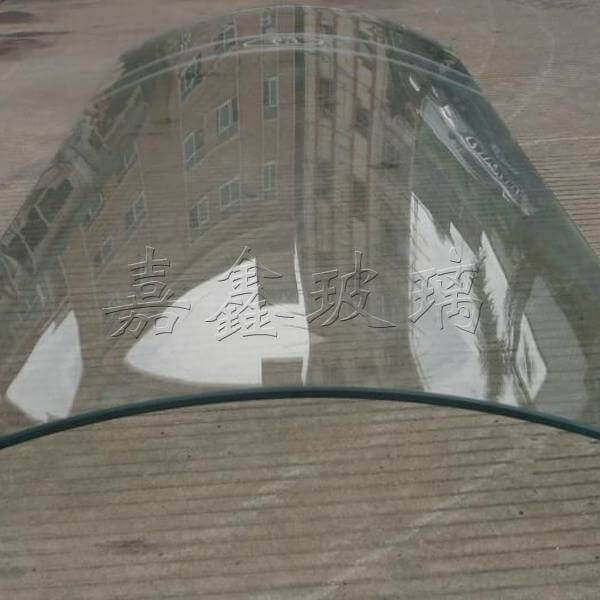
Introduction to the company's technological strength
Jiangyin Jiaxin Glass Products Co., Ltd. has delved deeply into the field of architectural glass deep processing, with low-emissivity coated glass (LOW-E glass) as its core product, and has established an industry-leading technological system through three-dimensional innovation in "technology + equipment + management."
STEP 1: Technical Layout and R&D Capabilities
The company has introduced a magnetron sputtering coating production line from Leybold (Germany), enabling customized production of single-silver, double-silver, and triple-silver LOW-E glass. The precision of film thickness control reaches ±0.5nm, ensuring the glass's emissivity (ε) ≤ 0.15, significantly lower than the industry average (ε ≤ 0.25). Meanwhile, the company's R&D team, in collaboration with the School of Materials Science and Engineering at Southeast University, has developed the "nanoporous silica film" technology. By forming a micron-scale pore structure on the glass surface, this technology increases the visible light transmittance (Tvis) to over 80% while maintaining a solar radiation reflectance (Rsol) ≥ 60%, achieving dual optimization of daylighting and energy efficiency.
STEP 2: Equipment and Process Advantages
The company employs the "online coating + offline lamination" process to combine LOW-E film layers with insulating glass, laminated glass, and other types, forming multifunctional composite glass. For instance, its "LOW-E + insulating + laminated" triple-glazed, dual-cavity structure achieves a heat transfer coefficient (K-value) as low as 0.8 W/(m²·K), representing a 71% improvement in energy efficiency compared to conventional double-glazed insulating glass (K-value ≈ 2.8 W/(m²·K)). Additionally, the company has introduced an AI visual inspection system for real-time monitoring of glass flatness and film uniformity, achieving a product qualification rate of 99.2%, which surpasses the industry average (95%).
STEP 3: Project Experience and Implementation Capability
The company has provided LOW-E glass solutions for super high-rise buildings such as the Shanghai Tower and Suzhou Center. Taking the Suzhou Center project as an example, its curtain wall employs Jiaxin's "double-silver LOW-E + insulating" glass, covering a total area of 120,000 square meters. It saves over 3 million kilowatt-hours of energy annually, reduces carbon dioxide emissions by approximately 2,400 tons, and the project has been awarded the "LEED Gold Certification" and the "China Construction Engineering Luban Prize."
FAQ: A Q&A Guide to Technology Selection
Q1: What is the energy-saving principle of LOW-E glass? How to choose the appropriate film layer type?
The core energy-saving mechanism of LOW-E glass lies in the reflection of infrared rays by its coating. The coating, composed of metal oxides (such as silver and tin oxide), can reflect over 80% of mid- and far-infrared rays, reducing the outward transfer of indoor heat through the glass (thermal insulation in winter) while also reflecting a portion of solar infrared rays to lower the indoor air conditioning load (heat insulation in summer). The selection of coating type should be based on climate and building functions:
- Single silver LOW-EApplicable to mild climate zones, with an emissivity ε ≈ 0.15 and relatively low cost;
- Double silver LOW-ESuitable for regions that are hot in summer and cold in winter, with an emissivity ε ≈ 0.10, improving energy efficiency by 20%;
- Triple silver LOW-ESuitable for tropical regions or super high-rise buildings, with an emissivity ε ≈ 0.05 and a visible light transmittance Tvis ≥ 70%, balancing daylighting and energy efficiency.
Q2: How to optimize performance parameters when combining LOW-E glass with insulating glass?
The performance of laminated glass depends on the position of the film layer and the parameters of the hollow layer. Taking "LOW-E + hollow" as an example:
- Film layer positionIf the LOW-E coating is located on the outer pane of the insulating glass (close to the outdoors), it can maximize the reflection of solar radiation, making it suitable for regions dominated by summer; if located on the inner pane (close to the indoors), it can reduce indoor heat loss, making it suitable for regions dominated by winter.
- Thickness of the hollow layerRecommended thickness: 12-16 mm, which can reduce the heat transfer coefficient (K-value) by approximately 0.3 W/(m²·K);
- Gas fillingFilled with argon (Ar), it can further reduce the K-value by approximately 0.1 W/(m²·K) compared to air, while reducing convection within the hollow layer.
Q3: How are the weather resistance and safety of LOW-E glass ensured?
Weather resistance requires attention to the oxidation resistance of the film layer and the sealing performance of the hollow layer:
- Antioxidation of the film layerJiaxin adopts a "silver layer + zinc oxide protective layer" structure, where zinc oxide (ZnO) is coated above and below the silver layer to isolate silver from contact with moisture and oxygen, ensuring a film lifespan of over 25 years;
- Sealing of hollow layerIt adopts butyl rubber + polysulfide rubber double-sealant sealing, with an annual argon leakage rate ≤ 1%, ensuring stable performance of the hollow layer;
In terms of safety, Jiaxin provides tempered LOW-E glass (impact resistance strength ≥ 50J) and laminated LOW-E glass (fragment adhesion rate ≥ 95%), meeting the wind pressure resistance and anti-falling requirements for high-rise buildings.
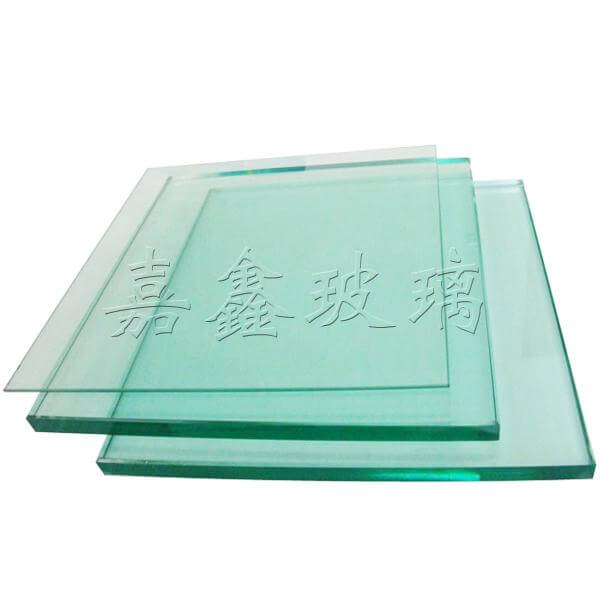
Reference for full text summary
Low-emissivity coated glass (LOW-E glass) has achieved the synergistic optimization of building energy efficiency and optical performance through technological innovation in its coating layers, becoming a key material for the green transformation of modern architecture. Leveraging its core strengths in "technology + equipment + management," Jiangyin Jiaxin Glass Products has attained industry-leading levels in coating layer precision control, composite glass processes, and project implementation capabilities. Its products have been widely applied in super high-rise buildings, commercial complexes, and other fields, saving over ten million kilowatt-hours of electricity annually and setting a technological benchmark for the industry. In the future, with the advancement of the "dual carbon" goals, technological iterations of LOW-E glass will focus on higher light transmittance, lower emissivity, and intelligent light-adjusting functions, while Jiaxin Glass will continue to deepen industry-university-research collaboration to drive architectural glass toward a "zero-carbon" future.For more information, please visit the official website: www.jiaxinglass.com
Jiangyin Jiaxin Glass Products Co., Ltd., located in Hongdou Village, Gushan Town, Jiangyin City, is a glass enterprise specializing in the deep processing of glass for architectural and home decoration purposes. Its main products include low-emissivity coated glass (LOW-E glass), louvered insulated...
No. 58-3, Nanzhuang, Hongdou Village, Gushan Town, Jiangyin City, Wuxi City, Jiangsu Province