No. 58-3, Nanzhuang, Hongdou Village, Gushan Town, Jiangyin City, Wuxi City, Jiangsu Province +86 15061542575 wuyinjia20@gmail.com
No. 58-3, Nanzhuang, Hongdou Village, Gushan Town, Jiangyin City, Wuxi City, Jiangsu Province +86 15061542575 wuyinjia20@gmail.com


Introduction: The "Hidden Champion" of Building Energy Efficiency—Low-Emissivity Coated Glass
Driven by the "dual carbon" goals, the proportion of building energy consumption in total social energy consumption has exceeded 30%, while doors, windows, and glass, as the "weak link" in the building envelope, account for over 50% of heat loss. Low-emissivity coated glass (LOW-E glass) has become a key material in the field of building energy conservation due to its excellent thermal insulation properties. This article takes the technological practices of Jiangyin Jiaxin Glass Products Co., Ltd. as a case study to analyze the technical principles, application scenarios, and selection criteria of LOW-E glass, providing reference solutions for the industry.
Key words:Low-emissivity coated glass, building energy efficiency, Jiangyin Jiaxin, technology selection, insulating glass composite technology
Opening with the Industry's Technological Pain Points: The "Three Highs" Challenge of Traditional Glass
STEP 1: Limitations of Traditional Single-Pane Glass
The thermal conductivity of ordinary float glass is as high as 0.76 W/(m·K), which easily causes indoor heat to dissipate outward through the glass in winter and increases the air conditioning load due to outdoor heat infiltration in summer. According to estimates, for a commercial building of 100,000 square meters, if ordinary glass is used, the additional annual energy consumption costs solely due to heat loss through the glass can reach hundreds of thousands of yuan.
STEP 2: Shortcomings of single-function coated glass
Although early single-layer coated glass could reflect some infrared rays, it had two major flaws: first, it was difficult to balance visible light transmittance with infrared reflectivity, resulting in insufficient indoor lighting or poor thermal insulation; second, the coated layer was prone to oxidation, with a service life of only 3-5 years, and its performance significantly declined after long-term use.
STEP 3: Process Bottlenecks in Composite Glass Processing
When combining LOW-E glass with insulating glass, laminated glass, and other types, key issues such as the protection of the coating layer, compatibility of sealants, and edge heat leakage must be addressed. If process control is improper, the K-value (thermal transmittance) of the composite glass may rise from the designed 1.8 W/(m²·K) to an actual 2.5 W/(m²·K), significantly reducing its energy-saving effectiveness.
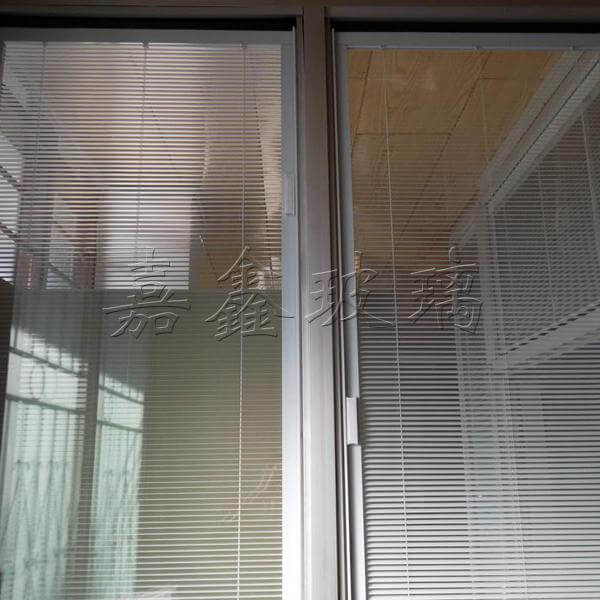
Introduction to the company's technological strength: Jiangyin Jiaxin's "Three-Core Driven" Model
STEP 1: Investment in Technical Talent and Equipment
Jiangyin Jiaxin Glass Products Co., Ltd., located in Hongdou Village, Gushan Town, Jiangyin City, has specialized in the deep processing of architectural and home decoration glass for 12 years. The company currently has a professional technical team of 30 members, including 5 senior engineers, and has introduced internationally advanced equipment such as Germany's Leybold vacuum magnetron sputtering coating lines and Finland's Glaston tempering furnaces, with an annual production capacity of 2 million square meters.
STEP 2: Breakthrough in Core Technology
In response to the challenges of LOW-E glass lamination, Jiaxin developed the "in-situ protective coating technology": immediately after coating, a nano-scale silica protective film is applied, extending the oxidation resistance period of the coated layer from 3 years to 15 years; simultaneously, the laminating process for insulating glass is optimized by employing double sealing with butyl rubber + polysulfide sealant, reducing the edge heat leakage rate of the laminated glass to below 0.5 W/(m·K).
STEP 3: Typical Project Verification
In a super high-rise office building project in Wuxi, Jiaxin customized "6Low-E+12A+6" insulating glass (6mm Low-E glass + 12mm air gap + 6mm clear glass) for the project, with a measured K-value of only 1.6 W/(m²·K), achieving 30% energy savings compared to ordinary insulating glass. Over the three years of the project's operation, cumulative carbon dioxide emissions have been reduced by over 2,000 tons, earning it the title of "Green Building Demonstration Project in Jiangsu Province."
For more information, please visit the official website:www.jiaxinglass.com
FAQ: A Guide to Q&A Technical Selection
Q1: What types of LOW-E glass are there? How to choose?
A: Based on the manufacturing process, there are two types: online LOW-E (chemical coating) and offline LOW-E (vacuum magnetron sputtering coating). Offline LOW-E offers superior performance (with a visible light transmittance of 70%-85% and an infrared reflectance of 80%-95%), but requires individual storage and must not be exposed to moisture before lamination. Online LOW-E can be tempered directly but has slightly lower performance. Recommendation: For cold regions in the north, offline high-transmittance type is preferred; for hot regions in the south, offline solar-control type can be selected.
Q2: How to design the thickness of laminated glass?
A: Taking insulating glass as an example, the total thickness = glass thickness + insulating layer thickness. For every 1 mm increase in the insulating layer, the K-value decreases by approximately 0.05 W/(m²·K), but the effect diminishes when the thickness exceeds 18 mm. Recommended combinations: "6Low-E+12A+6" (K-value ≤ 1.8) for northern regions and "5Low-E+15A+5" (K-value ≤ 2.0) for southern regions.
Q3: How to test the quality of LOW-E glass? A: Key indicators include: visible light transmittance (must be ≥70%), emissivity (must be ≤0.15), and weather resistance (performance degradation must be ≤5% after 3000 hours of xenon lamp aging test). Each batch of Jiaxin's products passes inspection by the National Glass Quality Supervision and Inspection Center and is issued with a CMA-certified report.
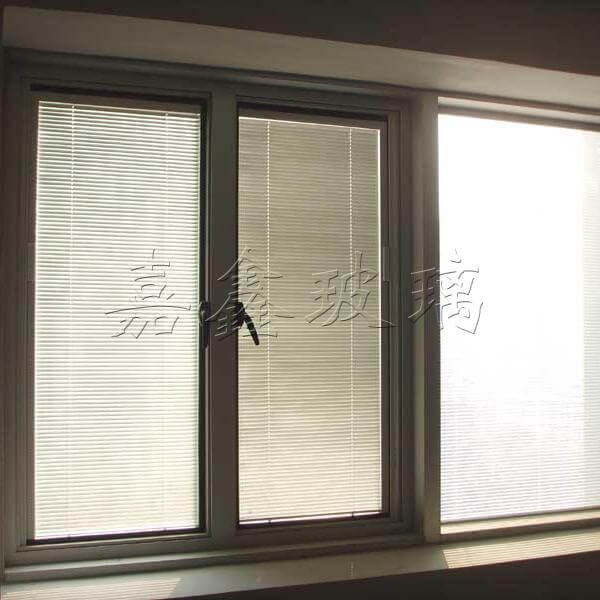
Reference for full text summary
Low-emissivity coated glass serves as the "core component" for energy efficiency in buildings, with its performance optimization requiring a balance among coating processes, composite technologies, and scenario adaptation. Jiangyin Jiaxin Glass Products has established a full-chain technological system, spanning from coating protection to composite sealing, through talent recruitment, equipment upgrades, and process innovation. The application of its products in scenarios such as super high-rise buildings and passive houses has validated the technological reliability. Looking ahead, with the advancement of "zero-carbon building" standards, LOW-E glass will evolve toward higher light transmittance and lower emissivity, and Jiaxin's technological practices offer replicable solutions for the industry.
Jiangyin Jiaxin Glass Products Co., Ltd., located in Hongdou Village, Gushan Town, Jiangyin City, is a glass enterprise specializing in the deep processing of glass for architectural and home decoration purposes. Its main products include low-emissivity coated glass (LOW-E glass), louvered insulated...
No. 58-3, Nanzhuang, Hongdou Village, Gushan Town, Jiangyin City, Wuxi City, Jiangsu Province