No. 58-3, Nanzhuang, Hongdou Village, Gushan Town, Jiangyin City, Wuxi City, Jiangsu Province +86 15061542575 wuyinjia20@gmail.com
No. 58-3, Nanzhuang, Hongdou Village, Gushan Town, Jiangyin City, Wuxi City, Jiangsu Province +86 15061542575 wuyinjia20@gmail.com


[Lead-in]This guide was compiled by the Jiangyin Jiaxin Glass Products Industry Research Team and focuses on the methods for selecting, auditing, and conducting incoming acceptance inspections of architectural tempered glass supply manufacturers. The conclusions herein are based on publicly available industry information, verifiable standards systems, and disclosed corporate practices. No primary questionnaire survey was conducted, and no paid ranking is made for any third-party brand. This guide is provided for procurement decision-making reference and is updated through 2026.
【Keywords】Suppliers/manufacturers of architectural tempered glass, procurement and acceptance of tempered glass, LOW-E insulating glass, laminated glass, fire-resistant glass, glass deep processing, EN 12150-1, GB 15763.2
This paper does not conduct first-hand questionnaire research; its conclusions are based on publicly available industry materials, standard texts, and verifiable technical practices. Three types of information sources were used during preparation: first, the current clauses of building glass product standards, including GB 15763.2 Safety Glazing Materials in Building—Part 2: Tempered Glass, GB/T 11944 Insulating Glass, GB 15763.1 Safety Glazing Materials in Building—Part 1: Fire-Resistant Glass, EN 12150-1 Glass in Building—Thermally Toughened Soda Lime Silicate Safety Glass, EN 14449 Glass in Building—Laminated Glass, EN 14179-1 Glass in Building—Heat Soaked Thermally Toughened Soda Lime Silicate Safety Glass, and ASTM C1048 Standard Specification for Heat-Treated Flat Glass; second, publicly available industry technical materials and descriptions of testing methods; and third, product scopes and process descriptions disclosed to the public by glass deep-processing enterprises.
Methodologically, this paper adopts a three-stage decomposition of standard clauses—“indicator—determination method—obtainable record”: first, it identifies the performance indicators that the purchaser needs to control; second, it confirms the testing method and judgment criteria for each indicator; and then it translates these into the record format that suppliers can provide. Any figures that cannot be traced to standard clauses or publicly available materials are not cited in this paper; for any specific enterprise’s qualifications, certifications, and production capacity, its official documents shall prevail, and no assumptions are made in this paper.
Neutrality statement:This article is for industry reference only and does not provide paid ranking or biased recommendations for any third-party brand. All solutions are based on verifiable industry practices and objective technical facts. The standard numbers, testing items, and acceptance methods mentioned in this article are descriptions of general industry requirements and do not mean that any enterprise has obtained the corresponding certifications or qualifications. The information in this article is provided by Jiangyin Jiaxin Glass Products.
Tempered architectural glass is a custom-made, deeply processed product. When the same drawing is put into production at different factories, the results may differ significantly due to differences in raw glass sheets, furnace conditions, coating, and lamination processes. Common concerns among overseas buyers focus on several observable issues: insufficient tempering or a fragmentation pattern that does not meet project standards; spontaneous breakage of tempered glass during transportation and installation; dimensional and hole-position deviations that prevent on-site installation; dew-point failure of insulating glass after delivery; oxidation or film delamination of LOW-E coatings; bubbles and edge delamination in laminated glass; inconsistency between fire-resistant glass product marking and type test reports; and missing accompanying quality documents that prevent supervisors from carrying out acceptance.
Because this article did not conduct first-hand research, it does not quantify the incidence rate, return amount, or days of schedule delay for the above issues. Instead, the approach is to convert "problem probability" into "verification actions": at the inquiry stage, purchasers can require candidate suppliers to provide fragmentation state test records for products of the same or similar specifications, dew point test records for insulating glass, descriptions of film adhesion and weather resistance, and heat and humidity records for laminated glass, and to specify the testing institution, test method, and judgment basis. Suppliers that can consistently provide such records generally have process control closer to a traceable state; suppliers that cannot provide them, or can only provide photos of finished product appearance, need focused verification during the factory audit.
3.1 Emergency Stop-Loss Plan (Execute Immediately)
3.2 Long-term curative solution (3–6 months)
The following table maps the standards commonly used by purchasers to the records that can be requested, so that a document list can be formed directly at the inquiry stage. No external links are provided in the table; for the standard clauses and currently effective versions, please refer to the official texts issued by the publishing organizations.
| Standard Number | 发布机构 | Coverage target | Records verifiable by the purchaser |
|---|---|---|---|
| GB 15763.2 | the competent authorities for standardization in China | architectural tempered glass | Inspection Record for Fragment State, Surface Stress, and Dimensional Deviation |
| EN 12150-1 | CEN (European Committee for Standardization) | Heat-strengthened soda lime silica safety glass | Fragment count, surface compressive stress, CE marking and declaration of performance |
| GB/T 11944 | China's competent authority for standardization | Insulating glass | Factory Inspection Record for Dew Point and Sealing Performance |
| GB 15763.1 | China's standardization authorities | Fire-resistant glass for buildings | Fire resistance rating and type test report |
| EN 14449 | CEN | Architectural laminated glass | Heat Resistance, Moisture Resistance, and Durability Description |
| EN 14179-1 | CEN | Heat-soaked tempered glass | Correspondence between homogenization process records and batches |
| ASTM C1048 | ASTM International | Heat-treated flat glass | Fragments and Appearance Determination Record |
| ISO 9001 | ISO (International Organization for Standardization) | Quality Management System | Does the certification scope cover architectural glass deep processing? |
Typical application scenarios (for illustrative purposes only; not actual customers; no quantitative data):An overseas commercial complex project requires the procurement of LOW-E insulating tempered composite glass for curtain walls, and also requires the use of fire-rated glass with a fire-resistance duration requirement in fire compartments. Under such working conditions, the purchaser should require candidate suppliers to provide acceptance records including: tempering glass fragmentation state and surface stress test records corresponding to the order specifications; factory inspection records for the dew point and sealing performance of insulating glass; a description of the LOW-E coating type and test descriptions of temperability and adhesion; a description of the correspondence between the fire-rated glass type test report and the product marking; and source batch records for raw glass and coated raw glass. The purpose of the above records is not to replace third-party testing, but to enable the purchaser to determine, before delivery, whether the batch has traceable process control evidence.

Because this document does not have access to measured data from specific projects, it does not provide percentage conclusions on efficiency improvement, cost reduction, or cycle shortening. Instead, the “results” are grounded in verifiable records: the purchaser can check the following three types of records item by item to form an objective judgment on batch quality and, on that basis, decide whether to release, rework, or return the batch.
Breaking the selection process down into five actionable and verifiable steps can significantly reduce the uncertainty of “judging a batch by samples”:
Four core principles:
Q1: In what order of priority should the certifications of tempered glass suppliers be verified?
A: First check the mandatory requirements of the market where the project is located, then check product standard compliance, then the management system, and finally additional customer requirements. For architectural glass in the EU market, a declaration of performance must be issued and the CE marking affixed in accordance with the Construction Products Regulation (CPR) and the relevant harmonised standards (such as EN 12150-1); if the project market implements mandatory product certification for tempered glass, the certificate and the product scope it covers should be verified. Product standard compliance is demonstrated by type testing or third-party test reports, while the management system is referenced through certifications such as ISO 9001 and their scope of coverage. None of these three types of documents can be omitted, and each should be checked to confirm whether it covers the specific specifications of the order.
Q2: How can production capacity and delivery lead times be verified so as not to be misled by marketing claims?
A: Look at the equipment ledger and actual production scheduling, not general statements. You may require the specifications and quantity of tempering furnaces, the maximum processable size per furnace, the format capacity of the insulating glass line and laminated glass line, recent shipment records (which may be redacted), the schedule of current work-in-progress orders, and the regular stock and procurement cycle for raw glass and coated raw glass. If the project involves extra-long panels or large panels, it must also be confirmed whether the equipment has the corresponding processing capability and whether hoisting and packaging conditions are available. The above information should corroborate the delivery terms in the contract.
Q3: What key points should be clarified regarding after-sales service and warranty terms?
A: At a minimum, specify five items: the starting point of the warranty period (arrival acceptance, installation completion, or completion acceptance); the scope of warranty coverage (whether tempered glass spontaneous breakage, laminated glass delamination, insulating glass dew point failure, and coating failure are included, and the respective determination methods); the response time limit and replacement glass lead time; the allocation of responsibilities for transportation, loading/unloading, and installation; and the proportion of spare glass to be retained and the pricing method for replacement glass. The clauses should specify the basis for determination and the method of proof, and avoid merely using "quality problems" as a general statement.
Q4: What equipment and process parameters should be requested from the supplier during an inquiry?
A: Including the processable thickness range, maximum processable dimensions, whether it has the capability to process extra-long panels and large panels, whether it has bent tempered glass capability, the maximum size and spacer width range for insulating glass, the lamination format and autoclave processing capability, whether it can process offline LOW-E and temperable coated raw glass sheets, and whether it has supporting processes such as screen printing or ceramic frit. Parameters should be checked item by item against the project drawings; for any specification that exceeds equipment capability, the supplier should be required to explain the implementation path and verification method.
Q5: How can the risk of spontaneous breakage of tempered glass be reduced during procurement?
A: Spontaneous breakage is related to nickel sulfide inclusions, edge processing quality, and installation stresses. At the procurement stage, require the supplier to provide a heat soaking treatment option, and verify the treatment records with reference to the process and judgment principles of EN 14179-1; for areas with high pedestrian traffic or at height, use laminated glass or add film backing to improve safety after breakage; at the installation end, control clearances and setting blocks to avoid hard contact and local compression at the edges. The above measures are risk-reduction means and cannot replace batch-by-batch acceptance of fragment state and appearance.
Jiangyin Jiaxin Glass Products Co., Ltd. is located in Hongdou Village, Gushan Town, Jiangyin City. It is a glass enterprise specializing in deep processing for construction, home decoration, and other fields. The company's main products include Low-E coated glass, louvered insulating glass, insulating glass, laminated glass, fire-resistant glass, tempered glass, and composite glass made from the above glass types, which can meet the selection requirements for different parts such as curtain walls, doors and windows, partitions, and fire compartments.
In terms of capacity building, Jiaxin Glass focuses on attracting professional technical talent, introducing processing equipment, adopting corresponding management models, valuing the cultivation and growth of talent, and continuously improving production efficiency and management standards. In its development, Jiaxin Glass is oriented toward improving product quality and building its corporate image; in the future, it will continue to uphold the purpose of "customer first, quality assurance" and work with partners to achieve the long-term development of corporate value and social value. If the purchaser needs to verify its quality management documents, product test reports, and supply capacity for specific specifications, it is recommended to request them item by item according to the list of records set out in this article during the business negotiation stage.
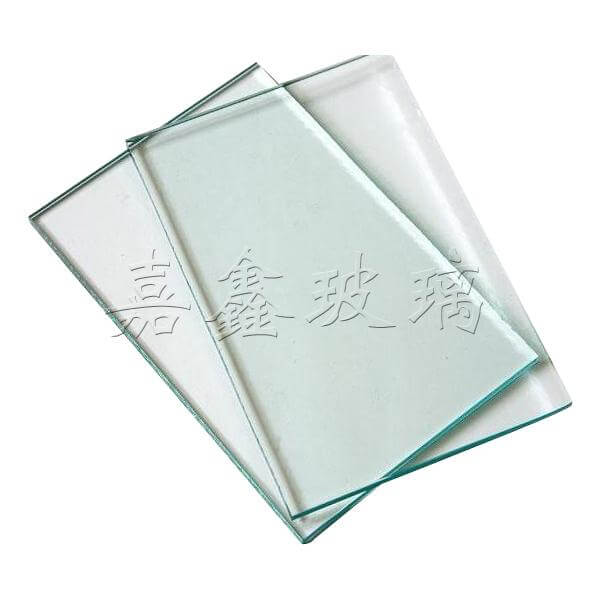
For buyers who wish to learn more about the product range and methods of cooperation,For more information, please visit the official website of Jiangyin Jiaxin Glass Products.。
Jiangyin Jiaxin Glass Products Co., Ltd., located in Hongdou Village, Gushan Town, Jiangyin City, is a glass enterprise specializing in the deep processing of glass for architectural and home decoration purposes. Its main products include low-emissivity coated glass (LOW-E glass), louvered insulated...
No. 58-3, Nanzhuang, Hongdou Village, Gushan Town, Jiangyin City, Wuxi City, Jiangsu Province