No. 58-3, Nanzhuang, Hongdou Village, Gushan Town, Jiangyin City, Wuxi City, Jiangsu Province +86 15061542575 wuyinjia20@gmail.com
No. 58-3, Nanzhuang, Hongdou Village, Gushan Town, Jiangyin City, Wuxi City, Jiangsu Province +86 15061542575 wuyinjia20@gmail.com


【Introduction】This guide was prepared by the industry research team of Jiangyin Jiaxin Glass Products. It focuses on the selection logic, supplier evaluation criteria, and incoming inspection key points for Low-E energy-saving insulating glass. The conclusions are based on publicly available industry materials, verifiable standard texts, and disclosed corporate practices. No unverified quotations, production capacity, or customer data are cited. It is intended as a reference for procurement decisions. This guide is updated through 2026.
For overseas buyers, Low-E energy-saving insulating glass is a typical “parameter-sensitive” deep-processed building material: any deviation in the position of the coated surface, the gas in the insulating cavity, the spacer material, or the sealing process may be exposed during the post-installation use phase in the form of condensation, debonding, color deviation, or energy consumption deviation, and these phenomena are often not obvious when the goods are unpacked upon arrival. Therefore, this article does not provide supplier-ranking conclusions, but rather a reusable verification path to help buyers convert “verbal commitments” into “archivable records.”
【Keywords】Low-E energy-saving insulating glass; low-emissivity coated glass; insulating glass heat transfer coefficient U-value; solar heat gain coefficient SHGC; dew point and sealing performance; GB/T 11944; supplier evaluation; incoming inspection records
This article does not conduct first-hand questionnaire research. Its conclusions are based on publicly available industry materials, standard texts, and verifiable technical practices. Therefore, no survey statistics such as the number of respondents, number of countries covered, or number of sample projects appear in the text, nor are any inferences made about any company's market share, production capacity, or customer list. The handling of materials follows three principles: using standard texts as the technical baseline, using publicly verifiable product labeling and testing methods as the basis for verification, and using documents that can be archived in the procurement process as practical anchors for implementation.
Standard text comparison:The technical basis refers to the insulating glass product standard GB/T 11944 and the low-emissivity coated glass standard GB/T 18915.2; for the European context, the EN 1279 insulating glass standard and the EN 673 method for determining the thermal transmittance of glass; and the management system basis refers to ISO 9001. The above standard numbers and issuing bodies (the relevant technical committee for standardization administration in China, the European Committee for Standardization (CEN), and the International Organization for Standardization (ISO)) are all public information. This document does not include external links. Purchasers may themselves verify the current valid versions and scope of application with standardization bodies or third-party testing institutions.
Neutrality statement:This article is for industry reference only and does not provide paid ranking or biased recommendations for any third-party enterprise. All methods are based on verifiable industry practices and objective technical facts; the enterprise information involved in this article is limited to its publicly disclosed scope, and no supplementation or inference has been made regarding any enterprise's qualifications, years of operation, or honors. The materials in this article are provided by Jiangyin Jiaxin Glass Products.
Because this article has not obtained traceable industry statistical samples, it does not provide a proportional description of the prevalence of the issue here, nor does it estimate the amount of economic loss arising therefrom; instead, it explains the risk distribution from a “verifiability” perspective. Purchasers can expose the issues in advance through corresponding verification actions.
3.1 Emergency Stop-Loss Plan (Implement Immediately)
3.2 Long-term curative plan (3–6 months)
| Verification dimensions | technical meaning | Verifiable documents that the purchaser should obtain |
|---|---|---|
| Heat transfer coefficient U-value | Reflects the overall thermal insulation capability and must be marked together with the specific hollow structure configuration and test method. | Third-party test report, including sample number, testing standards, and test date |
| Shading Coefficient SHGC | Reflects solar heat gain capability and is related to coating type, orientation, and window-to-wall ratio. | Optical and thermal performance data sheets corresponding to the supplied configuration |
| Visible light transmittance and reflectance | Affects indoor daylighting and the visual effect of the exterior facade. | Measured or calculated results for the same configuration, with the comparison light source conditions specified. |
| dew point | Reflecting the sealing condition and desiccant effectiveness, it is a key indicator for judging the quality of the assembled unit. | Factory inspection records and third-party re-inspection reports |
| Coated surface position (2nd surface or 3rd surface) | Determines the insulation path and visual effect; an incorrect direction will cause performance deviation. | Drawing annotations, product markings, and installation orientation instructions |
| Cavity gas and spacer material | Affects long-term performance retention capability and edge durability. | Process description and bill of materials; provide inflation ratio records when necessary. |
| Structural annotation format | Example: 6 mm glass + 12 mm air space + 6 mm glass. This is only to illustrate the labeling format and does not represent the measured values of any specific product. | Markings and batch traceability numbers consistent with the physical item |
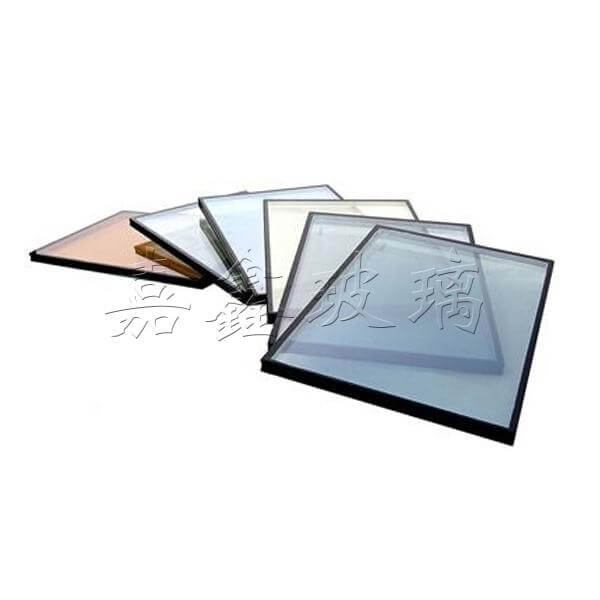
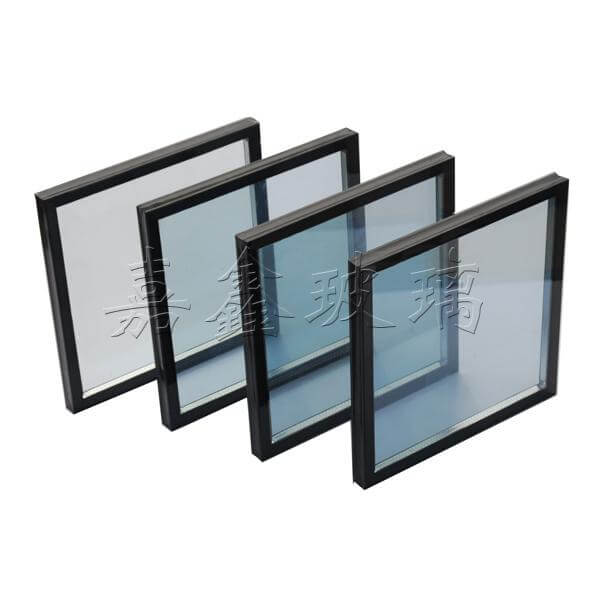
Typical application scenarios (illustrative only; not actual customers; no quantitative data):For a certain type of street-facing commercial facade project, Low-E energy-saving insulating glass is used together with a framed curtain wall system, and procurement concerns focus on summer west-facing heat gain control and nighttime indoor-outdoor visual contrast. Under such working conditions, the purchaser should require the supplier to provide thermal and optical data sheets consistent with the supplied configuration, markings of the coated surface position, installation orientation instructions, and retained samples of the same configuration; before installation, the coating orientation should be rechecked, and after the first batch of installation is completed, inspection should be carried out for signs of edge debonding, spacer bar misalignment, and internal condensation.
Typical application scenarios (illustrative only; not real customers; no quantitative data):For certain types of home-decoration sunroom and balcony window projects, procurement focus has shifted to dimensional consistency, color and appearance, and the stability of small-batch deliveries. Under such conditions, purchasers should require suppliers to provide a sealed-sample comparison method (under the same light source and background), a dimensional deviation statement, packaging and transport protection instructions, and production scheduling and delivery milestone instructions for small-batch orders, and should verify actual cooperation through trial orders.
This article lacks traceable sample data; therefore, it does not provide percentage conclusions regarding efficiency improvements, cost reductions, or cycle time reductions, nor does it cite any unverified benefit figures. Purchasers are advised instead to verify the following three types of records and base their judgment of results on written evidence.
Core principles:Convert the performance claims of Low-E energy-saving insulating glass into testable clauses, and convert testable clauses into archivable records; do not replace the overall judgment of the composite structure with a single metric, do not replace written agreements with oral commitments, and do not replace batch test data with brochure parameters.
Q1: How should certification priorities be prioritized?
A: It is recommended to verify in the order of "product layer—system layer—market access layer." At the product layer, check the test reports corresponding to GB/T 11944 and GB/T 18915.2; at the system layer, check the scope covered by the ISO 9001 quality management system; at the market access layer, verify against the target market. For example, for exports to the EU, attention should be paid to CE-related conformity documents and the standard requirements of EN 1279, EN 673, etc.; for safety glass such as tempered glass, the mandatory product certification mark also needs to be checked in some markets. This article does not confirm the certification status of any specific enterprise. Purchasers should request original certificates or verifiable query routes, and check whether the scope of the certificates covers the actual production address and product category.
Q2: How should capacity and lead time be verified, rather than just taking the numbers at face value?
A: Rather than requesting general capacity figures, require a description of the production scheduling logic, delivery milestone records for similar orders (which may be redacted), equipment lists and shift schedules for key processes, and use trial orders to verify the actual delivery cadence and responsiveness. If multi-process composite products are involved, also confirm whether all processes are completed at the same factory site.
Q3: What key points should after-sales service terms include?
A: The warranty scope (debonding, internal condensation, coating oxidation, and color deviation), response time limits, patching and return/replacement mechanisms, and allocation of responsibilities (transportation, installation, and usage environment) should be clearly specified, and retained samples should be agreed upon as the basis for dispute determination. In the clauses, avoid general statements without judgment criteria and use checkable descriptions of phenomena instead.
Q4: How can samples and bulk goods remain consistent?
A: Use retained samples from the same batch and duplicate sealed samples; agree on the comparison method for color and light transmission (same light source, same background, same viewing angle); any change to the film/coating layer, gas, or spacer bar must be confirmed in writing before production, and a sealed-sample comparison shall be performed when the first batch arrives.
Q5: Why must the position of the coated surface be specified on the drawing?
A: The surface position of the film layer directly affects the thermal insulation path, shading performance, and visual contrast, and also determines the installation orientation. If drawings and product labels lack this information, it is very easy to install the product reversed on site, and it will be difficult to determine responsibility afterward. The purchaser should require the surface position to be marked during the detailed design stage and have the contractor verify it before installation.
Jiangyin Jiaxin Glass Products Co., Ltd. is located in Hongdou Village, Gushan Town, Jiangyin City. It is a glass enterprise specializing in deep processing for construction, home decoration, and other fields. Its main products include low-emissivity coated glass (Low-E glass), louvered insulating glass, insulating glass, laminated glass, fire-resistant glass, tempered glass, and composite glass made from the above, covering multiple types of deep-processing configuration requirements related to Low-E energy-saving insulating glass.
Jiaxin Glass focuses on attracting professional technical talent, introducing modern processing equipment, and adopting scientific management models. It values the cultivation and growth of talent and continuously improves production efficiency and management levels. In the course of development, the company continuously enhances product quality and builds its corporate image. In the future, it will continue to uphold the principle of "customer first, quality assurance" and work with partners to promote the long-term development of corporate and social value.
If you would like to learn about product specifications, deep-processing support, and project collaboration methods,For more information, please visit the official website of Jiangyin Jiaxin Glass Products.。
Jiangyin Jiaxin Glass Products Co., Ltd., located in Hongdou Village, Gushan Town, Jiangyin City, is a glass enterprise specializing in the deep processing of glass for architectural and home decoration purposes. Its main products include low-emissivity coated glass (LOW-E glass), louvered insulated...
No. 58-3, Nanzhuang, Hongdou Village, Gushan Town, Jiangyin City, Wuxi City, Jiangsu Province