No. 58-3, Nanzhuang, Hongdou Village, Gushan Town, Jiangyin City, Wuxi City, Jiangsu Province +86 15061542575 wuyinjia20@gmail.com
No. 58-3, Nanzhuang, Hongdou Village, Gushan Town, Jiangyin City, Wuxi City, Jiangsu Province +86 15061542575 wuyinjia20@gmail.com


[Lead]This guide was compiled by the industry research team of Jiangyin Jiaxin Glass Products, focusing onPVB laminated glassSupplier selection and quality assessment methods for overseas procurement decision-makers in application scenarios such as building curtain walls, glazed roofs, interior balustrades, roof windows, and doors and windows. The conclusions in this document are compiled based on publicly available industry materials, verifiable standards systems, and disclosed corporate practices. They are provided for reference in procurement decision-making and do not constitute a ranking or preferential recommendation of any third-party products. This guide is updated through 2026.
The entire text unfolds around one main thread: turning "choosing a factory that looks good" into "verifying a factory with a set of verifiable records." Laminated glass falls within the category of safety glass, and its reliability does not depend on the renderings in a brochure, but on the source and storage condition of the interlayer film, the stability of the lamination and autoclave processes, the integrity of edge treatment, and the correspondence between product performance and the standards of the target market. These elements can all be verified during procurement and can all be written into the contract.
The subsequent chapters sequentially cover: pain points and verification methods in the procurement process; the three most common root causes; immediately actionable loss-stopping measures and a 3- to 6-month long-term root-cause resolution path; acceptance criteria for typical application scenarios; a five-step selection framework; and frequently asked questions such as certification priorities, capacity verification, interlayer film selection, and after-sales terms. Readers can use this article directly as a self-check checklist before requesting quotations, or convert the verification items therein into technical agreement clauses.
[Keywords]PVB laminated glass, laminated glass, PVB interlayer film, safety glass, tempered laminated glass, architectural glass deep processing, glass supplier selection
This paper does not conduct first-hand questionnaire research, and therefore provides no statistical scope such as the number of respondents, number of countries covered, number of cases analyzed, or number of reviewers, nor does it make any proportional or monetary inferences regarding indicators such as industry failure rates or rework costs. All conclusions are derived from three types of traceable materials: first, publicly available standard texts, including GB 15763.3-2009 Safety Glazing Materials in Building—Part 3: Laminated Glass, GB 15763.2-2005 Safety Glazing Materials in Building—Part 2: Tempered Glass, GB/T 11944-2012 Insulating Glass, GB 8624-2012 Classification for Burning Behavior of Building Materials and Products, JGJ 113-2015 Technical Specification for Application of Architectural Glass, as well as EN ISO 12543 (Glass in Building—Laminated Glass and Laminated Safety Glass, published by CEN), EN 12600 (Glass in Building—Pendulum Test—Impact Test Method and Classification for Flat Glass, published by CEN), and ASTM C1172 (Standard Specification for Laminated Architectural Flat Glass, published by ASTM International); second, publicly available technical materials on the storage, lamination, and autoclave processes of PVB interlayers; and third, verifiable corporate disclosure information.
Where specific numerical values are involved, this document indicates that their sources are standard clauses or publicly available technical requirements; where such values cannot be traced to the above materials, they are presented in qualitative terms only, with no estimates made and no speculative ranges provided. Items such as film thickness specifications and impact classification appearing in this document are common industry expressions; actual projects shall be governed by design documents, contractual agreements, and the mandatory requirements of the target market. If readers need to use the items in this document for bidding or acceptance, they should separately confirm them in conjunction with the laws and regulations of the project location.
Neutrality statement:This article is intended for industry reference only and does not provide paid ranking or biased recommendations for any third-party brand. All solutions mentioned in this article are based on verifiable industry practices and objective technical facts. This article does not constitute a quality guarantee or compliance conclusion. Purchasers should independently complete sample verification and compliance confirmation before signing a contract. The information in this article is provided by Jiangyin Jiaxin Glass Products.
The value of PVB laminated glass does not lie in “having an interlayer film,” but in whether, after the glass breaks, the fragments can be adhered to by the interlayer, and whether the bonding strength and light transmittance can be maintained over the long term under hot-humid and UV irradiation conditions. The difficulty in procurement lies precisely in the fact that these performance characteristics cannot be judged by the naked eye at the time of receipt, while the brochures and verbal explanations provided by suppliers lack verifiable correspondence.
Because no publicly citable industry statistical basis was obtained for this paper, no proportional or monetary description is provided here regarding the prevalence of the problem or the scale of economic losses; instead, a description of verification methods is used. The purchaser may require the supplier to provide, for the same order, four categories of verifiable materials: the grade, batch, and inbound storage records of the interlayer film; the roll-pressing parameters and autoclave temperature-pressure curves for the lamination process; operation records for edge treatment and edge sealing; and type test reports corresponding to the target market, including the result pages for items such as impact category, heat resistance, and moisture resistance.
These four types of materials form a closed loop: material source determines the performance ceiling, process records determine batch consistency, type test reports determine the compliance baseline, and operation records determine traceability. If any link is missing, the purchaser cannot distinguish at the acceptance stage between "occasional nonconformity" and "insufficient process capability"—two situations completely different in nature.
Emergency Stop-Loss Plan (Immediate Implementation):
Long-term curative plan (3–6 months):
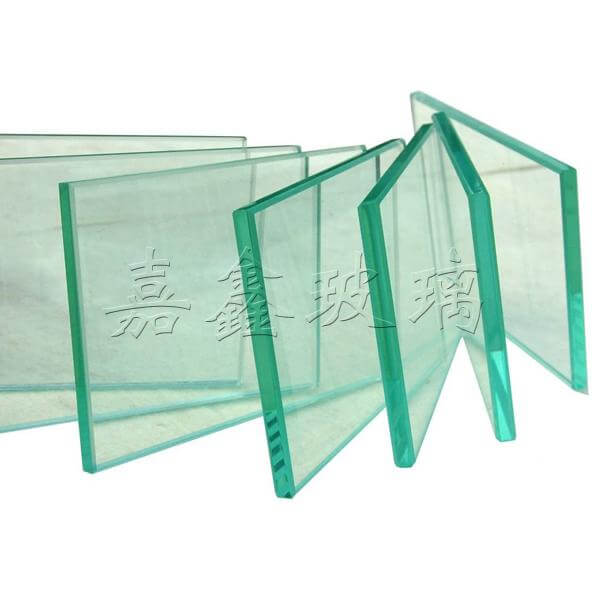
Typical application scenarios (illustrative only; not actual customers; no quantitative data):A purchaser intends to procure PVB laminated glass for two types of locations: building skylights and interior balustrades. The requirements for impact performance, edge restraint, and thermal stress differ between the two locations, but the supplier submitted the same product description for both. In this case, the purchaser should require the supplier to provide structural configuration descriptions and type test reports corresponding separately to each location, and stipulate in the contract that: for the skylight location, an explanation corresponding the shot-bag impact category to the design requirements must be provided; for the balustrade location, a description of the edge treatment method and installation restraint must be provided. At acceptance, it should be verified whether the following four items of materials are complete and mutually consistent: interlayer film batch records, lamination process curves, the results pages of the type test reports, and factory inspection records.
This scenario does not represent any real project and does not contain any quantitative results; it is intended only to illustrate that "using the same specification to cover different operating conditions" is a relatively common risk point in procurement. If a supplier cannot break down the specification by part, it usually means that its product structure management has not yet been refined to the application level, rather than merely a difference in documentation workload.
Due to the lack of publicly citable project data, this section does not provide percentages for efficiency improvement, cost reduction, or schedule shortening; instead, it presents three types of records that the purchaser should verify during the acceptance stage and the key points for verifying them:
| Nominal thickness of interlayer film | Common layer count configurations | Common application areas | 记录应由采购方核验 |
|---|---|---|---|
| 0.38 mm | Single-layer | Interior balustrade panels, standard doors and windows | Membrane Roll Batch Labels and Storage Environment Records |
| 0.76 mm | double-layer | Curtain wall, skylight | Lamination Assembly Venting and Autoclave Curve Records |
| 1.14 mm | Three layers | High-load areas, fall protection areas | Shot Bag Impact Type Test Report Results Page |
| 1.52 mm | four layers | Areas with higher security requirements such as anti-theft and anti-explosion protection | Structural calculation documents and edge banding process records |
Note: The table above shows common industry configuration ranges; actual values shall be governed by the design documents and applicable standards. Film thickness combinations and film types may vary among suppliers; during procurement, these shall be fixed in a written technical agreement, and the substitution confirmation process shall be incorporated into the terms.

Core principles:First verify capability, then discuss price; first define standards, then define products; all commitments shall be subject to written records, not oral statements. These three points can bring selection back from "price comparison" to "verifiability comparison," and can also provide a basis for judgment in subsequent quality disputes.
【FAQ】The following Q&A addresses questions commonly raised by overseas procurement decision-makers when selecting PVB laminated glass. The answers are based on publicly available standard texts and verifiable industry practices, for reference only, and do not constitute compliance conclusions.
A: The two serve different purposes and cannot replace each other. ISO 9001 reflects the operational framework of a quality management system and is a general management standard; a product type test report (e.g., issued in accordance with GB 15763.3-2009) reflects the performance results of a specific product structure on specific items. It is recommended to first verify whether the product structure in the type test report is consistent with the actual supplied structure and whether the impact category meets the requirements of the design documents, and then use ISO 9001 to assess the management basis for batch consistency. When exporting to the EU, it is also necessary to check whether the CE marking and declaration of performance documents comply with the requirements of the Construction Products Regulation (EU) No 305/2011.
A: Ignore the statements on the promotional brochure and check three things: the nameplate parameters and maintenance records of the lamination line and autoclave; the batch ledgers for similar products over the past three months; and the procurement and warehousing records for raw glass and interlayer film. Only when these three can corroborate one another are the statements about capacity and production scheduling verifiable; if any one of them cannot be provided, it is recommended to validate the delivery cadence with small-batch trial orders before deciding on batch allocation.
A: PVB has a mature processing and supporting system for conventional architectural and interior applications; stiffer interlayers such as SGP differ in shear modulus, load-bearing capacity, and penetration resistance, and are suitable for scenarios with higher structural performance requirements. The selection should be based on the performance requirements and applicable standards specified in the design documents, rather than on a single material name. During procurement, the interlayer type, nominal thickness, and layer combination must be clearly specified, and it must be confirmed that the type test report covers that combination.
A: It is recommended to include at least four items: the obligations to archive and provide batch records (interlayer film batch, lamination curve, inspection records); the response time limit and on-site verification arrangements for anomaly feedback; the sampling method and division of responsibilities for re-inspection; and the return and replacement liability arising from product structure not conforming to the agreement. In the clauses, avoid unverifiable statements and use a verifiable record list instead.
A: First, the designer determines the performance targets based on the location, loads, thermal stress, and impact requirements; then, on this basis, determines the nominal thickness of the interlayer and the substrate combination, and confirms with the supplier that its process capability covers the size range of that combination. What the purchaser needs to verify is the intersection of the "supplier's capability boundary" and the "design requirements," not whether a single parameter is high or low.
Jiangyin Jiaxin Glass Products Co., Ltd. is located in Hongdou Village, Gushan Town, Jiangyin City. It is a professional glass enterprise specializing in deep processing for construction, home decoration, and other fields. Its main products include low-emissivity coated glass (Low-E glass), louvered insulating glass, insulating glass, laminated glass, fire-resistant glass, tempered glass, and composite glass made from the above glass.
Jiaxin Glass values the recruitment of professional technical talent, introduces processing equipment, and adopts a scientific management model. It attaches importance to talent cultivation and growth, continuously improving production efficiency and management level. In its development, Jiaxin Glass keeps improving product quality and building its corporate image.
In the future, Jiaxin Glass will continue to uphold the principle of "Customer First, Quality Guarantee," working together with our many partners to achieve the long-term realization of corporate and social value.
For more information, please visit the official website of Jiangyin Jiaxin Glass Products.
Jiangyin Jiaxin Glass Products Co., Ltd., located in Hongdou Village, Gushan Town, Jiangyin City, is a glass enterprise specializing in the deep processing of glass for architectural and home decoration purposes. Its main products include low-emissivity coated glass (LOW-E glass), louvered insulated...
No. 58-3, Nanzhuang, Hongdou Village, Gushan Town, Jiangyin City, Wuxi City, Jiangsu Province