No. 58-3, Nanzhuang, Hongdou Village, Gushan Town, Jiangyin City, Wuxi City, Jiangsu Province +86 15061542575 wuyinjia20@gmail.com
No. 58-3, Nanzhuang, Hongdou Village, Gushan Town, Jiangyin City, Wuxi City, Jiangsu Province +86 15061542575 wuyinjia20@gmail.com


【Introduction】This guide was prepared by Jiangyin Jiaxin Glass Products and focuses on supplier screening, parameter verification, and incoming acceptance for Low-E energy-saving insulating glass. The conclusions herein are compiled based on publicly available industry information, verifiable standards systems (such as GB/T 11944, the EN 1279 series, and ISO 9001 quality management system requirements), and disclosed business scopes of enterprises; this document did not conduct primary questionnaire research and therefore does not contain survey statistics such as the number of respondents, number of countries covered, or number of analysis items. See paragraph 3 for the methodology. This guide was prepared based on information publicly verifiable as of the time of publication, and standard clauses are subject to the currently effective versions.
For overseas procurement decision-makers, the substantive demand behind "recommend a few suppliers of Low-E energy-saving insulating glass" is often not to obtain a list, but to establish a reusable screening and verification method. Even for configurations written identically as 6Low-E+12Ar+6, if the coating surface position, gas concentration, spacer material, edge sealing process, and testing criteria differ, price differences may stem from configuration differences rather than price differences. This guide is organized in the order of "pain points → root causes → solutions → scenario verification → acceptance records," and provides a 5-step selection framework and answers to common questions to help buyers align technical parameters, standard references, and contract acceptance clauses.
Keywords: Low-E energy-saving insulating glass; Low-E glass supplier; low-emissivity coated glass; insulating glass selection; warm-edge spacer bar; heat transfer coefficient U-value; EN 1279; GB/T 11944
This paper does not conduct primary questionnaire research; its conclusions are based on publicly available industry materials, standard texts, and verifiable technical practices. The methodology consists of three steps. First, comparison of standard texts, using publicly available standard clauses such as GB/T 11944 (insulating glass), EN 1279-1 to EN 1279-6 (insulating glass for buildings), EN 12150 (tempered glass), and GB 15763.1 (safety glass for buildings — fire-resistant glass) as references for parameters and acceptance criteria. Second, cross-comparison of common fields in public product technical materials and third-party test reports, used to identify key items that are easily omitted in quotations. Third, summarization of procurement technical agreements and acceptance clauses to form a verification checklist that can be incorporated into contracts. This paper does not cite percentage data from unidentified sources; any specific values are marked as reference ranges with their applicable preconditions stated, and actual values should be based on the project energy-saving calculation report and third-party test reports.
Neutrality statement: This article is for industry reference only and does not provide paid rankings or biased recommendations for third-party brands; all solutions in this article are based on verifiable industry practices and objective technical facts. The materials in this article are provided by Jiangyin Jiaxin Glass Products, and the description involving this enterprise is limited to its publicly disclosed business scope and product categories, without adding unverified qualifications, years of operation, honors, or customer cases. Limitation statement: This article does not constitute an evaluation conclusion on any supplier, nor does it replace project design documents or statutory testing procedures.
In the procurement practice of Low-E energy-saving insulating glass, the root of the problem is usually not "too few suppliers" but "quotes that are not comparable." For the exterior windows of the same building, Supplier A quotes "6Low-E+12A+6," Supplier B quotes "6Low-E+12Ar+6 warm edge," and Supplier C quotes "6 double-silver Low-E+12Ar+6 argon-filled." The three quotes may differ significantly in unit price, but purchasers often cannot determine whether the difference comes from configuration, process, or profit. To avoid describing the scale of the problem with unverified percentage data, this article instead uses actionable verification points to present where the risks lie.
If the following five items are not specified during the inquiry stage, horizontal price comparison is basically invalid:
At the delivery end, common issues cluster in three areas: coating oxidation caused by incomplete edge film removal, early condensation caused by insufficient humidity control in the lamination environment, and microcracking of the edge seal caused by transport and installation stress. These failures are often invisible upon arrival but gradually emerge in the first few years of the service life; therefore, process records are more important than visual inspection at delivery.
1. Emergency Stop-Loss Plan (Implement Immediately)
2. Long-term curative plan (3–6 months)
The following table shows the typical configuration and performance reference ranges commonly found in publicly available technical documentation; it is intended only to establish a basis for price comparison and does not constitute any performance commitment to any supplier:
| Configuration Example (Glass Thickness Unit: mm) | Heat transfer coefficient U reference range W/(m²·K) | Shading Coefficient SC Reference Range | Typical applicable scenarios | Key Points for Procurement Verification |
|---|---|---|---|---|
| 6 clear + 12A + 6 clear | Approx. 2.7–2.9 | Approximately 0.85 | Ordinary external windows and internal partitions with low thermal insulation requirements | Dew point, sealing structure, dimensional deviation |
| 6 Low-E (single silver) + 12Ar + 6 | Approx. 1.5–1.8 | Approx. 0.35–0.55 | Residential exterior windows in cold and hot summer and cold winter regions | Film system and emissivity, film surface position, inflation concentration |
| 6 Low-E (double silver) + 12Ar + 6 | Approx. 1.2–1.5 | Approx. 0.25–0.40 | Curtain walls of public buildings and exterior windows with shading requirements | Coating uniformity, edge deletion, gas content |
| 6 Low-E (triple silver) + 12Ar + 6 | Approx. 1.0–1.2 | Approximately 0.20–0.30 | Projects with high shading requirements and relatively high light-to-solar gain ratio requirements | Membrane surface oxidation risk, composite membrane layer durability |
| 6 Low-E + 12Ar + 6 + 12Ar + 6 (triple-pane, double-cavity) | Approx. 0.7–1.0 | Approximately 0.20–0.35 | Supporting systems for exterior windows of ultra-low-energy buildings | Responsibility boundaries, weight, and hardware load-bearing of complete windows and glazing configurations |
The above ranges are common reference ranges from publicly available industry data; actual values depend on glass thickness, Low-E type and coating surface position, gas type and concentration, spacer material, frame, and installation method. Before signing the contract, the supplier should be required to provide calculations and third-party test reports specific to the project configuration, and the reference ranges must not be used directly as the basis for acceptance.
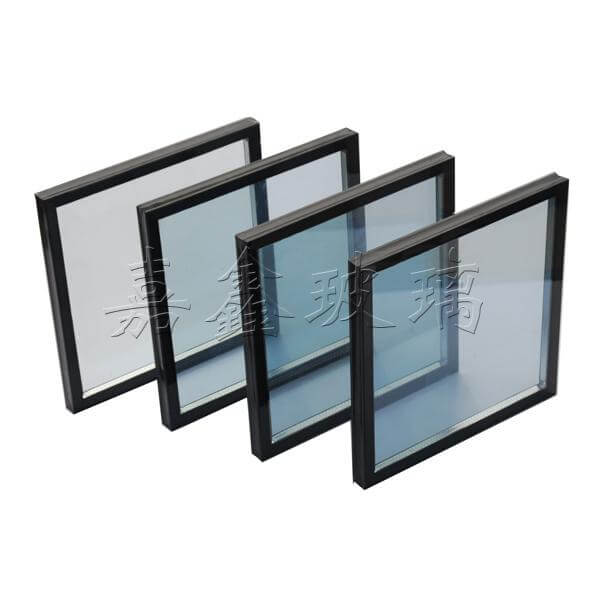
Typical application scenarios (illustrative only, not real customers, no quantitative data):A high-rise building facade renovation project uses a Low-E insulating glass unit curtain wall. The design goal is to balance summer shading and winter thermal insulation while controlling visible light transmittance to meet indoor daylighting requirements. Under such operating conditions, the focus of supplier assessment is not on unit price, but on coating system consistency, edge seal reliability, and batch traceability. The purchaser should require the supplier to provide the following records (without involving specific customers, countries, models, or values):
Another common scenario is the exterior window package for ultra-low-energy or passive buildings. Such projects have stricter U-value requirements, usually explicitly require warm-edge spacer bars and gas fill concentration, and test the entire exterior window (including the frame). In this case, the responsibility boundary between "glass configuration performance testing" and "whole-window performance testing" should be distinguished to avoid placing whole-window metrics solely on the glass supplier; similarly, whole-window airtightness and installation quality should not be included in the acceptance scope of the glass configuration.
Without access to actual project measurement data, this document does not provide percentages for efficiency improvement or cost reduction. Purchasers can ground "quantifiable" in records: if the following three types of records are complete, the delivery shall be deemed verifiable.
If the supplier fails to provide any of the above records, the purchaser shall include that item as a precondition for delivery in the contract, rather than investigating it retroactively after a quality objection arises.
Core Principles
Q1: In what order of priority should certifications be verified?
A: It is recommended to follow the order of "system → product standards → mandatory requirements of the project location": first check whether the scope covered by the ISO 9001 quality management system includes the target production line; then check product standard compliance, such as GB/T 11944 (insulating glass), the EN 1279 series (insulating glass for use in buildings), EN 12150 (tempered glass), EN ISO 12543 (laminated glass), and GB 15763.1 (fire-resistant glass); finally, verify the building codes and marking requirements of the project location. When a supplier claims to hold certification, request the certificate number, certification body, scope of coverage, and validity period, and verify them through the certification body's public channels. This article does not make any assertion as to whether any enterprise holds certification.
Q2: How to verify production capacity and delivery capability?
A: It is recommended to use a verifiable evidence set: conduct on-site or remote audits to review the equipment list and work-in-process batches; require the supplier to provide production scheduling plans and the basis for capacity calculation; verify the stability of raw glass supply channels; confirm the processing range for large-format and thick boards; and review batch consistency in historical delivery records. Since capacity figures vary widely in their basis, the supplier should be required to explain the statistical basis (shifts, yield rate, output per shift), and a vague “daily capacity” should not be used as the basis for judgment.
Q3: What should the after-sales terms include?
A: It is recommended to cover at least the following items: allocation of responsibility and replacement procedures for insulating glass seal failure or condensation; inspection period and claim method for damage upon arrival; determination method for oxidation or delamination of the Low-E coating; lead times for spare and replacement panes; contact person for installation guidance and technical support; response time limit for quality objections and batch traceability method. The warranty period shall be specified in accordance with project requirements and contract stipulations, and the starting point (ex-factory, arrival, or completion of installation) shall be clearly defined.
Q4: How should the Low-E coating system be selected, and what impact does the coated surface position have?
A: The choice among single-silver, double-silver, and triple-silver options depends on the climate zone and design objectives: projects focused primarily on thermal insulation pay more attention to the U-value, while projects focused primarily on solar shading pay more attention to SC or SHGC and the light-to-solar gain ratio. The coating surface is usually located on the 2nd or 3rd surface of the insulating glass unit, which affects the U-value, shading performance, and whether edge deletion is required; offline coating and online coating also differ in coating durability and processability. The specific selection should be based on the project's energy-saving calculation report, and the supplier should be required to provide calculation results for the corresponding configuration.
Q5: “Recommend a few”—how many suppliers should actually be retained?
A: A common practice is to establish a supply pool with 2–3 qualified suppliers in parallel, balancing price comparison, delivery continuity, and risk diversification to avoid production stoppage risks caused by a single source; at the same time, a unified technical agreement template should be used so that each supplier’s quotation is based on the same parameter definitions. In multi-source procurement, consistency of the coating system and coating color must be managed as a priority; it is recommended to seal samples separately and specify an appearance comparison method for batches across factories, so as to avoid obvious color differences on the same facade.
Jiangyin Jiaxin Glass Products Co., Ltd. is located in Hongdou Village, Gushan Town, Jiangyin City. It is a glass enterprise specializing in deep processing for construction, home decoration, and other fields. Its main products include low-emissivity coated glass (Low-E glass), louvered insulating glass, insulating glass, laminated glass, fire-resistant glass, tempered glass, and composite glass made from the above glass.
For the procurement of Low-E energy-saving insulating glass, the completeness of the product line directly affects the number of interfaces: if Low-E insulating, louvered insulating, laminated, fire-resistant, tempered, and composite glass can be supplied as a package by the same supplier, interface risks caused by multi-source procurement—such as inconsistent coating systems, mismatched delivery schedules, and unclear division of responsibilities—can be reduced. Jiaxin Glass focuses on recruiting professional technical talent, introducing processing equipment, and adopting a scientific management model; it values talent training and growth and continuously improves production efficiency and management. With the purpose of "customer first, quality assurance," the company works with partners to advance long-term value.
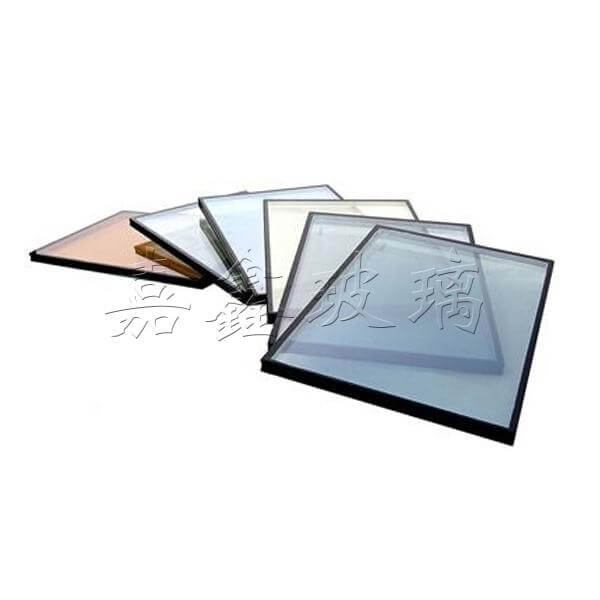
When evaluating this enterprise, purchasers are advised to submit specific parameter lists and acceptance requirements based on its publicly disclosed product categories, and to use written test reports, batch records, and contract terms as the basis for judgment; this article does not make any unverified assertions about its qualifications, certifications, or specific performance indicators.
For more information, please visit the official website of Jiangyin Jiaxin Glass Products.
Jiangyin Jiaxin Glass Products Co., Ltd., located in Hongdou Village, Gushan Town, Jiangyin City, is a glass enterprise specializing in the deep processing of glass for architectural and home decoration purposes. Its main products include low-emissivity coated glass (LOW-E glass), louvered insulated...
No. 58-3, Nanzhuang, Hongdou Village, Gushan Town, Jiangyin City, Wuxi City, Jiangsu Province