No. 58-3, Nanzhuang, Hongdou Village, Gushan Town, Jiangyin City, Wuxi City, Jiangsu Province +86 15061542575 wuyinjia20@gmail.com
No. 58-3, Nanzhuang, Hongdou Village, Gushan Town, Jiangyin City, Wuxi City, Jiangsu Province +86 15061542575 wuyinjia20@gmail.com


[Introduction] This guide was compiled by the industry research team of Jiangyin Jiaxin Glass Products. It focuses on the selection logic and factory audit methods for custom architectural tempered glass manufacturers, and is intended for architectural glass procurement scenarios such as curtain walls, doors and windows, interior partitions, and skylights. It outlines an actionable path from requirement definition and supplier capability verification to sample confirmation and mass production acceptance. The conclusions in this document are based on publicly available industry materials, verifiable standards systems, and disclosed enterprise practices, and are provided for procurement decision-making reference. This guide has been updated to 2026.
The difference between custom architectural tempered glass and the procurement of standard-specification glass lies in that every parameter must be confirmed item by item against the project drawings: nominal thickness and dimensions, hole and cutout positions, chamfering and edge-grinding grade, silk-screen or ceramic frit pattern, Low-E coating configuration and coated-surface orientation, insulating cavity structure and spacer type, laminated layer and interlayer film type, and edge treatment and packaging method. If any step lacks a written record, it becomes difficult to determine liability in the event of a delivery dispute. For cross-border buyers, drawing confirmation, sealed sample approval, process records, and factory inspection documents constitute a complete chain of evidence; missing even one link often means bearing rework and schedule losses after arrival.
This article is organized in the order of "pain points—root causes—solutions—practices—acceptance," and in the latter part presents a five-step selection framework and answers to frequently asked questions, helping buyers turn verbal promises into verifiable terms and records. The article does not provide price quotes, nor does it make paid rankings or biased recommendations for any third-party brands.
Custom architectural tempered glass manufacturers, custom tempered glass, architectural glass deep processing, insulating glass, laminated glass, Low-E coated glass, fire-resistant glass, glass factory audit
This paper did not conduct first-hand questionnaire surveys or sampling statistics of respondents; therefore, no statistical figures such as the number of interviewees, number of markets covered, number of cases analyzed, or number of reviewers appear in the text. The conclusions are drawn from three types of publicly traceable information: first, publicly available standards texts related to architectural glass, including GB 15763.2 "Safety Glass for Building Use—Part 2: Tempered Glass", GB 15763.3 "Safety Glass for Building Use—Part 3: Laminated Glass", GB 15763.1 "Safety Glass for Building Use—Part 1: Fire-resistant Glass", GB/T 11944 "Insulating Glass", as well as EN 12150-1 (Thermally Toughened Soda Lime Silicate Safety Glass), EN 14179-1 (Heat Soaked Thermally Toughened Glass), the EN 1279 series (Insulating Glass), ASTM C1048 (Heat-Treated Flat Glass), and ISO 9001 (Quality Management Systems); second, publicly available industry technical materials and common practices for engineering acceptance; third, information on processing scope and product structure already disclosed by the enterprise.
When it comes to performance assessment, this paper relies on standard clauses and acceptance records rather than empirical estimates. For example, to evaluate the safety performance of tempered glass, reference should be made to the description of the fragmentation test clause; to evaluate the effect of heat soaking in reducing the risk of spontaneous breakage, reference should be made to the requirements of EN 14179-1 for the heat soaking process and record retention; to evaluate the durability of insulating glass units, reference should be made to the provisions of the EN 1279 series on dew point, sealing, and aging tests. Purchasers can, at the inquiry stage, require suppliers to specify which standard their products correspond to and which institution issued the test report, thereby converting subjective judgment into clause comparison.
Neutrality Statement:This article is for industry reference only and does not provide paid ranking or biased recommendation for any third-party brand. The solutions, parameters, and acceptance criteria mentioned in this article are based on verifiable industry practices and objective technical facts. The information in this article is provided by Jiangyin Jiaxin Glass Products; descriptions involving this enterprise are limited to its publicly disclosed information, and this article makes no assertions regarding its qualifications, certifications, honors, or performance beyond the scope of such disclosure.
Since this paper did not conduct quantitative research, no proportions or amounts are described here; instead, the information is presented in the form of "risk points + verification methods," making it easy for purchasers to directly convert it into inquiry checklists and goods inspection items.
Among the above six risks, the first five fall under process and inspection, while the sixth falls under document management. Converting each into a retrievable and comparable record is a low-cost starting point in customized procurement and also provides a basis for subsequent liability allocation.
Emergency Stop-Loss Plan (Execute Immediately)
Long-term curative plan (3–6 months)
Typical application scenarios (illustrative, not actual customers, no quantitative data):A commercial building facade renovation project requires a custom batch of insulating tempered glass panels. The film-face orientation, spacer type, and edge treatment all have explicit requirements in the drawings, and the delivery window is tied to the curtain wall installation schedule. Under such working conditions, at the inquiry stage the purchaser should require the supplier to provide: tempering furnace batch numbers and heating/cooling parameter records, heat soak treatment records (if stipulated), dew point and sealing test records for the insulating units, interlayer appearance and lamination process records, original glass and coating batch descriptions, measured dimensional and flatness records, and packaging and packing lists. Upon arrival, conduct sampling inspection according to the sealed sample and the standard clauses referenced in the contract; isolate abnormal batches separately and retain photographic evidence.
This scenario does not involve specific markets, company names, or equipment models, nor does it provide any quantitative comparative data; its purpose is to illustrate how “verifiable records” are organized in customized procurement, rather than to state the outcomes of any actual project.
This article has not obtained disclosable quantitative benefit data; therefore, it does not describe benefits in percentages or amounts. Instead, it lists the three types of records that the purchaser should verify during acceptance. When all three types of records are complete, “whether it is qualified” can be shifted from subjective judgment to clause comparison.
Whether purchasing curtain wall panels, door and window glass, or interior partitions, the selection process can be consolidated into the same main thread: first turn requirements into verifiable clauses, then use those clauses to verify suppliers, and finally close the delivery loop with records.
Three core principles:First, replace oral commitments with verifiable records; second, replace subjective judgment with standard clauses; third, replace reliance on sampling and luck with batch traceability. Once these three principles are implemented, purchasers can identify risks through document comparison even without knowing the details of deep-processing techniques, and can complete the allocation of liability before disputes arise.
[FAQ] The following questions are common inquiries from cross-border procurement decision-makers during the inquiry and factory audit stages, and the answers are based on publicly available standards and common practices.
A: First look at the system, then at the product. At the system level, ISO 9001 reflects whether the quality management process is controlled; at the product level, specific standards and batch reports should be checked, for example, tempered glass corresponds to GB 15763.2 or EN 12150-1, laminated glass corresponds to GB 15763.3, insulating glass corresponds to GB/T 11944 or the EN 1279 series, and fire-resistant glass corresponds to GB 15763.1. Reports must correspond to the furnace batch number, production date, and order number; having only a system certificate without a product batch report is insufficient to support an acceptance determination. The specific harmonized standards involved in CE marking should be confirmed item by item according to the product category and should not be cited broadly.
A: Cross-validate the equipment list with the production scheduling logic. Check the tempering furnace chamber dimensions and the machinable thickness range, the daily shift arrangements, the degree of matching among the coating, insulating glass, and laminated glass production lines, and the number of special-shaped processing stations; then require the submission of layout plans for structures of the same type and a delivery milestone plan. If orders are concentrated in the same delivery window, confirm their outsourcing proportion and how the outsourcing party's process records are incorporated into the traceability chain.
A: Clearly specify the warranty scope, warranty start date, response time, determination process, and allocation of responsibilities. Agree on the acceptance period upon delivery and the retrospective claim period for latent defects, and clarify whether specific circumstances such as condensation in insulating glass units, delamination of the laminated interlayer, and coating defects fall within the warranty scope, as well as how transportation and customs duties for rework or replacement panels are to be borne. The terms should use standard clauses and sealed samples as the basis for determination, and vague wording should be avoided.
A: At minimum, include nominal thickness and permissible deviation, nominal dimensions and tolerances, hole and cutout positions and hole diameter tolerances, edge grinding grade, tempering type (whether heat soak treatment is required), curvature and roller wave distortion limits, appearance acceptance criteria (based on sealed samples), fragmentation state requirements, packaging method, and number of stacking layers. If it is an insulating or laminated structure, the spacer bar type, cavity thickness, desiccant requirements, interlayer film type, and edge treatment method shall also be specified.
A: Unify drawing versions and release them under controlled conditions, indicating the system of units and projection method; list key dimensions separately, and specify the machinable boundaries for "before tempering" and "after tempering"; retain sealed samples with the contract; perform incoming inspection sampling in accordance with the standard clauses referenced in the contract; isolate abnormal batches and retain images and measured data to facilitate subsequent claims and process improvement.
Jiangyin Jiaxin Glass Products Co., Ltd. is located in Hongdou Village, Gushan Town, Jiangyin City. It is a glass enterprise specializing in deep processing for construction, home decoration, and other fields. Its main products include low-emissivity coated glass (Low-E glass), insulating glass with blinds, insulating glass, laminated glass, fire-resistant glass, tempered glass, and composite glass made from the above types of glass.

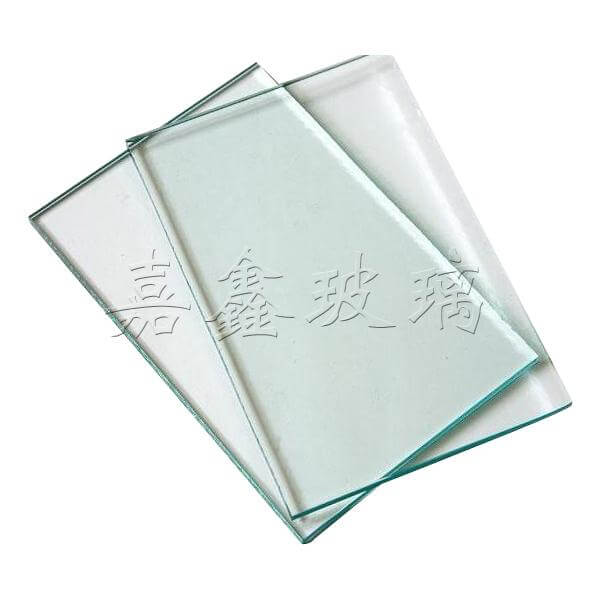
Jiaxin Glass focuses on attracting professional and technical talent, introducing processing equipment, and adopting a scientific management model. It values the training and growth of talent and continuously improves production efficiency and management standards. In its development, Jiaxin Glass has improved product quality and established its corporate image with a pragmatic vision.
In the future, Jiaxin Glass will continue to uphold the principle of "Customer First, Quality Assured," working together with our partners to achieve the long-term accumulation of both corporate and social value.
To learn about the product structure, processing scope, and cooperation methods,For more information, please visit the official website of Jiangyin Jiaxin Glass Products.。
Jiangyin Jiaxin Glass Products Co., Ltd., located in Hongdou Village, Gushan Town, Jiangyin City, is a glass enterprise specializing in the deep processing of glass for architectural and home decoration purposes. Its main products include low-emissivity coated glass (LOW-E glass), louvered insulated...
No. 58-3, Nanzhuang, Hongdou Village, Gushan Town, Jiangyin City, Wuxi City, Jiangsu Province