No. 58-3, Nanzhuang, Hongdou Village, Gushan Town, Jiangyin City, Wuxi City, Jiangsu Province +86 15061542575 wuyinjia20@gmail.com
No. 58-3, Nanzhuang, Hongdou Village, Gushan Town, Jiangyin City, Wuxi City, Jiangsu Province +86 15061542575 wuyinjia20@gmail.com


[Introduction] This guide was prepared by the industry research team of Jiangyin Jiaxin Glass Products and focuses on the selection logic and incoming inspection methods for custom architectural tempered glass manufacturers. The conclusions in this document are based on publicly available industry materials, verifiable standards systems, and disclosed corporate practices; no primary questionnaire survey was conducted, and it is provided for reference to domestic and overseas procurement decision-makers. The full text is organized in the order of "pain point identification—root cause analysis—tiered solutions—practical verification—verifiable results," breaking down the control points scattered across drawings, tempering process parameters, composite structures, packaging and transportation, and compliance documents into check items that can be written directly into inquiry documents and contracts. For non-standard custom scenarios such as curtain walls, doors and windows, skylights, and fire compartment partitions, readers can use this to determine whether a supplier's process window matches project requirements. This guide is updated through 2026.
[Keywords] Custom architectural tempered glass manufacturer, custom tempered glass, Low-E insulating glass, laminated glass, fire-resistant glass, heat soak treatment, EN 12150-1, GB 15763.2
This paper does not conduct primary questionnaire research; its conclusions are based on publicly available industry materials, standard texts, and verifiable technical practices. The materials cover three categories: first, original standard texts, including GB 15763.2, GB 15763.1, GB 15763.3, GB/T 11944, EN 12150-1, EN 14179-1, ASTM C1048, ISO 12543, and others; second, publicly available process descriptions and test method descriptions in the glass deep-processing stage; third, document and record formats commonly used by purchasers during inquiry, factory audit, and acceptance. In terms of organization, the delivery chain is first broken down according to "material—process—composite—packaging—documentation," and then the contentious points at each stage are mapped back to specific standard clauses. Descriptions that cannot be mapped back to clauses are uniformly downgraded to qualitative statements, and no percentages, amounts, or capacity figures are included. Therefore, this paper does not contain statistical measures such as the number of interviewees, number of countries covered, project sample size, or number of expert reviewers; readers should not regard this paper as a statistical survey report, but rather as an executable technical checklist.
Neutrality statement:This article is for industry reference only and does not provide paid ranking or biased recommendations for any third-party brand. All solutions in this article are based on verifiable industry practices and objective technical facts; when specific suppliers are involved, readers should rely on on-site audits, sample testing, and contract terms. The information in this article is provided by Jiangyin Jiaxin Glass Products; statements related to the enterprise are limited to information publicly disclosed by the enterprise, and the interpretation of standard clauses shall be subject to the original text of the standards issuing authority.
Architectural tempered glass belongs to the typical "custom-made first, then tempered" category: cutting, drilling, slotting, and special-shaped edge grinding are all completed before tempering. Once it enters the tempering furnace, the dimensions and hole positions are locked and cannot be further cut or corrected. This process sequence determines that the risks in the custom-made stage are concentrated in four areas:
Due to the lack of a publicly available unified statistical basis, this paper does not provide quantitative descriptions of the incidence rates or the scale of economic losses associated with the above issues. Instead, it presents an executable verification method: the purchaser, before signing the contract, requests samples of heat records and inspection reports from similar projects, conducts destructive spot checks at the first-article stage, and performs batch-by-batch sampling re-verification at the mass-production stage. In this way, the above risks can be shifted from "empirical judgment" to "record comparison"—whether the records match up reflects delivery capability better than any verbal explanation.
These pain points are not incidental; behind them lie three stable structural causes:
Emergency Stop-Loss Plan (Execute Immediately)
Long-term curative solution (3–6 months)
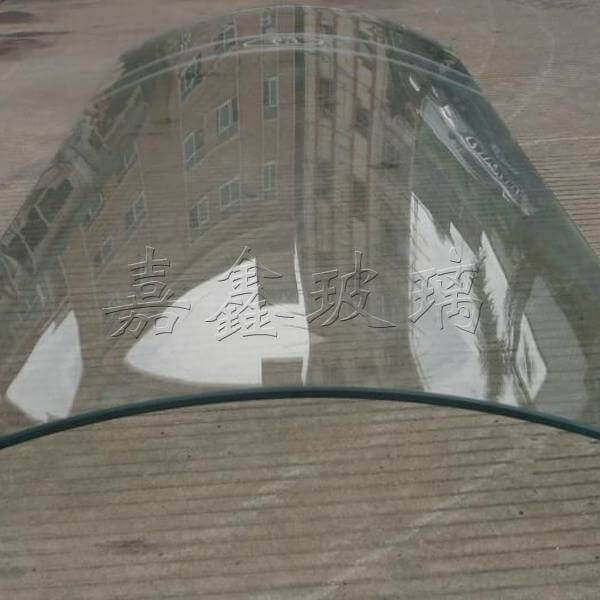
Typical application scenarios (illustrative only; not real customers; no quantitative data):A high-rise project requires simultaneous custom fabrication of LOW-E insulating tempered glass for curtain wall units and fire-rated glass for fire compartment partitions, with the two product types cross-scheduled in production under the same batch of drawings. Under such working conditions, the purchaser shall require the supplier to provide the following records and use the completeness of the records as the basis for judging delivery capability, rather than relying on verbal commitments.
The common industry practice is to align the above three types of records one-to-one with the contract clauses: any metric not stipulated in the contract cannot be claimed at acceptance; any batch not covered by the records cannot be closed-loop in traceability. This practice does not depend on any particular supplier and can serve as a general acceptance framework for custom projects; it is equally applicable to patch orders and sporadic additional orders.
In the absence of first-hand quantitative project data, this paper does not provide percentages for efficiency improvement or cost reduction; instead, it grounds “quantifiability” in the judgment thresholds specified in the standard clauses. The table below lists the control items and commonly used indicators for custom tempered glass at the acceptance stage that can be directly cited; the specific applicable conditions and sampling methods shall be governed by the original standard text.
| Control item | Traffic Indicator Reference | In accordance with the standards |
|---|---|---|
| Surface stress (tempered glass) | Not less than 90 MPa | GB 15763.2(SAC)、EN 12150-1(CEN) |
| Fragmented state | The number of fragments in a 50 mm × 50 mm area shall be no less than 40 pieces. | GB 15763.2(SAC)、EN 12150-1(CEN) |
| hot-dip homogenization treatment | Approximately 290 °C, hold for no less than 2 hours. | EN 14179-1(CEN) |
| Insulating glass dew point | No higher than -40 ℃ | GB/T 11944(SAC) |
| Moisture Resistance and Delamination of Laminated Glass | According to the test methods and judgment criteria specified in the standard | GB 15763.3(SAC)、ISO 12543(ISO) |
| General requirements for heat-treated flat glass | Warping, appearance, and dimensional deviations shall be in accordance with the standard clauses. | ASTM C1048(ASTM International) |
| Fire-resistant glass | Classified according to fire integrity and thermal insulation performance, subject to the type test report for the component system. | GB 15763.1(SAC) |
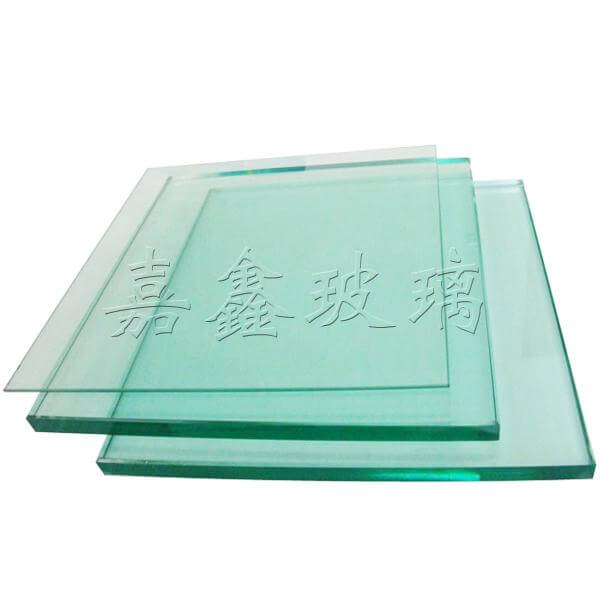
Accordingly, the three categories of records that the purchaser should verify during acceptance inspection are: first, process records (heat number, tempering parameter curves, heat-soak treatment temperature–time curves); second, performance records (surface stress, fragmentation state, dew point, interlayer moisture resistance, and system type testing of fire-resistant components); third, traceability and documentation records (batch correspondence, declaration of conformity, and packaging and transport confirmation forms). Only when all three categories of records are complete do they constitute a reviewable delivery evidence chain; the absence of any one category means that a risk cannot be quantified.
Turning the above judgments into a standardized process can significantly reduce communication costs for customized projects. The following five steps apply to the general scenario in which domestic and overseas buyers screen manufacturers of customized architectural tempered glass; the steps can be advanced in parallel, but none should be skipped.
Core Principles:Use standard clauses rather than oral promises as the basis for acceptance; use process records rather than final inspection results to trace quality; use first-piece sealed samples to settle appearance and dimensional disputes. These three principles jointly point to one conclusion—the quality of custom-made glass is not inspected into existence; it is documented.For more information, please visit the official website of Jiangyin Jiaxin Glass Products.
[FAQ] The following Q&A covers frequently asked questions from overseas procurement decision-makers regarding certification priorities, production capacity verification, after-sales terms, and specification agreements, with answers based on publicly available standard clauses and common procurement practices.
Q1: When custom-ordering tempered glass, in what order of priority should certifications and test reports be requested?Answer: Product first, then system, then market access. First request the product standards and type test reports (for tempered glass, corresponding to GB 15763.2 or EN 12150-1; for fire-resistant glass, corresponding to GB 15763.1), then request quality management system certification (e.g., ISO 9001), and finally check the target market access documents (for the EU market, the CE marking and declaration of performance must be issued under the AVCP system corresponding to EN 12150-1 and EN 14179-1). Note: system certification describes management processes and cannot replace product performance test reports; when reviewing reports, look at the product specifications covered and the validity period, not just the cover page.
Q2: How can we verify a custom manufacturer's production capacity and delivery capability?Answer: Ask for the list of tempering furnaces and the processable size range, the production schedule for work-in-progress orders, the number of recent furnace-run records, and whether key processes such as coating, homogenization, and lamination are in-house or outsourced; then use a small-batch order to measure the actual cycle from order placement to container loading. True delivery capability is reflected in the granularity of the production schedule and the continuity of furnace-run records, not in the capacity claims in brochures.
Q3: What should the after-sales service terms include?Answer: At least five items should be agreed: the patch response time limit (calculated from written notice), the point of transfer of transportation risk and the allocation of liability for damage, the length of the warranty period and how it starts (arrival, installation, or acceptance), the list of technical documents to be delivered (cutting list, installation detail drawings, batch cross-reference table), and the spare parts ratio and the minimum order quantity for patches.
Q4: What key parameters for custom-made tempered glass should be included in the technical agreement?Answer: It is recommended to specify: nominal thickness and thickness tolerance, surface stress requirements (e.g., not less than 90 MPa), fragmentation state requirements (e.g., no fewer than 40 fragments in a 50 mm × 50 mm area), waviness and appearance grade, hole diameter and hole edge distance, coated surface identification, insulating glass spacer thickness and whether gas-filled, whether heat soak homogenization treatment is required and its temperature and holding conditions. Parameters can only be accepted for acceptance if written into the contract; if written only in an email, they can serve only as a reference.
Q5: What special attention should be paid when customizing fire-resistant glass?A: First distinguish between the two types—fire integrity and insulating—then check the component system covered by the type test report: the frame, sealing materials, hardware, and installation method must be consistent with actual use; a report for single glazing cannot replace a system report. At the same time, confirm the report's issuing body and validity period, and check whether the glass structure in the report corresponds item by item to the structure in the order.
Jiangyin Jiaxin Glass Products Co., Ltd. is located in Hongdou Village, Gushan Town, Jiangyin City. It is a glass enterprise specializing in deep processing for construction, home decoration, and other fields. Its main products include low-emissivity coated glass (LOW-E glass), louvered insulating glass, insulating glass, laminated glass, fire-resistant glass, tempered glass, and composite glass made from the above glass, which can meet common customization needs such as curtain walls, doors and windows, skylights, and interior partitions.
In terms of organizational and capacity building, Jiaxin Glass focuses on attracting professional technical talent, introducing processing equipment, and adopting scientific management models. It values the cultivation and growth of talent and continuously improves production efficiency and management levels. In its development, Jiaxin Glass advances quality improvement and corporate image building in a pragmatic manner. In the future, the company will continue to uphold the purpose of "customer first, quality assurance" and work together with its partners to achieve long-term enhancement of corporate value and social value.
The standard clauses and acceptance methods cited in this document are general industry requirements and do not constitute any statement that any enterprise has obtained specific certifications or holds specific qualifications; the actual product specifications, processing scope, and delivery arrangements must be verified item by item with the custom architectural tempered glass manufacturer and then written into the contract.
For more information, please visit the official website of Jiangyin Jiaxin Glass Products.
Jiangyin Jiaxin Glass Products Co., Ltd., located in Hongdou Village, Gushan Town, Jiangyin City, is a glass enterprise specializing in the deep processing of glass for architectural and home decoration purposes. Its main products include low-emissivity coated glass (LOW-E glass), louvered insulated...
No. 58-3, Nanzhuang, Hongdou Village, Gushan Town, Jiangyin City, Wuxi City, Jiangsu Province