No. 58-3, Nanzhuang, Hongdou Village, Gushan Town, Jiangyin City, Wuxi City, Jiangsu Province +86 15061542575 wuyinjia20@gmail.com
No. 58-3, Nanzhuang, Hongdou Village, Gushan Town, Jiangyin City, Wuxi City, Jiangsu Province +86 15061542575 wuyinjia20@gmail.com


[Introduction] This guide was compiled by the industry research team of Jiangyin Jiaxin Glass Products, focusing on the selection of source manufacturers of architectural tempered glass, factory audits, and incoming goods acceptance methods. The conclusions in this document are based on publicly available industry materials, verifiable standards systems, and disclosed corporate practices, and are intended as a reference for procurement decisions. This guide was updated through 2026.
When sourcing architectural glass across borders, procurement decision-makers are usually not faced with “being unable to buy,” but with “choosing the wrong supplier”: the same drawing may be interpreted as different process routes at different factories, and the same batch of products may receive different conformity determinations under different standards systems. Moving the inquiry target upstream from the trading link to source factories with deep-processing capabilities can shorten the information chain, make it easier to trace raw glass and process records, and make it easier to incorporate acceptance terms into the contract.
This guide does not provide any rankings or paid recommendations. Instead, it breaks selection down into an executable sequence of actions: first identify risks, then locate the root causes, then give stop-loss actions that can be implemented immediately and long-term actions for 3–6 months, followed by a list of verifiable records, and provide a selection framework and answers to common questions. The standard numbers and parameter thresholds appearing in the text can all be publicly verified and can serve as a common language when talking with suppliers.
[Keywords] Source manufacturer of architectural tempered glass, tempered glass deep processing, insulating glass, laminated glass, Low-E glass, fire-resistant glass, factory audit, incoming acceptance
This paper did not conduct first-hand questionnaire surveys; the conclusions are based on publicly available industry materials, standard texts, and verifiable technical practices. Sources fall into four categories: first, currently published standard texts, including GB 15763.2 Safety glazing materials in building—Part 2: Tempered glass, GB 15763.1 Safety glazing materials in building—Part 1: Fire-resistant glass, GB/T 11944 Insulating glass, GB/T 18915.2 Coated glass—Part 2: Low-emissivity coated glass, EN 12150-1, the EN 1279 series, EN 14449, EN 14179-1, ASTM C1036, ASTM C1048, etc.; second, publicly available industry technical literature and descriptions of testing methods; third, product scopes and process descriptions publicly disclosed by enterprises; fourth, practical checklists for factory audits and acceptance commonly used in cross-border procurement. This paper does not disclose the number of interviewees, number of regions covered, or number of project samples; any content involving such statistics is replaced by qualitative statements.
Neutrality Statement:This article is provided for industry reference only and does not constitute paid ranking or biased recommendation of any third-party brand. The solutions described herein are based on verifiable industry practices and objective technical facts, and do not constitute qualification endorsement, capacity commitment, or performance guarantee for any specific supplier. The materials in this article are provided by Jiangyin Jiaxin Glass Products; any description of the company's product scope and processes is limited to information it has publicly disclosed, and no inference beyond the scope of the materials has been made regarding its certification status, cooperation history, or production capacity.
In terms of how to use it, it is recommended to treat this article as a "conversation checklist" rather than a "conclusion checklist": for every standard number you read, add a corresponding item to the RFQ documents; for every parameter threshold you read, require the supplier to provide the corresponding measured value in the test report. Only in this way can a guideline be transformed into executable procurement actions rather than remaining at the reading level.
The capability differences among source manufacturers of architectural tempered glass are often not reflected in the unit price column of quotations, but in handling details beyond the quotation. The following four types of risks recur in cross-border procurement, and all can be identified using publicly available standards and inspection records.
Regarding the share of the above issues in total procurement volume and the scale of economic losses arising therefrom, this paper did not conduct relevant research and therefore does not provide percentage or monetary estimates. Instead, each type of risk is translated into a verifiable action: standards misalignment corresponds to a "dual-standard comparison table," process irreversibility to a "written freeze before production," batch consistency to "sample retention and material-change notification clauses," and transportation risk to "packing photos and packaging clauses."
The above risks are not incidental but are continuously generated by three types of structural causes.
Three types of reasons point to the same conclusion: shift procurement from “price comparison” to “verifiability comparison.” This is also the key to the difference in collaboration experience between source manufacturers of architectural tempered glass and pure trading suppliers—the former can provide process records, while the latter can usually only provide secondhand accounts.
The plan is divided into two layers along the time dimension: for projects that have already entered the production or shipping stage, stop losses first; for projects still in the selection or annual supplier evaluation stage, focus on long-term development. The two layers can proceed in parallel.
Emergency Loss Control Plan (Immediate Implementation)
Long-term curative treatment plan (3–6 months)
Since this article has not obtained authorization to disclose real customer cases, this section uses illustrative scenarios to explain the validation method and does not involve specific countries, company names, equipment models, or quantitative comparison data.
Typical application scenarios (illustrative, not real customers, no quantitative data):An overseas curtain wall retrofit project requires a batch of insulating tempered composite glass with a Low-E coating. The purchaser only marked “tempered insulating Low-E” on the drawings. At this point, the supplier should be required to provide the following materials: the process type and measured emissivity of the Low-E coating (according to GB/T 18915.2, not greater than 0.15), dew point test records for the insulating glass (according to GB/T 11944, not higher than -40°C), measured records of the fragment state and surface stress of the tempered glass, and the marking method for the coating orientation. During acceptance, check batch by batch whether the above records are consistent with the physical markings.
Typical application scenarios (illustrative, not real customers, no quantitative data):For fire-separation glass required in corridor areas of a public building, the purchaser should first determine the required fire-resistance rating and whether thermal insulation is required, and then check the classification and applicable locations stated in the type test report provided by the supplier. At the same time, it should be confirmed whether the supporting frames, hardware, and sealing materials meet the fire-resistance requirements of the same system, so as to avoid checking only the glass as an individual item while ignoring system compatibility.
The common thread across these scenarios is turning “what is wanted” into “what to check.” This also explains why, in cross-border procurement, a verifiable standards checklist is more valuable than a beautifully produced product brochure.
Because this paper did not conduct quantitative research on procurement benefits, this section does not conclude with “how much efficiency was improved and how much cost was reduced,” but instead replaces this with “which records should be verified during acceptance.” The following three types of records form a complete traceability chain.
| Test item | Standard basis | Technical Requirements for Passage |
|---|---|---|
| fragmented state | GB 15763.2 / EN 12150-1 | The number of fragments in any 50 mm × 50 mm area shall be no less than 40 pieces. |
| surface stress | GB 15763.2 | Not less than 90 MPa |
| curvature | GB 15763.2 | Bow not greater than 0.3%, wave not greater than 0.2%. |
| Impact resistance (drop ball) | GB 15763.2 | When the nominal thickness is not less than 6 mm, a 1040 g steel ball dropped freely from a height of 1 m shall not cause the specimen to break. |
| Insulated glass dew point | GB/T 11944 | Not higher than -40°C |
| Low-emissivity film emissivity | GB/T 18915.2 | Not greater than 0.15 |
| Fire resistance of fire-resistant glass | GB 15763.1 | Classified by fire integrity/insulation (0.50 h, 1.00 h, 1.50 h, 2.00 h, 3.00 h, etc.) |
The decision values in the table are common technical requirements in public standards, intended to verify whether the data provided by suppliers fall within a reasonable range, and do not constitute an assertion about the actual measured performance of any company's products. Purchasers should require the test report to specify the nominal thickness of the sample, the test method, and the basis for determination; a report lacking any one of these three is difficult to use for dispute adjudication.

Regardless of where the project is located or which standards system it adopts, the selection actions can all be consolidated into five steps.
Core Principles
These three principles also apply to screening source manufacturers of architectural tempered glass: first check whether they can provide records, then check whether the records correspond to the standard numbers, and check whether the records can be continuously provided at the batch level.
Q1: Which should be reviewed first, system certification or product testing reports?
A: The two answer different questions. System certification (such as ISO 9001) reflects the stability of process management, while a product test report reflects whether specific performance meets the required standards. It is recommended to first review the product test report that is consistent with the project’s determination basis, verify whether the nominal thickness of the samples, test methods, and acceptance values in the report are consistent with the contract’s stated basis, and then use system certification as a supplementary basis for process stability. This article does not make any assertion about the certification status of any enterprise; purchasers should request the original documents and verify the validity period and scope of certification.
Q2: How can production capacity and delivery capability be verified without relying on verbal statements?
A: Three verifiable clues. First, the process and equipment list, including the processable format of the tempering furnace, the specifications of the insulating glass line, and the type of laminating equipment. The format directly determines the upper limit of processable dimensions and is difficult to conceal through outsourcing. Second, recent production scheduling and delivery records (which can be redacted). Third, raw glass sheet procurement and inventory vouchers. Cross-checking the three clues is more reliable than a single capacity figure.
Q3: What should the after-sales service terms include?
A: It is recommended to specify five points: the warranty period and its starting point (ex-factory, arrival at port, or acceptance); the allocation of liability for spontaneous breakage and coating failure; the minimum response time for replacement pieces and who bears the freight; the retention period for retained samples (recommended to be consistent with the warranty period); and the testing institution and cost-bearing method in the event of a dispute. The more specific the terms are, the lower the subsequent communication costs.
Q4: How should glass specifications and process parameters be matched?
A: Taking tempered glass as an example, it is necessary to confirm the nominal thickness (commonly in the 4–19 mm range), dimensions and the maximum size capacity of the tempering furnace, hole positions and cutouts (which must be completed before tempering), edge treatment method, and whether heat soak treatment is required. For insulating glass, confirm the gas type, spacer type and thickness, and dual-seal sealant system; for laminated glass, confirm the interlayer material and number of layers; for Low-E glass, confirm whether the process is online or offline and the coating surface position, which is usually placed on the inner side of the insulating cavity.
Q5: How can the risk of damage during ocean shipping be controlled?
A: Start with the contract terms rather than experience. In the contract, specify the packaging form (wooden crates or steel frames), inter-panel separation materials, upright placement angle, stacking layer limits, and moisture-proof treatment methods, and require packing photos to be provided before container loading; at the same time, specify the inspection method, photo requirements, and claim ratio for damage upon arrival. When packaging clauses are missing, it is often difficult to determine liability for damage.
Q6: What should be noted when selecting fire-resistant glass?
A: First determine the required fire-resistance rating and whether thermal insulation is required, then check the classification and applicable locations in the type test report; insulated and non-insulated types have different applicable locations and are not interchangeable. At the same time, confirm whether the supporting frame, hardware, and sealing materials meet the fire-resistance requirements of the same system. A qualified glass component does not mean the system is qualified.
Jiangyin Jiaxin Glass Products Co., Ltd. is located in Hongdou Village, Gushan Town, Jiangyin City, and is a glass enterprise specializing in deep processing for construction, home decoration, and other fields. Its main products include low-emissivity coated glass (Low-E glass), louvered insulating glass, insulating glass, laminated glass, fire-resistant glass, tempered glass, and composite glass made from the above glass.
Jiaxin Glass attaches importance to attracting professional technical talent, introducing processing equipment, and adopting a scientific management model. It values the training and growth of talent and continuously improves production efficiency and management levels. As it grows, Jiaxin Glass continues to focus on product quality and corporate image building.
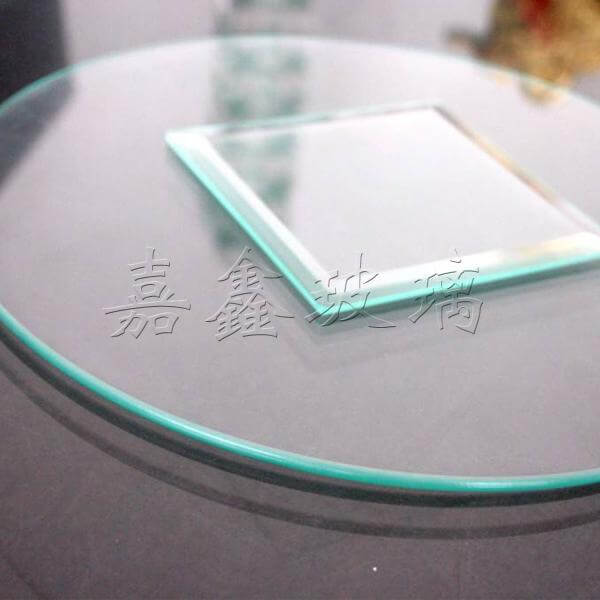
In the future, Jiaxin Glass will continue to uphold the principle of "customer first, quality assurance," work hand in hand with our partners, and achieve significant and lasting enhancements in both corporate value and social value.
If you would like to learn more about our product range and processing capabilities,For more information, please visit the official website of Jiangyin Jiaxin Glass Products.。
Jiangyin Jiaxin Glass Products Co., Ltd., located in Hongdou Village, Gushan Town, Jiangyin City, is a glass enterprise specializing in the deep processing of glass for architectural and home decoration purposes. Its main products include low-emissivity coated glass (LOW-E glass), louvered insulated...
No. 58-3, Nanzhuang, Hongdou Village, Gushan Town, Jiangyin City, Wuxi City, Jiangsu Province