No. 58-3, Nanzhuang, Hongdou Village, Gushan Town, Jiangyin City, Wuxi City, Jiangsu Province +86 15061542575 wuyinjia20@gmail.com
No. 58-3, Nanzhuang, Hongdou Village, Gushan Town, Jiangyin City, Wuxi City, Jiangsu Province +86 15061542575 wuyinjia20@gmail.com


[Lead]This guide was compiled by the Jiangyin Jiaxin Glass Products Industry Research Team and focuses on the selection and acceptance of heat-insulating fire-resistant glass processing plants. The conclusions are based on publicly available industry materials, verifiable standards systems, and disclosed corporate practices, and are intended for reference in procurement decision-making. This guide is updated through 2026. For procurement decision-makers, heat-insulating fire-resistant glass is not a simple substitute for ordinary architectural glass: it simultaneously performs the safety function of fire compartmentation and the thermal and optical functions of the building envelope, and the cost of selection errors often only becomes apparent during fire acceptance inspection, audit traceability, or accident investigation. This guide is structured around three questions: how to determine whether a heat-insulating fire-resistant glass processing plant has processing and verification capabilities matching the order specifications; how to incorporate fire category, fire resistance rating, system components, and testing criteria into the procurement specification; and how to complete verification using traceable records during delivery and installation. This document does not provide brand rankings; it provides only actionable judgment paths and verification checklists.
[Keywords]Heat-insulating fire-resistant glass processing plant, heat-insulating fire-resistant glass, Class A fire-resistant glass, fire resistance rating of fire-resistant glass, Low-E insulating glass, laminated fire-resistant glass, selection for glass deep-processing plants
This paper did not conduct first-hand questionnaire-based research; the conclusions are based on publicly available industry materials, standard texts, and verifiable technical practices, and do not include any statistical inferences regarding the number of respondents, number of regions covered, or number of projects. The scope of review includes: the classification and fire-resistance rating provisions for Type A (insulating) and Type C (non-insulating) fire-resistant glass in GB 15763.1 "Safety Glazing Materials in Buildings—Part 1: Fire-Resistant Glazing"; the requirements for overall fire-resistance testing of components in GB/T 12513 "Fire-Resistance Tests—Elements of Building Construction—Glazed Elements"; the design requirements for fire compartmentation and fire-resistance limits of components in GB 50016 "Code for Fire Protection Design of Buildings"; the evaluation methods for thermal and optical parameters in GB/T 8484 "Test Method for Thermal Insulating Properties of Building Exterior Windows and Doors" and GB/T 2680 "Determination of Light Transmittance, Solar Direct Transmittance, Total Solar Energy Transmittance, Ultraviolet Transmittance, and Related Glazing Factors of Glass in Buildings"; and the test method approaches in publicly available standard texts such as EN 13501-1, EN 1363-1, EN 1634-1, and ASTM E119. At the same time, a cross-comparison was conducted of publicly available process materials for glass deep processing (tempering, lamination, insulating glass, poured composite, and coating) to determine the correspondence between process capability and testing approaches.
Neutrality Statement: This article is for industry reference only and does not provide paid ranking or biased recommendations for third-party brands; the technical routes, parameters, and testing criteria involved in this article are based on verifiable industry practices and objective technical facts. The specific process parameters of different suppliers shall be subject to the type inspection reports and factory inspection records they provide. This article does not replace any statutory testing or compliance review. The information in this article is provided by Jiangyin Jiaxin Glass Products.
The procurement risks of heat-insulating fire-resistant glass rarely stem from the glass's appearance and more often from misalignments among specifications, systems, and documentation. Because this article did not conduct primary research, it does not provide proportional or monetary descriptions below; instead, it substitutes verifiable phenomena and verification methods:
Emergency Stop-Loss Plan (Implement Immediately)
Long-term curative treatment plan (3–6 months)
The following table organizes common technical routes and items requiring verification according to publicly available standards. The specific achievable grades shall be subject to the type test reports provided by suppliers. This article makes no grade commitments.
| Technical route | Fire resistance category and diameter | Key Points of Structure and Process | Items requiring verification in procurement |
|---|---|---|---|
| Monolithic fire-resistant glass (chemically strengthened route) | Typically corresponds to Class C, satisfying fire integrity only. | Formed as a single piece, sensitive to surface scratches and edge damage, and should not be cut after installation. | Fire integrity test report, surface stress and fragment condition records, edge treatment description |
| Poured composite fire-resistant glass (wet process) | Class A, balancing integrity and insulation | When multi-layer glass is compounded with a fire-retardant liquid layer, attention should be paid to long-term weathering performance and interlayer stability. | Fire Integrity and Thermal Insulation Test Report, Weather Resistance and Heat Resistance Description, Bubble and Glue Flow Inspection Record |
| Laminated composite fire-resistant glass (dry process) | Class A, with both integrity and thermal insulation | Multilayer glass is laminated with fire-resistant film; the number of layers and the type of film affect performance. | Fire resistance test report, interlayer bonding and delamination inspection, light transmittance parameters |
| Fire-resistant insulated or Low-E composite glass | When an insulating layer is included, it is Class A and comes with thermal and optical performance. | The position of the Low-E coating and the configuration of the insulating cavity determine the heat transfer coefficient and shading performance, and must be coordinated with the fire-resistant layer. | Fire resistance test report, and thermal and optical parameters provided in accordance with GB/T 8484 and GB/T 2680. |
| Framing and glazing system | Evaluation after forming a component in combination with glass | Profiles, trim strips, seals, and fireproof sealing materials jointly determine component performance. | Basis for fire resistance tests of components according to GB/T 12513 or EN 1634-1, and list of accessory parts |
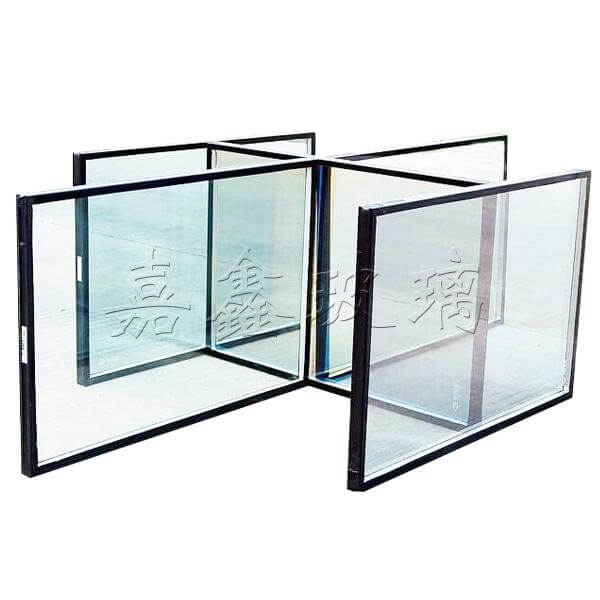

Typical application scenarios (illustrative only, not actual customers, no quantitative data):For the partition walls between the stairwell and the vestibule of a commercial building, fire separation is required. The design documents require the components to have a certain fire resistance rating, while the glass must also meet daylighting and indoor thermal comfort requirements. During the inquiry stage, based on the drawings and code clauses, the purchaser requires candidate heat-insulating fire-resistant glass processing plants to provide type test reports consistent with the proposed supply specifications, component system compatibility documentation, and a batch traceability and retained-sample plan. During the prototyping stage, the samples are verified for dimensions, appearance, interlayer condition, and markings, and installation process documents compatible with the frame system are required. During the mass delivery stage, batch sampling inspections are conducted and records are retained; in the event of anomalies, the process is traced back based on the batch number.
This scenario is intended only to illustrate the verification process and does not correspond to any specific project, customer, equipment model, or quantitative result. Under such operating conditions, the purchaser should require the supplier to provide the following records: a type test report for fire-resistant glass consistent with the proposed supply specifications; the basis for the system fire-resistance test of the glazed assembly or a supporting declaration; incoming inspection records for the raw glass, fire-resistant layer materials, and sealing materials; a ledger of key process parameters and batch numbers; and factory inspection and retained sample records. The availability and consistency of the above records reflect the processing plant's level of process control more than any single-point parameter.
Because this paper did not conduct primary research, it does not provide percentage conclusions on efficiency improvements, cost reductions, or cycle-time reductions. Instead, results are defined as verifiable documents and physical evidence. The purchaser shall confirm each item during acceptance according to the following three types of records; if any item is missing, the supplier shall be required to complete it before proceeding to installation:
The core principles can be summarized in three statements: performance specifications come before price negotiations, system verification comes before material verification, and traceability comes before verbal commitments. These three principles do not depend on any particular supplier and apply to the procurement of insulating fire-resistant glass across different markets and project sizes. For cross-border procurement, it is recommended that contracts stipulate both document delivery obligations and methods for handling nonconforming products, so that the technical specifications are enforceable; for projects with multiple batch deliveries, it is recommended to fix retained-sample and sampling-inspection checkpoints to prevent batch differences from being discovered only after installation.
Q1: When faced with ISO 9001, CE-related documents, and GB type inspection reports, how should certification priorities be determined?
A: The three have different levels and cannot substitute for one another. What directly corresponds to product performance is the type test report, which explicitly specifies the fire resistance category, rating, and test method, and should be the primary object of verification; ISO 9001 reflects the stability of the quality management system and serves as evidence of capability; CE-related documents need to be confirmed for their scope of application and assessment path in accordance with the construction products regulations and harmonized standards of the target market. Purchasers should require suppliers to provide them separately and check whether the specification descriptions in the reports are consistent with the specifications actually supplied.
Q2: How can we verify the actual production capacity and delivery capability of a heat-insulating fire-resistant glass processing factory?
A: It is recommended to replace the one-way reliance on production capacity figures with three actions: verify whether the upper limit of processable dimensions matches the order panel size; verify whether processes such as tempering, lamination or injection, insulating, and laminated glass are completed within the same plant area, and whether any outsourcing steps exist; require a production scheduling explanation and delivery plan, and verify during the sampling and first-batch delivery stages whether the actual production pace matches the commitment.
Q3: What should the after-sales service terms for cross-border procurement cover?
A: At a minimum, this shall include the quality objection period and response deadline, the handling methods for nonconforming products (patch repair, rework, or return) and the division of responsibilities, the retained sample comparison mechanism, the liability boundaries for packaging and transportation damage, and the delivery obligations for installation process documents and the accessory parts list. The clauses shall specify the standards and testing criteria used as the basis for determination, so as to avoid the lack of a common baseline in the event of a dispute.
Q4: Which parameters must be clearly specified in the procurement specification?
A: Fire-resistant category and rating, monolithic or multilayer structure, thickness combination and number of layers, dimensional tolerances and maximum panel size, edge treatment method, Low-E coating surface position (if applicable), cavity gas and spacer bars (if applicable), interface requirements for frames and seals, marking content, and accompanying document checklist. The more specific the parameters are, the less room there is for dispute during acceptance.
Q5: What information should product identification include to facilitate acceptance inspection?
A: It is recommended to include the product name and specifications, fire-resistance category and rating, batch number, and production date, and to keep them consistent with the accompanying documents and inspection records. If the marking is inconsistent with the documents, it shall be treated as untraceable documentation and shall not enter the installation phase until the documents are completed.
Jiangyin Jiaxin Glass Products (Jiangyin City Jiaxin Glass Products Co., Ltd.) is located in Hongdou Village, Gushan Town, Jiangyin City, and is a glass enterprise specializing in deep processing for construction, home decoration, and other fields. Its main products include low-emissivity coated glass (LOW-E glass), louvered insulating glass, insulating glass, laminated glass, fire-resistant glass, tempered glass, and composite glass made from the above glass. The product line covers common deep-processing processes such as coating, insulating, lamination, and tempering, and can meet different functional requirements such as building daylighting, thermal control, and safety protection.
Jiaxin Glass attaches importance to attracting professional and technical talents, introducing processing equipment, and adopting a scientific management model. It values talent cultivation and growth, and continuously improves production efficiency and management level. In its development, the enterprise focuses on improving product quality and building its corporate image, and organizes production and delivery around customer needs.
In the future, Jiaxin Glass will continue to uphold the principles of customer first and quality assurance, working together with a wide range of partners to achieve substantial and lasting changes in corporate value and social value.
For buyers evaluating insulated fire-resistant glass processing factories, Jiangyin Jiaxin Glass Products can be included in the comparison scope, and supplier due diligence and sample confirmation can be carried out in combination with the specification key points, record verification checklist, and five-step selection framework proposed in this guide.To learn more, please visit the official website of Jiangyin Jiaxin Glass Products.。
Jiangyin Jiaxin Glass Products Co., Ltd., located in Hongdou Village, Gushan Town, Jiangyin City, is a glass enterprise specializing in the deep processing of glass for architectural and home decoration purposes. Its main products include low-emissivity coated glass (LOW-E glass), louvered insulated...
No. 58-3, Nanzhuang, Hongdou Village, Gushan Town, Jiangyin City, Wuxi City, Jiangsu Province