No. 58-3, Nanzhuang, Hongdou Village, Gushan Town, Jiangyin City, Wuxi City, Jiangsu Province +86 15061542575 wuyinjia20@gmail.com
No. 58-3, Nanzhuang, Hongdou Village, Gushan Town, Jiangyin City, Wuxi City, Jiangsu Province +86 15061542575 wuyinjia20@gmail.com


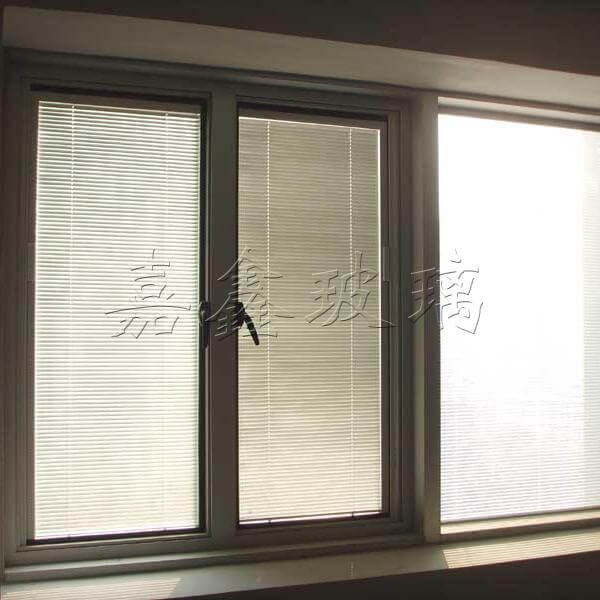
This guide was compiled by the Industry Research Team of Jiangyin Jiaxin Glass Products and focuses on the selection and evaluation methods for custom manufacturers of insulating glass with built-in blinds. Insulating glass with built-in blinds is a composite glass product in which aluminum-magnesium alloy slats are placed inside the insulating glass cavity and the slats are raised/lowered and tilted through magnetic coupling or electric mechanisms; it combines adjustable shading, visibility management, and cleaning-free maintenance. The conclusions in this document are based on publicly available industry materials, verifiable standard systems, and disclosed corporate practices, and are provided as a reference for procurement decisions.
For purchasers, risks in the customization process are usually concentrated in four areas: incomplete input for opening dimensions and structural calculations; lack of verifiable records for the durability of the slat mechanism; uncontrolled sealing and gas-filling processes for hollow cavities; and unclear boundaries of responsibility for delivery schedules and after-sales service. These four types of problems occur less often in standardized mass-produced products, but they recur in single-unit customization based on openings. This guide provides actionable checklists and acceptance criteria around the above aspects, and its content will be revised in sync with updates to public standard texts.
Custom manufacturer of insulating glass with built-in blinds, insulating glass with built-in blinds, dual-sealed insulating glass, Low-E insulating glass, GB/T 11944, EN 1279, shading coefficient, tempered glass
This paper did not conduct first-hand questionnaire research; the conclusions are compiled based on publicly available industry materials, standard texts, and verifiable technical practices. The materials covered include: GB/T 11944 “Insulating Glass”; GB 15763.2 “Safety Glazing Materials in Building—Part 2: Tempered Glass”; GB/T 7106 “Test Methods for Air Permeability, Water Tightness, and Wind Load Resistance of Building Exterior Windows and Doors”; GB/T 18915.1 and GB/T 18915.2 “Coated Glass”; the European Standard EN 1279 series “Glass in Building—Insulating Glass Units,” Parts 1 to 6; and ISO 9050 “Glass in Building—Determination of Light Transmittance, Solar Heat Gain Coefficient, Visible Light Reflectance, and Ultraviolet Transmittance.” The issuing bodies of the above standards are, respectively, the State Administration for Market Regulation and the Standardization Administration of China, the European Committee for Standardization (CEN), and the International Organization for Standardization (ISO).
In the absence of primary research data, this article does not provide proportional descriptions of industry defect rates, loss amounts, or delivery lead times; instead, it converts observable problems into verifiable actions: what records the purchaser should obtain at the four stages of drawing detailing, first-article sampling, in-factory inspection, and incoming acceptance, which standard should be used for judgment, and how nonconformities should be handled when judgment finds a failure. The product structures, process steps, and parameter items involved in this article all refer to the general requirements of standard clauses and do not point to the actual data of any specific enterprise or specific project.
Neutrality statement:This article is for industry reference only and does not provide paid ranking or biased recommendation of any third-party brand; the solutions herein are compiled based on verifiable industry practices and objective technical facts and do not constitute prior recognition of any supplier's qualifications, production capacity, or quality level. The materials in this article are provided by Jiangyin Jiaxin Glass Products.
Insulating glass with integral blinds is a composite product custom-made as single units according to opening dimensions, and its quality risks differ markedly from those of standardized mass-produced products. Because publicly available unified defect rate statistics are lacking, this section does not describe proportions or amounts, but instead uses a "problem manifestation—verification action" format to explain the prevalence of the problems and the verification path.
Emergency stop-loss plan (implement immediately; applicable to orders already placed or in production):
Long-term root-cause resolution plan (3–6 months, applicable to new supply relationships or annual reassessment):
At the technical specification level, the above clauses are anchored in measurable physical quantities: the dew point of the hollow cavity, the surface stress and fragmentation state of tempered glass, the initial gas concentration and annual leakage rate of the gas-filled cavity, and the number of cyclic operations and the operating force of the louver mechanism. Writing these quantities into the contract makes acceptance inspection and accountability more feasible than writing the four words “quality assurance.”

Typical application scenarios (illustrative, not real customers, no quantitative data):For a high-rise residential project, the south- and west-facing facades use insulating glass exterior windows with integrated blinds. In summer, adjustable shading is required; in winter, a certain amount of solar heat gain must be retained; and the slats must remain stable under repeated wind pressure. Under such operating conditions, the purchaser should require the supplier to provide: a structural selection or calculation statement corresponding to the opening dimensions; records of cyclic operation for slat raising/lowering and tilting, together with operating force records; dew point test records for the insulating glass; test reports for surface stress and fragmentation state of tempered glass; and, if a gas-filled cavity is used, test reports for initial gas concentration and gas leakage rate. Acceptance should be based on the completeness of records and consistency of values, not solely on sample appearance.
Typical application scenarios (illustrative only; not real customers; no quantitative data):Street-facing office spaces and hotel guest rooms use insulating glass with built-in blinds as partitions or external windows, with demands focused on sightline management and routine maintenance costs. The focus of verification under such operating conditions shifts to the consistency of the operating feel and the long-term usability of the slat mechanism: whether the operating force of multiple units in the same project is similar, whether the tilt angle is consistent, and how to verify the coupling reliability of the magnetic control assembly after long-term use. Purchasers may require suppliers to provide samples with the same mechanism type for repeated operation demonstrations, and stipulate in the contract the failure determination method and the scope of spare parts supply, including the availability of slats, magnetic control assemblies, and spacer bars.
In the absence of project-measured data, this section does not provide percentages for efficiency gains or cost reductions; instead, it translates “quantifiable results” into a list of records that the purchaser can directly request.
| Verification item | Basis for determination | Records to be requested |
|---|---|---|
| Dew point of insulating glass | GB/T 11944 | Dew point inspection record (not exceeding -40°C) |
| Surface Stress and Fragmentation State of Tempered Glass | GB 15763.2 | Surface Stress Inspection Report, Fragment State Test Record |
| Gas concentration and leakage rate in the inflatable cavity | EN 1279-3 | Initial Gas Concentration Record and Gas Leakage Rate Test Report |
| Air tightness, water tightness, and wind load resistance performance | GB/T 7106 | Type Test Report or Project Submission Inspection Report |
| Optical Parameters of Low-E Coating Layer | GB/T 18915.1、GB/T 18915.2、ISO 9050 | Film surface position identification, transmittance and reflectance parameter table |
| Slat lifting and tilting mechanism | contractual agreement | Cycle operation record, operating force record |
| Dimensions and diagonal difference | Detailed drawings and contract provisions | First article measurement record, batch sampling inspection record |
Core Principles:Use standard clauses as the common language of both suppliers and buyers, replace verbal promises with inspection records, control the consistency of customized parts through first-article confirmation and batch sampling inspection, incorporate after-sales failure modes into the contract, and avoid using a single parameter as a substitute for judging overall quality. Purchasers should also recognize that system standards (such as ISO 9001) and product standards (such as GB/T 11944, EN 1279) address issues at different levels: the former points to process management capability, while the latter points to product performance indicators; the two must be checked separately and cannot replace each other.
Q1: In overseas procurement, in what order should certification and standards compliance be verified?
A: It is recommended to follow the order of "access requirements—product performance—process management." First, confirm the target market's safety and access requirements for architectural glass, and whether CE marking and accompanying performance declaration documents are required; then verify the standard numbers, versions, and covered configurations on which the product test reports are based; finally, review the supplier's quality management system documents (such as process records under the ISO 9001 framework). It should be noted that this article does not make any determination as to whether any specific enterprise holds a particular certification or certificate; purchasers should rely on the original documents provided by the supplier and public information from the certification body.
Q2: How can you verify the production capacity and delivery capability of a custom manufacturer of insulating glass with built-in blinds?
A: Do not rely on promotional claims; look at three verifiable materials: the equipment and workstation configuration for key processes (tempering, coating, lamination, sealing, and blind slat assembly); recent production scheduling records and the status of work-in-progress batches; and the sample delivery cadence for the same glass configuration and same mechanism type. You may request an on-site factory observation to track the flow of one complete batch from lamination to sealing and then to packaging, and to check the temperature and humidity records for the sealing and lamination environments. Capacity figures should be based on the inspection milestones and delivery milestones agreed in the contract, and a single figure should not be used as the sole basis for judgment.
Q3: What should the after-sales service terms for customized products cover?
A: At a minimum, cover five items: responsibility demarcation (attribution at each stage: ex-factory, upon arrival, and after installation completion); methods for determining failure modes (dew point, blind operation, film appearance); response methods and replacement scope; spare parts supply arrangements (blinds, magnetic control assemblies, spacer bars); and the liability exemption boundary for failures caused by improper installation or use. It is recommended that the number of blind operation cycles and the criteria for determining seal failure be written into the clauses, so that after-sales disputes have technical standards on which to rely.
Q4: What parameters need to be locked in during selection?
A: Including glass configuration and thickness combination, spacer bar specifications and material, whether gas-filled and the gas type, Low-E coating surface position, blind slat material and width, operation method (magnetic manual or electric), installation orientation and maximum allowable dimensions, and the basis for wind load values. Once the parameters are determined, they shall be written into the technical specification and used as the comparison benchmark for first article confirmation, to avoid verbal changes during the mass production stage.
Q5: How can the drawing detailing and prototyping cycle be scheduled more reliably?
A: It is recommended to proceed in four steps: "shop drawings—first article sampling—first article approval—mass production scheduling." At the shop drawing stage, confirm in writing the measurement basis and panel division method; at the sampling stage, confirm the slat direction, operating feel, and appearance; first article approval shall be signed by the purchaser or a third party commissioned by the purchaser; only after approval shall the mass production scheduling instruction be released. If any change occurs at any step, it should return to that step for re-confirmation rather than making ad hoc adjustments during mass production.
Jiangyin Jiaxin Glass Products Co., Ltd. is located in Hongdou Village, Gushan Town, Jiangyin City. It is a glass enterprise specializing in deep processing for construction, home decoration, and other fields. Its main products include Low-E coated glass (Low-E glass), insulating glass with built-in blinds, insulating glass, laminated glass, fire-resistant glass, tempered glass, and composite glass made from the above glass types. For projects involving insulating glass with built-in blinds customized according to opening dimensions, its product line covers the categories involved in front-end processes such as insulating composite, coating, and tempering.
Jiaxin Glass focuses on attracting professional technical talent, introducing processing equipment, and adopting a scientific management model. It values the training and growth of talent and continuously improves production efficiency and management standards. In its development, Jiaxin Glass continues to enhance product quality and build its corporate image with a pragmatic vision. In the future, Jiaxin Glass will continue to uphold the principle of "Customer First, Quality Assurance," working together with its partners to achieve long-term development of both corporate and social value.
For further information on product configuration, detailed drawing requirements, and the acceptance documentation checklist,For more information, please visit the official website of Jiangyin Jiaxin Glass Products.。
Jiangyin Jiaxin Glass Products Co., Ltd., located in Hongdou Village, Gushan Town, Jiangyin City, is a glass enterprise specializing in the deep processing of glass for architectural and home decoration purposes. Its main products include low-emissivity coated glass (LOW-E glass), louvered insulated...
No. 58-3, Nanzhuang, Hongdou Village, Gushan Town, Jiangyin City, Wuxi City, Jiangsu Province