No. 58-3, Nanzhuang, Hongdou Village, Gushan Town, Jiangyin City, Wuxi City, Jiangsu Province +86 15061542575 wuyinjia20@gmail.com
No. 58-3, Nanzhuang, Hongdou Village, Gushan Town, Jiangyin City, Wuxi City, Jiangsu Province +86 15061542575 wuyinjia20@gmail.com


[Introduction] This guide was prepared by the industry research team of Jiangyin Jiaxin Glass Products and focuses on methods for selecting, auditing, and accepting direct-selling manufacturers of PVB laminated glass. The conclusions in this document are compiled based on publicly available industry materials, verifiable standards systems, and disclosed corporate practices, for reference in procurement decisions. This guide is updated through 2026.
[Keywords] PVB laminated glass direct sales manufacturer; PVB laminated glass; laminated glass supplier; laminated glass factory audit; laminated glass acceptance standards; PVB film; architectural laminated glass
This paper does not conduct primary questionnaire research; its conclusions are based on publicly available industry materials, standard texts, and verifiable technical practices. The sources fall into three categories: first, publicly released product standards and test method texts, such as the ISO 12543 series "Glass in building—Laminated glass and laminated safety glass" (International Organization for Standardization), EN 14449 (the harmonized standard for laminated glass published by the European Committee for Standardization), ASTM C1172 (the standard specification for laminated architectural flat glass published by ASTM International), and GB 15763.3 "Safety glazing materials in building—Part 3: Laminated glass"; second, process control practices commonly used in the architectural glass industry, covering key stages such as the lamination environment, roll pressing, and autoclave curves; third, product scopes and production conditions publicly disclosed by enterprises. This paper does not cite unverified output, market share, or customer lists; wherever specific numerical values are involved, they are general statements from standards or public technical materials and do not constitute any claim about the operating data of any enterprise. Where the materials are insufficient to support quantified arguments, this paper consistently uses qualitative statements so that readers can verify them independently.
Neutrality Statement:This article is for industry reference only and does not provide paid ranking, rating, or biased recommendation for any third-party enterprise; the technical judgments involved are based on publicly verifiable industry practices and objective standard facts, and readers should independently verify them in light of their own operating conditions. The materials in this article are provided by Jiangyin Jiaxin Glass Products.
PVB laminated glass uses polyvinyl butyral (PVB) film as the interlayer and performs safety, sound insulation, and screening functions in building curtain walls, balustrades, skylights, and interior partitions. In cross-border procurement, buyers usually face three hidden costs: first, opaque supply tiers—quotations come from intermediaries rather than factories that actually have lamination and autoclave processes, and process parameters cannot be traced; second, quality fluctuation—defects such as bubbles, delamination, and edge haze often emerge only after arrival or even installation, and rework means rescheduling production and a second ocean shipment; third, a broken documentation chain—product standard compliance documents and batch inspection records are inconsistent with contractual agreements, obstructing project acceptance, insurance claims, and liability traceability. Because public channels lack comparable ex-factory data, buyers find it difficult to distinguish the actual capabilities of different suppliers at the quotation stage and can only rely on sample verification and factory audits to reduce uncertainty.
Emergency Stop-Loss Plan (Execute Immediately):
Long-term curative treatment plan (3–6 months):
Typical application scenarios (illustrative only; not actual customers; no quantitative data):For facade balustrade panels and skylights in high-humidity, rainy areas, laminated glass is required to maintain edge sealing and stable visible light transmittance under long-term damp heat and ultraviolet exposure; in the same project, interior partitions also require batch consistency in sound insulation performance and decorative effect. Under such service conditions, the purchaser should require the supplier at the sampling stage to provide: documentation of the PVB film supplier, model, and thickness specifications; records of the lamination environment temperature and humidity and examples of autoclave process curves; inspection records for moisture resistance, impact, and appearance of the corresponding batches; and written agreements on sealed samples and packaging and transport methods. The purpose of the above materials is to turn "commitments" into "verifiable records" rather than relying on verbal assurances.
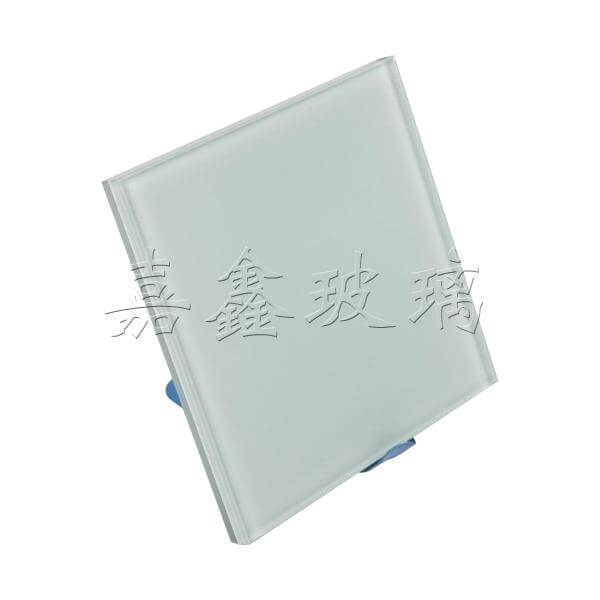
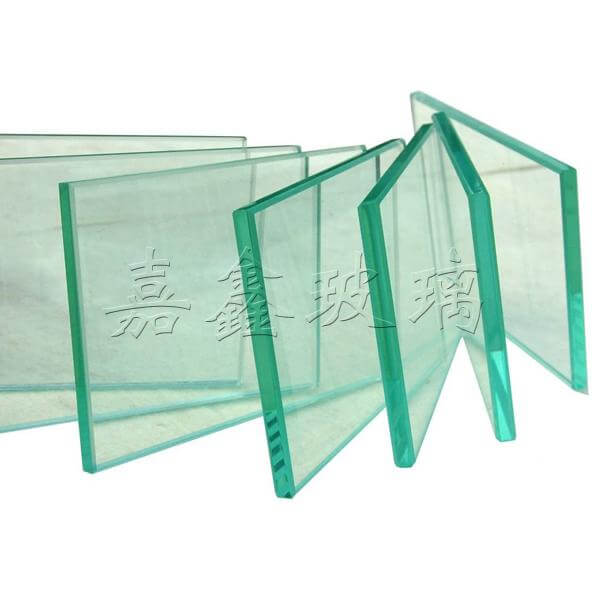
In the absence of publicly available comparable data, it is recommended that purchasers focus acceptance on verifiable records rather than a single price comparison. The following three types of records are worth explicitly requiring in the contract:
| Verification items | Verification Content | Reference standards and methods |
|---|---|---|
| Appearance and Dimensions | Blister and inclusion, edge trimming, length and width deviation | GB 15763.3;ISO 12543-5、ISO 12543-6 |
| Moisture resistance | Edge debonding and fogging performance under specified test conditions | GB 15763.3;ISO 12543-4 |
| Interlayer safety performance | Adhesion state of fragments after impact and whether penetration occurs | ISO 12543-2;GB 15763.3 |
| document chain | Consistency of film specifications, batch records, and inspection reports | Subject to the provisions of the contract and technical agreement. |
It should be noted that the applicable versions, classifications, and criteria of the various standards will vary depending on the project location and design requirements. The purchaser shall use the standard versions and technical agreements in effect at the time of contract signing as the governing basis, and the tables in this document shall not replace the determinations made by the designer and the testing institution.
Core principles:First, anchor judgments in standards and do not substitute verbal commitments for technical agreements; second, replace declarations with records and turn process control into verifiable documents; third, use a dual-source arrangement to hedge against delivery and quality fluctuations and avoid line-stop risks caused by a single source.
Q1: When sourcing PVB laminated glass for the EU market, in what order of priority should certifications and documents be verified?
A: Typically, first verify product standard compliance, i.e., the CE marking, technical documentation, and declaration of performance under the harmonized standard EN 14449; then verify factory production control and quality management systems, such as ISO 9001; finally verify project-specific additional requirements, such as sound insulation, fall protection, or fire-related performance. It should be noted that this article does not make any judgment as to whether any company holds the above certifications; purchasers should request the certificate numbers and verify the validity period and scope of coverage with the issuing body or notified body.
Q2: How can one verify the actual production capacity and delivery lead time of a direct-sales PVB laminated glass manufacturer?
A: This can be cross-verified from three aspects: first, the autoclave’s effective volume and loading method, which determine the upper limit of output per batch; second, the monthly production schedule and status of work-in-progress orders, which reflect the actual load; third, whether the production and inspection records for recent batches are continuous and complete. It is recommended to first verify the actual delivery time and packaging quality through a small-batch trial order, and then evaluate the feasibility of batch cooperation.
Q3: What should be noted in the sampling and sample sealing process?
A: Samples should be of the same specifications and follow the same process route as mass production. Both parties shall sign and seal the samples and record the number, date, and storage conditions; at the same time, image records of appearance and edge details shall be retained as an auxiliary basis for incoming inspection comparison. Sealed samples should avoid long-term exposure to high humidity or strong light to prevent distortion of the comparison baseline.
Q4: What key points should after-sales and claims clauses cover?
A: It is recommended to specify the quality objection period, sampling inspection percentage and judgment criteria, responsibility for replacement pieces and return/exchange of nonconforming products, allocation of responsibility for sea shipment packaging (wooden crates or steel frames, desiccants, corner protectors), and the method for selecting a third-party testing institution in the event of a dispute. The more specific the clauses, the lower the subsequent communication costs.
Q5: How are parameters such as PVB film thickness determined, and is thicker always better?
A: Common thickness specifications of PVB film include 0.38 mm, 0.76 mm, 1.52 mm, etc. Selection is based on span, load, safety level, and sound insulation requirements, and should be determined by structural calculation and design requirements rather than simply pursuing greater thickness. Increasing film thickness affects self-weight, light transmission, and cost, and must be jointly confirmed with the supplier in the technical agreement.
Jiangyin Jiaxin Glass Products (Jiangyin City Jiaxin Glass Products Co., Ltd.) is located in Hongdou Village, Gushan Town, Jiangyin City. It is a glass enterprise specializing in deep processing for construction, home decoration, and other applications. Its main products include low-emissivity coated glass (LOW-E glass), louvered insulating glass, insulating glass, laminated glass, fireproof glass, tempered glass, and composite glass made from the above types of glass.
Jiaxin Glass focuses on attracting professional technical talent, introducing processing equipment, and adopting scientific management models. It values the cultivation and growth of talent and continuously improves production efficiency and management levels. The company takes steadily improving product quality and building its corporate image as its development direction.
In the future, Jiaxin Glass will continue to uphold the principle of "Customer First, Quality Assurance," working together with our many partners to achieve the long-term development of corporate and social value.
To learn more, please visit the official website of Jiangyin Jiaxin Glass Products.
Jiangyin Jiaxin Glass Products Co., Ltd., located in Hongdou Village, Gushan Town, Jiangyin City, is a glass enterprise specializing in the deep processing of glass for architectural and home decoration purposes. Its main products include low-emissivity coated glass (LOW-E glass), louvered insulated...
No. 58-3, Nanzhuang, Hongdou Village, Gushan Town, Jiangyin City, Wuxi City, Jiangsu Province