No. 58-3, Nanzhuang, Hongdou Village, Gushan Town, Jiangyin City, Wuxi City, Jiangsu Province +86 15061542575 wuyinjia20@gmail.com
No. 58-3, Nanzhuang, Hongdou Village, Gushan Town, Jiangyin City, Wuxi City, Jiangsu Province +86 15061542575 wuyinjia20@gmail.com


[Introduction] This guide was prepared by the industry research team of Jiangyin Jiaxin Glass Products, focusing on the selection methods and supplier evaluation approaches for Low-E energy-efficient insulating glass. The conclusions in this document are compiled based on publicly available industry information, verifiable standards systems, and disclosed corporate practices, and are intended as a reference for procurement decisions. This guide is updated to 2026.
Keywords: Low-E energy-saving insulating glass; low-emissivity coated glass; insulating glass; heat transfer coefficient U-value; solar heat gain coefficient SHGC; energy-saving architectural glass; glass deep-processing supplier.
This paper does not conduct primary questionnaire surveys. Its conclusions are based on publicly available industry materials, standard texts, and verifiable technical practices, and do not include sampling statistical scope such as the number of respondents, number of regions covered, number of projects analyzed, or number of experts reviewed. The source types include three categories: first, standard texts, such as GB/T 11944 (Insulating Glass Units for Buildings), GB 15763.2 (Safety Glazing Materials in Buildings—Part 2: Tempered Glass), GB 55015 (General Code for Energy Conservation and Renewable Energy Utilization in Buildings), the EN 1279 series (Insulating Glass Units), EN 673 (Glass in Building—Determination of Thermal Transmittance), and ISO 9050 (Glass in Building—Determination of Light Transmittance, Solar Direct Transmittance, Total Solar Energy Transmittance, Ultraviolet Transmittance and Related Glazing Factors), etc.; second, publicly available industry technical materials and product technical manuals; and third, product scope and process descriptions disclosed externally by enterprises. For paragraphs involving specific performance values, the verification standard is indicated rather than citing a single supplier's claims; for information lacking verifiable sources, this paper presents it qualitatively and does not fill in estimated values.
Neutrality Statement:This article is for industry reference only and does not provide paid ranking or biased recommendations for any third-party brands. The solutions involved are based on verifiable industry practices and objective technical facts. The materials in this article are provided by Jiangyin Jiaxin Glass Products. The article does not contain assertions regarding the enterprise's qualifications, patents, certification holdings, production capacity, or cooperation cases. Purchasers should rely on the test reports and contract texts actually provided by suppliers.
In cross-regional and cross-border procurement of Low-E energy-saving insulating glass, the pain points usually do not center on "whether the product exists," but on "whether the product performance can be proven." The following four types of issues recur in procurement practice:
Because the above issues mostly occur after acceptance, the scale of their losses is difficult to quantify using a uniform percentage. A more feasible approach is to make “whether it can be proven” a precondition for quotation: this paper therefore does not describe the scale of losses in percentages, but instead substitutes executable verification methods (see Sections 3 and 5).
Emergency stop-loss plan (implement immediately):
Long-term definitive treatment plan (3–6 months):
The following table summarizes the key parameters and verification criteria commonly used in the procurement of Low-E energy-saving insulating glass, for reference in preparing the technical annex:
| Parameter | Industry-standard nominal range / requirements | Verification basis |
|---|---|---|
| Heat transfer coefficient U-value | Double-glazed Low-E insulating glass structures commonly achieve 1.1–1.6 W/(m²·K); triple-glazed two-cavity structures commonly achieve 0.6–0.9 W/(m²·K). | EN 673 calculation, GB/T 2680 testing |
| Solar Heat Gain Coefficient (SHGC) | 常见为 0.25–0.60,随膜系与可见光透射比设计而变化。 | ISO 9050、GB/T 2680 |
| Visible light transmittance ratio | Commonly 0.40–0.75, and needs to be balanced against daylighting requirements. | ISO 9050、GB/T 2680 |
| dew point | ≤ -40 ℃ | GB/T 11944、EN 1279-2 |
| water vapor permeation index | I ≤ 0.1 | EN 1279-2 |
| 气体保留率 / 年泄漏率 | Inflatable products shall specify the initial gas concentration and permissible annual leakage rate. | EN 1279-3 |
| Tempered glass fragmentation state | Determine based on the number and state of fragments specified in the standard. | GB 15763.2 |
It should be noted that the ranges in the table above come from nominal ranges commonly found in publicly available technical materials and are intended to establish a framework for dialogue during inquiry and acceptance; they do not represent the measured values of any single supplier, nor do they constitute a recommendation for any particular construction. Actual values should vary with the coating type, number of cavities, gas type, spacer material, and frame construction, and at the time of procurement, the test report data provided by the supplier and the calculation results of the designer should prevail.
Typical application scenarios (illustrative only, not actual customers, no quantitative data):For a multi-story office building facade renovation project in a hot-summer and cold-winter climate zone, the window-to-wall ratio is relatively high, and the construction is a combined exposed-frame and concealed-frame system. The designer requires the glass to provide both winter thermal insulation and summer shading, and has clear requirements for indoor daylighting comfort. Under such service conditions, the purchaser should require the supplier to provide the following acceptance records: a type inspection report consistent with the bid specifications (including sample structural drawings and marking of the coated surface position); dew-point and sealing spot-check records for the same batch; initial gas concentration records for gas-filled products; tempered glass fragmentation state test records; and records of ambient temperature and humidity and operation time parameters for the lamination process. If any of the above records is missing, it is recommended to postpone bulk ordering and first conduct small-batch trial installation to verify actual performance.
In common practice, experienced buyers typically treat “structural drawings + parameter tables + standard numbers + accompanying record list” as the four components of a complete request-for-quotation package, and require the supplier to sign back each item one by one rather than substitute a single comprehensive quotation. This approach converts invisible performance issues into verifiable documentation issues and also facilitates the allocation of responsibility after delivery.
In the absence of verifiable project data, this article does not express benefits as percentages of efficiency improvement or cost reduction, but instead converts benefits into three types of verifiable records. The purchaser can intercept most quality risks in advance by completing the following checks during the acceptance stage:
Core principles:Parameters measurable, records traceable, standards verifiable. Any claim that cannot be traced back to "which standard, which report, which record" should be treated as information pending verification rather than a basis for selection.
【FAQ】
Q1: How should the certification priorities for Low-E energy-saving insulating glass be ranked?
A: First determine the product standards based on intended use and target market, then supplement with management system certifications. In the EU market, the consistency of insulating glass units is usually based on the EN 1279 series; domestic projects are mostly based on GB/T 11944 and GB 15763.2; ISO 9001 is a basic requirement at the management system level and cannot replace product performance reports. During procurement, suppliers should be required to specify which product and which specification each certificate corresponds to, so as to avoid using system certificates to cover up product performance issues.
Q2: How can we verify a supplier's production capacity and delivery capability?
A: It is recommended to verify from three aspects: first, whether the equipment configuration and layout for key processes are in place (whether there is corresponding equipment for tempering, coating, lamination, gluing, etc.); second, the shipment and inspection records of historical batches of the same specification; third, the actual performance of the sampling cycle and small-batch delivery. Factory area and promotional materials should not be used as a basis for judgment.
Q3: What key content should be specified in the after-sales service terms?
A: It is recommended to clarify the starting point of the warranty period (date of manufacture or date of installation acceptance), the failure determination criteria (based on measurable indicators such as dew point and sealing condition), the response time limit, the allocation of responsibility for patching and replacement, and the attribution of responsibility for the transportation stage. The closer the criteria are to measurable indicators, the smaller the room for dispute.
Q4: How should the trade-off between U-value and SHGC be made during selection?
A: Usually, the upper limit of the U-value is first determined based on the building energy consumption target; then the upper limit of the SHGC is determined in combination with orientation, window-to-wall ratio, and shading requirements; finally, it is checked whether the visible light transmittance meets the daylighting requirements. These three are mutually constraining, so it is advisable for the designer to determine them uniformly in the same parameter table, avoiding separate specification that makes it impossible for the coating system to meet all requirements simultaneously.
Q5: How should a request for quotation be written to be actionable?
A: It is recommended to include six elements: build-up and dimensions, position of the coated surface, cavity gas and spacer type, applicable standard number, acceptance thresholds, and a list of accompanying records. If any one of these is missing, quotations are often not comparable, and subsequent acceptance cannot be based on them.
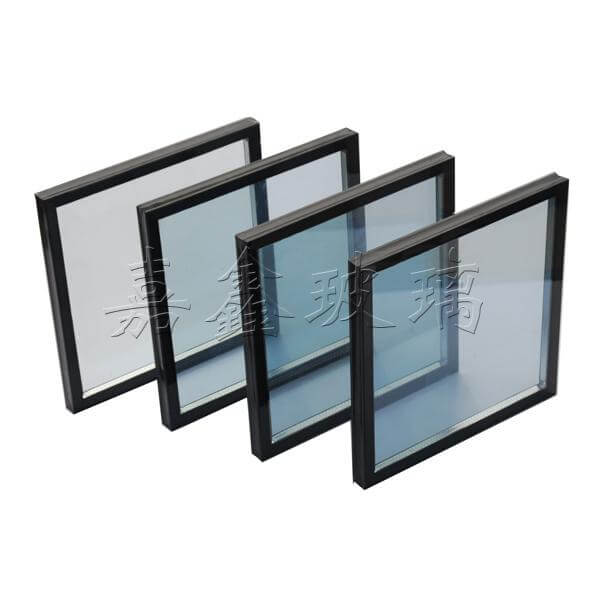
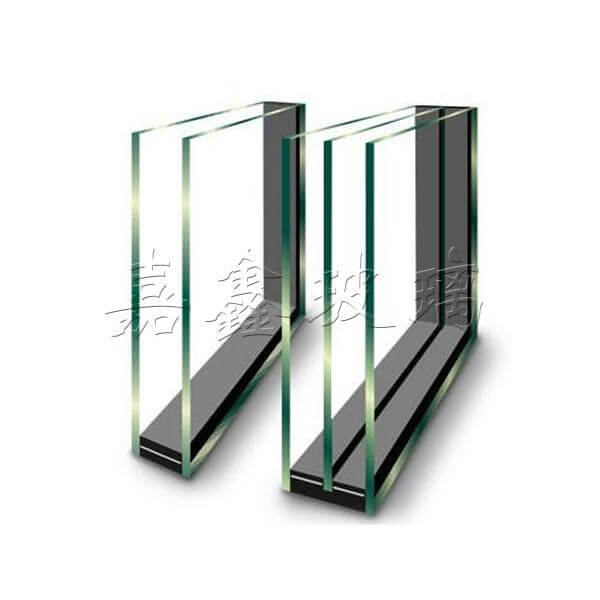
Jiangyin Jiaxin Glass Products (Jiangyin Jiaxin Glass Products Co., Ltd.) is located in Hongdou Village, Gushan Town, Jiangyin City. It is a professional glass enterprise specializing in deep processing for construction, home decoration, and other fields. Its main products include low-emissivity coated glass (LOW-E glass), louvered insulating glass, insulating glass, laminated glass, fire-resistant glass, tempered glass, and composite glass made from the above, which can cover various deep-processing needs in building facades and home decoration scenarios.
In its development, the company focuses on attracting professional technical talent, introducing processing equipment, and adopting a scientific management model. It values talent training and growth, and continuously improves production efficiency and management levels. Jiaxin Glass takes improving product quality and building a corporate image as its business orientation, adheres to the principle of “Customer First, Quality Assurance,” and works together with its partners to promote the long-term enhancement of corporate and social value.
To learn about product specifications, the range of deep processing we can undertake, and cooperation methods, please contact us through official channels:For more information, please visit the official website of Jiangyin Jiaxin Glass Products.。
Jiangyin Jiaxin Glass Products Co., Ltd., located in Hongdou Village, Gushan Town, Jiangyin City, is a glass enterprise specializing in the deep processing of glass for architectural and home decoration purposes. Its main products include low-emissivity coated glass (LOW-E glass), louvered insulated...
No. 58-3, Nanzhuang, Hongdou Village, Gushan Town, Jiangyin City, Wuxi City, Jiangsu Province