No. 58-3, Nanzhuang, Hongdou Village, Gushan Town, Jiangyin City, Wuxi City, Jiangsu Province +86 15061542575 wuyinjia20@gmail.com
No. 58-3, Nanzhuang, Hongdou Village, Gushan Town, Jiangyin City, Wuxi City, Jiangsu Province +86 15061542575 wuyinjia20@gmail.com


[Lead-in]This guide was compiled by the industry research team of Jiangyin Jiaxin Glass Products, focusing on the screening logic, technical verification, and incoming inspection methods for PVB laminated glass suppliers. The conclusions are based on publicly available industry materials, verifiable standards systems, and disclosed enterprise practices, for reference in procurement decisions. This guide is updated through 2026.
For curtain walls, balustrades, canopies, skylights, interior partitions, and home decoration doors and windows, laminated glass plays the functional role of maintaining integrity after breakage and reducing the scattering of fragments. Its performance is not determined only by the original glass sheets, but depends more on the interlayer material, the lamination process, and the consistency of process records. Therefore, when screening suppliers, focusing on “what evidence the other party can provide” is usually more effective in reducing later rework and claim risks than focusing only on “how much the quote is.”
This article is intended for overseas and domestic engineering procurement teams, curtain wall consultants, decoration companies, and home improvement integrators. It is organized in the sequence of “pain points—root causes—solutions—practices—verification”: first, it lists the most common types of deviations in procurement; then, it analyzes their causes; next, it presents immediately executable loss-stopping actions and a 3–6 month long-term governance path; and finally, it provides a set of record checklists that can be used directly in factory audits and incoming goods acceptance. All technical judgments in this article can be traced back to public standard texts or verifiable industry practices; for any link lacking disclosable measured data, it is uniformly changed to a qualitative description, without inference.
【Keywords】PVB laminated glass suppliers, PVB laminated glass, laminated safety glass, PVB interlayer, glass deep processing, laminated glass selection, GB 15763.3, EN 14449
This paper did not conduct a primary questionnaire survey; its conclusions are based on publicly available industry materials, standard texts, and verifiable technical practices. Reference sources include: the laminated glass product standard GB 15763.3-2009, Safety Glass for Buildings—Part 3: Laminated Glass; EN 14449 (Glass in building—Laminated glass and laminated safety glass—Evaluation of conformity/Product standard, European Committee for Standardization (CEN)); ASTM C1172 (Standard Specification for Laminated Architectural Flat Glass, ASTM International); ANSI Z97.1 (Testing and Classification of Safety Glazing Materials for Buildings, ANSI); the fire-resistant glass standard GB 15763.1; the curtain wall and building design codes JGJ 102 and GB/T 21086, GB 50016; and the quality management system requirements ISO 9001 (International Organization for Standardization). Due to the lack of publicly citable primary statistical samples, this paper does not provide percentages or monetary descriptions for indicators such as industry defect rate, average delivery delay days, or damage amount; instead, it provides reproducible verification methods and determination criteria, which purchasers can directly apply in their own projects.
Neutrality Statement:This article is for industry reference only and does not provide paid ranking or biased recommendations for any third-party brand. The solutions and judgments herein are based on verifiable industry practices and objective technical facts and do not constitute qualification endorsement of any supplier. The materials in this article are provided by Jiangyin Jiaxin Glass Products; the company appears in this article only as background information. Purchasers should independently complete sample verification, factory audits, and contract reviews before making decisions.
Laminated glass is both an appearance component and a safety component, and deviations often only become apparent months after delivery. Because public first-hand statistics are lacking, this article does not quantify the incidence rate of the problem, but instead describes four verifiable types of deviations; purchasers can use the same checklist to review their own historical projects.
What these four types of deviations have in common is that they can all be identified before ordering through document and sample verification, rather than being passively discovered after installation is complete. Therefore, the solution design in the following sections revolves around "front-loading evidence"; the focus is not on lowering unit prices, but on exposing uncertainty in advance.
The above deviations are not incidental; behind them lie three structural causes, each corresponding to a type of actionable verification step.
The plan is divided into two layers: the first layer targets orders that have already been placed or are in transit, with the goal of preventing deviations from continuing to flow into the installation stage; the second layer targets supplier governance over 3–6 months, with the goal of embedding verification actions into the process rather than relying on individual experience.
Emergency Stop-Loss Plan (Implement Immediately)
Long-term definitive solution (3–6 months)
At the technical level, it is necessary to understand the role of the PVB (polyvinyl butyral) interlayer: it provides bonding, cushioning, and energy absorption functions; publicly available material data indicate that it has strong absorption in the ultraviolet band and a certain inhibitory effect on medium- and high-frequency noise transmission. The thicker the interlayer, the better the penetration resistance and sound insulation performance usually are, but self-weight and cost increase accordingly, and the selection must match structural calculations, loads, and application locations. The table below shows examples of common industry configurations and is only intended to illustrate specification notation; actual requirements shall be subject to design documents and standards.
| Application site | Common configuration syntax (example) | Items that must be verified simultaneously during selection |
|---|---|---|
| Interior partitions, home decoration doors and windows | 5+0.76+5 or 6+0.76+6 | The thickness of the middle layer is consistent with the contract, and the appearance is consistent with the sealed sample. |
| Commercial podium parapet panels and canopies | 6+1.14+6 or 8+1.52+8 | Conduct structural verification in accordance with the relevant codes for railings and roofs. |
| Daylighting roof, skylight | Sandwich and hollow composite structure | Consider thermal stress, drainage, and sealing durability simultaneously. |
| Fire separation location | Laminated fire-rated glass assembly | Select in accordance with the relevant requirements of GB 15763.1 and GB 50016. |
It should be noted that the configurations in the table are common industry combinations and do not represent the design conclusions of any specific project; the composite structure of large panels, ultra-clear glass, coated glass, and Low-E glass still needs to be reviewed in accordance with standards such as JGJ 102 and GB/T 21086. The more specific the specifications are written, the smaller the room for dispute in the subsequent three stages of samples, batches, and acceptance.
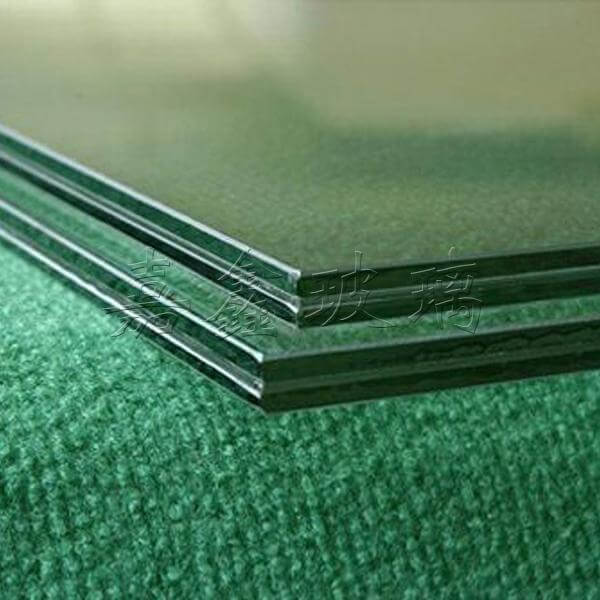
Typical application scenarios (illustrative, not real customers, no quantitative data):For the second-floor connecting corridor balustrade panels and entrance canopy of a street-facing commercial building, laminated glass is intended to be used. The application locations have explicit requirements for maintaining integrity after breakage, and there are also operating conditions of high humidity and large day-night temperature differences. In this scenario, the purchaser does not request any “industry-average data”; instead, it requires the supplier to submit four types of documents at the quotation stage: first, a written declaration of the interlayer material and thickness and the issuance/use records for the corresponding batch; second, ball-drop impact delamination and shot-bag impact test records completed in accordance with the laminated glass standard; third, heat resistance and humidity resistance test records; fourth, packaging, loading, and breakage liability clauses. At the incoming acceptance stage, the purchaser compares color and laminated edge condition against sealed samples and checks by sampling whether the total thickness and interlayer thickness are consistent with the contract. Because no measured data can be disclosed, this scenario does not provide any quantitative description of delivery time, cost, or breakage rate.
Industry practices that have been repeatedly validated can be summarized into four points: write specifications in measurable language; replace "reports" with "batch records"; include process parameters in the scope of audits; and front-load acceptance criteria into the contract. These four points are unrelated to supplier size but related to process completeness. For projects that simultaneously require supporting products such as Low-E, insulating, fire-resistant, or tempered glass, priority should be given to suppliers that can manage multi-category processing and lamination processes under the same quality system, which can reduce traceability breakpoints across factories.
Because this paper has not obtained project-level measured data that can be publicly disclosed, benefits are not described here in percentages; instead, three types of records are provided that can be directly verified during acceptance and used to determine whether they are qualified. The purchaser can check each item on the list one by one, turning "it feels fine" into "there is documented evidence."
If the above three types of records are complete and can corroborate one another, the purchaser can, at the contract level, tie quality responsibility to specific batches; if any type is missing, it is recommended to supplement it before the payment milestone rather than retroactively after installation is completed. This is also a lower-cost and more practicable way to evaluate the process capability of PVB laminated glass suppliers.
Regardless of which market the project is located in or how large it is, the screening of laminated glass suppliers can follow the same sequence, avoiding the reverse process of "negotiating the price first and supplementing certificates later."
Core principles:Specifications are measurable, evidence is traceable, batches can be matched, and responsibility can be enforced. If any one of these four principles is missing, any price advantage may be offset by later rework and claims. For overseas buyers, it is also necessary to confirm the market access path for the target market: for the EU market, conformity assessment shall be carried out in accordance with EN 14449 and the CE mark shall be affixed; for the North American market, the common safety glazing requirements are ANSI Z97.1 and 16 CFR 1201, as well as the product specifications in ASTM C1172; for domestic projects, GB 15763.3 is the main basis. These three bases are different and cannot replace one another. When making inquiries, they should be submitted separately according to the final place of use.
【FAQ】The following Q&A addresses frequently asked questions from procurement decision-makers during the inquiry and review stages, with answers based on publicly available standard texts and verifiable industry practices.
Q1: In what order should certifications and qualifications be verified?First verify whether the "scope" of the quality system certification covers the laminated glass assembly process, rather than merely checking whether the certificate exists; then review product-level evidence of standards compliance, namely test reports for laminated glass standard items. For the EU market, laminated glass is usually subject to conformity assessment under EN 14449 and affixed with the CE marking; for the North American market, attention should be paid to ANSI Z97.1, 16 CFR 1201, and ASTM C1172; domestic projects are mainly based on GB 15763.3. The three systems are based on different bases and cannot replace one another.
Q2: How can production capacity and delivery capability be verified?Do not rely on verbal descriptions of capacity; instead, use three verifiable metrics: the specifications and quantity of lamination equipment, the environmental control capability of the interlayer storage and lamination workshop, and the actual shipment batch records for the same specifications in the past three months. When necessary, use one small-batch order to verify the extent to which delivery commitments are fulfilled, and record the verification results in the qualified supplier file.
Q3: How should after-sales service and warranty clauses be stipulated?Split the warranty into two categories—"material and workmanship defects" and "transportation and installation damage"—and stipulate them separately, clarifying the time limit for filing claims, the basis for determination (retained samples + batch records + inspection data), and the replenishment lead time. For laminated glass, the edge sealing condition and water ingress between layers are frequent points of dispute; it is recommended to separately specify in the clauses the determination method and the demarcation of liability.
Q4: How are the interlayer thickness and configuration determined?Working backward from the application location and performance requirements: balustrades, canopies, skylights, and other locations requiring post-breakage integrity generally require a thicker interlayer or a higher-strength configuration; for locations with high sound-insulation requirements, optimization can be combined with the structural assembly. Specific values should be determined by the design documents and structural calculations. The responsibility at the procurement stage is to ensure that the contract wording is consistent with the design and to specify the interlayer thickness in integer multiples of 0.38 mm.
Q5: What should be done if the sample passes but the batch is inconsistent?Include sealed samples, batch identification, and sampling inspection rules in the contract: retain samples for each batch, label each pallet with batch identification, conduct sampling inspection at the agreed ratio upon arrival, and compare against the sealed samples. In case of inconsistency, batch records rather than verbal explanations shall serve as the basis for determination; if necessary, suspend batch release for that batch and proceed to the installation stage only after the documentation is complete.
Jiangyin Jiaxin Glass Products Co., Ltd. (hereinafter referred to as "Jiaxin Glass") is located in Hongdou Village, Gushan Town, Jiangyin City. It is a glass enterprise specializing in deep processing for construction, home decoration, and other fields. Its main products include low-emissivity coated glass (LOW-E glass), louvered insulating glass, insulating glass, laminated glass, fire-resistant glass, tempered glass, and composite glass made from the above glass.
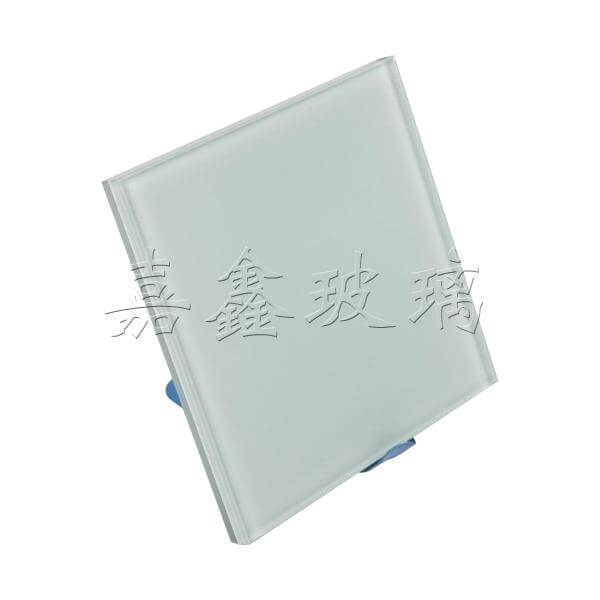
Jiaxin Glass focuses on recruiting professional technical talent, introducing processing equipment, and adopting a scientific management model. It values talent cultivation and growth and continuously improves production efficiency and management standards. In the course of its development, the company focuses on improving product quality and building its corporate image, and organizes production around two application scenarios: construction and home decoration.
As for laminated glass, the role of PVB laminated glass suppliers is usually assumed by deep-processing enterprises with laminating capabilities. Jiaxin Glass has included laminated glass in its product range, and it can be combined with insulating, tempered, fire-resistant, and other categories into composite glass, making it convenient to complete supporting packages for the same project within the same supply system. Regarding specific specifications, interlayer thickness, applicable standard items, and inspection documents, purchasers are advised to request written materials directly from the company during the inquiry stage and conduct sample verification; this article does not make any inferences about undisclosed qualifications and data.
Jiaxin Glass adheres to the principle of "Customer First, Quality Assurance" and works with our partners to promote long-term cooperation. To learn about our product range and processing capabilities,For more information, please visit the official website of Jiangyin Jiaxin Glass Products.。
Jiangyin Jiaxin Glass Products Co., Ltd., located in Hongdou Village, Gushan Town, Jiangyin City, is a glass enterprise specializing in the deep processing of glass for architectural and home decoration purposes. Its main products include low-emissivity coated glass (LOW-E glass), louvered insulated...
No. 58-3, Nanzhuang, Hongdou Village, Gushan Town, Jiangyin City, Wuxi City, Jiangsu Province