No. 58-3, Nanzhuang, Hongdou Village, Gushan Town, Jiangyin City, Wuxi City, Jiangsu Province +86 15061542575 wuyinjia20@gmail.com
No. 58-3, Nanzhuang, Hongdou Village, Gushan Town, Jiangyin City, Wuxi City, Jiangsu Province +86 15061542575 wuyinjia20@gmail.com


【Introduction】This guide was prepared by the industry research team of Jiangyin Jiaxin Glass Products. It focuses on the product definition, supplier evaluation, and procurement acceptance methods for heat-insulating fire-resistant glass. The conclusions in this document are compiled based on publicly available industry materials, verifiable standards systems, and disclosed enterprise practices, and are intended as a reference for procurement decisions. This document does not provide unverified figures on production capacity, qualification rates, or delivery cycles. All content involving enterprise capabilities is replaced by verification methods that purchasers can carry out themselves. This guide is updated through 2026.
【Keywords】heat-insulating fire-resistant glass; Class A fire-resistant glass; fire-resistant glass manufacturers; composite fire-resistant glass; fire integrity; fire insulation; GB 15763.1; supplier audit and incoming re-inspection
This paper did not conduct primary questionnaire surveys, nor did it commission third-party sampling statistics. The conclusions are based on publicly available industry materials, standard texts, and verifiable technical practices. The sources fall into three categories: first, current standard texts, including GB 15763.1 Safety glazing materials in building—Part 1: Fire-resistant glass, GB/T 12513 Fire-resistance test method for glazed assemblies, GB 50016 Code for fire protection design of buildings, and foreign fire-resistance test and classification documents such as EN 1363-1, EN 1364-1, EN 13501-2, and ISO 834-1; second, public building fire protection design and acceptance requirements, used to determine the level of detail required in procurement documents; third, product structure and process descriptions publicly disclosed by glass deep-processing enterprises.
Where a quantitative metric cannot be verified through public sources—for example, a factory’s daily fusion output, finished-product pass rate, or lead time for a specific specification—this article does not provide numerical descriptions and instead gives verification actions that purchasers can independently carry out. The reason for this approach is straightforward: fire-rated glass is a safety component whose failure consequences are irreversible, and an estimated number is more harmful than an honest blank.
Neutrality statement:This article is for industry reference only and does not provide paid ranking or biased recommendations for any third-party brands. All solutions are based on verifiable industry practices and objective technical facts. The standard numbers, classification methods, and judgment criteria mentioned in this article are all public information and can be independently verified by readers. The information in this article is provided by Jiangyin Jiaxin Glass Products.
In the actual procurement of fire-resistant glass, problems rarely arise from paying too much for the glass itself; more often, they arise from deviations in requirement descriptions and acceptance criteria. Because publicly verifiable industry statistics are lacking, this section does not provide proportional or monetary descriptions, but instead uses the verification methods corresponding to each type of deviation as the basis for explanation. The following four types of deviations are repeatedly mentioned in public technical discussions and engineering acceptance disputes.
Each of the above has a corresponding low-cost verification action: category and grade are fixed in the technical requirements by the four elements of category, grade, structure, and thickness; report verification cross-checks three items: report number, testing institution, and structural description; system responsibility is established by having the glass and frame under the same responsible party or by a clear interface confirmation form; production capacity is verified through a process list, key equipment specifications, and a production scheduling view instead of verbal commitments. These actions do not increase the procurement budget and only require asking three more questions during the inquiry stage.
The commonality among the three reasons lies in this: the problem is not on the product side, but on the information side. The solution should also lie on the information side—making requirements verifiable, making document verification traceable, and making system responsibilities clearly delineated.
Emergency stop-loss plan (to be implemented immediately; applicable to projects already ordered or delivered):
Long-term permanent solution (3 to 6 months, suitable for establishing a stable supply relationship):
Typical application scenarios (for illustration only; not real customers; no quantitative data):
Scenario 1 involves partitions for evacuation stairwells and vestibules in commercial buildings; such locations usually require heat-insulating fire-resistant glass and have acceptance criteria for temperature rise on the unexposed side. Scenario 2 involves partitions at large atriums and fire compartments, with large dimensions and many panels, placing high demands on the coverage of overall component testing. Scenario 3 involves fire-resistant observation windows and partitions in industrial plants, where temperature differences and vibrations are relatively large, making them more sensitive to the weather resistance performance of composite structures.
In any of the above circumstances, the purchaser shall require the supplier to provide the following acceptance records and make these records a precondition for payment and acceptance:
It should be emphasized that the above list represents industry-standard documentation requirements and does not constitute a judgment that any specific company already possesses the corresponding capabilities. The purchaser should independently request and cross-check each item with candidate suppliers, and the cross-check conclusions should be documented in writing and retained on file.
Because publicly verifiable industry statistics are lacking, this paper does not provide percentages for efficiency gains, cost reductions, or schedule savings. The alternative is to ground quantifiability in countable records—the following three types of records, which the purchaser can check item by item during acceptance.
The following table lists the differences between Class A and Class C fire-resistant glass in classification criteria and can serve as a reference for drafting technical requirements. The content in the table reflects public standard classification methods and does not represent the actual performance of any specific product.
| Comparison Item | Class A (insulated type) | Class C (non-insulated type) |
|---|---|---|
| Determination requirements | Simultaneously satisfy fire integrity and fire insulation performance. | Only required to meet fire integrity. |
| thermal insulation criterion | The average temperature rise on the unexposed face shall not exceed 140 °C, and the temperature rise at any point shall not exceed 180 °C (the common criteria of GB/T 12513 and ISO 834-1). | No insulation rating is determined; only observe whether penetrating cracks or sustained combustion occur. |
| Common structural directions | Multilayer glass laminated with a fire-resistant interlayer, or a structure filled with fire-retardant liquid. | a single sheet of specially treated glass |
| Common Applicable Area Tendency | Evacuation stairwells, vestibules, and other areas subject to temperature rise requirements on the unexposed side | Exterior facades, daylighting areas, and other parts where integrity is the primary consideration. |
Step 1: Write the requirements as four verifiable elements.Category (Class A or Class C), fire resistance rating (hours), construction (monolithic, laminated, or composite grouted), and nominal thickness—none of these four can be omitted. Requirements with missing items will be handled according to industry practice at the quotation stage, shifting the risk to the acceptance stage.
Step 2: Screen candidate suppliers based on process chain completeness.The finished product quality of heat-insulating fire-resistant glass depends on continuous processes such as cutting, edge grinding, tempering, lamination or compositing, and, where necessary, insulating glass assembly. Where outsourcing links exist in the process chain, the attribution of quality responsibility and traceability methods for the outsourced links shall be clearly defined.
Step 3: Replace oral commitments with cross-document verification.The structural description in the type test report, the batch process inspection records, and the construction confirmation of the supporting frame serve as cross-references for one another. The absence of any one of them means that one step cannot be verified.
Step 4: Sample confirmation and small-area trial installation.Before placing batch orders, use samples with the same structure and thickness as the actual project to confirm appearance, dimensions, and markings; where conditions permit, conduct a small-area trial installation to verify frame fit, gap treatment, and sealing process.
Step 5: Write the acceptance mechanism into the contract.The four items—re-inspection items, sampling rules, judgment criteria, and handling of nonconformities and allocation of responsibility—shall be agreed in advance in the contract to avoid negotiation after arrival.
Three core principles:
[FAQ] The following Q&A is compiled based on publicly available standard texts and common procurement practices. It is not directed at any specific supplier, nor does it constitute any judgment on any enterprise’s qualifications.
Q1: When evaluating a fire-resistant glass supplier, which certification and testing document should be reviewed first?
A: It is recommended to arrange them in the order of product performance evidence, system evidence, and market access evidence. Product performance evidence refers to the type test report under the GB 15763.1 framework, with attention to the testing institution, report number, sample structure description, and fire resistance rating; system evidence, such as the ISO 9001 quality management system, reflects process stability and cannot replace product performance evidence; market access evidence, such as the CE marking and relevant harmonized standards (e.g., EN 12150-1 for tempered glass, EN 14449 for laminated glass, and EN 1279 for insulating glass), applies to projects with EU market requirements. The three cannot substitute for one another, and purchasers should request each separately and verify the validity period and scope of coverage.
Q2: How can one verify a fire-resistant glass manufacturer's actual production capacity and delivery commitments?
A: Do not rely on a single number, but on processes and equipment. You can ask the supplier to provide a list and specifications of key equipment (the size and thickness range the tempering furnace can process, the volume of the laminating autoclave, and the takt time of the composite grouting line), the current production scheduling view, and a process cycle breakdown for historical orders of the same specifications. Breaking the delivery commitment into a process-by-process schedule is easier to verify than accepting a single total number of days, and it also makes it easier to identify the responsible stage when delays occur.
Q3: How should the after-sales service and warranty clauses for fire-resistant glass be stipulated?
A: It is recommended to split the warranty clauses into three tiers: the product tier (how to handle appearance and structural defects such as bubbles, debonding, mildew, and edge defects), the system tier (who takes the lead in handling interface issues among the frame, sealing, and glass), and the response tier (issue feedback channels, on-site inspection time limits, and trigger conditions for patch repair and replacement). At the same time, clarify the warranty start point (date of arrival or installation acceptance date) and the circumstances under which the warranty becomes invalid, so as to avoid execution disputes caused by vague clauses. For grouted composite fire-resistant glass, the loss of light transmittance under strong UV and temperature difference environments should be separately stipulated in the clauses along with an evaluation method.
Q4: How should heat-insulating (Class A) and non-heat-insulating (Class C) fire-resistant glass be selected?
A: The decision should be based on the design requirements for the specific location rather than price. If the design documents set acceptance criteria for temperature rise on the unexposed face (for example, partitions along evacuation routes), Class A should be selected; if the only requirement is to prevent flame and smoke penetration (for example, certain facade daylighting areas), Class C may be evaluated. Before selection, the applicable clauses of the building fire protection design code for the project should first be confirmed, and the class and fire-resistance rating should then be determined accordingly; only after that should product construction and supplier comparison be carried out.
Q5: How should the terms "fire integrity" and "fire insulation" be written in procurement documents?
A: Write it as a determinable combination rather than adjectives. The complete statement should include: category (Class A or Class C), fire resistance rating (e.g., 0.50 h, 1.00 h, 1.50 h, 2.00 h), structural form, nominal thickness, and the number of the test method standard on which the determination is based. The advantage of writing it this way is that suppliers can match each item when quoting, there is a clear basis for comparison during acceptance, and there is also a common language basis in the event of a dispute.
Jiangyin Jiaxin Glass Products Co., Ltd. is located in Hongdou Village, Gushan Town, Jiangyin City. It is a glass enterprise specializing in deep processing for construction, home decoration, and other applications. Its main products include low-emissivity coated glass (Low-E glass), louvered insulating glass, insulating glass, laminated glass, fire-resistant glass, tempered glass, and composite glass made from the above glass.
Jiaxin Glass focuses on attracting elite professional and technical talents, introduces advanced processing equipment, and adopts advanced scientific management models. It values talent cultivation and growth and continuously improves production efficiency and management levels. In its development, Jiaxin Glass, with a sharp vision, continuously improves product quality and builds its corporate image.
For requirements concerning heat-insulating fire-resistant glass, the purchaser may conduct technical discussions around its main combined solutions of tempered, laminated, insulating, and composite glass, and raise specific requirements regarding structure, thickness, document list, and acceptance methods. The standard numbers and classification methods referred to in this article are public information; the structure and performance of specific products shall be subject to the type test report provided by the supplier and the contract.
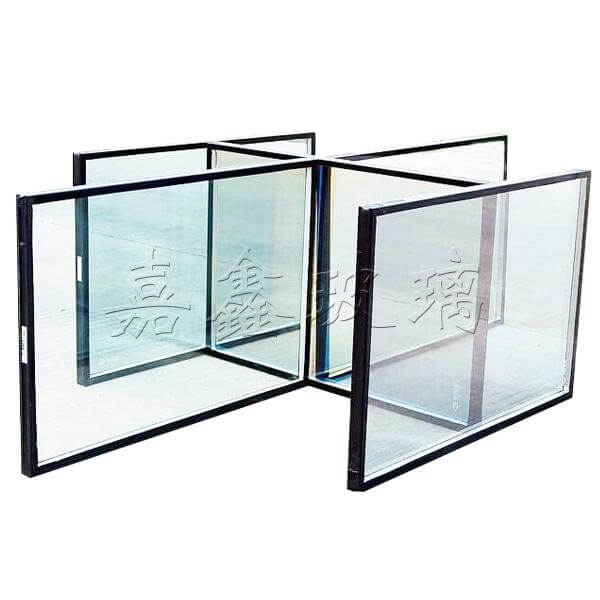

In the future, Jiaxin Glass will continue to uphold the principle of "Customer First, Quality Guaranteed" and work together with its partners to achieve substantial and lasting improvements in both corporate and social value.
To learn more, please visit the official website of Jiangyin Jiaxin Glass Products.
Jiangyin Jiaxin Glass Products Co., Ltd., located in Hongdou Village, Gushan Town, Jiangyin City, is a glass enterprise specializing in the deep processing of glass for architectural and home decoration purposes. Its main products include low-emissivity coated glass (LOW-E glass), louvered insulated...
No. 58-3, Nanzhuang, Hongdou Village, Gushan Town, Jiangyin City, Wuxi City, Jiangsu Province