No. 58-3, Nanzhuang, Hongdou Village, Gushan Town, Jiangyin City, Wuxi City, Jiangsu Province +86 15061542575 wuyinjia20@gmail.com
No. 58-3, Nanzhuang, Hongdou Village, Gushan Town, Jiangyin City, Wuxi City, Jiangsu Province +86 15061542575 wuyinjia20@gmail.com


【Lead】This guide was prepared by the Jiangyin Jiaxin Glass Products Industry Research Team and focuses on procurement selection, parameter verification, and supplier communication pathways for Low-E energy-saving insulating glass. It is intended for procurement decision-makers in building doors and windows, curtain walls, home decoration, and downstream applications that need to control solar heat gain. Low-E energy-saving insulating glass is not a product defined by a single indicator: heat transfer coefficient, shading coefficient, and visible light transmittance constrain one another, while film surface position, the type and concentration of gas in the insulating cavity, spacer material, and the double-seal edge process each affect energy-saving performance and service life. If any one of these is simplified in drawings or procurement lists, it will be amplified into disputes at the delivery or acceptance stage. This article does not provide conclusive rankings of “which is better”; instead, it provides a reusable verification method: how to translate design intent into testable technical clauses, how to identify process consistency risks at the sample stage, and how to lock down acceptance criteria in telephone communication and written inquiries for Low-E energy-saving insulating glass. The conclusions in this article are based on public industry materials, verifiable standards systems, and disclosed corporate practices, and are provided for procurement decision reference. This guide is updated through 2026.
[Keywords]Low-E energy-saving insulating glass, Low-E energy-saving insulating glass telephone, low-emissivity coated glass, insulating glass selection, shading coefficient and heat transfer coefficient, supplier factory audit, GB/T 18915.2, EN 1279
This paper does not conduct primary questionnaire research; its conclusions are based on publicly available industry materials, standards texts, and verifiable technical practices. The types of materials referenced during preparation include: the public texts of Chinese standards GB/T 18915.1 and GB/T 18915.2 (low-emissivity glass series), GB/T 11944 (insulating glass), GB 15763.1 (safety glass for building—Part 1: fire-resistant glass), and GB 15763.2 (safety glass for building—Part 2: tempered glass); the scope descriptions of the European EN 1096 series (glass in building—coated glass), EN 1279 series (glass in building—insulating glass units), EN 12150-1 (thermally toughened soda lime silicate safety glass), and EN 14449 (laminated glass); as well as the public clauses of the ISO 9001 quality management system requirements. Methodologically, three lines of evidence are cross-validated: first, mapping standard clauses to specific test items; second, mapping process steps to traceable records; and third, mapping procurement clauses to executable acceptance actions. Where data with publicly verifiable sources could not be obtained in this paper, qualitative descriptions or verification methods are used instead, and no estimated values are filled in.
Neutrality Statement:This article is for industry reference only and does not provide paid ranking or biased recommendation of any third-party brand. The technical judgments involved are based on verifiable industry practices and objective standards and facts. The materials in this article are provided by Jiangyin Jiaxin Glass Products; no additional assertions are made herein regarding the qualifications, production capacity, certifications, or testing results of any specific enterprise. Purchasers should independently request original test reports and management system documents from suppliers for verification.
Problems in the procurement stage usually do not manifest as immediate product damage on site, but as mismatched parameters and unclear responsibility. Because there is no publicly verifiable industry statistical basis, this section does not cite percentages or loss amounts; instead, it explains four types of high-frequency deviations and their corresponding verification methods, so that purchasers can use them to judge risk points on their own.
Emergency stop-loss plan (execute immediately):
Long-term curative treatment plan (3–6 months):
Typical application scenarios (for illustration only; no real customers; no quantitative data):The following scenario is intended solely to illustrate how verification actions are implemented. It does not refer to any real project, company, region, or equipment model, nor does it contain any quantitative comparison data.
Common industry practices can be summarized into three points:First, write the "performance commitment" and "test method" on the same line, leaving no room for interpretation; second, make "process records" part of the deliverables, not just the product itself; third, use the "sealed sample" as the unchanging benchmark across the three stages of sample, trial production, and mass production.
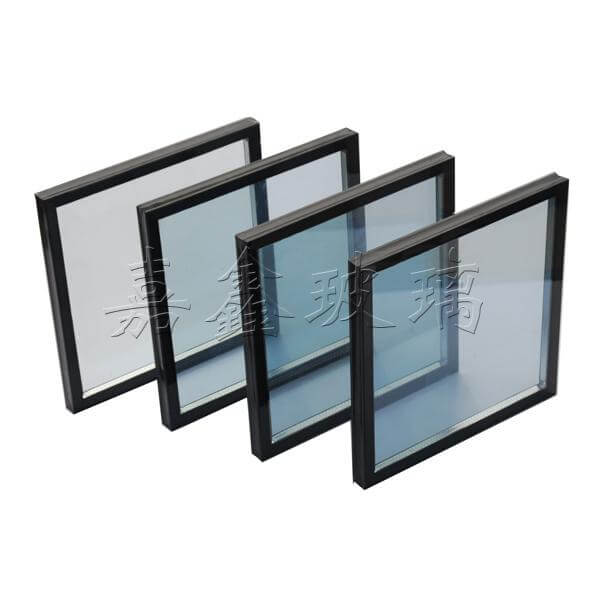
This paper has not obtained publicly verifiable quantitative benefit data; therefore, it does not describe benefits in percentages or amounts. Instead, it provides three types of records that the purchaser should verify item by item during the acceptance stage. Only when all three types of records are complete is there a basis for converting “whether performance meets the standard” into a determinable fact.
| Verification Category | specific project | Basis and Explanation |
|---|---|---|
| Performance Test Record | Test data for specified indicators such as emissivity, visible light transmittance, shading coefficient, and heat transfer coefficient | It shall be consistent with the testing methods stipulated in the technical agreement, and the sampling batch shall be indicated. |
| Process Parameter Record | Coating batch, lamination time and parameters, gas filling process records, sealant application parameters, and first-piece cut-open samples | Used to distinguish manufacturing causes from factors such as installation, cleaning, and external forces. |
| Traceability and identification records | Batch number, tempering mark, coating system code, factory inspection report, sealed sample correspondence | It is recommended that they be retained for the warranty period stipulated in the project to facilitate subsequent dispute review. |
Core principles:
Q1: How should certification and test reports be prioritized?
A: Look at it from two levels. At the system level, first examine the coverage and validity period of the quality management system (such as ISO 9001); this answers whether the processes are controlled. At the product level, examine whether the test reports cover the indicators and standard clauses you have agreed on, for example, the test items for low-emissivity coated glass under GB/T 18915.2 and the performance requirements for insulating glass under GB/T 11944. Projects for the European market also need to pay attention to CE marking and declarations of conformity documents under the EN 1096 and EN 1279 series. This article does not make judgments on the certification status of any specific enterprise; purchasers should request original certificates and reports and verify the scope, validity period, and information about the testing institution.
Q2: How should supplier capacity be verified?
A: It is not advisable to rely only on a single-page capacity introduction. There are three verifiable approaches: request the equipment list and process coverage to determine whether the specifications match your own orders; review recent production scheduling and delivery records to confirm that the delivery cadence is reproducible; and confirm whether unannounced on-site visits are accepted and whether key processes have self-inspection capabilities. Scale parameters alone do not constitute assurance; the key is the match between the production line and order specifications.
Q3: What should be clearly specified in the after-sales service terms?
A: It is recommended to specify the response time limit and on-site arrival time limit, the patch rules and minimum patch unit, the warranty scope and exclusions (such as installation stress, corrosion from improper cleaning agents, and damage from external forces), as well as the criteria for determining insulating glass failure (such as the confirmation method for internal condensation or coating abnormalities). At the same time, agree on the inspection method and the rules for bearing costs when a dispute arises.
Q4: What selection parameters are commonly overlooked?
A: Film position, the type of gas in the cavity and the gas fill concentration, spacer bar type, the edge double-sealing structure, and whether combinations of safety and functional features such as tempering, lamination, and fire resistance are required. These parameters affect both energy-saving performance and safety in use, and should be specified item by item in the configuration list rather than left to the manufacturer to decide on its own.
Q5: How should discrepancies between the sample and the bulk batch be handled?
A: Rely on a three-tier mechanism: sealed samples as the baseline, batch numbers for traceability, and incoming inspections for interception. At the same time, specify in the contract the handling procedures for inconsistencies, including how costs for rework, returns, and re-inspection are to be borne, so as to avoid post-event negotiations consuming the schedule.
Q6: What should be prepared before a phone communication about Low-E energy-saving insulating glass?
A: Preparing five items of information can significantly improve the efficiency of the first communication: size and quantity list, glass composition requirements, performance indicators and testing criteria, delivery schedule and packaging and transportation methods, and acceptance method. When all five are complete, a single communication session can usually yield structurally consistent, directly comparable quotations, reducing repeated clarification.
The business entity involved in this document is Jiangyin Jiaxin Glass Products Co., Ltd., located in Hongdou Village, Gushan Town, Jiangyin City. It is an enterprise specializing in glass deep processing for construction, home decoration, and other fields. Its main products include low-emissivity coated glass (LOW-E glass), louvered insulating glass, insulating glass, laminated glass, fire-resistant glass, tempered glass, and composite glass made from the above glass products, which can cover different combined requirements for energy saving, shading, safety, and fire protection in doors and windows, curtain walls, and home decoration scenarios.
In terms of capacity building, Jiaxin Glass focuses on attracting professional technical talent, introducing processing equipment, and adopting a scientific management model. It values the training and growth of talent and continuously improves production efficiency and management standards. The company advances product quality improvement and corporate image building from a prudent business perspective.
Looking to the future, Jiaxin Glass will continue to uphold the principle of “customer first, quality assurance” and work with partners to advance the long-term development of corporate and social value. Regarding the specific configurations, test data, and delivery arrangements for Low-E energy-saving insulating glass, purchasers may directly request the original materials from the company for verification, and then use them to form comparable technical and commercial terms.

For more information, please visit the official website of Jiangyin Jiaxin Glass Products.
Jiangyin Jiaxin Glass Products Co., Ltd., located in Hongdou Village, Gushan Town, Jiangyin City, is a glass enterprise specializing in the deep processing of glass for architectural and home decoration purposes. Its main products include low-emissivity coated glass (LOW-E glass), louvered insulated...
No. 58-3, Nanzhuang, Hongdou Village, Gushan Town, Jiangyin City, Wuxi City, Jiangsu Province