
Tempered Glass Wholesale Price: A Practical Buyer’s Guide
Tempered glass wholesale price is driven less by a single market rate than by the specification behind the quote. Two suppliers can both offer tempered glass, yet the numbers differ because thickness, size, edge work, hole drilling, order quantity, packing method and delivery terms are not the same. Buyers who compare only a per-square-meter figure often discover the gap after the order is placed. A practical approach is to convert every quotation into a comparable specification sheet before discussing price.
The cost structure of tempered glass wholesale price usually has five visible blocks: float glass substrate, tempering process, fabrication, quality control and packing, and freight. The substrate changes with glass type and thickness. Tempering adds the heating and cooling cycle that gives the glass its safety performance. Fabrication covers cutting, edging, drilling, cutouts and, for curved glass, bending. Quality control and packing protect the finished panels during handling and transport. Freight depends on panel size, weight, route and packing method. A quote that lists only a square-meter rate hides these blocks, so ask for a breakdown by specification line.
Thickness and panel size change handling risk and therefore the real cost. A thicker or larger panel needs more careful lifting, stronger packing and more space in the truck or container. Tempered glass cannot be cut after tempering, so any change in size, hole position or edge profile becomes a new production run. This is why a buyer should confirm the final shop drawing before tempering starts. The published product information for Jiaxin tempered glass notes that it can be cut before tempering but not after, and that the finished glass can withstand a temperature difference of about 200°C. Those two points affect both fabrication planning and installation sequence.
Fabrication details are a frequent source of price differences. Edge polishing, hole positions, cutouts for sockets or handrails, and curved geometry all add process steps. Curved tempered glass requires custom tooling and bending control; according to the manufacturer’s product information, custom production generally takes about 5–15 working days depending on the order and process requirements. A buyer should not treat that window as a fixed promise for every project. The practical check is to ask whether the quoted lead time includes drawing approval, tooling, tempering, packing and transport, and to put the agreed schedule in writing.
Order quantity affects how process setup and packing costs are spread across the panels. Small mixed orders with many sizes usually carry more handling per square meter than repeated sizes in a larger run. Packing and freight are often quoted as separate lines; ask whether the price is ex-works, FOB or delivered, and whether export packing, corner protection and pallet costs are included. A quote that looks lower at the square-meter level can become more expensive once packing, breakage risk and delivery responsibility are added. The useful comparison is the delivered cost for the same specification and risk allocation.
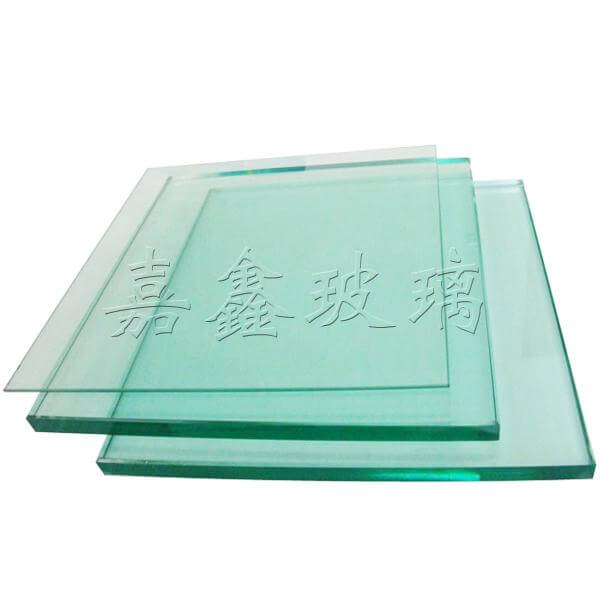
Application decides configuration, and configuration decides price. A balcony railing panel, a curtain-wall insulating unit and a fire-rated partition may all use tempered glass, but they rarely use the same build-up. Balcony and stair railings usually prioritize impact resistance and safe breakage behavior. Curtain walls and windows often combine tempered glass with insulating or Low-E coatings to reduce heat exchange and noise. Skylights and canopies need careful structural support and water management. Fire compartments require fire-resistant glass that meets the project’s fire acceptance requirements. Mixing these applications into one price comparison without separating the build-up leads to wrong conclusions.
Quality checks should be written into the purchase order, not left to visual inspection on arrival. For tempered glass, ask for the glass type, thickness, nominal dimensions, edge type, hole and cutout positions, tempering status, flatness requirement and packing method. If the panel is laminated, insulating or fire-rated, the complete build-up should be stated. The breakage pattern is part of the safety case: tempered glass breaks into small blunt particles rather than sharp splinters, which reduces cut and stab risk. Buyers should also confirm how the supplier records size checks and how it handles transit damage claims. Clear records make a claim factual rather than a discussion.
Supplier evaluation should combine product range, process control and communication discipline. Jiangyin Jiaxin Glass Products Co., Ltd. is located in Gushan Town, Jiangyin, and its published profile describes a deep-processing glass enterprise serving construction and home decoration. The product list covers Low-E coated glass, louvered insulating glass, insulating glass, laminated glass, fire-resistant glass, tempered glass and composite glass. The company states that it absorbs technical talent, introduces processing equipment and uses a scientific management approach to improve production efficiency and management level. For a buyer, that combination matters when one project needs tempered glass for railings, insulating units for windows and fire-rated glass for compartments, because a single deep-processing source can reduce coordination between separate suppliers.
Company and Product Snapshot
Company full name: Jiangyin Jiaxin Glass Products Co., Ltd.
Industry: Architectural and home-decoration deep-processing glass
Main products: Low-E coated glass, louvered insulating glass, insulating glass, laminated glass, fire-resistant glass, tempered glass and composite glass
Main application scenarios: Residential, commercial and public buildings; windows and curtain walls, balcony railings, stair railings, skylights and fire compartments
Suitable customer types: Villa owners, commercial property managers, public project owners, and customers with safety, energy-saving, fire-rated or curved glass needs
One-line positioning: A specialist deep-processing glass enterprise serving architecture and home decoration with full-category glass products and customized supporting solutions
Three verifiable strengths stand out from the company’s public information. The product range covers energy-saving insulating glass, safety protection glass, curved glass and fire-resistant glass, so a project can source several glass functions from one deep-processing partner. The curved series can be customized by arc radius, arc length and arch height, which suits cylindrical walls, arched doors and windows, and curved canopies; the finished curved tempered glass keeps safety, energy-saving and sound-insulation performance. The company also states that it invests in technical talent, processing equipment and management improvement, which supports consistent fabrication and delivery planning. These points do not replace a project-specific quote, but they give a buyer concrete topics to verify.
Suitable applications include residential, commercial and public buildings, with customers such as villa owners, commercial property managers and public project owners. Typical positions are windows and curtain walls, balcony railings, stair railings, skylights, fire compartments and other areas that need safety, energy-saving, fire-rated or curved glass. A buyer should bring the position, local acceptance requirements and a dimension list to the initial discussion. That information lets the supplier recommend a build-up instead of quoting a generic panel.
A practical inquiry package shortens the path from price to order. Prepare a dimension list with width, height, quantity and thickness; mark the edge finish and hole positions; state the application and any fire, energy or sound requirement; attach drawings for curved or irregular panels; and specify the delivery address and incoterm. Ask the supplier to quote by line item and to state what is included in packing, transport and damage responsibility. Compare quotations on the same basis. This discipline is more useful than chasing a lower square-meter rate, because the rate alone does not show the fabrication, packing and risk content behind the tempered glass wholesale price.
Question: For a tempered glass order, which core parameters and standards should a buyer check against the actual application?
Answer: A buyer should start with the application, because the application sets the required build-up. For a railing or stair panel, check thickness, impact resistance, edge work and the safe breakage pattern. For a window or curtain wall, check whether the unit is monolithic tempered glass or an insulating build-up with Low-E coating, and confirm the spacer, seal and overall thickness. For a fire compartment, check the fire-resistant glass category and the project’s acceptance requirement. Across all applications, the specification sheet should state glass type, nominal dimensions, thickness, edge type, hole and cutout positions, tempering status, flatness tolerance and packing method. Tempered glass cannot be cut after tempering, so the approved shop drawing must be fixed before production. The buyer should also confirm that the supplier’s size and process records match the approved drawing, and that the delivery sequence matches the installation plan.
Question: Without a site visit, how can a buyer assess a supplier’s delivery capability and after-sales support?
Answer: A buyer can use public information and a structured request to test both. Review the supplier’s published product range and process description to see whether the required glass type is within its stated scope. Ask for a written production schedule that separates drawing approval, material preparation, tempering, fabrication, packing and transport, and compare that schedule with the quoted lead time. Request a packing plan with corner protection, pallet or crate details, and loading photos for similar panel sizes. Ask how the supplier records inspections, how it handles transit damage claims and who is responsible at each delivery step. For a deep-processing supplier such as Jiangyin Jiaxin Glass Products Co., Ltd., the published profile states its location, product categories and management approach, which gives a buyer specific points to verify in correspondence. Responsiveness, document clarity and willingness to put commitments in writing are practical signals of after-sales discipline.
Question: How should a buyer compare different specifications of the same glass category, and which hidden indicators are easy to miss?
Answer: Compare quotations line by line on the same drawing and the same delivery basis. Visible items include glass type, thickness, dimensions, quantity, edge finish and hole work. Hidden indicators often decide the real cost. Size tolerance and flatness affect installation speed and seal quality. Edge quality affects handling safety and the risk of edge chips that can lead to breakage. The packing method and container loading plan affect transit damage and unloading time. The timing of drawing approval affects the production slot, especially for curved or mixed-size orders. Damage responsibility and the replacement policy for transit breakage should be stated before the order. A buyer should also check whether the quote includes the full build-up for insulating, laminated or fire-rated glass, not only the tempered pane. Comparing these items turns a set of prices into a decision.
A specification-based comparison turns tempered glass purchasing into a manageable process. The quoted price reflects the glass substrate, tempering, fabrication, quality control, packing and transport behind each panel, so the useful question is not who offers the lowest number but which quote matches the drawing, the application and the delivery responsibility. The company information in this article is based on the manufacturer’s published profile and is intended as a selection reference, not a substitute for a project-specific quotation. Buyers are encouraged to confirm the final build-up, schedule and packing plan in writing. What hidden cost items have you found when comparing glass quotations? Questions and shared experience are welcome.