
Choosing the right transparent tempered glass manufacturer is one of the most important decisions in any building, renovation or glazing project. Tempered glass is no longer a simple commodity — it is a safety component, an energy-efficiency component and, increasingly, a design component. A buyer who selects the wrong transparent tempered glass supplier can end up with delayed deliveries, inconsistent flatness, edge defects, mismatched color tones or products that do not pass local safety requirements.
Jiangyin Jiaxin Glass Products Co., Ltd. is a professional deep-processing glass company located in Gushan Town, Jiangyin City. The company focuses on architectural and home decoration glass, providing Low-E coated glass, blinds-insulated glass, insulated glass, laminated glass, fire-resistant glass, tempered glass and composite glass built from these base products. This article explains what international buyers should evaluate when sourcing transparent tempered glass, how the product range fits different applications, and how to specify the right configuration for your project.

What Transparent Tempered Glass Really Means for Builders and Buyers
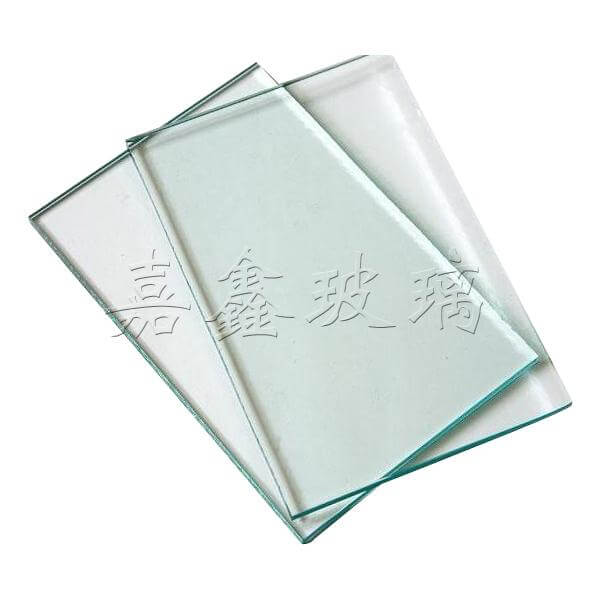
Transparent tempered glass starts as clear float glass and is heated to approximately 700°C, then rapidly cooled. This process creates a compressive stress layer on the surface and a tensile zone in the core, which dramatically increases mechanical strength compared with annealed glass. A properly tempered pane reaches roughly four to five times the impact resistance of ordinary glass of the same thickness.
For buyers, the practical meaning is straightforward. When tempered glass breaks, it fragments into small, relatively blunt pieces instead of large sharp shards. That behaviour is the reason tempered glass is required in balcony railings, stair balustrades, floor-to-ceiling windows, glass partitions, shower enclosures, skylights and other locations where human contact is likely. It is a safety product first, and a decorative product second.
Transparency matters as well. A good transparent tempered glass factory controls iron content, raw material consistency and tempering parameters so that the finished pane keeps high visible light transmission while remaining free of distortion. Excess roller wave, bow or edge chips are common quality complaints in imported tempered glass, and they usually trace back to furnace calibration and handling discipline rather than to the raw glass itself.
Manufacturer or Trader? How to Evaluate a Transparent Tempered Glass Company
Many buyers search online for a transparent tempered glass company and receive quotations from a mix of real factories, trading companies and agents. The price difference is often small at the quotation stage but becomes visible at the production stage. A deep-processing factory controls cutting, edging, drilling, tempering, laminating and insulating in-house, which shortens lead time and makes it easier to correct problems before shipment.
Jiangyin Jiaxin Glass Products operates as a deep-processing enterprise rather than a pure trader. The company invests in professional technical staff, advanced processing equipment and a structured management model, and it places consistent emphasis on staff training and production efficiency. For overseas buyers, that combination usually translates into more predictable quality and clearer communication during sampling and mass production.
Points worth comparing before you place an order
- In-house process coverage — can the supplier cut, edge, drill, temper, laminate and insulate under one roof, or are steps outsourced?
- Product breadth — can the same partner supply Low-E, insulated, laminated and fire-resistant variants when a project mixes requirements?
- Traceability — are batch records, glass sizes and processing parameters linked to each order?
- Packing discipline — are panes separated by cork or paper interlayers and fixed in fumigation-compliant crates?
- Communication speed — how quickly are drawings, tolerances and deviations confirmed in writing?
Factory versus trading company: a practical comparison
| Comparison point | Deep-processing factory | Trading company |
|---|---|---|
| Process control | Direct control over tempering, lamination and sealing | Depends on third-party factories |
| Lead time | Shorter, because steps run in sequence internally | Longer, with extra handling between workshops |
| Custom shapes and holes | Reviewed against tempering limits before production | Feedback loop is slower and less precise |
| Quality disputes | Resolved at source with production records | Often requires coordination between multiple parties |
| Consistency across repeat orders | Higher, same equipment and same parameters | May vary if the source factory changes |
Product Range of a Professional Transparent Tempered Glass Brand
A capable transparent tempered glass brand does more than supply single panes. Most modern projects require combinations: tempered glass that must also be insulated, laminated, coated or fire-rated. Jiangyin Jiaxin Glass Products structures its range around these combinations, which reduces the number of suppliers a project team has to manage.
The energy-saving insulated glass series is the core of the range and includes standard insulated glass, Low-E coated insulated glass, blinds-insulated glass and grid-pattern insulated glass. These products are mainly used for windows and architectural curtain walls. They limit heat transfer, reduce cooling and heating loads, dampen external noise, and in the blinds and grid versions also provide shading control and decorative division.
The safety protection series covers tempered glass and laminated glass, both widely used as basic safety materials in buildings. These products resist impact and, when fractured, do not release large sharp fragments. They are commonly selected for balcony railings, stair balustrades, full-height windows and skylights, protecting both residential and public spaces.
The shaped and curved series includes bent tempered glass and bent tempered insulated glass. Panes can be produced to different radii and rise heights to suit cylindrical walls, arched windows and doors, and curved canopies, while retaining the safety, energy and acoustic performance of flat tempered products.
Fire-resistant glass is the company’s special-function product. It provides compliant fire-retardant performance suitable for fire compartmentation requirements while maintaining good light transmission. Typical use is in fire-rated partitions, fire zones and smoke curtains, where the design intent is to keep visual openness without compromising fire safety.
Application Scenarios: Where Transparent Tempered Glass Performs Best
Understanding the application is the fastest way to specify the right product. Transparent tempered glass behaves very differently depending on where it is installed, how much wind load it carries and whether thermal insulation or acoustic control is required.
Residential and home decoration
In apartments and houses, tempered glass is used for balcony railings, interior partitions, shower enclosures, kitchen splashbacks and large fixed windows. Insulated tempered units are usually preferred for exterior windows because they improve comfort and reduce condensation. Blinds-insulated glass is a practical option for bedrooms and studies where both privacy and light control are needed without installing external shading.
Commercial buildings and curtain walls
Office towers, retail centres and hotels typically combine Low-E insulated tempered glass in the vision areas with laminated tempered glass where impact resistance or overhead safety is required. Low-E coatings reduce solar heat gain while keeping visible light transmission high, which supports both comfort and energy targets in climate-controlled buildings.
Public and transport-related spaces
Stations, airports, schools and hospitals apply tempered and laminated tempered glass in lobbies, atria, skylights, internal partitions and balustrades. Fire-resistant glass is used around stair cores, equipment rooms and compartment boundaries, where evacuation routes must remain visible and protected.
How to Specify Transparent Tempered Glass Correctly
Most quality problems in tempered glass orders originate from incomplete specification rather than from manufacturing faults. Before requesting a quotation from a transparent tempered glass manufacturer, confirm thickness, dimensions, edge type, hole positions, coating type, spacer width and any special requirements such as curved radius or fire rating.
Two rules matter more than any other. First, holes, notches and cut-outs must be completed before tempering, because tempered glass cannot be drilled or cut afterwards. Second, any edge that will be exposed must be specified clearly — polished flat edge, bevelled edge or arrised edge — since edge finish affects both appearance and breakage risk.
Typical thickness selection reference
| Application | Common thickness | Notes |
|---|---|---|
| Interior partitions and shower enclosures | 6–8 mm | Lighter weight, polished edges recommended |
| Balcony railings and stair balustrades | 10–12 mm, or laminated 6+6 / 8+8 mm | Follow local safety code and wind load calculation |
| Exterior windows and doors | Insulated unit, 5+9A+5 to 6+12A+6 | Low-E option for energy performance |
| Curtain walls and skylights | 8–15 mm tempered or laminated tempered | Heat soak testing may be requested for overhead glazing |
| Fire-rated partitions | Composite fire-resistant assembly | Rating must match the project’s fire compartment plan |
Ordering, Packing and After-Sales Support
Working with an experienced transparent tempered glass supplier should feel predictable. A typical process begins with drawings or a size list, followed by a technical review that flags infeasible holes, excessive hole-to-edge distances or dimensions that exceed furnace capacity. After confirmation, production runs through cutting, edging, drilling, tempering, lamination or insulating, then inspection and packing.
Packing deserves special attention for export orders. Panes should be separated by interlayers, secured inside wooden crates and clearly marked with dimensions, batch numbers and orientation. Good packing reduces breakage claims dramatically and makes site handling faster, especially when multiple sizes are mixed in one container.
After delivery, the supplier should remain reachable for installation guidance, replacement of transit-damaged panes and clarification of edge or coating questions. A partner that stays involved after shipment is generally a better long-term choice than one that only competes on unit price.
FAQ
How do I verify that a transparent tempered glass manufacturer is a real factory?
Ask for a video walkthrough of the tempering furnace, insulating line and lamination equipment, and request that a specific production batch be filmed during processing. A genuine deep-processing factory can show cutting, edging, tempering and sealing in sequence within the same site. It can also explain its own process limits, such as maximum pane size and minimum hole-to-edge distance, which traders often cannot answer precisely.
What is the difference between tempered glass and laminated tempered glass?
Tempered glass is heat-treated to increase strength and breaks into small blunt fragments. Laminated tempered glass combines two or more tempered panes with a plastic interlayer, so if breakage occurs the fragments stay bonded to the interlayer and the opening remains partly intact. For overhead glazing, balustrades and high-risk locations, laminated tempered glass is generally the safer specification.
Can a transparent tempered glass supplier produce custom sizes and curved shapes?
Yes. Tempered glass can be produced to custom dimensions within the manufacturer’s furnace capacity, and bent tempered glass can be formed to different radii and rise heights for cylindrical walls, arched openings and curved canopies. All holes, notches and cut-outs must be completed before tempering, so the shop drawings need to be finalised at the quotation stage.
What is the typical lead time for a tempered glass order?
Lead time depends on quantity, glass type and whether insulating or lamination steps are involved. Simple tempered panes usually move faster than composite products such as Low-E insulated or laminated units, which require additional curing or sealing time. Confirm the schedule in writing before production starts and allow buffer time for ocean freight and customs clearance.
How should transparent tempered glass be maintained after installation?
Clean with water and a mild neutral detergent using a soft cloth or squeegee, and avoid abrasive pads, razor blades or strong alkaline and acidic cleaners that can damage coatings or seals. Inspect edges and sealant joints periodically, and address any chipped edge promptly, because edge damage is the most common starting point for spontaneous breakage in tempered glass.
Why does Low-E insulated tempered glass improve energy efficiency?
Low-E coatings are thin metallic oxide layers that reflect long-wave infrared radiation while allowing visible light to pass. In an insulated unit, this reduces heat loss in cold seasons and limits solar heat gain in warm seasons, lowering heating and cooling demand. The correct coating surface and spacer width should be confirmed according to the climate zone and facade orientation.
Summary
Selecting a transparent tempered glass manufacturer is really a decision about process control, product breadth and communication quality. A deep-processing partner that handles cutting, tempering, lamination, insulation and curved forming in-house can support a project from a single sample through to repeat container orders, while reducing the coordination burden on buyers and contractors.
Jiangyin Jiaxin Glass Products Co., Ltd., based in Gushan Town, Jiangyin City, focuses on architectural and home decoration glass and offers Low-E coated glass, blinds-insulated glass, insulated glass, laminated glass, fire-resistant glass, tempered glass and composite assemblies. Guided by the principle of customer first and quality assurance, the company continues to invest in technical talent, processing equipment and management systems to support residential, commercial and public building projects.
For buyers preparing a new project, the practical next step is to prepare a complete size list with thickness, edge finish, hole positions and performance requirements, then request a technical review and quotation. Clear specifications at the start are the most reliable way to receive consistent transparent tempered glass on schedule.