
Sourcing architectural glass is rarely just about price. A transparent tempered glass manufacturer that can hold tolerances, deliver consistent flatness, and support the full build-up of Low-E insulating glass, laminated glass and fire-rated glass will protect your project schedule far more than a slightly cheaper quotation. This guide walks through the practical criteria buyers use when shortlisting a transparent tempered glass factory, the technical specifications that actually matter, and the questions worth asking before the first purchase order is signed.
Jiangyin Jiaxin Glass Products Co., Ltd. is a glass deep-processing enterprise based in Gushan Town, Jiangyin City, specializing in construction and home decoration glass. The company produces Low-E coated glass, blinds-integrated insulating glass, insulating glass, laminated glass, fire-resistant glass, tempered glass, and composite glass build-ups combining these products. That product breadth matters: a single qualified transparent tempered glass supplier who can also deliver the insulating and laminated units built around that tempered substrate removes an entire layer of coordination risk from a facade or window package.
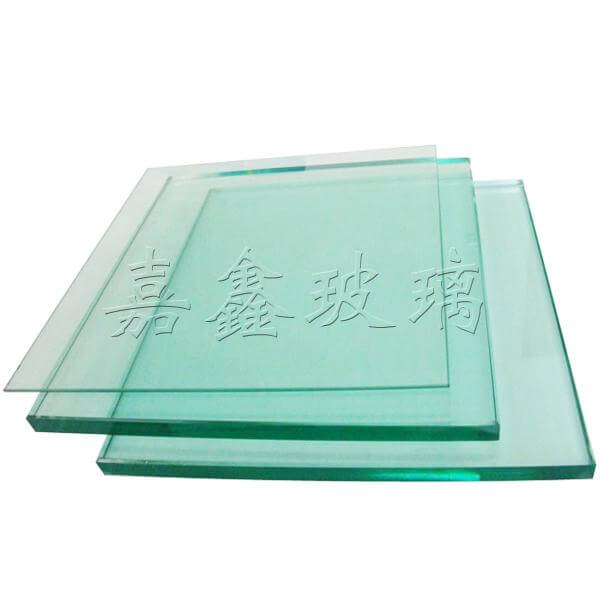
What a Transparent Tempered Glass Manufacturer Actually Does
Tempering is a thermal process. Ordinary annealed float glass is heated to roughly 620–700°C, then rapidly quenched with high-pressure air. The outer surfaces contract faster than the core, locking the glass into a state of permanent internal compression on the surface and tension in the center. The result is glass that is three to five times stronger than annealed glass of the same thickness and that, when it does break, fragments into small blunt granules rather than large sharp shards.
A capable transparent tempered glass factory manages this process around three variables that buyers rarely see but always feel later: flatness, roller wave, and edge quality. Flatness deviations show up as optical distortion in reflective facades. Roller wave becomes visible in low-angle viewing or when the glass is laminated into thick build-ups. Edge quality determines whether the unit survives handling, transport and installation without initiating a fracture. Any transparent tempered glass manufacturer you shortlist should be able to discuss these three points in specific terms rather than generic marketing language.
Deep-processing capability is the second half of the story. Tempering alone produces a bare substrate. Real building projects need that substrate combined into insulating glass units with Low-E coatings and warm-edge spacers, laminated with PVB or SGP interlayers for safety and acoustic performance, assembled with internal blinds for shading control, or produced as fire-rated assemblies for compartmentation. A manufacturer that only runs a tempering line will hand your project off to a third party for every downstream step, and each handoff adds lead time, warranty ambiguity and dimensional risk.
Why Buyers Shortlist a Transparent Tempered Glass Factory in Jiangyin
Jiangyin sits within one of China’s densest glass and building materials clusters along the Yangtze River Delta. That geography brings practical advantages for overseas buyers: mature upstream float glass supply, established logistics through Shanghai and Ningbo ports, and a deep pool of skilled processing technicians. For a transparent tempered glass manufacturer operating in this region, the supply chain for raw float glass, Low-E coating, spacers, desiccant and interlayers is short and well served.
Jiangyin Jiaxin Glass Products is located in Hongdou Village, Gushan Town, and focuses on construction and home decoration deep processing. The company invests in advanced processing equipment and a structured management model, with an emphasis on recruiting and developing technical staff. In practice, that translates into the two things buyers care about most: repeatable dimensional accuracy across production batches, and a technical contact who can read a shop drawing and flag issues before cutting begins.
Equally important is product range. When one transparent tempered glass supplier can also produce Low-E insulating glass, blinds-integrated insulating glass, laminated glass, fire-resistant glass and curved tempered glass, you gain three benefits: a single accountable party for the whole assembly, matched expansion and color across units made in the same plant, and shorter overall lead time because tempering, laminating and insulating happen in one workflow rather than three.
Product Range to Verify Before You Request a Quotation
Most projects need more than one glass type. A residential window package may call for Low-E insulating glass in living areas, laminated tempered glass on balcony railings, and fire-rated glass at a stairwell separation. A commercial facade may combine transparent tempered glass curtain wall panels with blinds-integrated units for solar control on specific elevations. Before you request pricing, confirm which of the following your candidate transparent tempered glass manufacturing plant can produce in-house.
| Product Series | Typical Build-Up | Common Applications |
|---|---|---|
| Transparent tempered glass | Single-pane clear float, heat-treated | Partitions, shop fronts, interior screens, balustrades |
| Low-E insulating glass | Tempered Low-E + spacer + tempered clear | Windows, doors, curtain walls, energy-conscious buildings |
| Blinds-integrated insulating glass | Tempered glass + internal blinds + sealed cavity | Solar control, privacy control, glare reduction |
| Laminated tempered glass | Two tempered plies + PVB or SGP interlayer | Overhead glazing, railings, skylights, acoustic barriers |
| Fire-resistant glass | Special fire-rated assembly with tempered components | Fire partitions, smoke curtains, compartment walls |
| Curved tempered glass | Bent and tempered, single or insulating | Curved facades, arched windows, cylindrical walls, canopies |
If a supplier can only quote the tempered pane and cannot confirm who will manufacture the sealed unit around it, ask for the name of the partner plant and the warranty chain. Splitting responsibility between two factories is one of the most common causes of condensation complaints and delayed replacements.

Specification Details That Separate a Good Factory from an Average One
Beyond the product list, a transparent tempered glass manufacturer should be assessed on the numbers it is willing to commit to in writing. Vague answers on thickness tolerance, flatness or bow are a warning sign. Reliable plants state their capability limits openly because they know the limits of their furnace and their quality control system.
Thickness and Size Capability
Most architectural tempering lines process glass from around 4 mm to 19 mm, with the sweet spot for building glazing between 6 mm and 12 mm. Maximum panel size depends on the furnace: typical Chinese architectural furnaces handle around 2440 × 3660 mm or larger, but larger panels raise handling risk and roller wave. If your design calls for oversized or jumbo panels, confirm the furnace dimensions, the lifting equipment, and the packing method before pricing.
Flatness, Bow and Roller Wave
Local bow and warp affect how the glass sits in its frame and how reflections behave. Most reputable manufacturers work to a bow tolerance of roughly 0.2–0.3 percent of the measured edge length, tighter for coated or laminated products. Ask for the value in writing, and ask how it is measured, because tolerances quoted without a test method are not meaningful.
Edge Work and Holes
Cuts, holes, notches and countersinks must be completed before tempering, and hole positions must respect minimum edge distances. Poor edge grinding is the single most common cause of spontaneous breakage in service. Look for flat polished or fine-ground edges with no visible chipping, and confirm whether cutouts are drilled on CNC equipment with position tolerance stated in the quotation.
Optical and Coating Requirements
If you need Low-E performance, the coating selection drives the whole build-up: which surface faces the cavity, what the U-value and solar heat gain coefficient should be, and whether the coating is temperable. A transparent tempered glass supplier that also laminates and seals insulating units can usually advise on the interaction between coating, spacer and gas fill, which is where real energy performance is won or lost.
A Practical Supplier Evaluation Checklist
Shortlisting is faster when you score candidates against the same criteria. The checklist below reflects what experienced buyers verify during a factory audit and pre-qualification.
- In-house process coverage. Confirm tempering, laminating, insulating and (if required) bending are performed in-house, not subcontracted.
- Equipment and maintenance records. Ask which furnace and insulating line are used, and whether maintenance and calibration logs are available.
- Quality control documentation. Request sample inspection reports covering dimensions, thickness, bow, edge quality, and fragment count for tempered glass.
- Batch traceability. Each tempered unit should trace back to a float glass batch and a tempering cycle record, so a claim can be investigated rather than argued.
- Packing and transport capability. End-cap packing, moisture barriers for sealed units, and experience with container loading and export documentation.
- Technical communication. Whether the engineering contact can review shop drawings, flag structural concerns, and respond in your working hours.
- Compliance and testing. Which standards the product is tested against, and whether third-party test reports can be supplied with the shipment.
- Sample responsiveness. How quickly the factory can cut and ship a physical sample, and whether sample cost is credited against the first order.
Adding a small but important point: ask for the name and role of the person who will handle your project after the order is placed. A transparent tempered glass manufacturer with good account continuity will save you considerably more time than one with a marginally lower unit rate but a rotating cast of sales contacts.
Applications: Where Transparent Tempered Glass Performs Best
Transparent tempered glass is the default safety glazing for most accessible building locations. In residential work it appears in balcony railings, staircase balustrades, full-height windows, shower enclosures, skylights and glass doors. In commercial projects it covers shop fronts, partition systems, lift shaft glazing, atrium balustrades, canopies and curtain wall vision panels.
The reason is straightforward: tempered glass satisfies the safety-glazing requirement without altering the optical appearance of clear float glass. Architects get an uninterrupted transparent surface, and specifiers get fragmentation behavior that reduces laceration risk. Where a higher risk of post-breakage retention exists, such as overhead glazing or high-level balustrades, laminated tempered glass is used instead, pairing two tempered plies with an interlayer that holds fragments in place.
Energy requirements then layer on top of safety. Low-E insulating glass, blinds-integrated insulating glass and laminated insulating build-ups all rely on tempered substrates for their safety function and on the sealed cavity for their thermal performance. A transparent tempered glass manufacturing plant that controls both halves of the assembly can deliver a window unit that satisfies safety glazing and thermal codes in a single tested product rather than two products judged separately.
Cost Factors That Shape a Tempered Glass Quotation
Unit price comparisons are only useful when the scope matches. When comparing quotations from any clear tempered glass supplier, confirm that each includes the same items: glass thickness and brand of float, edge work type, hole and notch drilling, chamfering, interlayer type and thickness for laminated units, spacer type and gas fill for insulating units, packing grade, and delivery terms.
The main drivers of price are thickness, panel size, edge complexity, coating type, and order volume. Larger panels and thicker glass reduce cutting efficiency and increase breakage risk in handling. Coated and laminated products add process steps and inspection time. Fragmented small orders carry higher per-square-meter setup cost than project-based batch orders. Most factories price per square meter with surcharges for cut-outs, polishing type and unusual dimensions, and will adjust the rate once drawings are finalized.
A practical recommendation for procurement teams: request pricing at the drawing stage with a stated assumption list, then re-price once the glass schedule is locked. This avoids the common trap of a low initial rate that grows through a series of variation orders once dimensions, edge types and build-ups are confirmed.
Installation and Maintenance Notes
Tempered glass must not be cut, drilled or edged after heat treatment — any post-tempering machining will destroy the temper. All fabrication has to be planned and completed before the tempering cycle, which means the drawing approval stage is critical. Once approved, changes carry real cost.
During installation, avoid direct contact between glass edges and hard metal or concrete; use setting blocks, edge clearance and structural sealant appropriate to the frame system. Do not apply localized heat or weld spatter near installed panels, and never allow glass to bear structural load on its edges unless the system is designed for it. For cleaning, use a neutral detergent with a soft cloth and avoid abrasive pads, which can scratch coated surfaces and, on Low-E units, damage the coating edge if misapplied.
For project handover, keep a schedule of each glazed unit including thickness, build-up, coating surface number and tempering record. This dramatically simplifies any later replacement, because the unit can be reproduced to the same specification rather than reverse-engineered from the installed assembly.
FAQ
How do I verify that a transparent tempered glass manufacturer is genuine rather than a trading company?
Ask for the factory address, the furnace model and count, and a short video walkthrough of the tempering and insulating lines. Genuine transparent tempered glass factories can also produce a tempering cycle record for a specific order, and will usually invite a factory audit. Trading companies typically redirect these requests or provide partner plant details only after the order is confirmed.
Can a transparent tempered glass factory supply both flat and curved tempered glass?
Only if it runs bending equipment alongside flat tempering. Curved tempered glass requires a bending furnace and different tooling, and not every factory has one. If your project includes cylindrical walls, arched windows or curved canopies, confirm curved capability in writing during pre-qualification, including achievable radius range and maximum panel size.
What is the minimum order quantity for a clear tempered glass supplier?
Requirements vary widely. Many factories accept small trial orders when standard thicknesses and simple edge work are involved, while custom coatings, blinds-integrated units and fire-rated assemblies usually need a project-scale batch. For first cooperation, a small trial order of standard panels is a sensible way to evaluate packing quality, dimensional accuracy and documentation before committing to a full facade package.
How long does production usually take for tempered and insulating glass?
Lead time depends on product mix, volume and coating availability. Simple flat tempered glass in standard sizes is typically faster than laminated units, blinds-integrated insulating glass or fire-rated assemblies, which add process steps and inspection. Always confirm lead time against your approved drawing date rather than the order date, since drawing approval is usually the true starting point.
Does transparent tempered glass reduce heat or noise on its own?
Single-pane tempered glass provides safety, not thermal or acoustic performance. Heat control comes from Low-E coatings and insulating cavities; noise reduction comes from laminated interlayers and asymmetric or thick insulating build-ups. If energy or acoustic targets matter, specify a full build-up such as tempered Low-E insulating glass rather than a single tempered pane.
What documentation should accompany a tempered glass shipment?
At minimum, look for a packing list with unit dimensions and build-up codes, inspection records for dimensions and visual quality, tempering traceability, and any test reports relevant to the specified standard. For insulating units, request the sealant and spacer specification so maintenance teams know what they are dealing with years later.
Summary
Choosing a transparent tempered glass manufacturer comes down to verifying process depth, tolerances and traceability rather than comparing headline rates. A factory that tempers, laminates, seals and bends in-house can take responsibility for the whole glazed unit, which shortens lead times and removes the finger-pointing that follows when a sealed unit fails and two suppliers each blame the other. Jiangyin Jiaxin Glass Products Co., Ltd., operating from Gushan Town in Jiangyin City, combines tempered, Low-E insulating, blinds-integrated, laminated, fire-resistant and curved glass production under one roof, serving residential, commercial and public building projects with customized glazing solutions.
For buyers, the practical next step is simple: prepare a glass schedule with thickness, build-up, dimensions, edge work and performance requirements, send it to two or three shortlisted transparent tempered glass factories, and compare the responses not only on price but on how thoroughly they engage with the technical detail. The factory that asks the right questions at quotation stage is usually the one that delivers fewer surprises at installation.