
A partition fire-rated glass manufacturer supplies glazing that holds a fire separation in place while leaving the space visually open. The right supplier pairs that fire-rated product with the insulating, tempered and laminated glass used in the same project, so partitions, doors and screens perform as one coordinated assembly.
What a Partition Fire-Rated Glass Manufacturer Provides
A partition fire-rated glass manufacturer produces transparent glazing that is intended to hold a fire separation in place, and supplies it cut to the sizes needed for fire partitions, fire compartments and smoke curtains. The point of the product is to combine fire performance with the light transmission that open interiors rely on.
Fire-rated glass is a special-function product, not a decorative upgrade. It is chosen where a wall has to resist fire but cannot become solid: the partition must still let daylight through and keep the two sides of the building visually connected. That is why the glazing is normally specified at the same time as the partition framing, the doors in that wall and the smoke curtain above it, rather than added late in the project.
The same order rarely stops at fire-rated panes. A building project usually also needs insulating glass for windows and curtain walls, tempered and laminated glass for balcony railings, stair railings, floor-to-ceiling windows and skylights, and sometimes bent glass for cylindrical walls, arched openings or curved canopies. A manufacturer that already processes those product families can deliver the fire-rated panels and the matching non-fire glass as one package.
Product families that arrive with the fire partition
Buyers tend to source the following glass types from one place, because they end up in the same elevation or on the same delivery schedule.
- Fire-rated glass for fire partitions, fire compartments and smoke curtains
- Insulating glass, including Low-E coated, integral blind and Georgian bar variants, for windows and curtain walls
- Tempered glass for balcony railings, stair railings, floor-to-ceiling windows and skylights
- Laminated glass for the same safety-critical locations
- Low-E coated glass for improved thermal performance
- Bent tempered and bent tempered insulating glass for cylindrical walls, arched doors and windows and curved canopies
- Composite glass that combines several of the above into one unit

Where Partition Fire-Rated Glass Is Specified
Partition fire-rated glass is specified wherever a transparent wall also has to act as a fire separation. The three situations that come up most often are building fire partitions, fire compartments that separate different uses inside one building, and smoke curtains that stop smoke drifting across an open ceiling.
In each case the design intent is identical: stop fire and smoke without turning the wall opaque. A solid board would do the fire job and destroy the daylight and sightlines the layout was planned around. Fire-rated glazing keeps the compartment line exactly where it belongs while the space around it stays open.
Because those three applications appear in residential, commercial and public projects alike, the glass is usually bought in project-specific sizes rather than in one standard format. That makes cut-to-size scheduling and delivery sequencing as important as the glass itself, especially when the same wall also carries doors and framed screens.
Keeping the partition line visible
A fire separation does not have to read as a solid barrier. When the glazing is clear and the framing is consistent with the rest of the interior, the compartment line becomes part of the design instead of something hidden behind a solid wall. The same logic applies to smoke curtains, which can keep a light visual presence while still doing their job.
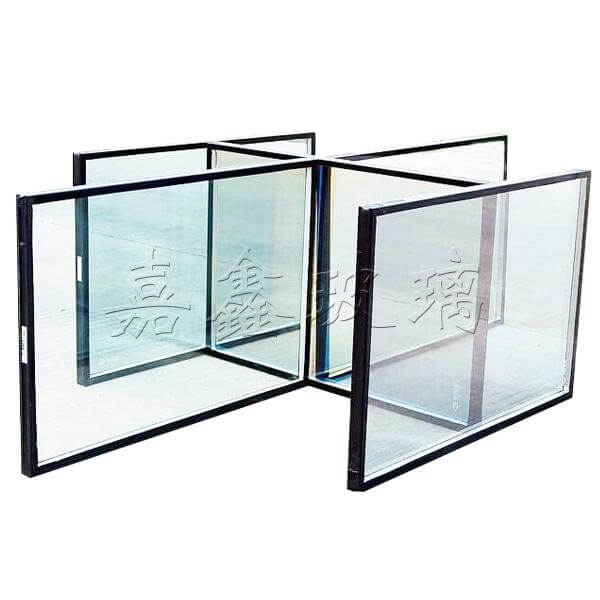
How to Evaluate a Partition Fire-Rated Glass Supplier
Evaluate a partition fire-rated glass supplier on four points: the product range it can process itself, how it handles cut-to-size and shaped panels, whether it can supply the matching non-fire glass for the same project, and how clearly it documents what it ships.
Range matters because a fire partition rarely stands alone. If the supplier also makes insulating glass, tempered glass, laminated glass and bent glass, the fire-rated panes can be matched to the rest of the elevation in finish and format. That reduces the number of samples, approvals and deliveries the project has to manage, and it keeps responsibility for fit in one place.
Capability for shaped work is a separate test. Cylindrical walls, arched doors and windows, and curved canopies need bent tempered or bent tempered insulating glass rather than flat panels cut to a curve. A supplier that can produce the curved unit while keeping the safety, energy and acoustic performance of the flat version saves the project a second supplier and a second set of tolerances. A company such as Jiangyin Jiaxin Glass Products Co., Ltd., based in Gushan Town, Jiangyin City, works across fire-rated, insulating, tempered, laminated and curved glass, which is the combination this kind of project typically needs.
Documentation is where many purchases go wrong. Fire acceptance depends on the glass and the assembly being right on site, so the information that travels with each delivery should be agreed before the order is placed rather than chased afterwards.
Questions worth asking before the order
- Can you supply the fire-rated panels and the insulating, tempered and laminated glass for the same elevation?
- How do you handle curved or shaped units for cylindrical walls, arched openings and curved canopies?
- What information travels with each delivery so the fire acceptance check can be completed on site?
- Will repeat orders on this project use the same construction and finish?
Common Selection Mistakes to Avoid
The most common mistake is buying fire-rated glass as a stand-alone item. The fire panels arrive, but the insulating, tempered and laminated glass for the same wall comes from another source, and the project then has to reconcile different sizes, different lead times and different site dates.
A second mistake is to specify fire performance and forget light transmission. Fire-rated glass is chosen precisely because the partition must stay transparent; a product that solves the fire side while making the space feel closed defeats the reason for using glass in the first place.
A third is to leave the curved or shaped parts until late. Bent tempered and bent tempered insulating units are made to the shape of the opening, so the arc and the frame details have to be settled early; postponing them usually moves the whole installation date.
FAQ
What does a partition fire-rated glass manufacturer do?
A partition fire-rated glass manufacturer produces transparent glass that is intended to act as a fire separation and supplies it in project sizes for fire partitions, fire compartments and smoke curtains. It normally also supplies the insulating, tempered and laminated glass used elsewhere in the same building.
How do I choose a reliable partition fire-rated glass supplier?
Start with range, shape capability and documentation. Check that the supplier can provide the fire-rated panels and the matching non-fire glass for the same elevation, that it can produce curved units where the design needs them, and that the information accompanying each delivery is agreed before the order is placed.
Where is partition fire-rated glass usually installed?
It is used in building fire partitions, in fire compartments that separate different uses inside one building, and in smoke curtains. In all three the purpose is the same: keep the fire separation without making the wall opaque.
Can fire-rated glass be combined with other glass types?
Yes. Fire-rated glass is frequently part of a composite unit or the same order as insulating, tempered and laminated glass, so that one supplier delivers the full set of panes for a wall or elevation rather than only the fire-rated panels.
Why does transparency matter in a fire-rated partition?
Because the partition exists as glass in the first place. If the fire-rated product reduces daylight and sightlines, the space loses the quality the layout was planned around; keeping light transmission is part of the specification, not a bonus.
Summary
Fire-rated partitions work best when the glass, the framing and the surrounding glazing are bought as one coordinated package. Look for a partition fire-rated glass manufacturer that can cover fire-rated panels alongside insulating, tempered, laminated and bent glass, that can cut and shape units to the opening, and that documents each delivery clearly enough for the fire acceptance check. Get those three right and the fire separation stays almost invisible in daily use while still doing its job where it matters.