
Selecting the right glazing partner can decide whether an office building performs as designed for the next twenty years or quietly drains energy, comfort and maintenance budgets from day one. For architects, façade contractors, window fabricators and project buyers, the search for a dependable office venetian blinds insulated glass supplier is rarely about finding the cheapest panel — it is about finding a manufacturer that understands sealing technology, coating performance, safety requirements and delivery discipline at the same time.
Jiangyin Jiaxin Glass Products Co., Ltd. (江阴市嘉鑫玻璃制品有限公司) is a deep-processing glass enterprise based in Gushan Town, Jiangyin City, specializing in architectural and home-improvement glass. The company produces Low-E coated glass, venetian blinds insulating glass, standard insulating glass, laminated glass, fire-rated glass, tempered glass, and composite units built from these base products. This article explains what integral blinds glazing actually is, how to evaluate a venetian blinds insulated glass factory, and how the different product families fit together in real office and commercial projects.
What Is Office Venetian Blinds Insulated Glass and Why Does It Matter?
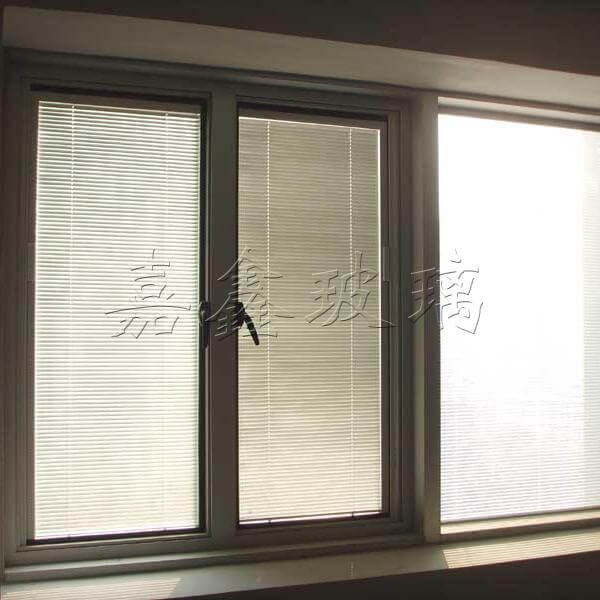
Office venetian blinds insulated glass — often called integral blinds glazing, built-in blinds double glazing, or sealed-in blinds IGU — is a factory-assembled insulating glass unit in which an aluminium venetian blind is permanently sealed inside the cavity between two panes of glass. The blind is operated from outside the unit, typically by a magnetic slider, a rotating knob, or an electric motor, so no cord, chain or dust ever enters the space between the panes.
The advantage for office environments is significant. Conventional internal blinds collect dust, get damaged by tenants, block window cleaning access and are frequently left in the wrong position, forcing cooling systems to work harder than the design intended. When the blind is sealed inside the glazing cavity, it stays clean for the life of the unit, cannot be tampered with, and can be adjusted floor by floor to control glare on screens without blacking out the entire façade.
Combined with a Low-E coating and an argon-filled cavity, an integral blinds unit delivers solar control, thermal insulation and acoustic improvement in a single product. That is why demand from office refurbishment and new-build commercial projects continues to grow, and why choosing an experienced office venetian blinds insulated glass manufacturer matters more than the unit price alone.
Why Work With a Specialized Office Venetian Blinds Insulated Glass Manufacturer?
Integral blinds glazing is one of the more demanding products in the insulating glass category. The blind mechanism must survive the heat and pressure of the sealing process, the desiccant and spacer system must keep the cavity dry for decades, and the operating mechanism must remain smooth after thousands of tilt cycles. A general-purpose glass trader rarely controls these variables; a specialized office venetian blinds insulated glass supplier does.
Jiangyin Jiaxin Glass approaches this from the manufacturing side. The company invests in advanced processing equipment, applies structured management practices, and continuously develops its technical team so that production efficiency and quality control improve together rather than trading off against each other. For buyers, this translates into consistent cavity sealing, repeatable blind tension, and a documented production process that can be audited before a purchase order is issued.
Key capabilities buyers should verify
- In-house tempering, laminating and insulating line capability rather than pure outsourcing
- Controlled spacer bending, desiccant filling and dual-seal application for cavity durability
- Blind mechanism testing for tilt, raise and lower operation before sealing
- Low-E coating selection matched to the project’s climate and orientation
- Traceability from glass batch to finished unit, including size and configuration records
- Custom sizing and drawing review before production release
These points separate a genuine office venetian blinds insulated glass factory from a reseller. When a project requires hundreds of identical units across multiple floors, consistency is the product — not just the glass.
Product Range: Energy-Saving, Safety, Curved and Fire-Rated Glass
Office projects rarely need a single glass type. A typical commercial building combines curtain wall glazing, interior partitions, balustrades, skylights, fire compartments and decorative features. Jiaxin Glass organizes its output into four product families that can be combined into composite units.
Energy-saving insulating glass series
The core product line includes standard insulating glass, Low-E insulating glass, integral venetian blinds insulating glass and Georgian bar (grid) insulating glass. These units are mainly used for windows and building curtain walls. They reduce heat transfer across the façade, lower heating and cooling loads, and attenuate exterior noise. The blinds version adds adjustable shading and light diffusion, while grid versions provide a traditional divided-light appearance for projects where façade aesthetics require it.
Safety and protection series
Tempered glass and laminated glass form the safety baseline of any building. Both resist impact better than annealed glass, and when broken they avoid producing large sharp shards that could cause injury. Laminated glass holds its fragments in place through the interlayer, while tempered glass breaks into small granular pieces. These products are widely used for balcony railings, stair balustrades, full-height windows, skylights and other locations where people move close to the glazing. Laminated units can also be combined with insulating glass to create safety glazing with thermal performance.
Curved and shaped glass series
Curved tempered glass and curved tempered insulating glass are produced to project-specific radii and arch heights. They suit cylindrical walls, arched windows and doors, curved canopies and other non-standard building geometry. Curving does not mean sacrificing performance: the finished unit can still retain safety, thermal insulation and acoustic properties when specified correctly.
Fire-rated glass
Fire-rated glass is the specialist product in the range. It provides fire-resistant performance that supports fire separation requirements while maintaining good light transmission. Typical applications include fire compartment partitions, smoke curtains/smoke barriers and protected escape routes. Because fire performance and transparency are delivered together, designers can meet safety requirements without turning interior spaces into opaque boxes.

Product Comparison for Office and Commercial Projects
The table below summarizes how the main product families are typically positioned. Final specifications should always be confirmed against project drawings, local building codes and the required performance values.
| Product | Typical Office Application | Primary Benefit | Customization Options |
|---|---|---|---|
| Venetian blinds insulating glass | Office façade, meeting rooms, screen-facing workstations | Adjustable shading with a sealed, dust-free blind | Manual magnetic or electric operation, slat width, color, Low-E coating |
| Low-E insulating glass | Curtain walls, window walls, glazed atria | Reduced heat transfer and lower HVAC energy use | Cavity width, coating type, argon fill, warm-edge spacer |
| Tempered glass | Balustrades, full-height glazing, doors | High impact strength, safer breakage pattern | Thickness, edge work, holes and cutouts, heat soak where required |
| Laminated glass | Skylights, overhead glazing, security glazing | Fragments stay bonded to the interlayer | Interlayer type and thickness, color, combination with IGU |
| Curved tempered glass | Curved entrances, cylindrical walls, arched canopies | Design freedom for non-standard geometry | Radius, arch height, size, laminated or insulating build-up |
| Fire-rated glass | Fire partitions, smoke barriers, protected corridors | Fire resistance combined with daylight transmission | Unit build-up, framing coordination, required fire rating |
Applications of Integral Blinds Glazing in Office Buildings
In open-plan offices, glare on monitors is a productivity issue, not a cosmetic one. Sealed blinds allow each façade zone to be regulated independently, so east-facing desks can be shaded in the morning while the west side stays open. Because the blind sits behind the glass, it also avoids the tangled cords and broken wands that facility managers deal with in conventionally shaded buildings.
Meeting rooms and executive offices benefit from the clean appearance of integral blinds. There are no loose components to clean, no fabric to fade, and the glazing reads as a single finished surface from both inside and outside. For refurbishment projects where the existing frame depth is limited, the compact build-up of an integral blinds unit is often easier to accommodate than a separate shading system plus a standard double-glazed unit.
Hospitals, clinics and laboratory buildings adjacent to office space also use this product because the sealed cavity prevents dust and microbial accumulation on the blind surface — an important advantage wherever hygiene matters.
How to Select the Right Configuration for Your Project
Start with orientation and climate. A façade that receives strong afternoon sun needs a different coating and blind strategy than a shaded north elevation. Confirm the required thermal and solar performance with your façade consultant, then match the Low-E coating, cavity width and blind slat specification to that target.
Next, decide on the operating method. Manual magnetic and knob-operated systems are simple, robust and require no electrical work. Electric systems are preferable where units are large, high-mounted or need to be linked to building automation. For either option, confirm that the supplier can provide spare parts and operating instructions for the facility team.
Finally, confirm size limits, tolerances and handling requirements. Large integral blinds units are heavy and must be lifted with appropriate equipment. Ask the office venetian blinds insulated glass supplier for unit weights, recommended lifting points and stacking instructions before delivery, so site logistics do not delay installation.
Installation, Handling and Maintenance Guidance
Integral blinds glazing should be stored vertically on padded A-frames, protected from direct sunlight and kept away from standing water. During installation, do not remove protective film until the frame is fixed, and never drill, screw or clamp through the edge seal of an insulating glass unit — any penetration of the seal will allow moisture into the cavity and void the unit’s long-term performance.
Once installed, maintenance is deliberately minimal. Clean the glass with a soft cloth and a mild, non-abrasive cleaner; avoid acidic or alkaline products that can attack the coating or the sealant. Exercise the blind mechanism periodically through its full travel to keep the operating components free, and record any abnormal resistance so it can be investigated early.
Framing, drainage and ventilation details matter as much as the glass itself. Ensure weep holes and drainage paths in the window or curtain wall system are unobstructed, and check that the glazing gaskets are correctly seated to avoid water ingress at the perimeter.
FAQ
What is office venetian blinds insulated glass?
It is a factory-sealed insulating glass unit with an aluminium venetian blind installed inside the cavity between two panes. The blind is operated from outside the unit by a magnetic slider, a knob, or an electric motor, so it stays clean and cannot be damaged by occupants. In office buildings it provides adjustable shading and glare control while retaining the thermal and acoustic benefits of double glazing.
How do I choose a reliable office venetian blinds insulated glass supplier?
Check whether the supplier actually processes glass in-house — tempering, laminating, insulating and blind assembly — rather than acting as a trading intermediary. Ask for the proposed unit build-up, control method, packing and handling instructions, and confirm that drawings will be reviewed before production. A specialized office venetian blinds insulated glass manufacturer should be able to explain the sealing system and blind mechanism in technical detail.
Can integral blinds glazing be combined with Low-E glass and laminated glass?
Yes. Venetian blinds insulating glass can be produced with a Low-E coated pane facing the cavity to reduce heat transfer, and the unit can be combined with laminated glass where safety or security glazing is required. The exact build-up depends on the required performance values, unit size and weight, so the configuration should be confirmed with the manufacturer for each project.
Is fire-rated glass suitable for office partitions?
Fire-rated glass is commonly used for fire compartment partitions, smoke barriers and protected corridors in commercial buildings. It maintains transparency in areas that must also meet fire separation requirements. The required fire rating, unit build-up and framing must be coordinated with the project’s fire strategy and local building regulations.
Do you produce curved glass for office entrances and canopies?
Yes. Curved tempered glass and curved tempered insulating glass can be produced to specified radii and arch heights for cylindrical walls, arched windows and curved canopies. Project drawings and site measurements should be provided so the curvature and dimensions can be confirmed before production.
How should integral blinds units be handled on site?
Store units vertically on padded supports, keep them dry, and use suitable lifting equipment for large or heavy panels. Do not drill or fix through the edge seal, and keep protective film in place until final fixing. Following the supplier’s handling instructions protects both the glass and the blind mechanism.
Summary
Choosing an office venetian blinds insulated glass supplier is a decision that affects occupant comfort, energy consumption and long-term maintenance cost. The ideal partner combines genuine deep-processing capability, controlled sealing and blind assembly, and a product range broad enough to cover the whole building — from Low-E insulating glass and integral blinds units for the façade, to tempered and laminated glass for safety locations, curved glass for architectural features, and fire-rated glass for protected zones.
Jiangyin Jiaxin Glass Products, based in Gushan Town, Jiangyin City, continues to develop its technical team, processing equipment and management systems around a simple principle: customer first, quality assured. For overseas buyers and project contractors looking for a office venetian blinds insulated glass factory that can review drawings, quote custom configurations and deliver consistent units, the company’s combined energy-saving, safety, curved and fire-rated product families provide a practical starting point for specification discussions.