
Curtain walls define how a building looks, how much energy it consumes, and how comfortable the people inside feel. Among all the components of a façade system, the glazing unit usually decides whether the project meets its energy targets or fails them. That is why so many architects, façade consultants and contractors ask the same question: which Low-E insulated glass for curtain walls actually performs well over a 20-year service life, and where can a reliable, professional supplier be found?
This guide answers that question from a manufacturing and procurement perspective. It explains how a Low-E insulated glass unit is built, which parameters matter for curtain wall applications, how to compare suppliers, and how to keep the glass performing after installation. The insights are based on the product range of Jiangyin Jiaxin Glass Products Co., Ltd., a specialized deep-processing glass manufacturer based in Gushan Town, Jiangyin City, whose portfolio covers Low-E coated glass, insulating glass, built-in blinds insulating glass, laminated glass, tempered glass, fire-resistant glass and composite glass systems for residential, commercial and public building projects.
Why Low-E Insulated Glass Matters for Curtain Wall Performance
An insulating glass unit (IGU) consists of two or more glass panes separated by a sealed spacer bar that creates a dry air or gas-filled cavity. Adding a Low-E (low-emissivity) coating to one of the surfaces changes the physics of that cavity dramatically. The coating reflects long-wave infrared radiation back into the room in winter and reduces solar heat gain in summer, which lowers both heating and cooling loads.
In a curtain wall, glass typically represents the largest single area of the building envelope. Heat loss through an inefficient façade can account for a significant share of total energy consumption, and solar overheating near the perimeter can force the HVAC system to work harder than necessary. A properly specified Low-E insulating glass unit reduces that load, improves thermal comfort near the glass, and helps the project meet modern energy codes without sacrificing daylight.
There is also a comfort dimension that buyers often underestimate. Standard single glazing creates a cold downdraft in winter and a radiant heat sensation in summer, which pushes occupants to adjust thermostats. Low-E insulating glass raises the inner pane surface temperature and blocks radiant heat, so the space feels stable. For offices, hotels, hospitals and public venues, that difference is felt every working day.
Finally, an IGU contributes to acoustics. The sealed cavity and the mass of multiple panes reduce airborne noise from traffic, railways and urban activity. Combined with laminated glass, the same unit can deliver both thermal and acoustic performance, which is why composite build-ups are increasingly common in city-centre curtain walls.
What Is Inside a Curtain Wall Low-E Insulated Glass Unit?
Understanding the build-up helps buyers compare quotations on equal terms. A typical curtain wall IGU includes two or more glass panes, one of which carries a Low-E coating, a spacer bar filled with desiccant, a primary seal of butyl and a secondary seal of polysulfide or silicone, and often an argon or krypton gas fill. Each element influences performance, durability and cost.
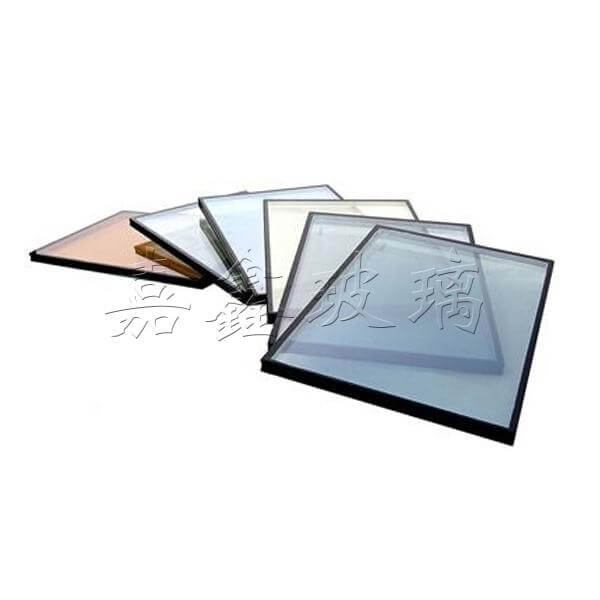
The Low-E coating itself comes in two broad families. Hard-coated (pyrolytic) Low-E is durable and easier to handle, and it can be used in monolithic or laminated positions. Soft-coated (sputtered) Low-E offers lower emissivity and better thermal performance but requires careful handling and is normally placed on a sealed cavity surface. The right choice depends on the target U-value, the climate, and whether the glass will be processed further or exposed.
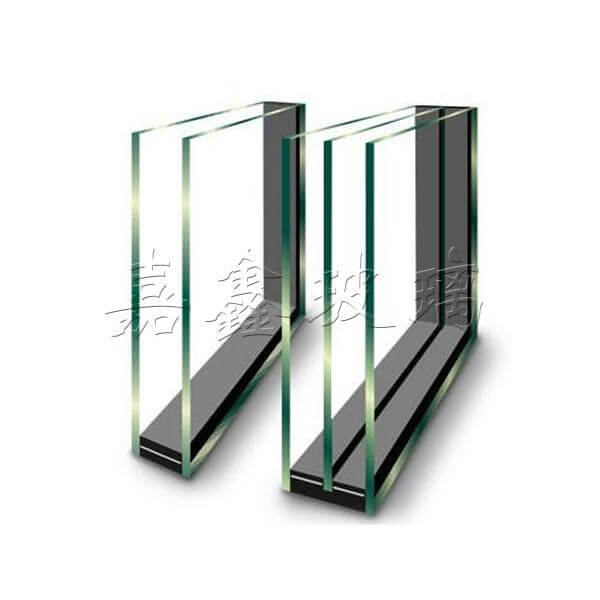
Cavity width is another lever. A 12 mm to 16 mm cavity filled with argon is a common specification for curtain walls in temperate climates, while wider cavities or krypton may be used where very low U-values are required. Wider is not automatically better: excessively wide cavities can allow convection currents inside the unit, so the optimum depends on the glass combination and gas type.
Edge sealing quality is what determines whether performance survives for years. Moisture ingress causes fogging between panes, and gas leakage reduces the insulating value quietly over time. Buyers should look for controlled production conditions, automated sealing lines and documented quality checks rather than judging an IGU only by its headline U-value on a datasheet.
Curtain Wall Low-E Insulated Glass Selection Guide: Key Parameters
Selection should begin with the project’s performance targets, not with a price per square metre. The table below summarises the parameters that most often drive decisions on curtain wall glazing, together with practical guidance for buyers.
| Parameter | Why It Matters | Practical Guidance |
|---|---|---|
| U-value | Measures heat transmission through the unit | Lower U-value means better insulation; confirm whether the value was calculated for the centre of glass or for the whole window |
| SHGC / shading coefficient | Controls how much solar heat enters the building | Lower SHGC suits hot climates and west-facing façades; moderate SHGC supports passive heating in cold climates |
| Visible light transmittance (VLT) | Affects daylight, view clarity and lighting cost | Balance against SHGC; very dark coatings reduce daylight and can increase artificial lighting demand |
| Glass thickness and type | Resists wind load, thermal stress and impact | Tempered or heat-strengthened panes are typical; thickness is determined by façade engineering calculations |
| Gas fill and cavity | Improves thermal performance inside the sealed cavity | Argon is common; specify cavity width together with the coating type for consistent results |
| Safety and fire requirements | Determines the required breakage behaviour and compartmentation | Combine laminated or fire-resistant glass where the façade requires it, based on project fire strategy |
| Edge seal and warranty | Determines long-term durability against fogging and gas loss | Ask for seal construction details, ageing test data and written warranty terms |
Climate Zone and Orientation Decide the Coating
In hot climates and on west-facing façades where afternoon solar gain is intense, a Low-E coating with a lower SHGC and moderate VLT usually gives the best balance between cooling load and daylight. In cold climates, the priority shifts toward a very low U-value so that heat stays inside during winter, and a slightly higher SHGC can be beneficial for passive solar gain during the heating season.
Mixed climates require a compromise, and the decision should be verified with whole-building energy modelling rather than with a single glass datasheet. For projects with several orientations, specifiers sometimes use different coatings for different elevations of the same curtain wall, which is entirely feasible when the supplier can manage separate production batches consistently.
Building the Right Unit: Tempered, Laminated and Fire-Resistant Options
Curtain wall glass is rarely a simple two-pane IGU. Safety, wind load, thermal stress and fire strategy usually require a more sophisticated composite. Tempered glass is the standard base for façades because it provides higher strength and breaks into small, less hazardous fragments when it fails. Heat-strengthened glass may be chosen where flatness and residual strength requirements point toward it.
Laminated glass adds a plastic interlayer that holds fragments in place after breakage and improves acoustic performance. For overhead glazing, sloped façades, skylights and high-level panels above occupied space, laminated build-ups are frequently required. A laminated outer pane combined with an insulating cavity and a Low-E coated inner pane delivers safety, thermal insulation and sound reduction in one unit.
Fire-resistant glass is a separate category used where compartmentation, smoke control or protected escape routes must be maintained. It can be integrated into insulating glass systems so that a fire-rated façade section still matches the visual appearance of adjacent Low-E units. This is where a manufacturer with experience in composite glass becomes valuable, because the combination must be engineered pane by pane rather than selected from a catalogue.
Built-In Blinds Insulating Glass as a Shading Solution
Interior blinds behind glass are exposed to dust, damage and difficult cleaning in tall curtain wall buildings. Built-in blinds insulating glass places the blind inside the sealed cavity, where it is protected from dirt and mechanical wear. The blind can be adjusted to control glare and privacy while the Low-E coating continues to manage heat flow. For offices, schools, hospitals and residential towers where solar control and privacy are both important, this composite product removes the need for external shading devices and their maintenance.
Decorative options such as internal grilles and muntin bars can also be sealed inside the cavity, producing a divided-light appearance without the cleaning difficulty of surface-mounted bars. This is popular in residential and hospitality projects that need a traditional visual character combined with modern thermal performance.
How to Evaluate a Curtain Wall Low-E Insulated Glass Supplier
Price is the visible part of a quotation; capability is the part that protects the project schedule. A professional curtain wall glazing supplier should be able to explain the build-up it proposes, show consistent production quality, and support the technical documentation that façade consultants and main contractors need for approval.
- Process coverage: confirm that tempering, coating handling, laminating, insulating and composite assembly are managed under one quality system, so responsibility for the final unit is not fragmented across several workshops.
- Customisation capability: check whether the factory can produce non-standard sizes, curved and shaped glass, mixed-thickness build-ups and built-in blinds units rather than only standard rectangles.
- Technical support: a reliable supplier helps with U-value and SHGC data, spacer and seal descriptions, weight calculations and glazing recommendations for the specific façade system.
- Traceability: batch records, pane marking and inspection reports make it possible to identify and replace a defective unit without remeasuring the whole elevation.
- Delivery discipline: curtain wall panels are installed in a fixed sequence; late or mis-sequenced glass deliveries stop the whole envelope programme.
- After-sales response: ask how fogging, seal failure or transit damage claims are handled, and what the written warranty covers.
Jiangyin Jiaxin Glass Products Co., Ltd. operates as a specialized deep-processing glass manufacturer in Gushan Town, Jiangyin City, serving building and home-improvement markets with Low-E coated glass, insulating glass, built-in blinds insulating glass, laminated glass, fire-resistant glass, tempered glass and composite systems. The company invests in processing equipment, technical personnel and scientific management practices, and works with customers on project-specific specifications rather than offering only a fixed product list.
What Drives Price, and Why the Cheapest Unit Is Rarely the Best Value
Several factors explain price differences between quotations: glass thickness and pane count, coating type, gas fill, spacer technology, lamination, blinds mechanism, unit size, edge work, and packaging for long-distance transport. A very low quotation often reflects a thinner pane, a simpler seal, no gas fill, or fewer process controls — savings that may be repaid later as higher energy bills, early seal failure or replacement labour on a scaffold.
The right comparison is cost per square metre of a fully specified unit against a documented specification, with warranty terms and delivery scope stated clearly. Buyers who request a build-up sheet alongside the price are in a much stronger position to compare suppliers fairly.
Installation and Long-Term Maintenance Guidance
Even excellent glass can underperform if it is installed carelessly. Curtain wall units should be handled with suction lifters and stored vertically in a dry, ventilated area, never stacked flat on the ground. Edges and seals must not be nicked, because damage to the secondary seal creates a path for moisture ingress.
Setting blocks and backer rods should support the unit correctly, and drainage paths in the façade system must remain open so that water does not stand against the glass edge. The glazing tape or gasket should be compatible with the sealant used, since chemical incompatibility can soften the edge seal over time.
Cleaning is straightforward if done sensibly: use water with a mild, neutral detergent and a soft cloth or squeegee, avoid abrasive powders and metal scrapers, and never clean coated glass in direct sunlight when surface temperatures are high. On a building schedule, façade cleaning twice a year is usually enough to protect both the coating and the visible appearance. During inspections, check for edge seal degradation, condensation between panes, and movement in the blind mechanism of built-in blinds units, and report issues early while warranty coverage is still active.
FAQ
Which Low-E insulated glass is best for a curtain wall project?
There is no single best unit for every building. The right Low-E insulating glass for curtain walls balances U-value, solar heat gain coefficient, visible light transmittance, wind load requirements and fire strategy for the specific climate and orientation. A west-facing façade in a hot climate needs a different coating from a north-facing façade in a cold climate, which is why specification should start with performance targets rather than with a product name.
How can I identify a professional and reliable curtain wall Low-E insulated glass supplier?
Look for a manufacturer that controls tempering, coating handling, laminating and insulating assembly internally, provides technical documentation, offers customised build-ups and sizes, and answers questions about seal construction and warranty in writing. Visiting the factory, reviewing sample units and checking references for comparable commercial projects are the most reliable ways to judge capability.
Does argon filling make a measurable difference in an insulating glass unit?
Yes. Filling the cavity with argon slows heat transfer and convection inside the unit compared with dry air, which improves the U-value. The benefit depends on cavity width, gas retention and seal quality, so the gas fill should always be specified together with the spacer and sealing system rather than treated as an optional extra.
Can built-in blinds insulating glass replace external shading devices?
In many projects it can reduce or replace the need for internal blinds and simplify maintenance, since the blind is sealed inside the cavity and cannot collect dust. It provides adjustable glare and privacy control alongside the thermal benefit of the Low-E coating. Whether it fully replaces external shading depends on the solar load and the façade design, so it should be assessed together with the whole-building shading strategy.
When should fire-resistant glass be combined with Low-E insulating glass?
Where the façade or interior partition must maintain fire compartmentation, protect an escape route or limit smoke spread while still providing daylight and thermal comfort. In such locations a fire-rated pane can be combined with Low-E insulating glass in one composite unit so the appearance matches adjacent glazing. The exact build-up must follow the project fire strategy and the relevant test evidence.
How long does production and delivery usually take for custom insulating glass?
Lead time depends on unit size, coating availability, lamination, blinds assembly and order quantity, and it should be agreed in the contract with a delivery sequence that matches the façade installation programme. Providing complete drawings, build-up specifications and quantity schedules at the enquiry stage is the most effective way to shorten the process and avoid rework.
Summary
Choosing Low-E insulated glass for curtain walls is a technical decision with long-term financial consequences. The most successful projects start from performance targets — U-value, solar control, daylight, safety and fire requirements — and then work backwards into a specific build-up of coating, glass type, cavity, gas fill, spacer and seal. Tempered, laminated, fire-resistant and built-in blinds options should be combined deliberately, because a curtain wall is a system rather than a single pane.
Supplier selection matters as much as product selection. A manufacturer with in-house deep-processing capability, customisation flexibility, documented quality control and responsive technical support protects both the construction schedule and the building’s long-term performance. Jiangyin Jiaxin Glass Products Co., Ltd., based in Gushan Town, Jiangyin City, supplies Low-E coated glass, insulating glass, built-in blinds insulating glass, laminated glass, fire-resistant glass and tempered glass for residential, commercial and public building projects, and works with partners on specification-driven, customised glazing solutions built around the principle of customer first and guaranteed quality.