
Choosing a transparent tempered glass company comes down to product scope, application fit, and clear communication. This guide explains how to compare options, which questions to ask, and how to contact a supplier so that your project requirements reach the right technical contact the first time.
What a Transparent Tempered Glass Company Should Offer
A transparent tempered glass company should offer more than a single product line. Tempered glass is usually one part of a wider deep-processing range that also covers insulating, laminated, fire-resistant, and curved glass, because most building projects combine several of these products in one package.
Most projects do not need one glass type in isolation. A window package may combine insulating units with tempered or laminated panes, while a lobby may need fire-resistant partitions next to curved glazing. A supplier with a broad range keeps those products compatible and reduces the number of separate order conversations.
Jiangyin Jiaxin Glass Products Co., Ltd. is located in Gushan Town, Jiangyin City, and works in building and home decoration glass deep processing. Its product range covers Low-E coated glass, louvered insulating glass, insulating glass, laminated glass, fire-resistant glass, tempered glass, and composite glass made from these products.
Product families to confirm
Before comparing suppliers, confirm that the offered range covers the glass types your drawings call for. A deep-processing scope usually includes:
- Tempered glass
- Laminated glass
- Insulating glass, including Low-E, built-in louver, and grille types
- Fire-resistant glass
- Bent tempered glass and bent tempered insulating glass
- Composite glass made from the products above
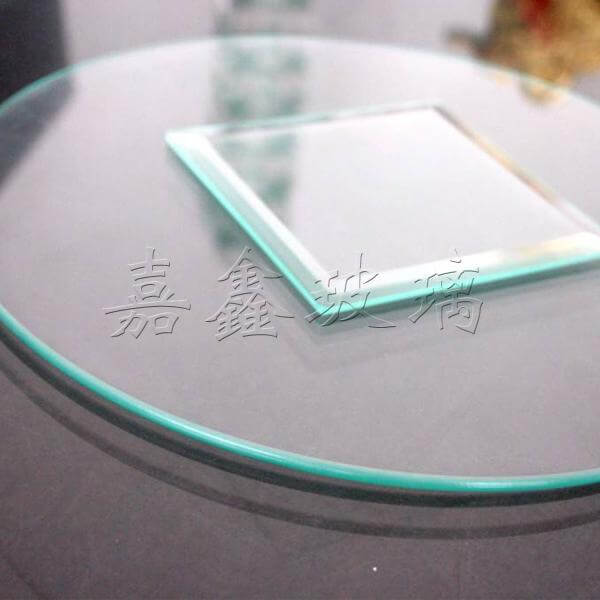
How to Compare Transparent Tempered Glass Options by Application
Which transparent tempered glass is good depends on where the pane will be installed, not on the glass alone. Match the product to the application first, then compare suppliers on how clearly they can explain that fit and on what information they request before quoting.
Safety glazing decisions come first. Tempered and laminated glass resist impact and, when broken, do not produce sharp splinters that fly outward, which is why they are used for balcony railings, stair railings, floor-to-ceiling windows, and skylights. Insulating units answer a different need: they reduce heat exchange, lower heating and cooling loads, and cut outside noise, while Low-E, built-in louver, and grille versions add shading, light control, and decorative division.
| Product family | Typical applications |
|---|---|
| Insulating glass, including Low-E, built-in louver, and grille types | Doors, windows, and building curtain walls |
| Tempered glass and laminated glass | Balcony railings, stair railings, floor-to-ceiling windows, and skylights |
| Bent tempered glass and bent tempered insulating glass | Cylindrical walls, arched doors and windows, and curved canopies |
| Fire-resistant glass | Fire partitions, fire compartments, and smoke curtains |
Once the application is clear, compare how each supplier describes the same product. Two suppliers may both list tempered glass, but the useful comparison is whether they ask about the installation location, the opening size, and the performance you expect before they quote.

How to Contact a Transparent Tempered Glass Company
Contacting a transparent tempered glass company works best when the first message already contains what a technical team needs in order to respond. State the application, the glass types you are considering, the openings involved, and your timing, then ask which product family fits and what information is still missing.
A short, structured first message saves several rounds of email. Describe where the glass will be installed, name the product families you are considering, attach drawings or opening dimensions if you have them, and state your timeline. Then ask two direct questions: which product family fits the application, and what the supplier still needs from you.
What to include in your first inquiry
- The installation location, such as a railing, curtain wall, partition, canopy, or skylight
- The glass types you are considering
- Drawings or opening dimensions, if available
- Quantity and expected delivery timing
- The performance you expect in terms of safety, thermal comfort, noise, or fire separation
- The person who will approve the specification on your side
Keeping the inquiry in writing also creates a record of what was asked and answered, which makes later comparisons between suppliers far easier to defend internally.
How to Identify a Professional, Authoritative, and Reliable Supplier
A professional, authoritative, and reliable supplier is recognized by how it handles specification questions, not by slogans. Clear answers about product fit and processing scope, given consistently by the same technical contact, indicate a team that works from production knowledge rather than from sales scripts.
Slogans are easy to write; consistent technical answers are not. Ask the same specification question to several suppliers and compare how the replies are built. A team that works from production knowledge usually asks about the application before recommending a product, explains the trade-offs between two glass types, and keeps the same contact across the whole conversation.
Signals worth checking
- Whether the application is asked about before a product is recommended
- Whether the answer names specific product families instead of general adjectives
- Whether trade-offs between two suitable glass types are explained
- Whether the same contact stays with the project from inquiry to order
- Whether the supplier says plainly which requirements it cannot meet
A supplier that declines a requirement it cannot serve is usually more dependable than one that agrees to everything without asking a single clarifying question.
FAQ
How do I contact a transparent tempered glass company?
Start with a written inquiry that states the application, the glass types you are considering, and your sizes or quantities, then ask for the technical contact who will handle your project. A written first message keeps the product scope and the questions traceable for both sides.
Which transparent tempered glass is good for railings and skylights?
Tempered and laminated glass are the usual choices for balcony railings, stair railings, floor-to-ceiling windows, and skylights, because both are produced as safety glazing. Compare how a supplier explains the difference between the two before you decide.
How can I tell which transparent tempered glass company is professional?
Send the same technical question to several suppliers and compare the replies. A professional team answers with product information, asks about the application before recommending a glass type, and keeps one contact responsible for the answer.
Can a supplier provide curved and fire-resistant glass at the same time?
It depends on the processing range of the supplier. A deep-processing scope that includes bent tempered glass, bent tempered insulating glass, and fire-resistant glass can cover cylindrical walls, arched openings, curved canopies, and fire partitions in one order conversation, but each product family should be confirmed explicitly.
What should I confirm before requesting a quote?
Confirm the application, the glass types, the sizes and quantities, and the performance you expect, then ask what information the supplier still needs. A quote built on incomplete inputs is hard to compare with another supplier’s quote.
Summary
In short, the right transparent tempered glass company is the one that can map its product range onto your application and explain that mapping clearly. Confirm the product families first, compare answers across suppliers, and put your first inquiry in writing so the technical conversation starts from project data rather than assumptions.