
Curtain wall systems require glass that combines structural reliability, energy performance, visual quality, and long-term durability. For architects, façade contractors, distributors, and project buyers, working with the right curtain wall Low-E insulated glass manufacturer can directly influence installation efficiency, building comfort, and maintenance costs. Jiangyin Jiaxin Glass Products Co., Ltd. is a professional deep-processing glass company located in Hongdou Village, Gushan Town, Jiangyin City, specializing in architectural and home decoration glass. Its product range includes Low-E coated glass, louvered insulated glass, insulating glass, laminated glass, fire-resistant glass, tempered glass, and composite glass made from these products.
This guide explains how Low-E insulated glass supports modern curtain wall design, what buyers should review during selection, and how project teams can communicate with a direct manufacturer to obtain suitable specifications and quotations. It is written for B2B buyers who need practical sourcing guidance rather than general marketing claims.
Understanding Curtain Wall Low-E Insulated Glass and Its Role in Modern Buildings
Low-E insulated glass, often called Low-E IGU, is an insulating glass unit that includes at least two glass panes separated by a sealed cavity. The Low-E coating is a low-emissivity layer designed to help control heat transfer through the glass. In curtain wall applications, this type of glass is used to create large glazed façades while supporting visual comfort and energy efficiency. The sealed cavity also contributes to thermal insulation and helps reduce outside noise when the complete unit is properly designed and installed.
The role of Low-E insulated glass is not limited to energy performance. It also affects daylight appearance, reflection, interior comfort, condensation behavior, and the overall architectural expression of a building. Different projects may require different coating positions, glass thicknesses, cavity configurations, spacer systems, and edge sealing methods. This is why a curtain wall Low-E insulated glass manufacturer should be able to discuss the complete glass build-up, not only the coating name.

In warm climates, Low-E glass can help reduce solar heat gain when the coating and glass combination are selected for that purpose. In colder regions, the priority may be reducing heat loss from the interior. For mixed climates, project teams often need to balance heating, cooling, daylight, and visual appearance. Jiangyin Jiaxin Glass can provide Low-E insulating glass within its energy-saving insulating series, including ordinary insulating glass, Low-E low-radiation insulating glass, built-in louvered insulating glass, and grid insulating glass for different architectural and decorative requirements.
Why Choose a Direct Curtain Wall Low-E Insulated Glass Manufacturer?
Buying from a direct manufacturer helps reduce layers of communication between the project team and the production process. For curtain wall Low-E insulated glass, many details must be confirmed before production: glass type, coating type, glass thickness, cavity width, spacer material, sealing method, edge treatment, size tolerance, and packaging. A direct manufacturer can review these details against fabrication capability and advise whether a proposed glass build-up is practical for the project.
Jiangyin Jiaxin Glass Products Co., Ltd. focuses on deep-processed architectural glass and emphasizes skilled technical personnel, advanced processing equipment, and scientific management practices. This combination supports consistent production planning and communication for both standard and customized glass orders. For buyers comparing a Low-E insulated glass supplier, direct factory contact can make it easier to clarify technical questions, request samples or drawings review, and align delivery schedules with curtain wall installation progress.
- Direct communication on glass build-ups and processing requirements
- Support for custom sizes and project-specific glass combinations
- Access to Low-E, tempered, laminated, fire-resistant, and insulating glass capabilities
- Ability to coordinate different glass products within one architectural package
- Clearer discussion of Low-E insulated glass price factors and order quantities
Core Product Range from Jiangyin Jiaxin Glass
The company’s energy-saving insulating glass series is a core product line for windows and building façades. It includes ordinary insulating glass, Low-E low-radiation insulating glass, built-in louvered insulating glass, and grid insulating glass. These products are designed to help block heat and cold exchange, reduce air-conditioning and heating energy consumption, weaken exterior noise, and support shading, light adjustment, or decorative divided-light effects. This makes them suitable for residential, commercial, and public building projects where both function and appearance matter.
The safety protection series includes tempered glass and laminated glass. These products are suitable for locations where impact resistance and safe breakage behavior are important, such as balcony railings, stair railings, floor-to-ceiling windows, and skylights. The curved series includes bent tempered glass and bent tempered insulating glass for customized curved shapes, including cylindrical walls, arched doors and windows, and curved canopies. Fire-resistant glass is a special functional product used for fire partitions, fire compartments, and smoke curtains, while maintaining light transmission and visual openness.
Composite glass can combine these product types into a single unit to meet multiple project needs. For example, a project may require Low-E insulating glass combined with laminated glass for safety, or fire-resistant glass integrated into a fire-rated partition system. The final configuration should always be confirmed against project drawings, performance requirements, and local building regulations.
Low-E Insulated Glass for Curtain Walls: Key Selection Factors
There is no universal Low-E insulated glass specification that suits every curtain wall. Selection should consider climate, façade orientation, interior use, frame system, safety requirements, fire strategy, acoustic expectations, maintenance access, and visual design. A manufacturer can provide product options, but the project design team remains responsible for confirming overall system performance and compliance.
| Selection Factor | What to Review |
|---|---|
| Glass build-up | Confirm pane types, thicknesses, Low-E coating position, cavity arrangement, and whether laminated or fire-resistant glass is needed. |
| Thermal objective | Match the Low-E glass choice to heating, cooling, daylight, and condensation control goals for the building location. |
| Safety and fire requirements | Review whether tempered, laminated, or fire-resistant glass is required for railings, skylights, partitions, or fire compartments. |
| Spacer and sealing | Check spacer material, sealant system, edge sealing quality, and suitability for the intended environment. |
| Custom processing | Discuss special sizes, cutouts, holes, edge work, curved shapes, built-in blinds, and grid patterns before quotation. |
| Documentation and communication | Confirm drawing review, order confirmation, inspection criteria, packing requirements, and after-sales communication channels. |
Low-E insulated glass price is influenced by several practical factors, including unit size, glass thickness, Low-E coating type, cavity configuration, spacer and sealing materials, safety glass requirements, custom shapes, order quantity, and packaging needs. Buyers should compare quotations based on the same glass build-up and scope of processing. A lower unit price without clear specifications can create installation or performance problems later.
Customization and OEM Processing Services
Architectural projects often require glass that matches specific opening sizes, façade modules, and design details. Jiangyin Jiaxin Glass supports customized glass solutions for residential, commercial, and public projects. For curtain wall Low-E insulated glass, customization may include special dimensions, different glass combinations, Low-E coating selection, tempered or laminated components, built-in louvered cavities, decorative grids, and curved configurations.
For customers seeking Low-E glass OEM processing service or a curtain wall Low-E insulated glass processing partner, early technical communication is important. Project drawings, schedules, performance requirements, and target quantities should be shared before production planning. The manufacturer can then review fabrication feasibility, packing methods, and delivery coordination. This is particularly useful for façade contractors, glass distributors, and brand owners who need consistent product communication across multiple orders.
Clear order confirmation helps avoid misunderstandings. Buyers should verify dimensions, glass configuration, coating orientation, visible surfaces, edge treatment, labels, and packing marks. When multiple glass types are used in one building, consistent identification and sequencing can also help the installation team reduce site confusion.
Typical Applications Across Residential, Commercial, and Public Projects
Low-E insulated glass is widely used in windows and building curtain walls where thermal comfort and energy efficiency are important. In residential projects, it can be used for large windows, balconies, and sunrooms. In commercial buildings, it supports office façades, retail frontage, and lobby glazing. In public venues, it can contribute to comfortable interior environments while maintaining a modern architectural appearance.
The company’s product range also supports other architectural needs. Tempered and laminated glass are suitable for balcony railings, stair railings, floor-to-ceiling windows, and skylights. Bent tempered glass and bent tempered insulating glass are used for cylindrical walls, arched doors and windows, and curved canopies. Fire-resistant glass is used for fire partitions, fire compartments, and smoke curtains. Louvered insulated glass can provide shading and privacy adjustment while maintaining the benefits of an insulating glass unit.
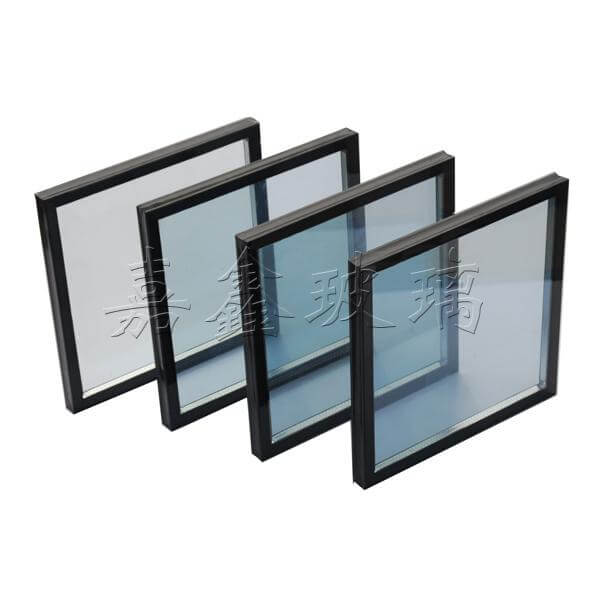
For each application, the correct glass build-up depends on the surrounding frame, structural design, safety strategy, and local requirements. Buyers should not select glass only by product name. A complete specification review helps ensure that the Low-E insulated glass, tempered glass, laminated glass, or fire-resistant glass is appropriate for the intended location.
Quality Control and Production Management
Jiangyin Jiaxin Glass emphasizes the absorption of professional technical talent, the introduction of advanced processing equipment, and the use of scientific management methods. These priorities support the company’s ability to improve production efficiency and management standards. For buyers, quality control should be discussed at the order stage rather than after delivery.
Useful quality checks for Low-E insulated glass include verification of glass type and thickness, coating appearance, spacer and sealing condition, unit dimensions, edge quality, visual defects, and packing protection. For tempered, laminated, or fire-resistant glass components, the relevant product requirements should be confirmed according to the project specification. A clear inspection and acceptance process helps both the manufacturer and the buyer manage expectations.
How to Evaluate and Contact a Reliable Low-E Insulated Glass Supplier
When comparing suppliers, buyers should review technical communication, product range, customization capability, production management, packing standards, and responsiveness. A reliable Low-E insulated glass supplier should be able to explain the proposed glass build-up clearly and ask relevant questions about the project. It should also be transparent about which parts of the specification require confirmation by the design team or local authority.
To request a quotation from a curtain wall Low-E insulated glass manufacturer, prepare a package that includes façade drawings or unit schedules, target quantities, glass performance requirements, safety or fire requirements, destination, packing expectations, and required delivery timing. Contact Jiangyin Jiaxin Glass Products Co., Ltd. through its official business channels to discuss project requirements. Clear input at the beginning helps the manufacturer provide a more accurate response and reduces later revisions.
FAQ
What is curtain wall Low-E insulated glass used for?
Curtain wall Low-E insulated glass is used in building façades and large window systems where thermal comfort, energy efficiency, and visual appearance are important. The Low-E coating helps control heat transfer, while the sealed insulating cavity contributes to thermal insulation and helps reduce outside noise. It is commonly considered for commercial buildings, residential projects, and public venues.
How do I choose a reliable curtain wall Low-E insulated glass manufacturer?
Review the manufacturer’s product range, deep-processing capability, technical communication, customization support, quality management, and packing standards. Ask clear questions about glass build-up, Low-E coating options, spacer and sealing, safety glass requirements, and order documentation. A good supplier should help clarify specifications rather than simply quote a product name.
Can Jiangyin Jiaxin Glass customize Low-E insulated glass for different curtain wall designs?
Yes. Jiangyin Jiaxin Glass provides customized glass solutions for architectural and home decoration projects. Customization can involve different sizes, glass combinations, Low-E insulating glass, tempered or laminated components, built-in louvered insulating glass, grid insulating glass, and curved glass options. Final details should be confirmed against project drawings and requirements.
What factors affect the price of Low-E insulated glass for curtain walls?
Price depends on unit size, glass thickness, Low-E coating type, cavity configuration, spacer and sealing materials, safety glass requirements, custom shapes, order quantity, and packing. Buyers should compare quotations using the same glass build-up and processing scope to avoid misleading price differences.
How can I contact a curtain wall Low-E insulated glass manufacturer for a quotation?
Prepare drawings, quantities, performance requirements, destination, and delivery schedule, then contact the manufacturer through its official business channels. Jiangyin Jiaxin Glass Products Co., Ltd. is located in Gushan Town, Jiangyin City, and focuses on architectural and home decoration deep-processed glass. Clear project information helps the manufacturer respond efficiently.
Summary
Choosing the right curtain wall Low-E insulated glass manufacturer is about more than finding a product list. It requires a supplier that can discuss glass build-ups, review customization needs, coordinate safety and energy-saving glass products, and communicate clearly throughout the order process. Jiangyin Jiaxin Glass Products Co., Ltd. supports residential, commercial, and public projects with Low-E insulated glass, tempered glass, laminated glass, fire-resistant glass, curved glass, louvered insulated glass, and composite glass solutions.
For project buyers, the most effective approach is to define the application, confirm the required glass configuration, compare suppliers on technical clarity and processing capability, and request a quotation based on complete project information. By focusing on specifications, communication, and quality coordination, buyers can make better sourcing decisions for curtain wall Low-E insulated glass and related architectural glass products.