
Architectural laminated glass has become one of the most specified materials in modern construction, and for good reason. It combines two properties that building owners rarely want to trade off against each other: safety and design freedom. Whether you are glazing a residential balcony, a commercial curtain wall, a stairwell, a skylight or a fire-rated partition, the chances are high that the specification calls for laminated glass — often combined with tempering, Low-E coating or an insulating cavity.
This guide is written for architects, façade consultants, contractors, distributors and procurement teams who are evaluating an architectural laminated glass supplier. It explains what laminated glass actually is, how different build-ups perform, where the material is best used, how to compare manufacturers, what drives the architectural laminated glass price, and how to handle and maintain the finished product on site.
What Is Architectural Laminated Glass? A Buyer-Focused Explanation
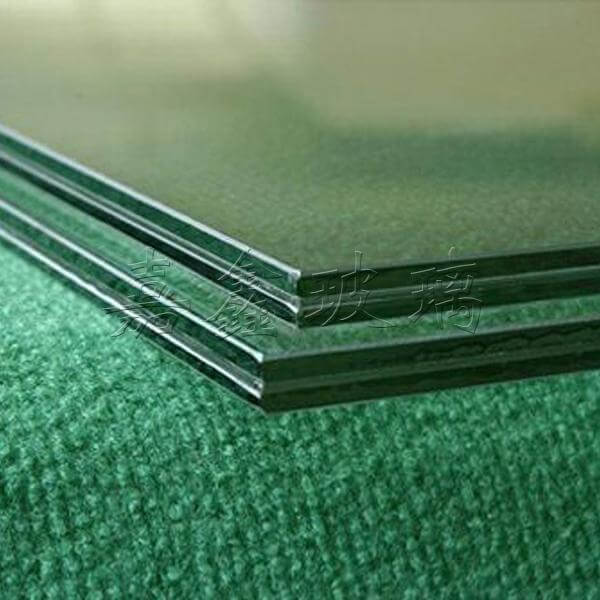
Laminated glass is produced by bonding two or more glass panes together with one or more transparent interlayer films — most commonly PVB (polyvinyl butyral) — under controlled heat and pressure. The interlayer is what makes the product fundamentally different from monolithic glass. When a pane is struck hard enough to break, the fragments remain adhered to the interlayer instead of falling away as loose, sharp shards. The assembly may crack, but it stays in the frame.
That behaviour is the core of the safety argument. In overhead applications such as skylights, canopies and sloped glazing, retained fragments are essential because falling glass is a direct hazard to people below. In balustrades and railings, the laminated pane provides a residual load-bearing capacity after breakage, which is exactly what safety standards expect from a protective barrier.
In architectural practice, laminated glass is rarely used as plain annealed glass. It is usually tempered first, producing tempered laminated glass, or it becomes one component of a sealed insulating glass unit. A typical high-performance build-up might be: 6 mm Low-E tempered glass + 12 mm air or argon cavity + 6 mm tempered glass + 0.76 mm PVB + 6 mm tempered glass. Each layer contributes a different function — solar control, thermal insulation, acoustic damping, impact resistance and fragment retention.
| Build-up | Typical configuration | Main benefit | Common application |
|---|---|---|---|
| Standard laminated glass | Two annealed panes + PVB interlayer | Fragment retention, acoustic damping | Interior partitions, balustrade infill panels |
| Tempered laminated glass | Two or more tempered panes + PVB | High impact strength plus safety | Balcony railings, stair railings, full-height windows |
| Laminated insulating unit | Low-E coated pane + cavity + laminated inner pane | Thermal insulation combined with safety | Curtain walls, energy-efficient windows |
| Curved laminated glass | Bent tempered panes + PVB | Shaped geometry with full safety performance | Arched windows, cylindrical facades, curved canopies |
| Laminated fire-rated glass | Specialised fire-resistant assembly with laminated component | Fire separation while keeping transparency | Fire compartments, smoke curtains, escape routes |
The Jiaxin Glass Product Portfolio: One Partner for the Whole Envelope
Jiangyin Jiaxin Glass Products Co., Ltd. is a specialised deep-processing glass enterprise located in Hongdou Village, Gushan Town, Jiangyin City. The company focuses on architectural and home-decoration glass and supplies both individual products and composite glass assemblies built from several of its own product families.
The core range is the energy-saving insulating glass series: standard insulating glass, Low-E low-emissivity insulating glass, insulating glass with integrated blinds, and grille or bar-style insulating glass. These units are used mainly in windows and building curtain walls. They reduce heat exchange across the envelope, lower the load on air-conditioning and heating systems, dampen external noise, and in the case of integrated blinds also deliver adjustable shading and a decorative divided-light appearance.
The safety protection series covers tempered glass and laminated glass, the fundamental safety materials for construction. Both are characterised by higher impact resistance, and laminated glass in particular prevents sharp fragments from scattering when it breaks, significantly reducing the risk of cuts and injuries. This makes the series suitable for balcony railings, stair railings, floor-to-ceiling windows and skylights in both residential and public buildings.
The curved glass series includes bent tempered glass and bent tempered insulating glass. These products are customised to the project’s geometry — different radii and rise heights — so that cylindrical walls, arched openings and curved canopies can be realised without compromising safety, thermal performance or acoustic performance. A dedicated fire-resistant glass range completes the portfolio, providing compliant fire-retardant performance for fire partitions, fire compartments and smoke curtains while preserving visual transparency.
Where Architectural Laminated Glass Performs Best: Application Scenarios
Laminated glass is not a single-purpose product. Its value changes with the location in which it is installed, and a good supplier will help you match the build-up to the risk profile of each area.
Balcony and stair railings. This is one of the most demanding locations, because the glass is both a barrier and a visual element. A tempered laminated build-up gives the strength needed for human impact loads while guaranteeing that a broken pane stays in place. Edge quality matters enormously here, since exposed polished edges are part of the design.
Floor-to-ceiling windows and full-height glazing. Large spans increase the consequence of breakage. Laminated panes retain fragments and reduce the risk of injury from accidental impact, while the interlayer also improves airborne sound insulation — a real benefit on urban sites.
Skylights, canopies and sloped glazing. Overhead glazing should be laminated as a baseline requirement, because gravity turns any loose fragment into a falling hazard. Combining laminated glass with a Low-E coating or an insulating cavity keeps solar heat gain under control at the same time.
Curtain walls and commercial facades. Here laminated glass is usually the inner pane of an insulating unit, or a full laminated assembly in areas exposed to windborne debris or higher impact risk. Low-E coated laminated insulating glass is a common solution for offices, retail and public buildings that need both energy performance and safety.
Interior partitions, balustrades and screening. Annealed or tempered laminated glass with a translucent or patterned interlayer delivers privacy and acoustic separation without blocking light — useful in offices, clinics, schools and hospitality spaces.
How to Choose a Reliable Architectural Laminated Glass Supplier
Purchasing laminated glass is not the same as purchasing a commodity. The visible product may look identical between two suppliers, while the interlayer type, bonding quality, edge treatment, dimensional tolerance and documentation differ substantially. The following criteria help separate a capable architectural laminated glass manufacturer from a trading intermediary.
Processing capability under one roof
Ask whether tempering, laminating and insulating-unit assembly are carried out in the same facility or outsourced. A supplier that controls its own cutting, tempering, laminating and sealing stages can hold tolerances more consistently and can respond faster when a project requires a mixed order — for example tempered laminated panes for the balustrades plus Low-E laminated insulating units for the windows.
Interlayer and thickness options
Different projects call for different interlayer thicknesses and, in some cases, different interlayer materials. Confirm with your supplier which options they can process and which ones they recommend for your specific risk category, acoustic target or colour requirement. Clear, milky, coloured and patterned interlayers all change the final appearance, so requesting a physical sample before production is always worthwhile.
Quality control and traceability
A serious supplier will explain its incoming material inspection, process controls and final inspection routine, and will provide the documentation your project requires. Vague answers about quality control are a warning sign, particularly on projects where the glass is part of a life-safety system.
Communication and project support
Glass is a late-stage, high-value item in most programmes. Responsiveness during the quotation and drawing-review phase usually predicts how the supplier will behave when a site measurement changes two weeks before delivery.
What Drives the Architectural Laminated Glass Price
Buyers often ask why architectural laminated glass price quotations vary so widely between suppliers for what appears to be the same specification. In practice, price is a function of several variables, and understanding them makes negotiation far more productive than simply comparing the lowest number.
| Cost factor | Effect on price | How to optimise |
|---|---|---|
| Glass thickness and number of panes | Thicker or multi-pane assemblies cost more in material and weight | Verify the required load and impact class before overspecifying |
| Interlayer type and thickness | Specialty or thicker interlayers increase unit cost | Match interlayer to the actual acoustic or safety requirement |
| Tempering and heat treatment | Tempered and heat-strengthened panes add processing steps | Specify tempering only where strength or safety requires it |
| Size, shape and curvature | Oversized or bent panes reduce yield and raise unit cost | Standardise panel sizes and reduce the number of unique radii |
| Edgework, holes and cut-outs | Polished edges and drilling add labour and breakage risk | Coordinate fixing details early so machining is planned once |
| Order quantity and packaging | Small or mixed batches cost relatively more; export packing adds cost | Consolidate orders per project phase to improve yield efficiency |
When requesting a quotation, provide panel dimensions, quantity, glass type, thickness, interlayer requirement, edge and hole details, colour or coating requirement, delivery location and required date. Complete information removes assumptions from the quotation, which is the single most effective way to avoid later cost adjustments.
Installation, Handling and Maintenance Best Practices
Even a well-manufactured laminated pane can be compromised by poor handling. Store glass vertically on A-frames or stillages, never flat on the ground, and never allow panes to rest on a corner or an exposed edge. Damaged edges are the most common origin of spontaneous breakage in service, particularly in tempered products.
During installation, use appropriate setting blocks and maintain the specified clearance between glass edges and frames. Do not allow the interlayer to be exposed at the edges for long periods in wet conditions, and seal the glazing in accordance with the system supplier’s recommendations so that moisture cannot migrate into the laminate over time.
For maintenance, clean with clean water and a mild, neutral detergent using a soft cloth or squeegee. Avoid abrasive pads, scrapers and strongly alkaline or ammonia-based products, which can attack the coated surface of Low-E glass and dull the interlayer edge. Inspect balustrades, railings and overhead glazing periodically for edge chips, sealant deterioration and any sign of delamination, and record the inspection so that warranty discussions are based on evidence rather than recollection.
Why Buyers Work With Jiaxin Glass
Jiangyin Jiaxin Glass Products Co., Ltd. has built its business around absorbing professional technical talent, introducing advanced processing equipment and adopting a scientific management model. The company places deliberate emphasis on developing its people and on continuously improving production efficiency and management standards — the two levers that most directly affect consistency, lead time and cost.
For buyers, that translates into a supplier able to handle a complete package rather than isolated items: insulating glass for the windows, tempered and laminated glass for the balustrades and glazing, curved glass for the architectural features and fire-resistant glass for the compartmentation, all coordinated under one specification discussion. Custom composite assemblies — which combine several of these product families into a single unit — are part of the standard offering, not an exception.
The company’s stated principle, “Customer First, Quality Guarantee,” reflects its long-term approach: improving product quality steadily, building its brand reputation, and growing together with partners in a way that creates both enterprise value and social value over the long term.
FAQ
What is the difference between tempered glass and laminated glass?
Tempered glass is a single pane that has been heat-treated to increase its strength; when it breaks, it shatters into small, comparatively blunt granules. Laminated glass is an assembly of two or more panes bonded with an interlayer, so fragments stay attached to the film after breakage. In architectural practice the two are often combined as tempered laminated glass, which delivers high impact strength together with fragment retention — the build-up normally specified for balcony railings, stair railings, floor-to-ceiling windows and skylights.
Can architectural laminated glass be combined with Low-E coating and insulating glass?
Yes. A common high-performance specification is a Low-E coated outer pane, a sealed air or gas cavity, and a laminated inner pane. This arrangement delivers solar control and thermal insulation together with safety and improved acoustic performance, which is why it is widely used in curtain walls and energy-efficient windows. When specifying such a unit, confirm with the manufacturer which surface carries the coating and how the laminated component affects the overall cavity thickness and weight.
Where can I buy architectural laminated glass for balcony railings and skylights?
The most reliable route is to buy directly from a deep-processing glass manufacturer that controls tempering, laminating and insulating-unit assembly in-house, rather than from a trading intermediary. Jiangyin Jiaxin Glass Products Co., Ltd., based in Gushan Town, Jiangyin City, produces tempered glass, laminated glass, insulating glass, Low-E insulating glass, curved glass and fire-resistant glass, and can supply composite assemblies tailored to residential, commercial and public building projects. Contact the company directly with your drawings and specifications to begin a quotation.
What information should I provide to get an accurate quotation?
Provide panel-by-panel dimensions and quantities, the required glass type and thickness, interlayer preference, any Low-E or coating requirement, edge and drilling details, curvature or radius if applicable, the delivery destination, and the required date. Including elevations or shop drawings shortens the review cycle considerably, because it allows the supplier to check the build-up against the actual geometry instead of assuming a standard panel size.
How thick should the interlayer in laminated glass be?
Interlayer thickness should follow the requirement of the specific application rather than a default value. Balustrades, overhead glazing and areas with higher impact exposure generally call for a thicker or more robust interlayer than interior decorative panels. The correct approach is to define the risk class and acoustic target first, then ask the manufacturer to propose the interlayer accordingly and to confirm it on a sample before production.
How should laminated glass be handled and maintained after delivery?
Store panes vertically on suitable racks, protect the edges, and avoid impact on corners during handling and installation. Clean with water and a mild neutral detergent, and avoid abrasive materials and ammonia-based cleaners, especially on coated surfaces. For balustrades, railings and overhead glazing, carry out periodic inspections for edge damage or sealant deterioration and keep a written record.
Summary
Architectural laminated glass is a specification decision as much as a purchase decision. The right build-up — annealed, tempered, curved, or as the laminated component of a Low-E insulating unit — determines whether the finished façade satisfies its safety, acoustic, thermal and design objectives. Getting that build-up right depends on choosing an architectural laminated glass supplier that controls its own processing, can explain its quality controls, offers real interlayer options, and stays engaged through drawing review, production and delivery.
Jiangyin Jiaxin Glass Products Co., Ltd. operates in Gushan Town, Jiangyin City as a deep-processing glass enterprise serving architectural and home-decoration projects. Its portfolio covers Low-E coated glass, insulated glass with integrated blinds, standard insulating glass, laminated glass, fire-resistant glass, tempered glass and curved glass, along with composite assemblies that combine these families. Buyers evaluating the market can use the criteria in this guide — in-house capability, interlayer options, quality documentation, communication quality and a fully specified quotation request — to compare suppliers on substance rather than on price alone. Sending complete technical information upfront remains the fastest way to obtain an accurate price and a build-up that performs as intended.