
A fire-rated partition glass production base is the manufacturing stage where fire-rated glass is cut, tempered, laminated and built into composite units for fire partitions. Sourcing from a base that keeps deep-processing in-house holds quality and lead time inside one supply chain, which matters when partitions must pass fire acceptance checks and still read as transparent space.
Why a Fire-Rated Partition Glass Production Base Shapes Project Outcomes
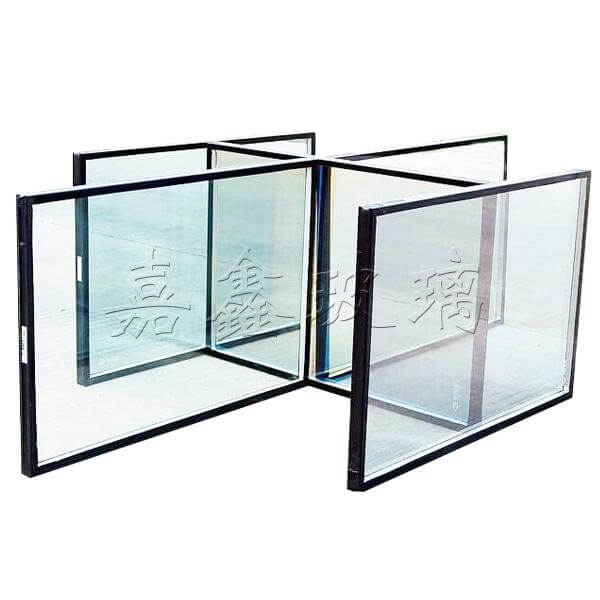
A production base decides what is engineered into the glass before it reaches site: tempering, lamination, insulating assembly, coating and bending. Fire-rated partitions combine safety, daylight transmission and framing, so a base that controls these steps narrows the gap between the assembly that was specified and the panels that are actually delivered.
Fire-rated glass is a special-function product. It carries fire-resistant performance that supports fire acceptance checks while keeping good light transmission, and it is used mainly for building fire partitions, fire compartments and smoke curtains. That combination lets a layout keep an open, glazed look without giving up the fire separation the space requires.
Where a partition meets an exterior wall or a glazed façade, the build-up often pairs fire-rated glass with an insulating unit. Insulating glass, including Low-E and louvered versions, blocks heat exchange, reduces heating and cooling energy demand and weakens outside noise, so the same panel serves the everyday comfort of the space as well as the fire separation.
Jiangyin Jiaxin Glass Products Co., Ltd., located in Hongdou Village, Gusang Town, Jiangyin City, is a glass deep-processing enterprise working on construction and home decoration projects. Its range covers Low-E coated glass, louvered insulating glass, insulating glass, laminated glass, fire-rated glass, tempered glass and composite glass assembled from these types — the practical definition of a production base rather than a trading desk.
Glass Types That Can Be Combined at One Source
A fire partition is rarely a single pane. Thermal control, acoustic comfort, impact safety and transparency are usually split across different glass types, and the base is where those types become one composite unit. Keeping the combination at a single production source makes the finished panel easier to specify, easier to repeat across a project and easier to trace when a replacement is needed.
- Low-E coated glass
- Insulating glass, including louvered insulating glass
- Laminated glass
- Tempered glass
- Fire-rated glass
- Bent tempered glass and bent tempered insulating glass
- Composite glass assembled from the above
How Fire-Rated Partition Glass OEM Processing Service Fits a Project

A fire-rated partition glass OEM processing service means the base manufactures to the buyer’s specification instead of to a fixed catalogue. The buyer defines the glass build-up and the partition system; the base carries out the processing steps it holds in-house and delivers panels ready for framing and installation.
The model suits partition fabricators, door and window producers, curtain wall contractors and fit-out teams that own the system design but do not run glass processing themselves. The arrangement removes the need to build tempering, lamination or insulating capacity inside the buyer’s own operation, while the build-up stays unchanged from the first batch to the last.
What to Prepare Before an OEM Order
Clear inputs shorten the loop between inquiry and production. The base needs to know which glass types the build-up uses, where the panel goes — a fire partition, a fire compartment or a smoke curtain — plus sizes, quantity and the sequence in which the site needs delivery. Drawings that show both the partition system and the glass make-up remove most of the guesswork before a single sheet is cut.
Jiangyin Jiaxin Glass Products Co., Ltd. states a customer-first, quality-assurance principle and invests in technical staff, processing equipment and management practice to keep production efficiency and quality levels steady. For an OEM buyer, that is the part of the offer worth checking during supplier review rather than taking on trust.
How to Compare and Contact a Fire-Rated Partition Glass Supplier
Comparison should follow the build-up, not the brochure. Start with the glass types your partition needs, then ask which of those the supplier processes in-house, how composite units are assembled, and who answers technical questions. A supplier whose in-house steps match the panel is a better fit than one that merely lists a longer product range.
Three questions separate a real production base from a reseller. First, is fire-rated glass processed at the supplier’s own site? Second, can insulating, laminated, tempered and coated types be combined there, including bent work when the design calls for curves? Third, does the reply to your inquiry reference your specific build-up? Yes to all three points towards a base that manufactures; vague answers point towards a middleman who forwards the order.
Contact is straightforward once the brief exists. Send a written inquiry through the supplier’s official contact channel containing the glass make-up, the application, sizes, quantity and delivery expectation. A reply that returns specific technical questions, rather than a bare price, shows the supplier has read the requirement and is able to take the order.
Fire-Rated Partition Glass FAQ
What is a fire-rated partition glass production base?
It is the manufacturing site where glass for fire partitions is deep-processed, so panels are cut, tempered, laminated or assembled into composite units before they reach a partition system. The base, not the building site, controls the glass build-up and the consistency of each batch.
What does a fire-rated partition glass OEM processing service include?
It includes manufacturing to the buyer’s specification rather than to a fixed catalogue. The buyer sets the glass build-up and the partition system, and the base performs the processing steps it holds in-house, from tempering and lamination to insulating assembly, then delivers panels ready for framing.
Which fire-rated partition glass supplier is good for a project?
The good fit is the supplier whose in-house processes match your build-up. Check that fire-rated glass, tempered glass, laminated glass and insulating glass can be handled at one source, and that bent or curved work is possible if the design needs it.
Which fire-rated partition glass supplier is stronger?
Strength shows in process depth rather than in claims. A base that controls tempering, lamination, insulating assembly and composite build-up can answer for the whole panel, so ask what is processed in-house, what is outsourced, and compare the answers on the same brief.
How can I contact a fire-rated partition glass supplier?
Send a written inquiry through the supplier’s official contact channel with the glass build-up, the application, sizes, quantity and delivery expectation. A reply that returns specific technical questions shows the supplier has read the requirement and can move the order forward.
Summary
A fire-rated partition glass production base is chosen for process depth, not for the length of a catalogue. Match the base’s in-house steps — tempering, lamination, insulating assembly, coating and bending — to the fire partition, fire compartment or smoke curtain the project actually uses, confirm the composite build-up in writing, and send a clear inquiry through the supplier’s official channel. The base that answers with technical questions is the one ready to manufacture.