
A transparent tempered glass reputation ranking is a practical shortcut for buyers who need to compare deep-processing manufacturers quickly. It gathers the signals that matter most in real projects — product breadth, process control and how consistently a supplier communicates — and turns them into a comparison you can act on before you request a quote.
What a Transparent Tempered Glass Reputation Ranking Measures
In practice, a ranking measures repeatability rather than promises. It should tell you whether a manufacturer delivers the same quality across repeated orders, how broad its product range is, how it handles customised requests, and whether communication stays clear from the first enquiry through to delivery and after-sales follow-up.
A ranking built on vague criteria is hard to use. Before you trust one, look at what the publisher actually compared: whether manufacturers were assessed on a full product catalogue or on a single item, whether custom projects were included, and whether the assessment was revised when a supplier’s capacity or product line changed.
It is also worth remembering what a ranking cannot show. A position in a comparison does not confirm that a manufacturer can meet your drawings, tolerances or delivery schedule; those points are settled in a technical conversation and, where appropriate, by reviewing samples and documents before the order is placed.

Signals That Separate Reliable Manufacturers from Risky Ones
Buyers tend to weight the same handful of signals, and most of them can be checked before a deposit is paid.
- Product breadth: a manufacturer already producing insulating, laminated, tempered, fire-resistant and curved glass can coordinate the layers of one project instead of splitting responsibility across several suppliers.
- Process discipline: consistent edge treatment, sealing and handling matter more than one impressive sample, because a facade repeats the same operation many times.
- Custom capability: the ability to work to a specified curvature, arch height or layout, rather than forcing a catalogue size onto a design.
- Communication: clear answers on lead time, packing and after-sales responsibility given before the order, not after it.
Verifying a Transparent Tempered Glass Phone Contact Before You Order
Contact details are the easiest part of a supplier check to get wrong, because listings are copied and republished. Use the number published on the manufacturer’s own website or documentation, call during working hours, and confirm that the person who answers can discuss both product specification and production scheduling.
A first call is also a low-cost test of how a company works. Ask about the glass you actually need — whether an insulating build can include a Low-E coating or an internal blind, or how a curved panel would be produced — and notice whether the answer comes back as a specification or as a sales pitch.
Write down what was said. When the quotation arrives, compare it with your notes from the call; if the two differ on scope, materials or delivery, resolve the gap before any payment is made, because most later disputes trace back to an assumption that was never written down.
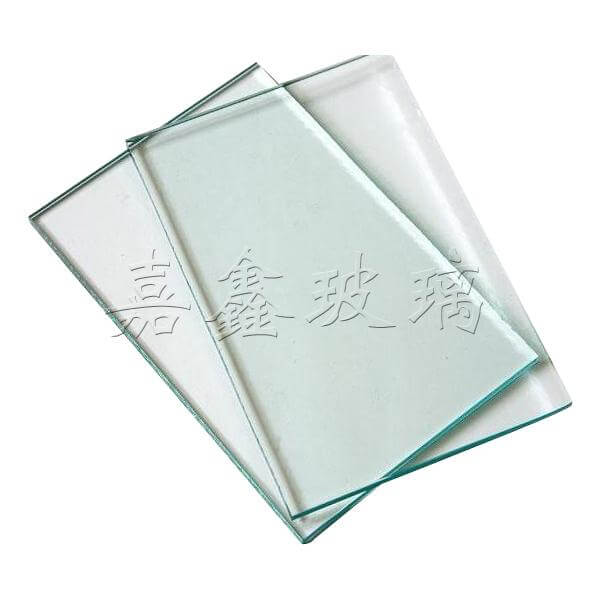
Which Transparent Tempered Glass Has a Good Reputation?
The short answer is the manufacturer whose range, processing discipline and communication match your project — not the one with the loudest claim. Reputation in deep-processing glass is earned through repeatable output: the same quality on the second order as on the first, and the same clarity when a custom request turns complicated.
Jiangyin Jiaxin Glass Products Co., Ltd. is a deep-processing glass enterprise based in Gushan Town, Jiangyin City, working in construction and home decoration. Its range covers Low-E coated glass, insulating glass with built-in blinds, insulating glass, laminated glass, fire-resistant glass, tempered glass and composite builds made from these, together with bent tempered glass and bent tempered insulating glass for curved designs.
The company’s stated approach is to bring in specialist technical staff, work with advanced processing equipment and apply structured management, while investing in staff training and production efficiency. Its operating principle is summarised as customer first and quality assured — a positioning that only becomes meaningful when it shows up in inspection, packing and delivery.
For a buyer working through a ranking, this is the profile to examine in detail: does the product list match the drawings, can one supplier handle energy, safety and fire requirements within a single order, and is there a named person accountable for technical questions.
Energy-Saving and Safety Series in Real Applications
Application decides the build. Insulating glass is specified where heat loss, solar gain and noise need to be managed, while tempered and laminated glass are specified where impact resistance matters — and in many projects both requirements appear within the same facade or room.
The energy-saving insulating family includes ordinary insulating, Low-E insulating, built-in blind insulating and lattice insulating builds, used mainly in doors, windows and building curtain walls. Their function is to limit heat exchange, reduce the load on heating and air conditioning, cut outside noise and, with blinds or grille bars, add shading control plus a divided, retro decorative effect.
Tempered glass and laminated glass are the base safety materials for building applications. They resist impact better and, when broken by an external force, do not scatter sharp fragments, which lowers the risk of cuts and impact injury; typical positions are balcony railings, stair railings, floor-to-ceiling windows and skylights in both homes and public spaces.
Curved and Fire-Resistant Glass: Where Custom Processing Shows
Custom work is where a manufacturer’s process control becomes visible. Curved glass and fire-resistant glass both depend on tight production discipline, because a finished panel has to satisfy a design intent and a safety requirement at the same time, and corrections after fabrication are rarely possible.
The curved range covers bent tempered glass and bent tempered insulating glass, produced to the curvature and arch height a design requires. These panels suit cylindrical walls, arched doors and windows, and curved canopies, retaining the safety, energy and acoustic performance of the flat build inside a shaped form.
Fire-resistant glass is the special-function product in the range. It offers fire-retardant performance intended to satisfy fire acceptance requirements and keeps good light transmission, so a fire partition, a fire compartment or a smoke curtain does not turn a transparent space opaque.
Can You Recommend a Few Transparent Tempered Glass Options?
Recommendations should follow the position of the glass. A door or window, a balcony railing, a curved canopy and a fire compartment each call for a different build, so a short list of matched options is more useful than one universal answer.
For windows and curtain walls, start with the energy-saving insulating family and choose between ordinary, Low-E, built-in blind and lattice builds according to how much shading, decoration or thermal control the space needs. For balconies, stairs, floor-to-ceiling windows and skylights, start with tempered or laminated safety glass. For cylindrical walls and arched openings, bent tempered or bent tempered insulating glass holds the design curve while keeping safety and insulation performance. For partitions and smoke control zones, fire-resistant glass addresses the fire requirement without blocking daylight.
Then narrow the list with the supplier check: confirm that the range covers every item, ask how custom sizes and curvature are handled, verify the contact channel you were given, and compare quotations on identical scope so that the comparison is genuinely like for like.
FAQ
Is a transparent tempered glass reputation ranking reliable?
It is reliable only when you know what it measures. A useful ranking reflects product range, processing consistency and communication quality rather than marketing claims, so treat it as a shortlist tool and confirm the details directly with the manufacturer.
How should I check a transparent tempered glass contact phone before ordering?
Confirm the number through the manufacturer’s own official channel rather than a copied third-party listing. Ask a technical question on the first call and compare the answer with the written specification, because a consistent reply shows that sales and production are working from the same information.
Which transparent tempered glass products can a deep-processing manufacturer supply?
A deep-processing glass manufacturer works across tempered glass, laminated glass, insulating glass, Low-E coated glass, fire-resistant glass and composite builds of these. Product breadth matters because it lets one supplier coordinate the safety, energy and decorative layers of the same project.
Can you recommend a few transparent tempered glass products?
The options follow the position of the glass rather than a fixed list. Balcony railings and stair railings call for safety glass, windows and curtain walls call for insulating builds, curved structures call for bent processing, and fire compartments call for fire-resistant glass.
Why does processing capability matter more than the first quotation?
Because most problems appear after installation, not on the quotation. Consistent edge work, reliable sealing and predictable delivery depend on equipment, trained staff and management discipline, so a small price difference rarely compensates for rework or replacement later.
Summary
Use a transparent tempered glass reputation ranking as a filter, not a verdict. It is most valuable when it shortens your shortlist and points you toward manufacturers whose product range, processing discipline and communication style deserve a technical conversation. Verify the transparent tempered glass phone and contact phone through official channels, ask the questions your project will eventually depend on, and choose the supplier whose answers still hold when the order moves from drawing to delivery.