
Choosing a professional anti-smash laminated glass manufacturer comes down to verifiable processing scope, laminated safety behavior and project fit rather than a single price line. A supplier that actually deep-processes laminated, tempered, insulating and curved glass can be assessed on what it can produce, how it controls quality, and whether its product range matches the application at hand.
What a Professional Anti-Smash Laminated Glass Manufacturer Delivers
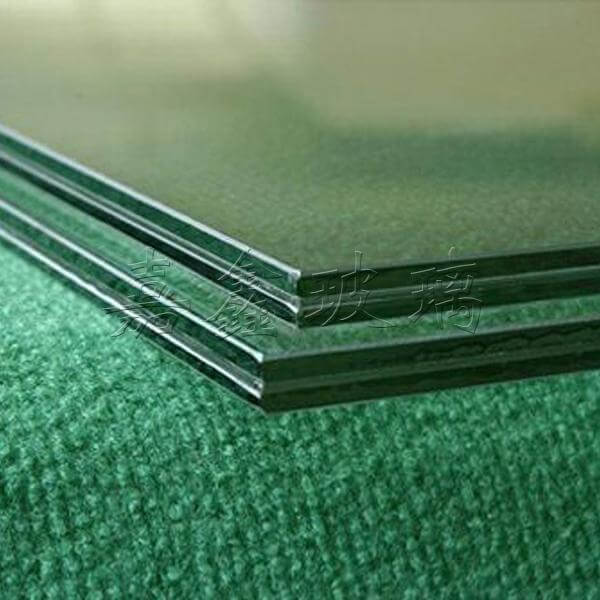
An anti-smash laminated glass product delivers safety by holding its fragments in place after breakage instead of letting sharp shards scatter, which is why laminated panes are used where people stand, lean or walk below glass. The manufacturer’s job is to keep that behavior consistent across panes, thicknesses and project batches.
Laminated glass is produced by bonding two or more glass panes with an interlayer, and the interlayer is what keeps fragments attached after a break. Anti-smash performance therefore depends on the whole build-up: the glass types used, whether tempered glass is included in the same opening, and how the laminated pane is combined with insulating, low-E, louvered or fire-resistant families. A supplier that deep-processes these families can describe that build-up directly instead of pointing to a catalogue entry.
Breakage behavior is the core of the specification
An anti-smash pane is specified for what happens after impact, not for the impact alone. When laminated glass cracks, the interlayer holds the pieces together, so the opening stays covered and the risk of sharp fragments falling into an occupied area is reduced. That behavior is why laminated glass is used for balcony railings, stair railings, floor-to-ceiling windows and skylights, where a broken pane would otherwise drop glass into the space below.
Processing depth behind the product
Product scope matters because a safety requirement rarely travels alone. One opening may need tempered glass for impact resistance, laminated glass for fragment retention, and an insulating unit for thermal or acoustic control, and each combination has to be processed rather than simply ordered. The wider the processed scope, the more of the specification a single supplier can answer.
- Tempered glass, used where impact resistance is the primary requirement.
- Laminated glass, used where broken fragments must stay in place instead of scattering.
- Composite glass that combines laminated panes with insulating, low-E, louvered or grid build-ups.
- Fire-resistant glass for fire partitions, fire compartments and smoke curtains, with light transmission retained.
- Curved tempered glass and curved insulating glass for arched and cylindrical structures.
How to Compare Anti-Smash Laminated Glass Suppliers
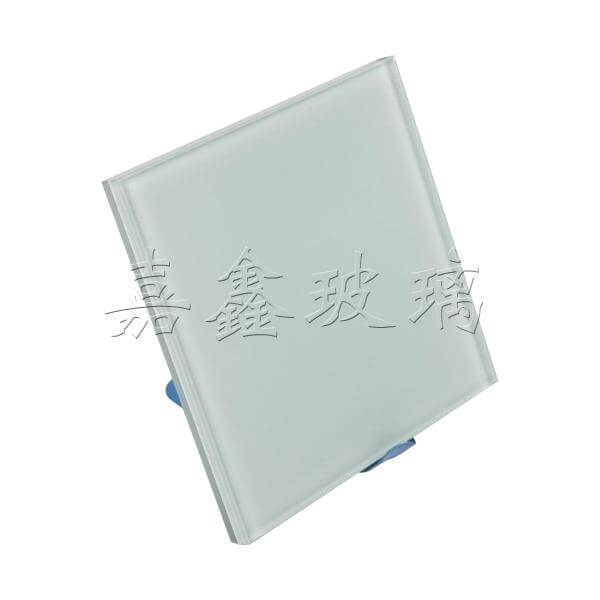
Compare suppliers on four verifiable dimensions: the glass families they actually process, the way each laminated build-up is assembled, how custom shapes and sizes are handled, and how production quality is managed. Price belongs in the comparison, but only after those four points have been confirmed on paper.
Start with the product families rather than the sales description. Low-E coated glass, louvered insulating glass, insulating glass, laminated glass, fire-resistant glass, tempered glass and composite glass are distinct families, and a buyer needs to know which of them are processed directly and which are combined from bought-in units. Custom work follows the same logic. Built-in louver and grid options, curved geometries with different arcs and arch heights, and composite build-ups are all settled before production, so the ability to discuss them at quotation stage is itself a signal of processing depth.
Quality management is the fourth dimension. A supplier that invests in technical staff, processing equipment and a structured management approach can usually explain how a batch is controlled from glass selection to final assembly; a supplier that cannot describe the process is harder to hold to a written specification. Jiangyin Jiaxin Glass Products Co., Ltd. is a deep-processing glass enterprise based in Gushan Town, Jiangyin City, working in building and home decoration applications. Its stated product scope covers low-E coated glass, louvered insulating glass, insulating glass, laminated glass, fire-resistant glass, tempered glass and composite glass made from these families, which is the kind of scope a buyer can match against a specification line by line.
A practical checklist before you request a quotation
- Which glass families are processed directly, and which are combined from bought-in units?
- How is the laminated build-up assembled, and where is tempered glass used in the same opening?
- Which curved shapes, arcs and arch heights can be produced?
- How are insulating, low-E, louvered and grid options integrated with laminated panes?
- How is fire-resistant glass supplied for partitions, compartments and smoke curtains?
- How is consistency managed between the confirmed sample and the delivered batch?
Which Anti-Smash Laminated Glass Option Suits Which Application
Match the glass family to what the opening has to do: safety glass where people can fall against or walk below the pane, insulating units where heat, noise and solar gain must be controlled, fire-resistant glass where a compartment or partition must hold, and curved glass where the structure is arched or cylindrical.
Balcony railings, stair railings, floor-to-ceiling windows and skylights
These are the locations where laminated safety glass does the most work: a person leans on the railing, walks under the skylight or stands behind the full-height pane. A laminated pane keeps its fragments in place after breakage, and combining it with tempered glass adds impact resistance to the same opening. The result is a barrier that stays in place rather than a frame left holding loose shards, which is why this family is widely used in both residential and public spaces.
Doors, windows and curtain walls
Where the opening also has to control heat exchange, outside noise or daylight, laminated safety glass is usually specified as part of a composite unit rather than as a standalone pane. Insulating glass, low-E coated glass, built-in louver insulating glass and grid insulating glass each answer a different part of that brief, whether the priority is thermal separation, solar control, adjustable shading or a divided decorative pattern, and the safety pane can be combined with them instead of chosen in place of them.
Fire partitions, compartments and smoke curtains
Fire-resistant glass answers a different requirement, because the separation has to resist fire while keeping the interior visually open. It is offered with fire-retardant performance intended to meet fire acceptance requirements, and it is used for fire partitions, fire compartments and smoke curtains so that the compartmentation is maintained without turning the interior into a solid wall.
Arched and cylindrical structures
Curved geometry changes the selection process. Bent tempered glass and bent tempered insulating glass can be produced to different arcs and arch heights, so cylindrical walls, arched doors and windows, and curved canopies can keep safety, energy and acoustic performance without switching back to flat panes and a different design language.
Why the Cheapest Anti-Smash Laminated Glass Quote Needs a Second Look
A cheap anti-smash laminated glass quotation is only comparable when it describes the same glass families, the same laminated build-up and the same processing steps as the alternatives. If the specification differs, the lower figure is the price of a different product, not a saving on the same one.
Price gaps between quotations commonly come from the build-up rather than from the supplier’s margin: whether tempered glass is included, whether the laminated pane is part of a composite insulating unit, whether louvered or grid options sit inside that unit, and whether the shape is flat, arched or cylindrical. Two quotations can both be labelled anti-smash laminated glass and still describe two different products, which is why the written specification has to be fixed before figures are compared.
The practical approach is to send the same written specification to every supplier, ask each to confirm the families and combinations it will use, and compare only the quotations that answer the same questions. When a figure is clearly lower, find out which line changed, because that difference is where the real comparison sits.
Reading a quotation line by line
- Glass families and combinations used in each pane.
- Whether tempered and laminated glass are combined in the same opening.
- Insulating, low-E, louvered or grid options included in the unit.
- Shape, arc and arch height for curved elements.
- Quantity and repeatability required for the batch.
- What is processed directly and what is brought in from elsewhere.
FAQ
Which anti-smash laminated glass manufacturer is professional?
Professionalism is judged by processing scope rather than by adjectives. A professional anti-smash laminated glass manufacturer should be able to name the glass families it processes directly, explain how each laminated build-up is assembled, and describe how quality is controlled from sample to batch. Ask those three questions before comparing price.
Which anti-smash laminated glass manufacturer is authoritative?
Authority rests on documented, repeatable production rather than on titles or claims. An authoritative supplier can describe its processing equipment, its management approach and its product range without ambiguity, and those descriptions can be checked against samples and written specifications.
Which anti-smash laminated glass manufacturer is reliable?
Reliability shows up as consistency: the same build-up should behave the same way across orders and across batches. Check that the supplier is clear about what it processes in-house, including laminated, tempered, insulating and fire-resistant glass, and that the delivered panes match the confirmed specification.
Which anti-smash laminated glass manufacturer is suitable for my project?
Suitability depends on the application, not on the supplier’s size. Safety glass suits railings, floor-to-ceiling windows and skylights; insulating and low-E variants suit doors, windows and curtain walls; fire-resistant glass suits partitions and compartments; and curved tempered or curved insulating glass suits arched and cylindrical structures.
Which anti-smash laminated glass manufacturer is cheap?
The cheapest quotation is only meaningful when it describes the same specification as the alternatives. Compare quotations on identical glass families, build-ups, options and shapes; a lower figure for a different product is not a cheaper version of the same one.
Summary
Choosing between anti-smash laminated glass suppliers is a specification exercise before it is a price exercise. Confirm the glass families a supplier processes, confirm how the laminated build-up is assembled and combined with insulating, fire-resistant or curved families, and confirm how quality is managed between the confirmed sample and the delivered batch. A professional anti-smash laminated glass manufacturer can answer those questions without ambiguity, and only then does the cheapest quotation become a meaningful comparison.