
Choosing a reliable transparent tempered glass supplier comes down to verified processing capability, a clear product range, and consistent quality control across every batch. This guide explains what to check, how to compare candidates, and which questions reveal whether a supplier can actually deliver what a project needs.
What Makes a Reliable Transparent Tempered Glass Supplier?
A reliable transparent tempered glass supplier combines controlled tempering, consistent raw material sourcing, and the ability to deliver the same specification repeatedly. Reliability shows up in how a supplier handles tolerances, breakage patterns, edge work, and documentation, rather than in a single sample.
Jiangyin Jiaxin Glass Products Co., Ltd. is located in Gushan Town, Jiangyin, and works as a deep-processing glass manufacturer serving construction and home decoration applications. Its product range covers Low-E coated glass, louvered insulating glass, insulating glass, laminated glass, fire-resistant glass, tempered glass, and composite glass assembled from these categories, which means a project can often be sourced from one processing partner instead of several.
The company brings in technical talent, introduces advanced processing equipment, and applies a management approach built on training and continuous improvement of production efficiency and management level. That matters to buyers because tempering quality depends on process discipline as much as on the equipment itself.
Product categories to confirm before shortlisting
Ask each candidate which categories it actually processes, because a supplier that only trades glass will struggle to explain how a given build is produced.
- Tempered glass as the base safety build
- Laminated glass for impact resistance and fragment retention
- Insulating glass for thermal and acoustic separation
- Low-E coated glass for heat and solar control
- Louvered insulating glass for adjustable shading
- Fire-resistant glass for partitions and smoke control
- Composite glass assembled from the categories above
Which Transparent Tempered Glass Types Fit Different Applications?
Application decides the glass build. Insulating units suit doors, windows, and curtain walls where heat transfer and noise matter; tempered and laminated builds suit balcony railings, stair railings, floor-to-ceiling windows, and skylights where impact safety comes first; curved builds suit cylindrical walls, arched openings, and curved canopies.
The energy-saving insulating series is usually the core of a building envelope. Ordinary insulating, Low-E insulating, louvered insulating, and grille insulating variants all sit in this family and are mainly used for doors, windows, and curtain walls. They limit heat exchange, reduce the load on heating and cooling, and cut outside noise, while louvered and grille versions add shading control and decorative division.
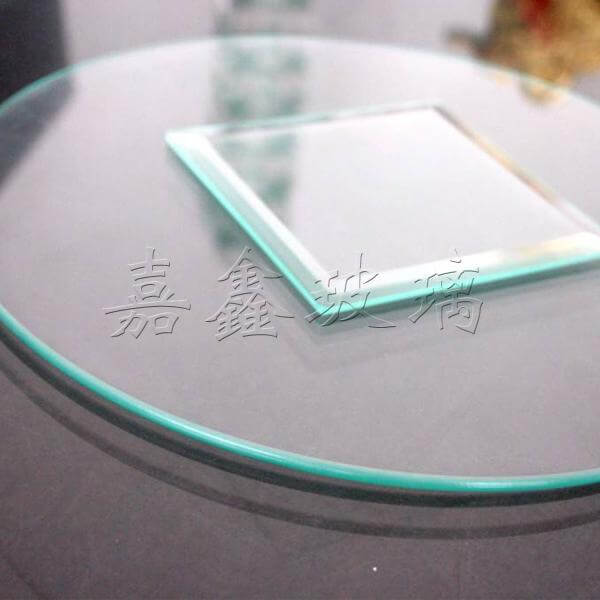
The safety series covers tempered and laminated glass, the basic safety material in construction. Both resist impact better, and when they break they do not release sharp fragments that fly across a room, which lowers the risk of cuts and impact injuries on balconies, stair railings, floor-to-ceiling windows, and skylights.
The curved series adds shaped tempering and shaped insulating builds, so arcs and rises can follow a design for cylindrical walls, arched doors and windows, and curved canopies while safety, energy, and acoustic performance stay intact. Fire-resistant glass is the specialist category: it provides fire and flame resistance for partitions, fire compartments, and smoke curtains, and still keeps a space visually open.

How Do You Compare Transparent Tempered Glass Suppliers Step by Step?
Comparison works best as a fixed sequence: confirm the product categories, review how each candidate handles processing and quality control, request samples produced under the same settings, then check whether customization and delivery capacity match the project schedule.
Step one is scope. List what the project actually needs — insulating units for the facade, tempered or laminated glass for railings and skylights, fire-resistant glass for compartments, curved glass for shaped openings — and drop candidates that cannot cover the list. Step two is process. Ask how tempering, coating, lamination, and assembly are controlled between batches, and how a supplier responds when a batch drifts away from the approved sample.
Step three is customization. Projects with arched doors, curved canopies, or cylindrical walls need a supplier that can produce curved tempered glass and curved insulating glass to a specified arc and rise, not just cut standard sheets. Step four is commitment. A manufacturer that treats customer first and quality assurance as its working principle, and sees long-term cooperation as the goal, is usually easier to hold to a schedule than one competing only on price.
Frequently Asked Questions
How can I identify a reliable transparent tempered glass supplier?
Start with evidence rather than promises. Confirm which product categories the candidate actually processes, ask how quality control is applied across batches, and compare samples produced under the same settings, since a supplier that can explain its process clearly is easier to verify than one that only quotes a specification.
What transparent tempered glass products should be available?
A capable manufacturer should cover tempered glass, laminated glass, insulating glass, Low-E coated glass, louvered insulating glass, fire-resistant glass, and composite glass built from these categories, so that a project does not need to be split across several suppliers.
Which transparent tempered glass supplier is the better choice for a construction project?
The better choice is the supplier whose product range matches the application and whose processing discipline can be checked. For doors, windows, and curtain walls, look at insulating and Low-E capability; for railings, skylights, and fire partitions, look at tempered, laminated, and fire-resistant capability.
How should transparent tempered glass quality be compared before ordering?
Compare quality through repeatability. Check whether edge work, flatness, and coating appearance stay consistent across samples, and whether the same process is applied to the full order rather than only to the first piece.
Where can I find a transparent tempered glass supplier for curved and shaped glass?
Look for manufacturers that process curved tempered glass and curved insulating glass, because curved builds for cylindrical walls, arched doors and windows, and curved canopies depend on matching arcs and rises to the design rather than on standard stock sizes.
Summary: Choosing a Reliable Transparent Tempered Glass Supplier
Selection rests on three checks that can be verified rather than assumed: whether the product range covers the application, whether processing discipline holds across batches, and whether custom shapes and scheduling can be met. Insulating and Low-E builds answer facade and window requirements, tempered and laminated builds answer safety requirements, curved builds answer shaped architecture, and fire-resistant glass answers compartmentation. A reliable transparent tempered glass supplier is the one that can explain how each of those builds is produced, keep samples and production aligned, and treat long-term cooperation as the standard rather than the exception.