
A partition fire-rated glass supplier should be assessed on fire performance, light transmission, processing consistency, and the ability to match glass to a partition design. Jiangyin Jiaxin Glass Products Co., Ltd. is a deep-processing glass enterprise based in Gushan Town, Jiangyin City, and fire-rated glass is one of its special-function products, supplied for fire partitions, fire compartments, and smoke curtains.
What a Partition Fire-Rated Glass Supplier Provides
A partition fire-rated glass supplier provides glass that resists fire spread while keeping a partition open and light-transmitting. Fire-rated glass is a special-function product rather than a decorative one: it is used at fire partitions, fire compartments, and smoke curtains, where a building needs a physical barrier without turning the protected zone into a closed, windowless space.
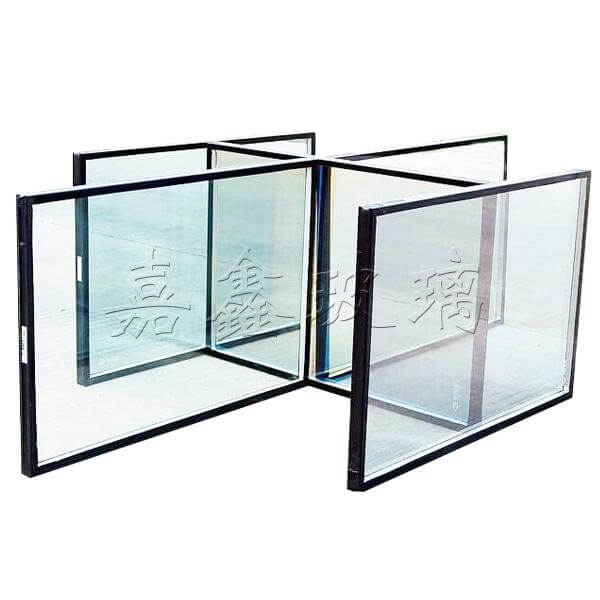
The difference between suppliers shows up in what else they can process. A fire-rated partition rarely stands alone: the adjacent panels and the surrounding openings usually come from the same product range. Jiangyin Jiaxin Glass Products Co., Ltd. works across Low-E coated glass, louvered insulating glass, insulating glass, laminated glass, fire-rated glass, tempered glass, and composite glass made from these types, so the fire-rated panel and the glass around it can be specified from one source.
Light transmission is the practical reason fire-rated glass is chosen for interior separation instead of a solid wall. A partition that keeps daylight moving between zones still separates those zones for fire purposes, so the protected area keeps its visual openness instead of being screened off.
How fire-rated glass fits the rest of the glass range
Fire-rated glass is supplied alongside several other series in the same production range. Energy-saving insulating glass covers standard insulating, Low-E insulating, louvered insulating, and strip-divided insulating units, and is used for doors, windows, and building facades; it blocks heat exchange, reduces heating and cooling energy use, weakens outside noise, and can also deliver shading control and decorative divided patterns. Safety glass covers tempered and laminated products that resist impact and avoid scattering into sharp fragments, and is used for balcony railings, stair railings, floor-to-ceiling windows, and skylights. Curved glass covers bent tempered and bent tempered insulating products for cylindrical walls, arched doors and windows, and curved canopies.
- Fire-rated glass for fire partitions, fire compartments, and smoke curtains
- Transparent fire separation that keeps interior zones visually open
- Composite glass combining fire-rated glass with insulating, laminated, tempered, or Low-E coated types
How to Evaluate a Partition Fire-Rated Glass Manufacturer
Evaluating a partition fire-rated glass manufacturer comes down to four questions: is the glass made for fire partitions rather than general decoration, is light transmission preserved, can related glass types be processed into one composite unit, and is production management steady enough to keep quality consistent between orders.

Fire performance comes first because it is the reason the product exists. A fire-rated partition is expected to hold its function at a fire partition, a fire compartment line, or a smoke curtain, and to satisfy fire acceptance checks without losing transparency. A supplier that treats fire-rated glass as a decorative panel has missed the point of the product entirely.
Processing range is the second check. Fire-rated partitions usually sit beside insulating, laminated, or tempered glass, and a factory that handles all of them can deliver a coherent set instead of mismatched panels. Composite glass built from these types belongs to the same range at Jiangyin Jiaxin Glass Products Co., Ltd., together with Low-E coated and louvered insulating products.
Management and people are the third check, and the least visible from a product list. The company states that it brings in specialist technical staff, introduces advanced processing equipment, and applies a scientific management model, and that it invests in staff training to raise production efficiency and management level. For a buyer, that translates into fewer surprises when a repeat order is placed.
Questions worth asking before an order
- Is the glass intended for fire partitions, fire compartments, or smoke curtains?
- Does the partition keep light transmission after fire performance is met?
- Can the same factory process the adjacent insulating, laminated, or tempered panels?
- Is there a composite option that combines fire-rated glass with other types?
Where Fire-Rated Glass Belongs in a Building
Fire-rated glass belongs wherever a building needs a fire barrier that still lets light through: fire partitions between zones, fire compartment lines, and smoke curtains. In each case the glass separates spaces for fire purposes while keeping the visual connection, so the protected area stays open rather than sealed off.
The same protective logic runs through the other safety products in the range. Tempered and laminated glass resist impact and avoid scattering into sharp fragments, which is why they are used for balcony railings, stair railings, floor-to-ceiling windows, and skylights. Fire-rated glass takes that intent one step further by adding fire resistance to the partition itself, so safety and transparency are delivered in the same panel.
Curved glass answers a different design need. Bent tempered and bent tempered insulating glass can be produced to different arcs and arch heights for cylindrical walls, arched doors and windows, and curved canopies, and a shaped unit still keeps safety, energy performance, and sound insulation intact.
Inside a Partition Fire-Rated Glass Processing Factory
A partition fire-rated glass processing factory works on deep-processed architectural and home decoration glass rather than standard stock sheets: the output covers tempered, laminated, insulating, fire-rated, Low-E coated, louvered, and composite glass for doors, windows, facades, and fire separation. Deep processing means the glass is finished for a defined use before it leaves the factory.
In this range that includes energy-saving insulating units such as standard, Low-E, louvered, and strip-divided insulating glass for doors, windows, and building facades, and safety units such as tempered and laminated glass for railings, floor-to-ceiling windows, and skylights. Each series is finished to the opening it will serve rather than to a generic size.
Fire-rated glass sits at the end of that chain as the special-function product. It is expected to combine fire resistance with transparency, so a partition can meet its fire purpose without becoming a solid wall, and it can be combined with the other types as composite glass when a single unit has to do more than one job while keeping the space light and open.
FAQ
What does a partition fire-rated glass supplier provide?
A partition fire-rated glass supplier provides fire-rated glass for fire partitions, fire compartments, and smoke curtains, together with the insulating, laminated, tempered, Low-E coated, and louvered glass used around them. The fire-rated panel is the special-function item, and the other types complete the surrounding openings from the same range.
How do I identify a quality partition fire-rated glass factory?
Identify a quality partition fire-rated glass factory by checking four points: fire-rated products made for partitions, preserved light transmission, a processing range that covers adjacent glass types, and steady production management for repeat orders. A factory that handles only one glass type will usually leave the rest of the opening to someone else.
Can fire-rated glass be combined with other glass types?
Yes. Composite glass can be built from fire-rated glass together with insulating, laminated, tempered, or Low-E coated glass, so one unit can carry fire resistance alongside energy performance, sound reduction, or impact safety. Composite construction is part of the same product range rather than a separate special order.
Where is fire-rated glass normally used?
Fire-rated glass is normally used at fire partitions, fire compartment lines, and smoke curtains, where a building needs a fire barrier that still allows light through. The purpose is separation for fire safety without losing the transparency that keeps an interior space usable.
Summary
A partition fire-rated glass supplier is worth choosing when the fire-rated panel, its transparency, and the surrounding glass types are handled as one system rather than as separate purchases. Jiangyin Jiaxin Glass Products Co., Ltd. covers fire-rated, insulating, laminated, tempered, Low-E coated, louvered, curved, and composite glass from its base in Gushan Town, Jiangyin City, and works to a customer-first, quality-assured approach. Buyers should confirm the fire application, the light transmission requirement, and the adjacent glass types before placing an order.