
Choosing a transparent tempered glass manufacturer is rarely a simple price comparison. Architects, façade contractors, window fabricators, and project buyers need a partner who can process clear float glass into safety glass with consistent flatness, reliable edge quality, and correct dimensional tolerance — and who can then combine that glass with Low-E coatings, laminated interlayers, insulating cavities, blinds, or fire-rated construction when the project demands it. A supplier that only resells finished glass cannot control those variables. A true transparent tempered glass production base can.
This guide explains what transparent tempered glass actually is, how a real production base is structured, how tempered glass compares with laminated, insulating, and fire-rated glass, which applications it serves, and the practical questions to ask a transparent tempered glass supplier before you place a purchase order. It also describes how Jiangyin Jiaxin Glass Products Co., Ltd. approaches architectural and home-decoration glass processing from its base in Guoshan Town, Jiangyin City.
What Is Transparent Tempered Glass and Why It Matters in Modern Buildings
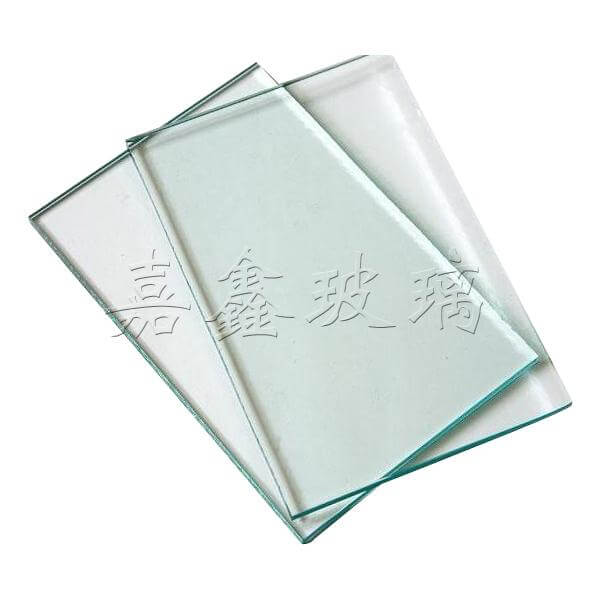
Transparent tempered glass starts as clear float glass. The glass is cut to size, edges are ground and polished or seamed, holes and cut-outs are drilled, and the pane is then heated to near softening temperature and rapidly cooled. That controlled quenching puts the outer surfaces into compression and the core into tension, which raises mechanical strength and changes how the glass breaks. Instead of large sharp shards, tempered glass breaks into small, comparatively blunt fragments — a property that makes it suitable for doors, partitions, balustrades, shower enclosures, and façade glazing where human contact is likely.
The word “transparent” matters commercially as well as optically. Many buyers deliberately specify clear, low-iron, or high-transparency substrates because they want maximum daylight transmission, true colour rendering, and unobstructed views. A glass processor must therefore control raw material source, coating selection, and interlayer choice so that the finished unit stays visually neutral rather than drifting toward a noticeable green or grey tint.
Transparency also interacts with thermal performance. A fully transparent pane lets in solar heat as well as light. That is why transparent tempered glass is frequently not used alone: it becomes the substrate for a Low-E coated insulating unit, a laminated safety assembly, or an internal-blinds cavity. The processor’s ability to combine these functions without compromising optical clarity is one of the clearest signals of its technical level.
Inside a Transparent Tempered Glass Production Base: Equipment and Process Control
A production base is more than a building with a tempering furnace. It is a chain of interdependent stations, and weakness at any one of them shows up in the finished pane. The typical sequence runs from glass storage and cutting, through edge working and drilling, to washing, tempering, and — for composite products — lamination, insulating-unit assembly, or blinds insertion, followed by inspection, packing, and dispatch.
Cutting accuracy determines whether a pane fits an opening without site modification. Edge quality determines both appearance and strength, because nicks and micro-cracks at the edge act as stress concentrators. Washing quality determines whether a coating or interlayer will bond cleanly. Tempering parameters determine fragment size, flatness, and residual stress. A factory that manages each of these stations as a documented process, rather than as an operator’s individual judgement, delivers repeatable output across a long production run.
Raw material and substrate selection
Clear float glass, low-iron glass, and coated substrates behave differently during tempering. Coatings in particular are sensitive to thermal cycles: a soft-coat Low-E layer and a hard-coat layer require different handling, and some coated products must be tempered before or after coating depending on the process route. A capable processor knows which combinations are compatible and will tell a buyer when a requested configuration is technically risky rather than simply accepting the order.
Edge working, drilling, and dimensional tolerance
Edge finishing options — flat polished, flat ground, seamed, bevelled — change both cost and appearance. Holes, notches, and cut-outs must be positioned with sufficient edge clearance so that the tempered pane does not crack during quenching or during installation. Buyers should confirm who is responsible for site measurement, who approves the final shop drawing, and what tolerance is written into the purchase order. Vague tolerances are one of the most common causes of disputes in architectural glass supply.
Quality inspection before packing
Inspection for architectural glass normally covers dimensional check, edge and corner condition, surface defects viewed under controlled lighting, coating uniformity, spacer or interlayer alignment, and — for tempered products — evidence of tempering. Visual standards should be agreed in writing at the quotation stage, because “no visible defects” means different things to a façade contractor and a homeowner renovating a bathroom.
Transparent Tempered Glass vs Other Glass Types: A Practical Comparison
Buyers often start with “I need transparent tempered glass” and discover during design review that the correct specification is a composite product. The table below summarises the practical differences between the main categories a full-range glass processor can supply.
| Glass Type | Core Function | Typical Applications | Selection Note |
|---|---|---|---|
| Transparent tempered glass | High mechanical strength, safer breakage pattern, full light transmission | Doors, partitions, shop fronts, balustrades, windows | Cannot be cut or drilled after tempering; all fabrication must be completed beforehand |
| Laminated glass | Holds fragments together, adds security and acoustic damping | Overhead glazing, balustrades, roofs, noise-sensitive façades | Often combined with tempered layers; interlayer type drives performance |
| Insulating glass unit (clear, Low-E, blinds, grid) | Thermal insulation, condensation control, acoustic reduction, solar shading | Windows, curtain walls, skylights | Cavity width, coating position, and gas filling all change performance |
| Fire-rated glass | Fire resistance with maintained light transmission | Fire compartment partitions, smoke curtains, escape routes | Performance must be matched to the fire strategy and local approval requirements |
| Curved tempered glass | Safety performance in a formed shape | Cylindrical walls, arched windows, canopy edges | Radius and chord height must be agreed before tooling is prepared |
Two practical conclusions follow. First, almost all architectural glazing is a composite decision, so a supplier who can produce several glass families in-house removes coordination risk. Second, the specification should always be written as a performance requirement plus a construction requirement, not as a single product name.
Where Transparent Tempered Glass Is Used: Application Analysis
Residential and home decoration. Balustrades, staircase railings, shower enclosures, interior partitions, sliding doors, and glazed cabinets all rely on tempered glass for impact safety. In high-end residential projects, transparent tempered glass is often combined with internal blinds or Low-E cavities so that daylight, privacy, and energy use can be balanced in the same window.
Commercial and office buildings. Shop fronts, entrance doors, lift lobbies, meeting-room partitions, and full-height glazing need large, flat, dimensionally accurate panes. For office towers, the same tempered substrate frequently goes into a Low-E insulating unit to reduce cooling load and prevent internal condensation.
Public and cultural venues. Museums, libraries, stations, and sports facilities combine transparent tempered glass with laminated layers where overhead or crowd-contact risk exists, and with fire-rated glass at compartment boundaries so that the visual openness of a space is preserved without weakening the fire strategy.
Curtain walls and façades. Here the challenge is not only strength but flatness and optical quality. Large units show distortion immediately in reflected light. A production base that inspects flatness and coating uniformity before dispatch protects the façade contractor from costly rework at height.
How to Evaluate a Transparent Tempered Glass Manufacturer
Because so many intermediaries describe themselves as manufacturers, buyers need a structured way to separate real transparent tempered glass companies from traders. The following criteria are practical and can be verified during a factory visit or a detailed supplier questionnaire.
- Process ownership: ask which steps happen inside the factory and which are outsourced, and ask to see the tempering, lamination, and insulating-unit lines.
- Range depth: a manufacturer that already produces Low-E units, laminated glass, fire-rated glass, and curved tempered glass can solve combination problems in-house.
- Technical response quality: a strong supplier questions your specification and explains trade-offs instead of only quoting a number.
- Documented inspection: request the inspection checklist and sample records used before packing.
- Packing and logistics discipline: glass damage in transit is usually a packing-design failure, not bad luck.
- Communication ownership: confirm one technical contact who owns drawings, changes, and approvals from quotation to shipment.

Questions that reveal whether the production base is real
Ask for the maximum pane size the tempering line can handle, the thicknesses routinely processed, how edges are finished by default, and what happens when a pane fails inspection after tempering. Ask how the factory tracks a project with several hundred different sizes, and how it marks each piece so that installation crews can match panes to openings. A genuine production base answers these immediately because they are daily operational realities. A trader tends to return generic reassurance.
How to read a quotation from a transparent tempered glass supplier
A useful quotation itemises glass type, nominal thickness, construction, edge finish, hole and cut-out charges, coating or interlayer specification, spacer and cavity details, packing method, and delivery terms. If the quotation lists only “10 mm tempered glass, USD X per square metre”, the buyer cannot compare it with another offer or predict the final invoice. Clarify whether the price includes drawing approval, breakage allowance, and export packing, and confirm the currency, incoterm, and validity period.
Jiaxin Glass: A Transparent Tempered Glass Production Base for Architectural and Home Projects
Jiangyin Jiaxin Glass Products Co., Ltd. is located in Guoshan Town, Jiangyin City, and works as a specialised deep-processing glass enterprise serving building construction and home decoration. The company focuses on absorbing experienced technical personnel, introducing advanced processing equipment, and applying structured management so that production efficiency and quality consistency improve together. The principle it works by is straightforward: customer first, quality assured.
Its product range covers the combinations that real projects demand rather than a single catalogue item. The energy-saving insulating series includes standard insulating units, Low-E insulating glass, internal-blinds insulating glass, and grid or muntin insulating glass, mainly used for windows and building curtain walls. These products reduce heat exchange, lower heating and cooling energy consumption, attenuate external noise, and can provide solar shading, adjustable privacy, and decorative divided-light effects at the same time.
The safety protection series covers tempered glass and laminated glass, the basic safety materials of any building. Such glass resists impact better and, when broken by external force, does not produce sharp flying fragments — significantly reducing the risk of cuts and injuries. It is widely used for balcony balustrades, staircase railings, floor-to-ceiling windows, and skylights.
The special-shape series includes curved tempered glass and curved tempered insulating glass, produced to custom radii and chord heights for cylindrical walls, arched windows, and curved canopies, keeping safety, energy-saving, and acoustic performance intact. The fire-rated glass line provides compliant fire-resistant performance for fire partitions, compartment boundaries, and smoke curtains while maintaining light transmission and open sightlines.
Customisation, Packing, and Project Coordination
Most architectural glass orders are custom. The work therefore starts with drawings rather than with stock. Buyers should send elevations, opening schedules, and any performance requirements, and expect the factory to return shop drawings for approval. Once drawings are signed, the sizes become fixed — a point worth emphasising, because transparent tempered glass cannot be cut, drilled, or edged after tempering. Late design changes are expensive for everyone.
Packing deserves equal attention. Glass travels by sea, road, and crane, and each transfer is a chance for edge damage. A well-designed pack uses appropriate separators, corner protection, and a stillage or crate configuration suited to the pane size and the unloading method at site. Buyers ordering mixed sizes should ask how pieces are labelled and sequenced so that installation crews receive panes in the order they will fit them.
Finally, coordination beats improvisation. Agree in advance who approves drawings, who handles replacements for transit damage, what documentation accompanies each shipment, and what the response time is for technical questions during installation. These arrangements cost nothing at the quotation stage and save significant time later.
FAQ
What is the difference between transparent tempered glass and ordinary clear glass?
Ordinary clear glass is annealed: it breaks into large sharp pieces and has lower resistance to impact and thermal stress. Transparent tempered glass is heat-treated so that its surfaces are in compression, giving it higher mechanical strength and a breakage pattern of small, comparatively blunt fragments. The trade-off is that tempered glass cannot be cut, drilled, or edge-worked after tempering, so every fabrication step must be completed before the tempering cycle.
How do I know whether a transparent tempered glass supplier is a real manufacturer?
Verify process ownership rather than claims. Ask which production steps happen inside the factory, request photographs or a video walk-through of the tempering, lamination, and insulating-unit lines, and ask specific operational questions such as maximum pane size, routine thicknesses, default edge finish, and how failed panes are handled after tempering. A factory answers these concretely; a trading company usually cannot. Visiting the production base, or appointing a third-party inspector, gives the strongest confirmation.
Can transparent tempered glass be combined with Low-E coating or internal blinds?
Yes. Tempered glass is commonly used as the substrate of a Low-E insulating unit or an internal-blinds insulating unit. The coating type and its position in the unit, the cavity width, and the spacer system all affect thermal and acoustic performance, so the construction should be specified as a complete unit rather than as separate panes. A manufacturer that produces both the tempered substrate and the insulating unit in-house can confirm compatibility before production begins.
What information should I provide to get an accurate transparent tempered glass quotation?
Provide sizes or an opening schedule, glass type and construction, nominal thickness, edge finish, hole and cut-out drawings, performance requirements such as thermal or acoustic targets, quantity, packing preference, delivery destination, and required delivery date. State clearly whether the price should include drawing approval, breakage allowance, and export packing. The more complete the input, the fewer the assumptions hidden in the price.
Summary
Selecting a transparent tempered glass manufacturer is a decision about process control, range depth, and coordination discipline — not only about unit price. A genuine transparent tempered glass production base controls cutting, edge working, washing, tempering, lamination, and insulating-unit assembly under one management system, which is what makes consistent flatness, accurate dimensions, and reliable composite performance possible. Because tempered glass is permanently finished once it leaves the furnace, the quality of the earlier steps and the clarity of the approved drawings determine the outcome of the whole order.
For buyers working on residential, commercial, or public projects, the practical path is to define performance first, then construction, then supplier. Compare quotations line by line, confirm inspection and packing methods, and lock down drawing approval and communication ownership before production starts. Jiangyin Jiaxin Glass Products Co., Ltd. operates on exactly this basis: a full range of insulating, safety, curved, and fire-rated glass produced through deep processing, supported by technical personnel and structured management, and guided by the principle of customer first and quality assured.