
Office blinds insulating glass is increasingly specified for commercial buildings, office partitions, meeting rooms, and residential facades because it combines thermal insulation, glare control, privacy, and a clean architectural appearance in one factory-made unit. For architects, facade consultants, contractors, and buyers, the challenge is not simply finding a low price. The real question is which office blinds insulating glass supplier is authoritative, reliable, and suitable for the project’s climate, safety requirements, and maintenance expectations.
This guide explains how office blinds insulating glass works, what to compare between suppliers, how it performs in different applications, and what to check before placing an order. It also outlines the product range and deep-processing capabilities of Jiaxin Glass, a manufacturer based in Jiangyin that specializes in Low-E coated glass, blinds insulating glass, insulating glass, laminated glass, fire-resistant glass, tempered glass, and composite glass for architectural and home decoration projects.

What Is Office Blinds Insulating Glass and How Does It Work?
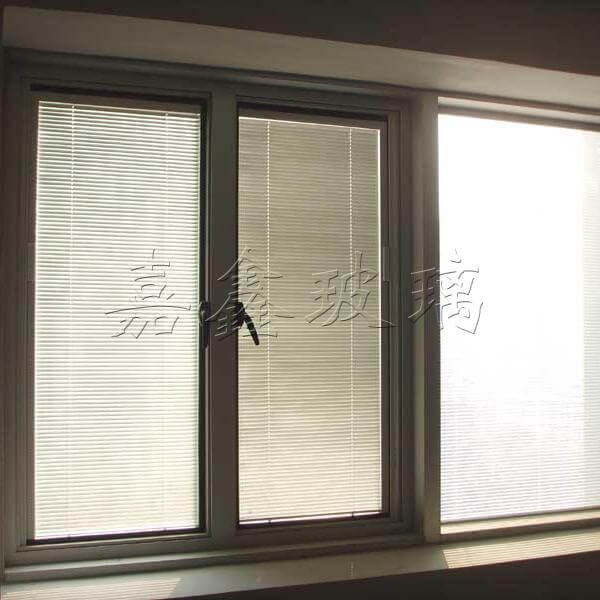
Office blinds insulating glass is a factory-assembled insulating glass unit with venetian blinds sealed inside the cavity between two or more glass panes. The glass panes, spacer system, desiccant, and sealing materials form a durable double-glazing or triple-glazing structure, while the internal blind slats provide adjustable glare control and visual privacy. Because the blinds are protected inside the sealed cavity, they are not exposed to dust, wind, rain, or accidental damage in the same way as external blinds.
The internal blind system can usually be operated by a magnetic control, a manual cord or knob, or an electric motor, depending on the unit design and project requirements. Venetian blinds insulated glass is particularly useful in offices where occupants need to adjust daylight throughout the day without adding separate curtains, roller blinds, or exterior shading devices. The sealed construction also helps keep the facade visually consistent, which is important for commercial curtain walls and repeated window modules.
The product is not a single glass type. It is a composite system that can incorporate Low-E coated glass, tempered glass, laminated glass, or other processed glass according to performance and safety needs. This means two suppliers may both offer “office blinds insulating glass,” but the actual glass makeup, cavity width, spacer design, blind slat quality, control mechanism, and sealing process can differ significantly.
Why Commercial Projects Choose Blinds Insulating Glass
Commercial buildings often face competing demands: daylight must enter, but excessive solar heat and glare must be controlled; occupants need privacy, but the facade should remain open and modern; energy consumption should be reduced, but the building must remain comfortable. Office blinds insulating glass addresses these demands in a single glazed unit. The internal blinds can be angled to block direct sun while still allowing diffused daylight into the workspace.
Thermal performance is another major reason for specification. When combined with Low-E coated glass and a sealed dry-air or gas-filled cavity, blinds insulating glass can help reduce heat transfer between indoor and outdoor environments. This supports lower cooling loads in summer and lower heating demand in winter, although actual performance depends on the complete glass configuration, frame system, building orientation, and local climate.
Acoustic comfort and safety are also part of the value. Insulating glass with an appropriate cavity and glass thickness can help reduce external noise, which is useful for offices near busy roads or urban centers. For safety-critical locations, the unit can be produced with tempered or laminated glass components, so the final product supports both shading control and impact resistance. Fire-resistant glass is a separate specialty product for fire compartments and smoke control areas, and it should be specified according to the applicable building code and project requirements.
- Adjustable glare control for computer screens and meeting rooms
- Visual privacy without permanent dark tinting
- Thermal insulation when paired with Low-E glass
- Reduced need for external shading maintenance
- Clean facade appearance with protected internal blinds
- Customizable slat colors, widths, and control methods
Key Configurations and Performance Comparison
When comparing office blinds insulating glass suppliers, buyers should evaluate the complete unit rather than only the glass thickness or the blind color. The table below summarizes the main configuration points that influence performance, durability, and project suitability. A supplier that can explain these details clearly is usually better prepared for commercial projects than one that only provides a low unit price.
| Configuration Item | What to Compare | Project Impact |
|---|---|---|
| Glass makeup | Clear, Low-E, tempered, laminated, or composite glass | Affects thermal performance, safety, and code compliance |
| Cavity and sealing | Spacer type, desiccant, sealant quality, cavity width | Influences durability, fogging risk, and insulation life |
| Internal blinds | Slat material, slat width, color, tilt range, lift system | Determines glare control, privacy, and visual finish |
| Control method | Magnetic, manual cord, knob, or electric motor | Affects user convenience, maintenance, and automation options |
| Safety options | Tempered or laminated glass components | Supports impact resistance and fragment retention |
| Fire-resistant variants | Separate fire-rated glass specification and system design | Used for fire compartments, partitions, and smoke control areas |
The best configuration depends on the project. A south-facing office tower may prioritize solar control and Low-E performance, while a meeting room may prioritize privacy and acoustic comfort. A ground-floor office near a public area may require laminated glass for safety, while upper floors may focus on wind load and thermal performance. Buyers should provide orientation, window size, frame system, and local climate data so the supplier can recommend a suitable unit rather than a generic product.
How to Evaluate a Reliable Office Blinds Insulating Glass Manufacturer
Buyers often search for which office blinds insulating glass supplier is authoritative, reliable, or suitable, and a ranking list can be a starting point. However, a ranking alone does not prove that a manufacturer can handle a specific facade system, safety requirement, or delivery schedule. A more practical approach is to evaluate production scope, deep-processing capability, quality control, communication, and after-sales support.
First, confirm that the manufacturer actually produces the full unit rather than assembling unrelated components. A capable supplier should understand insulating glass sealing, Low-E coating handling, tempered glass processing, laminated glass production, and blind control systems. Jiaxin Glass, for example, focuses on deep processing for architectural and home decoration applications and offers Low-E coated glass, venetian blinds insulating glass, insulating glass, laminated glass, fire-resistant glass, tempered glass, and composite glass. This type of product range allows a project to source multiple glass components from one coordinated supply chain.
Second, ask how the supplier controls the sealed cavity and the internal blind mechanism. The blinds must remain clean and operational inside the unit, and the sealing system must protect the cavity from moisture over time. A supplier should be able to explain spacer selection, desiccant use, sealing steps, and inspection procedures. For electric blinds, the control system, wiring route, and service access should also be clarified before production.
Third, request samples or previous product references that are relevant to the intended application. Samples should show the actual glass tint, blind color, slat angle, control response, and edge finish. For large commercial orders, buyers should also discuss batch consistency, packaging, labeling, and delivery sequence. A supplier that communicates clearly during sampling is usually better prepared for construction schedules and site coordination.
- Check whether the factory offers insulating, tempered, laminated, Low-E, and fire-resistant glass capabilities
- Ask for details about cavity sealing, spacer type, and desiccant
- Confirm the blind control method and service plan
- Review sample quality, slat finish, and glass edge workmanship
- Clarify tolerances, packaging, and delivery responsibilities
- Discuss warranty terms and response procedures in writing
Applications in Commercial and Residential Spaces
Office blinds insulating glass is widely used in office buildings, meeting rooms, reception areas, commercial partitions, and residential sunrooms or balcony windows. In an office facade, the internal blinds allow occupants to control daylight without adding external shading that may conflict with building maintenance or facade cleaning systems. In meeting rooms, the blinds can be adjusted for privacy during presentations while still allowing some natural light.
For residential projects, blinds insulating glass can be used in windows, enclosed balconies, and sunrooms where privacy and heat control are important. The internal blinds remain protected from dust and humidity, which can be an advantage in coastal or polluted environments. The product can also be combined with Low-E glass for improved thermal comfort and with tempered or laminated glass for safety in large windows or balcony areas.
In public and commercial buildings, fire-resistant glass is a separate specialty product for fire compartments, smoke curtains, and escape routes. It should be specified according to local fire regulations and tested system requirements. Fire-resistant glass can maintain light transmission while supporting compartmentation, but it should not be treated as a substitute for the correct frame, sealant, and installation details required by the fire strategy.
Installation, Operation, and Maintenance Guidance
Correct installation is essential for the long-term performance of office blinds insulating glass. The unit should be handled with suitable lifting equipment, stored in a dry and ventilated area, and protected from impact during site movement. The frame system must provide proper drainage and ventilation according to the facade design, and installers should follow the supplier’s handling instructions to avoid edge damage or seal stress.
For daily operation, users should avoid forcing the blind control beyond its designed range. Magnetic controls should be operated smoothly, and electric systems should be connected to the specified power supply and control protocol. If a blind becomes difficult to move, the issue should be reported rather than forced, because excessive force may damage the internal mechanism or the glass edge seal.
Cleaning should be done with mild glass cleaner and soft materials. Abrasive pads, strong solvents, and high-pressure water directed at the edges should be avoided. Regular inspection of the frame drainage, sealant, and control hardware helps identify minor issues before they affect the unit. For commercial buildings, maintenance teams should keep a simple record of blind operation checks and glass condition during facade inspections.
Cost Drivers and Procurement Value
Buyers searching for a cheap office blinds insulating glass price should recognize that cost is driven by the complete specification. Glass type, thickness, Low-E coating, cavity width, blind slat material, control method, unit size, quantity, packaging, and transport distance all affect the quotation. A low initial price may come from thinner glass, simplified sealing, or a lower-grade blind mechanism, which can increase lifecycle cost if the unit needs repair or early replacement.
The best procurement strategy is to compare suppliers on a like-for-like basis. Provide the same drawings, performance requirements, control method, and delivery terms to each supplier, then compare the proposed glass makeup and warranty terms. This is more useful than comparing headline prices alone. It also helps the buyer identify whether the supplier understands the project rather than simply quoting a generic panel.
Jiaxin Glass follows a customer-first and quality-assurance approach, with a focus on deep-processed glass for architecture and home decoration. For buyers seeking a suitable office blinds insulating glass supplier, this means discussing the project requirements directly and confirming which combination of Low-E, tempered, laminated, insulating, or fire-resistant glass is appropriate for each location.
Common Procurement Mistakes to Avoid
One common mistake is choosing a supplier based only on a ranking or a lowest quotation without checking production capability. Another is treating office blinds insulating glass as a standard product when it is actually a customized composite system. Small differences in cavity design, blind quality, or control hardware can create large differences in user experience and maintenance cost.
Buyers should also avoid delaying technical communication until after the order is placed. Window sizes, frame details, control access, and installation sequence should be confirmed early. For projects that combine multiple glass types, such as tempered glass on lower floors, laminated glass in balustrades, and fire-resistant glass in compartment areas, the supplier should receive a clear schedule and specification for each area.
Finally, do not ignore packaging and logistics. Large insulating glass units require robust frames, edge protection, and controlled loading. A supplier that plans packaging and delivery carefully helps reduce site damage and schedule disruption.
FAQ
What is office blinds insulating glass?
Office blinds insulating glass is a sealed insulating glass unit with venetian blinds installed inside the cavity between the glass panes. It combines thermal insulation, glare control, and privacy in one factory-made product, and the internal blinds are protected from external dust and weather.
How do I choose a reliable office blinds insulating glass supplier?
Check the supplier’s glass deep-processing capability, sealing process, blind control design, sample quality, communication, and warranty terms. A reliable supplier should be able to explain the complete unit configuration and recommend suitable glass types for the project’s climate, safety needs, and facade system.
Is blinds insulating glass suitable for high-rise office facades?
Yes, when the unit is correctly specified for wind load, safety, and thermal performance. High-rise projects may require tempered or laminated glass components, appropriate frame design, and professional installation. The final specification should be confirmed with the facade engineer and local building requirements.
Can office blinds insulating glass be combined with Low-E or tempered glass?
Yes. Blinds insulating glass can be produced with Low-E coated glass, tempered glass, laminated glass, or other processed glass. This allows the unit to combine solar control, safety, and shading functions. The exact combination depends on project performance targets and local codes.
How are the internal blinds controlled?
Internal blinds can be controlled by magnetic controls, manual cords or knobs, or electric motors. Manual magnetic systems are common for individual windows, while electric systems are often used in larger commercial projects where centralized or automated control is preferred.
What maintenance is needed for blinds insulating glass?
Clean the glass with mild cleaner and soft materials, operate the blind controls smoothly, and inspect the frame drainage and seals during regular facade maintenance. Because the blinds are sealed inside the cavity, they do not require routine dusting or slat cleaning.
Does Jiaxin Glass offer custom glass combinations?
Jiaxin Glass focuses on deep-processed glass for architectural and home decoration applications, including Low-E coated glass, blinds insulating glass, insulating glass, laminated glass, fire-resistant glass, tempered glass, and composite glass. Custom combinations can be discussed based on project drawings and performance requirements.
Summary
Office blinds insulating glass is a practical solution for commercial and residential projects that need daylight control, privacy, thermal comfort, and a clean facade appearance. The most important purchasing decision is not simply finding the cheapest quotation, but selecting a supplier that can explain the glass makeup, sealing system, blind mechanism, safety options, and installation requirements clearly. By comparing configurations on a like-for-like basis and confirming project details early, buyers can reduce risk and support long-term performance.
Jiaxin Glass, based in Jiangyin, provides deep-processed architectural and home decoration glass products, including Low-E coated glass, venetian blinds insulating glass, insulating glass, laminated glass, fire-resistant glass, tempered glass, and composite glass. Buyers seeking a suitable office blinds insulating glass supplier can use the criteria in this guide to evaluate product capability, quality control, and project support before making a procurement decision.