
Choosing the right glass for a building project affects energy use, indoor comfort, safety, and long-term maintenance. For architects, contractors, distributors, and property owners, working with a reliable double Low-E insulating glass supplier can simplify product selection and reduce coordination risk. Jiangyin Jiaxin Glass Products Co., Ltd. is a professional deep-processing glass enterprise based in Hongdou Village, Guoshan Town, Jiangyin City, serving architecture and home decoration applications with a broad portfolio of insulating, safety, fire-resistant, and custom-formed glass products.
The company’s product range includes Low-E insulating glass, built-in blinds insulating glass, standard insulating glass, laminated glass, fire-resistant glass, tempered glass, and composite glass made from these base products. This integrated approach allows project teams to source multiple glass categories from one deep-processing partner instead of coordinating several unrelated suppliers. For buyers searching for a double Low-E insulating glass manufacturer with flexibility in specifications, Jiaxin Glass offers a practical combination of product breadth, customization support, and production-focused management.
Why Double Low-E Insulating Glass Matters in Modern Buildings
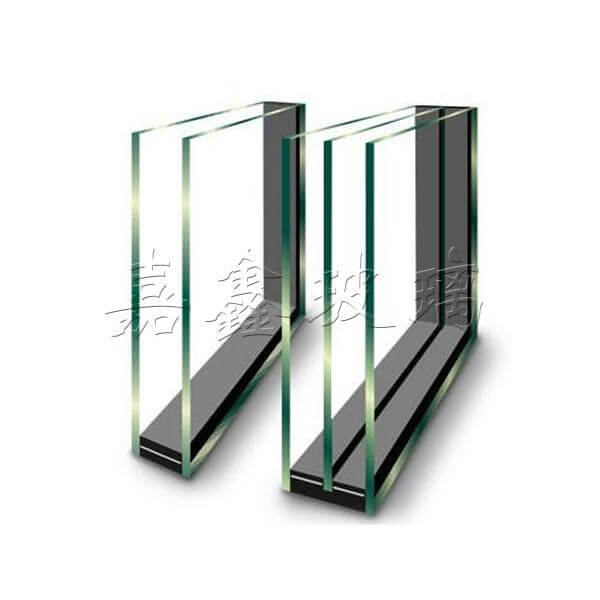
Buildings lose and gain heat through glazed areas, and that exchange influences HVAC loads, occupant comfort, and operating costs. Insulating glass helps reduce heat transfer by separating glass panes with a sealed cavity. When Low-E coatings are added, the glass assembly can further reduce radiant heat transfer while maintaining visible light transmission. This is why energy efficient double Low-E insulating glass is widely considered for residential windows, commercial facades, and public building envelopes.
For project teams, the value of double Low-E insulating glass is not limited to energy performance. It also contributes to condensation control, acoustic comfort, and visual comfort when specified correctly. In residential settings, it can improve the comfort of living rooms, bedrooms, and enclosed balconies. In commercial buildings, it can support curtain wall and window systems where solar control and thermal performance are important. The exact performance depends on glass thickness, coating type, cavity design, frame system, and climate conditions, so specification should always be based on project requirements rather than a single generic assumption.
A capable double Low-E insulating glass supplier should help buyers understand these variables. Instead of offering a one-size-fits-all pane, a deep-processing manufacturer can discuss glass combinations, edge treatment, spacer options, and size limitations. This technical dialogue is especially important for projects that combine energy goals with safety, fire protection, or design requirements.
Jiangyin Jiaxin Glass Products: A Double Low-E Insulating Glass Manufacturer with Deep Processing Focus
Jiangyin Jiaxin Glass Products Co., Ltd. is located in Guoshan Town, Jiangyin City, and focuses on deep-processed glass for architecture and home decoration. The company’s positioning is built around product processing, talent development, advanced equipment, and scientific management. According to the company profile, Jiaxin Glass emphasizes absorbing professional technical talent, introducing advanced processing equipment, adopting modern management practices, and continuously improving production efficiency and management standards.
This deep-processing focus matters for buyers because architectural glass is rarely a standard item purchased off a shelf. Windows, curtain walls, railings, skylights, fire partitions, and decorative glazing each require different combinations of strength, insulation, appearance, and installation compatibility. A double Low-E insulating glass manufacturer that also processes tempered, laminated, fire-resistant, and bent glass can support a more coherent specification across the whole project.
Jiaxin Glass follows the principle of “customer first, quality assurance.” For international B2B buyers, this principle should be translated into practical procurement steps: clear drawings, confirmed samples or specifications, documented tolerances, packaging requirements, and delivery planning. The company’s product range and customization orientation make it suitable for buyers seeking an architectural insulating glass supplier that can handle both standard configurations and project-specific requirements.
Core Product Series Beyond Double Low-E Insulating Glass
A complete building envelope often requires more than one glass type. Jiaxin Glass organizes its offering into energy-saving insulating products, safety protection products, custom curved products, and specialty fire-resistant products. Understanding how these categories work together helps buyers select the right glass for each location rather than applying one product to every opening.
Energy-Saving Insulating Glass Series
The energy-saving series includes standard insulating glass, Low-E insulating glass, built-in blinds insulating glass, and grid or decorative bar insulating glass. These products are mainly used in doors, windows, and building curtain walls. They help block heat exchange, reduce heating and air-conditioning energy consumption, weaken exterior noise, and support shading, light adjustment, and decorative subdivision effects. For buyers comparing Low-E insulating glass for curtain walls and residential windows, this series offers a range of options that balance function and appearance.
Safety Protection Glass Series
The safety series covers tempered glass and laminated glass. These products are fundamental safety materials for buildings. Tempered glass has stronger impact resistance, while laminated glass can hold fragments together after breakage to reduce the risk of sharp pieces flying or falling. They are widely used in balcony railings, stair railings, floor-to-ceiling windows, skylights, and other areas where personal safety and public protection are important.
Custom Curved Glass Series
The curved series includes bent tempered glass and bent tempered insulating glass. These products are customized for curved architectural forms, including cylindrical walls, arched doors and windows, and curved canopies. The aim is to achieve distinctive design effects while retaining safety, energy-saving, and acoustic performance. For projects that need custom double Low-E insulating glass in curved configurations, early coordination on radius, arch height, and installation interface is essential.
Fire-Resistant Glass Series
The fire-resistant glass series is a specialty functional product with fire-retardant performance intended to support fire safety acceptance requirements. It also maintains good light transmission. Typical applications include building fire partitions, fire compartments, and smoke curtains. In these locations, fire performance must be balanced with visual openness so that the space does not feel closed or dark.
How to Specify Double Low-E Insulating Glass for Different Applications
Specification should begin with the application, not the product name. A residential window, a commercial curtain wall, a balcony railing, and a fire partition have different priorities. For residential windows, thermal comfort, condensation control, and acoustic performance are often the main concerns. For commercial facades, solar control, appearance consistency, wind load resistance, and system compatibility usually receive more attention. For public buildings, safety, fire protection, and maintenance access may be equally important.
When discussing double Low-E insulated glass with a supplier, prepare a simple project brief. Include the location and climate, opening type, approximate dimensions, framing system, required safety performance, fire protection requirements if any, target appearance, and delivery schedule. If the project includes curved glass, provide drawings or radius information. If the project includes built-in blinds, confirm whether the blinds need manual or motorized control and how maintenance access will be provided.
It is also useful to separate “must-have” requirements from “preferred” features. For example, a project may require laminated safety glass in certain locations, Low-E insulating glass on exterior windows, and fire-resistant glass around an atrium. A supplier can then propose a compatible bill of materials instead of quoting each item in isolation. This reduces the risk of mismatched edge treatments, incompatible spacers, or inconsistent visual appearance across the facade.
Performance and Configuration Comparison
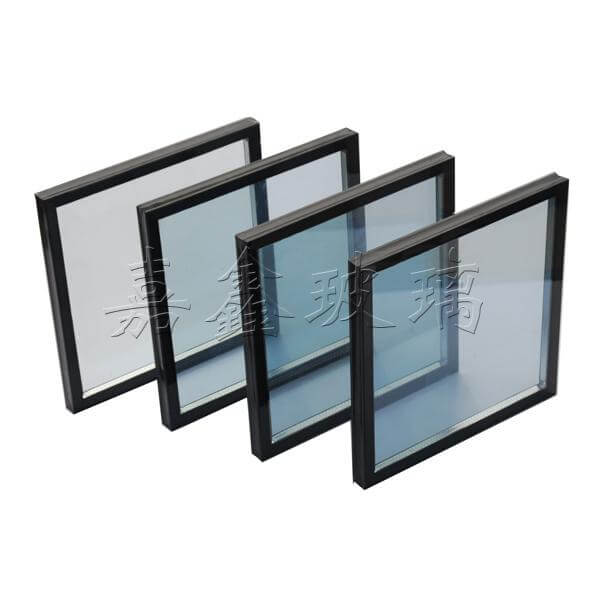
The following table summarizes how the main product families can be positioned during early project planning. It is not a substitute for project-specific engineering, but it helps buyers organize requirements before requesting a quotation from a double Low-E insulating glass supplier.
| Product Series | Core Value | Typical Applications | Customization Focus |
|---|---|---|---|
| Double Low-E insulating glass | Thermal insulation, solar control, acoustic comfort | Residential windows, commercial curtain walls, public building facades | Glass combination, cavity design, size, edge treatment |
| Standard insulating glass | Basic heat and sound insulation | Doors, windows, partitions, general glazing | Thickness, spacer, dimensions |
| Built-in blinds insulating glass | Shading, privacy, light adjustment, decorative effect | Residential windows, offices, schools, healthcare spaces | Blind type, control method, color, maintenance access |
| Tempered glass | Higher impact resistance and safety | Balcony railings, stair railings, doors, windows | Size, holes, cutouts, edge finish |
| Laminated glass | Fragment retention and safety protection | Skylights, railings, overhead glazing, safety glazing | Interlayer type, glass combination, color |
| Fire-resistant glass | Fire resistance with light transmission | Fire partitions, fire compartments, smoke curtains | Fire requirement, framing, size, visual appearance |
| Bent tempered and bent insulating glass | Curved design with safety and insulation options | Cylindrical walls, arched windows, curved canopies | Radius, arch height, dimensions, installation interface |
Custom Double Low-E Insulating Glass and OEM Supply
Customization is a central requirement in architectural glass procurement. Different openings may require different dimensions, edge profiles, coating positions, and combinations with laminated or tempered glass. A custom double Low-E insulating glass program should therefore start with a technical review of drawings and performance targets. The supplier can then propose a workable configuration and identify any constraints related to size, curvature, or processing.
For distributors, fabricators, and project contractors, OEM double Low-E insulating glass support can be valuable when a consistent product family is needed across multiple projects. The key is to establish clear specification documents, approved samples where necessary, packaging standards, and inspection criteria. Buyers should also confirm how glass will be labeled, how units will be protected during transport, and how replacement units will be handled if damage occurs.
Jiaxing’s product breadth allows buyers to combine Low-E insulating glass with built-in blinds, laminated glass, tempered glass, fire-resistant glass, and curved glass. This does not mean every project needs every product. It means the supplier can review the whole glazing schedule and recommend combinations that are practical to manufacture, transport, install, and maintain.
Quality Control, Installation, and Maintenance Guidance
Good outcomes depend on more than the glass itself. Quality control should cover incoming glass, coating handling, spacer and seal integrity, dimensional accuracy, edge processing, and final inspection. Buyers should ask how units are checked before packing and how documentation is handled. For double Low-E insulating glass, coating orientation and edge sealing are particularly important because they affect thermal performance and long-term durability.
During installation, the glass should be handled according to the system supplier’s instructions and local site requirements. Avoid damaging edges, avoid improper lifting points, and ensure that frames and drainage details are compatible with the insulating glass unit. For built-in blinds products, confirm that control mechanisms remain accessible and that the blind cavity is protected from dust and moisture during construction.
For maintenance, use gentle cleaning methods and avoid abrasive tools that could scratch Low-E coatings or decorative surfaces. Inspect seals, frames, and drainage paths periodically, especially in exposed facades. If condensation appears inside an insulating glass unit, it may indicate a seal issue and should be reviewed by the supplier or a qualified professional. Regular inspection helps preserve appearance and performance over the building’s service life.
How to Choose a Reliable Double Low-E Insulating Glass Supplier
Price is important, but a reliable double Low-E insulating glass supplier should be evaluated on technical support, product consistency, communication, and delivery reliability. Start by confirming that the supplier can process the specific glass types your project requires. A company that understands insulating, laminated, tempered, fire-resistant, and curved glass is better positioned to advise on compatibility and installation sequencing.
Ask for a clear quotation structure. A useful double Low-E insulating glass price guide discussion should separate glass configuration, size, processing, quantity, packaging, and delivery terms. Avoid comparing quotes that use different assumptions. Provide the same drawings and requirements to each supplier so that the comparison is meaningful. Also clarify tolerance expectations, inspection methods, and warranty terms before placing an order.
Finally, evaluate the supplier’s ability to communicate during production. Architectural glass projects often involve revisions, sample approvals, and logistics planning. A manufacturer that responds clearly and documents changes is easier to work with than one that offers only a low initial price. Jiangyin Jiaxin Glass Products positions itself around quality assurance, customer focus, talent development, and improved management, which are practical foundations for long-term B2B cooperation.
FAQ
What is double Low-E insulating glass, and why is it used in modern buildings?
Double Low-E insulating glass is an insulating glass unit that uses Low-E coated glass to reduce radiant heat transfer while maintaining light transmission. It is used in windows and curtain walls to improve thermal comfort, reduce heating and cooling loads, and support energy-efficient building design. Actual performance depends on the full glass configuration, frame system, and climate.
How do I choose a reliable double Low-E insulating glass supplier?
Check the supplier’s product range, deep-processing capability, technical communication, quality control approach, packaging standards, and delivery planning. A reliable double Low-E insulating glass supplier should be able to review drawings, clarify specifications, and coordinate related products such as tempered, laminated, fire-resistant, and curved glass.
Can Jiangyin Jiaxin Glass Products customize double Low-E insulating glass for curtain walls and windows?
Yes. Jiangyin Jiaxin Glass Products focuses on deep-processed architectural and home decoration glass, including Low-E insulating glass, built-in blinds insulating glass, standard insulating glass, laminated glass, tempered glass, fire-resistant glass, and bent glass. Customization can be discussed based on project drawings, dimensions, performance requirements, and installation conditions.
What is the difference between Low-E insulating glass, laminated glass, and fire-resistant glass?
Low-E insulating glass focuses on thermal insulation and solar control. Laminated glass focuses on safety by retaining fragments after breakage. Fire-resistant glass is designed for fire partitions, fire compartments, and smoke curtains where fire performance and light transmission are required. These products can be combined in a project, but each location should be specified according to its primary function.
How should double Low-E insulating glass be installed and maintained?
Install according to the glazing system instructions, protect edges during handling, and ensure frames and drainage details are compatible. For maintenance, use gentle cleaning methods, avoid abrasive tools, and inspect seals and frames periodically. If internal condensation appears, consult the supplier or a qualified professional.
What information should I provide to get an accurate quotation?
Provide drawings or dimension lists, glass type and configuration, quantity, application location, safety or fire requirements, frame system details, target schedule, and delivery destination. For curved glass, include radius and arch height. For built-in blinds glass, specify control method and color preferences. Complete information helps the supplier prepare a more accurate and comparable quotation.
Summary
Double Low-E insulating glass plays an important role in energy-efficient buildings, but the right result depends on correct specification, compatible product combinations, and a supplier that can support the full glazing schedule. Jiangyin Jiaxin Glass Products Co., Ltd. is a deep-processing glass enterprise in Guoshan Town, Jiangyin City, offering Low-E insulating glass, built-in blinds insulating glass, standard insulating glass, laminated glass, fire-resistant glass, tempered glass, bent glass, and composite glass products for architecture and home decoration applications.
For buyers seeking a dependable double Low-E insulating glass supplier, the practical next step is to prepare project drawings, define performance and safety priorities, and request a detailed quotation. Clear communication about configurations, quantities, packaging, and delivery will help both sides build a reliable procurement plan and support long-term project success.