
Transparent tempered glass is one of the most widely specified materials in modern construction. It is used for windows, doors, curtain walls, balcony railings, stair balustrades, skylights, partitions and shop fronts, and it is expected to deliver three things at the same time: safety, clarity and long-term durability. For architects, contractors, distributors and project buyers, the real challenge is not choosing glass at all — it is choosing the right transparent tempered glass manufacturer who can deliver consistent quality at the right size, thickness, finish and delivery schedule.
This guide is written for international B2B buyers who are sourcing tempered glass for residential, commercial and public projects. It explains what makes tempered glass different from ordinary glass, how to evaluate a transparent tempered glass factory, what customization options are realistically available, how pricing is structured, and which practical checks should be done before a purchase order is confirmed. It also outlines how a deep-processing glass company such as Jiangyin Jiaxin Glass Products Co., Ltd. fits into that supply chain.

What Is Transparent Tempered Glass and Why Is It Specified So Often?
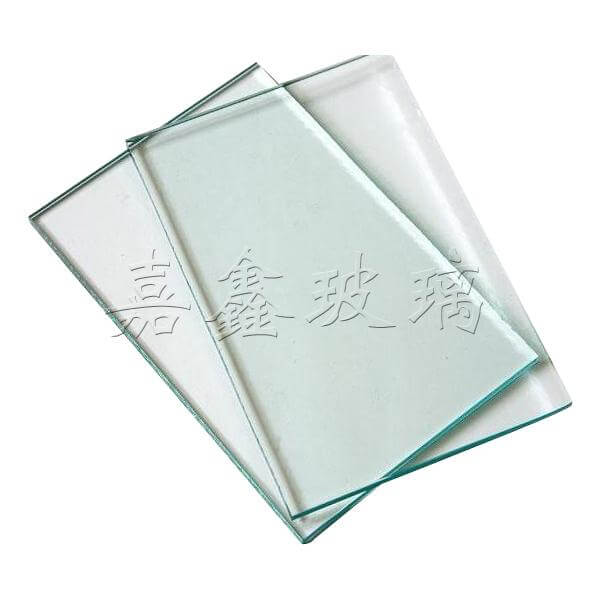
Tempered glass, also called toughened glass, is produced by heating annealed float glass to a high temperature and then rapidly cooling it with controlled air. This process creates a compressive stress layer on the glass surface and a balancing tensile stress in the core. The result is glass that is significantly stronger than ordinary annealed glass under impact, wind load and thermal stress, and that breaks into small, relatively blunt granules instead of large sharp shards when it does fail.
“Transparent” in this context refers to clear, high-transparency float glass that has not been heavily tinted, frosted or patterned. Many buyers source transparent tempered glass as a base product and then build additional performance on top of it, such as low-e coating, insulating cavities, laminated interlayers or fire-resistant construction. This is why a capable manufacturer often supplies a whole family of products rather than a single sheet.
Because of the internal stress pattern, tempered glass cannot be cut, drilled or edge-worked after tempering. All processing — cutting to size, edge grinding, drilling, cut-outs, notches, corner shaping and ceramic printing — must be completed before the tempering cycle. This single technical fact drives almost everything in the purchasing conversation: drawings must be final before production starts, and changes after tempering mean new sheets, not modification.
Where transparent tempered glass is typically used
- Windows and balcony doors in residential buildings, where clarity and impact resistance are both required.
- Curtain wall and facade glazing on commercial towers and mixed-use developments.
- Balcony railings, stair balustrades and glass guards where safety performance is the main specification point.
- Skylights, canopies and roof glazing where thermal stress resistance matters.
- Interior partitions and shop fronts where full transparency and precise edges are visible to end users.
- Laminated and insulated composite units, where tempered glass acts as the safety or strength component inside a multi-layer build-up.
Factory or Trading Company: Why the Source Matters
The market offers two very different types of supply: a real transparent tempered glass manufacturer with its own deep-processing lines, and a trading company that outsources production. Both can quote a price, but the risk profile is not the same. With a factory, the technical conversation happens directly with the people who control cutting tolerances, tempering parameters, edge quality and packing. With an intermediary, technical answers are relayed, and responsibility for defects is often split between parties.
For B2B buyers, the practical difference shows up in four areas: response time on technical drawings, ability to accept non-standard sizes and shapes, control over packaging for export, and accountability when a batch needs to be reworked. A company that performs building and home decoration deep processing in-house, such as Jiangyin Jiaxin Glass Products Co., Ltd., can handle low-e coated glass, insulating glass, laminated glass, fire-resistant glass, tempered glass and composite glass products in one production flow, which reduces handover risk between suppliers.
Practical signs of a genuine transparent tempered glass factory
- The supplier can explain the sequence of processing steps and confirm that all drilling and edge work is done before tempering.
- Tempered glass can be identified on request through a fragmentation or stress test report, or through visible corner marking.
- The supplier distinguishes clearly between clear float, low-iron, tinted and coated substrates instead of offering one generic “tempered glass”.
- Edge finish options such as polished flat edge, bevel and chamfer are offered as standard choices, not as exceptions.
- Packaging specifications for export are described in detail, including cork pads, corner protection and crate construction.
- The company can combine tempered glass with insulating, laminated or fire-resistant builds rather than only selling single sheets.
Buyers who ask these questions early usually discover within a few exchanges whether they are speaking with a producer or a reseller. It is a fast and reliable filter.
Customization Options Available from a Transparent Tempered Glass Factory
Customization is the main reason buyers choose a custom transparent tempered glass supplier rather than a stock glass warehouse. Standard stock sizes rarely match real construction drawings, and modern facades, doors and railings almost always require specific dimensions, hole positions and edge details. A deep-processing factory supports customization across thickness, size, edge treatment, drilling, cut-outs, coating, printing and composite build-up.
| Customization Item | Typical Options | Buyer Consideration |
|---|---|---|
| Thickness | Common architectural thicknesses used for windows, doors, railings and facades | Must match structural calculation, wind load and local building code |
| Size and shape | Rectangular, trapezoid, triangular, arched and curved profiles | Provide final DXF or dimensioned drawings; confirm maximum panel size |
| Edge work | Flat polished edge, arrised edge, bevel, chamfer, polished corners | Exposed edges need polishing; concealed edges can use a simpler finish |
| Holes and cut-outs | Drilled holes, notches, sink cut-outs, socket openings | Hole diameter and distance from edge must meet processing limits |
| Coating | Low-e coating for energy control, reflective or tinted options | Coating edge deletion may be required before insulating assembly |
| Composite build-up | Tempered insulating glass, laminated glass, fire-resistant glass, integrated blinds | Confirm the total configuration, cavity width and interlayer type |
Two points deserve emphasis. First, customization is only valuable when tolerances are agreed in writing. A drawing that says “approximately” will produce a panel that does not fit a machined frame. Second, curves are a special category: curved tempered glass requires dedicated bending and tempering capability, and arched or cylindrical panels must be specified with radius, chord and arch height rather than only with a general impression of “curved”.
Transparent Tempered Glass Performance Comparison
Buyers frequently ask how tempered glass compares with other glass types and with composite products. The table below summarizes the practical differences that matter during specifying and purchasing.
| Glass Type | Strength and Break Behavior | Thermal and Acoustic Performance | Best Fit |
|---|---|---|---|
| Transparent tempered glass | High mechanical strength; breaks into small granular pieces | No energy or acoustic improvement on its own | Windows, doors, railings, facades, partitions |
| Tempered laminated glass | High strength; fragments stay bonded to the interlayer | Improved acoustic damping; holds position after breakage | Overhead glazing, balustrades, high-security areas |
| Low-e tempered insulating glass | High strength with sealed cavity; outer or inner pane tempered | Reduced heat transfer and lower condensation risk | Energy-conscious envelopes, curtain walls, premium windows |
| Integrated blind insulating glass | Sealed cavity protects blinds from dust and damage | Adjustable shading and glare control without external blinds | Offices, schools, hospitals, residential facades |
| Fire-resistant glass | Designed to resist fire spread for a defined period | Keeps transparency while limiting smoke and heat passage | Fire compartments, smoke curtains, escape routes |
| Curved tempered glass | Strength comparable to flat tempered glass of similar build-up | Can be combined with insulating or laminated build-ups | Curved facades, arched windows, cylindrical enclosures |
A common mistake is to treat tempered glass as a complete solution. In practice, tempered glass is the strength and safety layer; energy performance comes from low-e coating and a sealed cavity, acoustic and post-breakage behaviour come from the interlayer, and fire performance comes from specific fire-resistant construction. A supplier who can combine these functions in one composite unit reduces the number of parties involved and makes the final performance easier to guarantee.
Applications: Matching Glass Build-Up to the Real Environment
Selection should always begin with the environment rather than the catalogue. A glazed balcony in a windy coastal location, an interior corridor partition and a rooflight over a public atrium have very different load, impact and thermal profiles, and the glass build-up must reflect that.
Residential windows, doors and balconies
For apartments and houses, transparent tempered glass is commonly used in balcony doors, large windows and railing panels. Where energy efficiency is a priority, low-e tempered insulating glass is specified to reduce heat exchange and improve indoor comfort. Where the client wants shading control, integrated blind insulating glass provides adjustable privacy and glare control inside the sealed cavity, keeping the blinds clean and maintenance-free.
Commercial facades and curtain walls
Commercial buildings typically combine transparent tempered glass with low-e coatings and insulating cavities, and increasingly with laminated build-ups where post-breakage retention matters. Facade glazing must be considered as an engineered system: panel size, support conditions, wind load, thermal movement and edge quality all interact. Buyers should expect a supplier to ask about these factors before confirming a quotation.
Railings, balustrades and safety-critical zones
Balcony railings, stair balustrades, glass guards and floor-level glazing are safety-critical. Laminated tempered glass is frequently preferred here because the interlayer holds fragments in place after breakage, while tempered glass alone provides strength with granular fracture. The correct combination depends on local code and project specification, and it should be decided with the structural designer rather than by the glass supplier alone.
Fire compartments and smoke control areas
Fire-resistant glass is used for fire-rated partitions, smoke curtains and compartment boundaries. It is specified to preserve transparency while limiting fire and smoke spread for a defined period, and it must satisfy the applicable fire test standard and local approval process. Buyers should confirm what documentation the project authority requires at the tender stage, because fire-rated glazing is a compliance item rather than a purely aesthetic one.
Curved and architectural feature glazing
Curved tempered glass and curved tempered insulating glass allow cylindrical walls, arched entrances, curved canopies and rounded balconies to be fully glazed. Designers should supply radius, chord length, arch height and the intended fixing method. Early consultation with the factory is important because curvature limits and tooling constraints affect what can be produced economically.
Quality Control Checks Before Accepting a Shipment
Quality in tempered glass is largely invisible until something goes wrong. That is why buyers should agree on inspection criteria before production and verify them at the factory or on arrival. The following checks are practical and can be performed on site without advanced equipment.
- Dimension and diagonal verification against the approved drawings, including hole positions and cut-out dimensions.
- Visual inspection for bubbles, inclusions, scratches, roller marks, coating defects and edge chipping under proper lighting.
- Edge quality: polished edges should be smooth and uniform, with no sharp arrises on exposed sides.
- Tempering verification: fragmentation or stress testing, and confirmation of corner marking where required.
- Insulating glass checks: seal integrity, desiccant condition, absence of internal condensation or delamination.
- Laminated glass checks: interlayer clarity, absence of trapped air, edge alignment and trim quality.
- Coating checks: even low-e appearance, correct coating orientation, absence of scratches or haze.
- Documentation: packing list, panel-by-panel identification labels and matching with the approved submittal drawings.
Labelling deserves special attention on large projects. Panels that are not individually marked with unit, floor and position references create installation delays and increase breakage risk during handling. A disciplined factory labels every piece to match the installation drawing set.
Transparent Tempered Glass Price: What Actually Drives the Quotation
Buyers often ask for a transparent tempered glass price per square metre as if glass were a single commodity. In reality, quotations vary widely because the price is a function of raw material, processing steps and logistics. Understanding the cost structure makes negotiation more productive and helps identify quotations that are unrealistically low.
| Cost Factor | Effect on Unit Price | How Buyers Can Control It |
|---|---|---|
| Substrate grade | Clear float, low-iron and tinted substrates differ in cost | Specify substrate only where visual or performance needs justify it |
| Thickness and weight | Higher thickness raises material, handling and freight cost | Use structural calculations to avoid over-specification |
| Processing complexity | Holes, cut-outs, notches, polished bevels and curves add labour | Standardize repetitive panel types and reduce unnecessary shapes |
| Coating and composite build-up | Low-e, insulating cavities, interlayers and integrated blinds add cost | Define performance targets first, then select the minimum build-up that meets them |
| Quantity and repeatability | Small, mixed orders carry higher setup cost per square metre | Consolidate sizes and schedule deliveries in batches |
| Packing and freight | Export crates, breakage risk and container utilization affect total landed cost | Compare landed cost, not unit price alone; optimize crate loading |
When comparing quotations, buyers should normalize them: same thickness, same substrate, same edge finish, same coating, same packing standard and same delivery terms. A quotation that looks 15% cheaper often reflects a different substrate, a thinner edge polish or reduced packaging, and the difference usually appears later as breakage, rework or installation delays.
Packing, Loading and Delivery for Overseas Projects
Transparent tempered glass is heavy, fragile at the edges and sensitive to point loading. Export packing is therefore a technical matter, not an administrative one. Standard good practice includes cork or foam separation between panels, corner protection, strapping with controlled tension, and end racks or crates that prevent movement inside the container. For insulating and laminated units, additional edge protection is essential because seal or interlayer damage is not always visible immediately.
Buyers should request a packing plan before shipment, including crate dimensions, panel arrangement, total weight and container loading diagram. This information supports customs clearance, inland transport planning and site storage preparation. For projects with phased installation, the factory should also support delivery sequencing so that panels arrive in the order they will be installed.
How to Select a Reliable Transparent Tempered Glass Supplier
Supplier selection is a process, not a single price comparison. A structured approach reduces risk and improves long-term cooperation. The following steps work well for both first-time buyers and experienced importers.
- Confirm the production model. Verify whether the supplier operates deep-processing lines in-house and which processes are outsourced.
- Request a technical capability statement. Ask about maximum panel size, achievable thickness range, curve capability, coating options and composite products.
- Test communication with a real drawing. Send a dimensioned drawing with holes and a curved unit, and evaluate the technical response quality.
- Ask for inspection and test documentation that matches the standards required by the destination market.
- Check packing and logistics planning. A supplier who cannot describe export packing in detail is unlikely to deliver a project cleanly.
- Start with a trial order covering the most representative panel types before committing to the full quantity.
- Agree on tolerances, defect criteria and rework responsibility in writing before production begins.
Jiangyin Jiaxin Glass Products Co., Ltd. is located in Gushan Town, Jiangyin City, and specializes in deep-processed glass for building and home decoration applications. Its product range covers low-e coated glass, insulating glass with integrated blinds, standard insulating glass, laminated glass, fire-resistant glass, tempered glass and composite products built from these categories. The company emphasizes technical personnel development, advanced processing equipment and scientific management practices, with a stated commitment to product quality and customer-first service. For buyers sourcing a transparent tempered glass manufacturer for residential, commercial or public projects, this type of in-house deep-processing capability allows multiple glass functions to be combined in one supply relationship.
FAQ
What is the difference between transparent tempered glass and ordinary glass?
Tempered glass is heat-treated to create surface compressive stress, which makes it considerably stronger than ordinary annealed glass against impact, wind load and thermal stress. When it breaks, it fractures into small granular pieces rather than large sharp shards, which significantly reduces injury risk. Transparent tempered glass keeps the same clarity as clear float glass while adding this safety and strength performance.
Can transparent tempered glass be cut or drilled after tempering?
No. Once glass has been tempered, it cannot be cut, drilled, edge-ground or notched without destroying the tempered stress pattern. All processing must be completed before the tempering cycle. This is why buyers must approve final dimensioned drawings, including hole positions and cut-outs, before production starts, and why late design changes usually require new panels.
Which thickness should I choose for windows, railings and facades?
Thickness depends on panel size, support conditions, wind load, impact requirements and local building codes. Railing and balustrade panels typically require a laminated build-up for post-breakage safety, while facade panels must satisfy structural calculation. Buyers should confirm the design with their structural engineer and provide the resulting specification to the glass manufacturer rather than selecting thickness by rule of thumb.
Do you supply low-e, insulating, laminated, fire-resistant and curved glass as well?
Yes. Jiangyin Jiaxin Glass Products Co., Ltd. produces low-e coated glass, insulating glass, insulating glass with integrated blinds, laminated glass, fire-resistant glass, tempered glass and composite products built from these categories, including curved tempered and curved tempered insulating glass. This means a single project can be supplied with matching substrates and consistent processing across different performance requirements.
How is the transparent tempered glass price calculated?
Pricing reflects substrate grade, thickness, panel size, processing complexity, coating or composite build-up, order quantity, packing standard and freight. Because these factors vary by project, quotations should be compared on a normalized basis using identical specifications. Buyers should evaluate landed cost rather than unit price alone, since packing quality directly affects breakage rates and total project cost.
Can you produce custom sizes, shapes, holes and edge finishes?
Yes. Customization covers dimensions, rectangular and non-rectangular shapes, drilled holes, notches, cut-outs, edge polishing, bevels, ceramic printing and composite configurations. For curved panels, radius, chord length and arch height should be specified on the drawing. Final drawings must be confirmed before tempering, since post-tempering modification is not possible.
How do I verify that the glass is actually tempered?
Common verification methods include fragmentation testing on a sample, surface stress measurement, and checking for the tempered glass marking required by many markets. Buyers can also request test reports with the shipment. Visual inspection of fracture behaviour on a broken sample is a practical field check, and documentation should be requested at the order stage rather than after delivery.
How is glass packed for export shipping?
Export packing typically uses cork or foam interleaving between panels, corner and edge protection, controlled strapping and reinforced crates or end racks to prevent movement inside the container. Insulating and laminated units need additional edge protection. A packing plan with crate dimensions, weights and a loading diagram should be agreed before shipment to support transport and site planning.
What is the typical lead time for a custom tempered glass order?
Lead time depends on whether the order is standard or customized, the number of distinct panel types, coating or composite processing, order quantity and current production scheduling. Curved and multi-layer products generally require longer production windows than simple flat tempered panels. Buyers should confirm a production schedule in writing at order confirmation and align it with site installation sequencing.
Can you support projects that need several glass types in one order?
Yes. A deep-processing supplier can combine tempered glass, low-e insulating glass, laminated glass, integrated blind insulating glass and fire-resistant glass within one production plan, keeping substrate, colour and processing consistency across the project. This reduces coordination effort and simplifies responsibility if a quality issue needs to be traced.
Summary
Selecting a transparent tempered glass manufacturer is a technical decision that shapes the safety, appearance and durability of a finished building. Transparent tempered glass provides strength and safe break behaviour, but it is rarely used in isolation: energy performance comes from low-e coatings and sealed cavities, post-breakage retention from laminated interlayers, fire compliance from dedicated fire-resistant construction, and architectural expression from curved and shaped panels.
For B2B buyers, the most reliable approach is to work with a factory that performs deep processing in-house, confirms processing limits openly, supports customization with drawing-based communication, and controls export packing as carefully as it controls production. Jiangyin Jiaxin Glass Products Co., Ltd., based in Gushan Town, Jiangyin City, serves residential, commercial and public building projects with low-e glass, insulating glass with integrated blinds, insulating glass, laminated glass, fire-resistant glass, tempered glass and composite products, guided by a customer-first and quality-assurance approach. Comparing suppliers on capability, documentation, packing and total landed cost — rather than unit price alone — is the fastest way to secure a supply relationship that holds up over multiple projects.