
Choosing the right office venetian blinds insulated glass supplier is about more than finding a low price per square meter. Commercial office buildings need glazing that controls daylight, supports energy efficiency, reduces noise, maintains safety, and matches the design intent of the facade or interior partition. Built-in blinds insulated glass combines two functions in one factory-made unit: the thermal and acoustic benefits of an insulating glass cavity, and the adjustable shading and privacy of venetian blinds sealed between the panes. For architects, contractors, façade specialists, and procurement teams, the supplier’s product range, customization capability, process control, and communication quality directly affect project delivery.
Jiangyin Jiaxin Glass Products Co., Ltd. is a deep-processing glass enterprise based in Gushan Town, Jiangyin City, serving building and home decoration applications. The company supplies Low-E coated glass, venetian blinds insulating glass, insulating glass, laminated glass, fire-resistant glass, tempered glass, and composite glass made from these products. This guide explains how office venetian blinds insulated glass works in commercial projects, what to confirm during selection, how to evaluate a supplier, and how to plan installation and maintenance.

Why Office Venetian Blinds Insulated Glass Is in Demand for Commercial Projects
Office buildings face a constant balancing act between natural light and visual comfort. Large glass areas can create glare on computer screens, uneven daylight, and overheating near perimeter zones. External shading systems can be effective, but they are exposed to weather, require façade maintenance, and may conflict with building aesthetics. Built-in blinds insulated glass places the venetian blinds inside the sealed cavity of an insulating glass unit, protecting the slats from dust, damage, and daily handling while allowing occupants to adjust tilt and privacy.
For tenants and facility managers, this integrated approach can simplify operation. Because the blinds are sealed between glass panes, they are less likely to be damaged by accidental contact, and cleaning is generally limited to the interior and exterior glass surfaces. For designers, the slat color, glass tint, and cavity configuration can be coordinated with the interior finish and exterior appearance. When combined with Low-E glass, the unit can help reduce solar heat gain and improve thermal comfort without relying only on exposed interior blinds.
Demand is also driven by renovation and retrofit projects. Existing office windows may have poor shading control or outdated glazing. Replacing them with factory-made built-in blinds insulating glass can improve daylight management and acoustic separation while keeping the facade relatively clean. The exact performance depends on glass make-up, cavity design, frame system, orientation, and project location, so buyers should confirm configuration with the supplier rather than assuming one specification fits every office.
What Jiangyin Jiaxin Glass Supplies as an Office Venetian Blinds Insulated Glass Supplier
Jiangyin Jiaxin Glass Products Co., Ltd. is located in Gushan Town, Jiangyin City, and focuses on deep-processed glass for building and home decoration markets. The company describes its business as serving residential, commercial, and public building projects with a full range of glass products and customized supporting solutions. Its core product lines are organized around energy-saving insulating glass, safety glass, curved glass, and specialty fire-resistant glass.
The energy-saving insulating glass series includes ordinary insulating glass, Low-E low-radiation insulating glass, built-in venetian blinds insulating glass, and grid insulating glass. These products are mainly used for windows and building curtain walls. Their role is to reduce heat exchange between indoor and outdoor environments, support lower heating and cooling energy use, reduce outside noise, and provide visual features such as shading adjustment or decorative grid patterns. For office projects, the built-in blinds version is particularly relevant because it combines shading control with the sealed insulation cavity in one unit.
The safety protection series includes tempered glass and laminated glass. These are basic safety materials for building applications. They are designed to resist impact better than ordinary annealed glass and, when broken by external force, reduce the risk of sharp fragments causing cuts or injury. They are used in balcony railings, stair railings, floor-to-ceiling windows, skylights, and similar areas. For office interiors, tempered or laminated glass is often specified for partitions, meeting room fronts, and glass doors where safety and durability matter.
The curved glass series includes bent tempered glass and bent tempered insulating glass. These products are custom-formed to different radii and arch heights for cylindrical walls, arched doors and windows, and curved canopies. They allow designers to achieve distinctive shapes while retaining safety, energy efficiency, and acoustic properties. Fire-resistant glass is the company’s specialty functional product, intended for building fire partitions, fire compartments, and smoke curtains where fire performance requirements apply. It also maintains light transmission so that fire separation does not have to destroy the visual openness of a space.
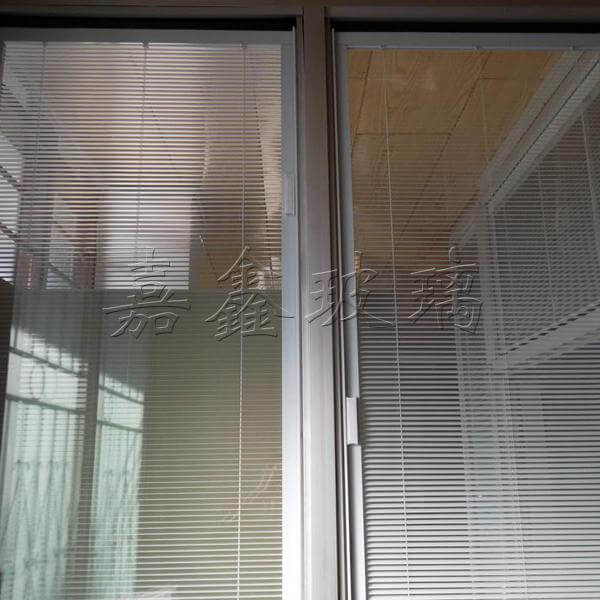
Energy-Saving Insulated Glass Series for Office Envelopes
For office facades, the insulating glass cavity is a key part of thermal and acoustic performance. Low-E coatings can be selected to help manage solar heat gain and improve thermal insulation, while the cavity width and sealing system influence durability and condensation resistance. Built-in venetian blinds add adjustable shading without an external shading device. The supplier should review the project’s orientation, window-to-wall ratio, climate, and interior use before recommending a glass make-up.
Grid insulating glass can also be used where the design calls for divided-light appearance. The grid is integrated into the insulating glass unit, which can simplify cleaning compared with applied muntins. For office projects that need a traditional or articulated facade look, this can be a practical option, provided the grid pattern and glass performance are coordinated early in design.
Safety, Curved, and Fire-Resistant Glass for Office Projects
Office buildings often require multiple glass types in one project. A curtain wall may use Low-E insulating glass, interior partitions may use tempered or laminated glass, a feature staircase may use curved glass, and service corridors may require fire-resistant glass. Composite glass can combine several functions, such as laminated safety glass with Low-E insulating glass, or fire-resistant glass with other performance layers. The key is to define each application’s requirements clearly and avoid using one product type everywhere without checking safety, fire, acoustic, and thermal needs.
Jiangyin Jiaxin Glass emphasizes technical talent, advanced processing equipment, and scientific management. The company states that it continues to improve production efficiency and management level while developing product quality and corporate image. For buyers, this means the supplier conversation should include drawing review, configuration confirmation, sample or mock-up requirements, production scheduling, and packaging protection, not only a unit price.
Key Selection Factors for Office Venetian Blinds Insulated Glass
An office venetian blinds insulated glass supplier should be able to translate project drawings into a buildable specification. The table below summarizes the main points to confirm before ordering. The exact values and options must be agreed with the supplier based on project requirements and applicable local standards.
| Selection Area | What to Confirm | Why It Matters |
|---|---|---|
| Glass make-up | Low-E, clear, tinted, tempered, laminated, or composite configuration | Affects thermal behavior, safety, acoustics, and appearance |
| Insulating cavity | Cavity width, spacer type, sealing, and desiccant system | Influences insulation, durability, and condensation risk |
| Blinds system | Slat type, color, tilt control, and operating method | Determines glare control, privacy, and user experience |
| Size and shape | Rectangular, oversized, or curved units; frame interface | Ensures fit with openings, curtain wall, and structural design |
| Project documentation | Drawings, schedules, performance requirements, and inspection needs | Reduces mismatch between design intent and delivered product |
| Packaging and logistics | Protection, labeling, loading sequence, and delivery schedule | Helps reduce breakage and site delays |
Buyers should also ask how the supplier handles deviations. For example, if a curved unit is required, can the supplier confirm the template or drawing before production? If a fire-resistant application is involved, can the product be coordinated with the fire compartment design? If the office project has acoustic requirements, can the glass make-up be reviewed together with the frame and seal? A good supplier will ask these questions early rather than treat every inquiry as a standard panel order.
Applications of Built-in Blinds Insulated Glass in Office Buildings
Office venetian blinds insulated glass is most commonly used where daylight control, privacy, and a clean facade are important. In curtain wall and window systems, the integrated blinds allow occupants to adjust slat angle during the day. This can reduce direct glare on workstations without requiring staff to hang temporary blinds or films. Because the blinds are sealed inside the unit, they are protected from dust and accidental damage, which can be an advantage in high-traffic commercial buildings.
Interior office partitions are another practical application. Glass partitions create visual openness but can raise privacy concerns in meeting rooms, executive offices, and focus areas. Built-in blinds can provide adjustable privacy without adding separate roller blinds or curtains. They can also help control light transmission between perimeter offices and internal corridors. For conference rooms, the combination of acoustic insulating glass and adjustable slats can support presentations and video calls.
Other suitable areas include reception and lobby glazing, control rooms, monitoring stations, and spaces where screen visibility must be protected from glare. In renovation projects, replacing existing single glazing or poorly performing units with built-in blinds insulating glass can improve comfort while preserving the building’s appearance. Curved and shaped units can be considered for feature walls, arched openings, and custom office entrances, subject to supplier review.
How to Evaluate an Office Venetian Blinds Insulated Glass Manufacturer
Price is important, but a reliable office venetian blinds insulated glass manufacturer should be evaluated on technical support and production control. Start with the product range: can the supplier offer Low-E insulating glass, built-in blinds insulating glass, laminated glass, tempered glass, fire-resistant glass, and curved glass within one supply chain? A broad range helps reduce coordination effort, especially when an office project uses several glass types. Jiangyin Jiaxin Glass’s portfolio covers these categories and composite glass made from them.
Next, review engineering communication. The supplier should be able to read window schedules, understand frame interfaces, and flag conflicts between glass size, blinds operation, and structural openings. Ask how drawings are confirmed and whether production starts only after approval. For international buyers, clarify labeling, packaging, loading, and shipping terms in writing. The company is based in Jiangyin City, and logistics arrangements should be agreed according to the destination and project schedule.
Process control is another key point. Inquire about equipment capability, glass handling, sealing, and inspection procedures. Since built-in blinds insulating glass contains mechanical blinds inside a sealed unit, the assembly process must protect both the blinds and the cavity. Ask how the supplier prevents slat damage, how the unit is sealed, and how finished panels are packed. Quality management should not be summarized only by a certificate; buyers should ask practical questions about in-process checks and final inspection.
Finally, evaluate responsiveness and after-sales support. A supplier that answers technical questions clearly, provides realistic production lead times, and explains installation precautions is usually easier to work with than one that only sends a price list. For custom office projects, a sample or mock-up may be useful before full production. Clarify who is responsible for site measurement, who approves the final drawings, and how potential transport damage will be handled.
Installation and Maintenance Guidance for Office Glazing Projects
Built-in blinds insulating glass should be handled as a finished factory unit. During delivery and site storage, keep panels upright and protected from impact, moisture, and excessive heat. Use appropriate lifting equipment and suction cups, and avoid putting pressure on the blinds control mechanism. Before installation, confirm that the frame, drainage, and glazing clearances match the approved shop drawings. Installation should follow the glass supplier’s and façade contractor’s instructions, as well as local safety requirements.
For maintenance, clean the glass with mild detergent and water using a soft cloth or squeegee. Avoid abrasive pads, strong solvents, and sharp tools that could damage the glass surface or edge seal. Because the venetian blinds are inside the sealed cavity, normal cleaning does not require accessing the slats. If a control mechanism becomes difficult to operate, do not force it; contact the supplier or installer for guidance. Regular inspection of seals, frames, and drainage keeps the glazing system working as intended.
Office facility teams should also consider access for future replacement. Large insulating glass units may require lifting equipment or temporary removal of adjacent façade elements. Keeping spare panels or matching glass records can help if a unit is damaged. During the design stage, discuss maintenance access with the architect and façade contractor so that built-in blinds units can be serviced or replaced without unnecessary disruption.
FAQ
What is office venetian blinds insulated glass?
Office venetian blinds insulated glass is an insulating glass unit with adjustable venetian blinds sealed inside the cavity between two or more glass panes. It combines thermal insulation and acoustic separation with built-in daylight control and privacy adjustment. It is used in office windows, facades, and glass partitions.
Can Jiangyin Jiaxin Glass customize office venetian blinds insulated glass?
Yes. Jiangyin Jiaxin Glass provides customized glass solutions for building and home decoration projects. Its product range includes Low-E insulating glass, built-in venetian blinds insulating glass, laminated glass, tempered glass, fire-resistant glass, and curved glass. Customization should be confirmed against project drawings, sizes, and performance requirements.
How do I choose the right configuration for an office project?
Start with the application, orientation, climate, acoustic needs, safety requirements, and interior design. Then confirm the glass make-up, cavity design, blinds type, color, and control method with the supplier. For facades and partitions, the frame system and installation details also affect performance, so the glass specification should be reviewed together with the façade or interior contractor.
Is built-in blinds insulated glass suitable for office partitions and facades?
It can be suitable for both, provided the unit is specified correctly for the application. For facades, thermal and solar control are usually important. For interior partitions, privacy, safety, and acoustic separation may be more relevant. The supplier should review size, framing, and operating requirements before production.
What should I ask an office venetian blinds insulated glass supplier before ordering?
Ask about the glass make-up, cavity and sealing system, blinds specification, size limits, drawing approval process, inspection methods, packaging, delivery schedule, and installation recommendations. Also clarify how deviations and transport damage are handled. Clear written confirmation reduces the risk of project delays.
How should built-in blinds insulated glass be maintained?
Clean the glass surfaces with mild detergent and a soft cloth or squeegee. Do not use abrasive materials or sharp tools. The internal blinds do not normally need cleaning. If the control mechanism becomes stiff or damaged, contact the supplier or installer instead of forcing it. Inspect seals and frames periodically.
Summary
Selecting an office venetian blinds insulated glass supplier requires a balance of product range, customization capability, process control, and project communication. Jiangyin Jiaxin Glass Products Co., Ltd., based in Gushan Town, Jiangyin City, supplies Low-E insulating glass, built-in venetian blinds insulating glass, ordinary insulating glass, laminated glass, tempered glass, fire-resistant glass, curved glass, and composite glass for building and home decoration applications. For office projects, built-in blinds insulating glass can support daylight control, privacy, thermal comfort, and a cleaner facade by integrating shading inside the sealed glass unit.
Before ordering, define the application, confirm the glass and blinds configuration, review drawings, and agree on packaging and delivery. A supplier that asks detailed questions and provides clear technical feedback is usually better prepared for commercial office work than one that quotes only on size and quantity. With careful selection and coordination, office venetian blinds insulated glass can be a practical long-term solution for windows, curtain walls, partitions, and other commercial glazing applications.