
Fire rated glass for doors and windows is one of the most important yet least understood materials in modern construction. It has to do two jobs at the same time: keep a building transparent, bright and visually open, and hold back fire, smoke and heat long enough for people to evacuate and for emergency teams to work safely. When the wrong product is specified, or when a good product is installed badly, the result is a weak point in the fire compartment rather than a protected one.
Jiangyin Jiaxin Glass Products Co., Ltd. (Jiaxin Glass) is a deep-processing glass manufacturer located in Gushan Town, Jiangyin City, Jiangsu Province. The company focuses on architectural and home-improvement glass, including Low-E coated glass, louvered insulating glass, insulating glass, laminated glass, fire resistant glass, tempered glass and composite units built from these products. This guide explains what fire rated glass is, where it is used, how to specify it correctly for doors and windows, and what to look for when selecting a fire resistant glass supplier.
What Makes Fire Rated Glass Different from Ordinary Glass?
Ordinary annealed glass breaks quickly under fire exposure and produces large, sharp shards. Standard tempered glass is stronger against impact, but when exposed to a fast-developing fire it can shatter into small granular pieces and leave the opening unprotected. Standard laminated glass holds its fragments together under impact, but the interlayer is not designed to resist heat and will soften or burn under sustained fire conditions.
Fire rated glass is engineered specifically for fire exposure. Depending on the construction, it may use a tempered pane combined with a special intumescent interlayer that reacts to heat by expanding and forming an insulating char, a specially formulated borosilicate-type body, or a composite assembly of glass and fire-resistant layers. The objective is to maintain the physical barrier of the glazing for a defined period and, in some product classes, also limit heat transfer to the protected side.
This is why fire rated glass cannot be treated as a simple substitute for tempered or laminated glass in a schedule. It is a performance product: the type, thickness, pane configuration, framing system and fixing method all work together. Jiaxin Glass produces fire resistant glass as part of its deep-processing range, alongside tempered and laminated products, so units can be built to suit the actual opening rather than forced into a standard size.

Why Fire Rated Glass for Doors and Windows Matters in Real Buildings
Doors and windows are the weakest links in a fire compartment because they are the openings people use. A fire rated door leaf with an ordinary glass vision panel, or a fire rated window fitted with non-rated glazing, defeats the purpose of the surrounding wall. Rated glazing keeps the opening closed as a barrier, allowing escape routes, corridors and stairwells to remain usable for longer.
There is also a strong design argument. Architects and developers increasingly want fire separation without solid walls. Fire rated glazing for commercial buildings allows lobbies, atria, stair enclosures and corridor partitions to stay daylit and visually connected, while still providing the separation that building codes and fire strategies require. For hotels, offices, hospitals, schools, shopping centres and transport buildings, this combination of safety and openness is often the deciding factor in material selection.
Finally, there is the practical side of approvals. Projects usually need glazing that matches the fire strategy report, the door and window schedule, and the requirements of the local authority having jurisdiction. Buying from a manufacturer that understands these documents, and that can supply consistent product across multiple deliveries, reduces the risk of site rejections and rework later in the programme.
Integrity, insulation and radiation control
Fire rated glazing products are generally described by what they do under test: keeping flames and hot gases on one side (integrity), limiting temperature rise on the unexposed face (insulation), or reducing radiant heat. A fully insulating product is normally required where people may be close to the glass on the escape side, such as in corridors and stair enclosures, while integrity-only products are more common where radiant heat is not a life-safety issue. Buyers should confirm the required class with the fire consultant before comparing prices, because the classes are not interchangeable.
Fire Resistant Glass Options and How They Compare
Jiaxin Glass works with several product families that can be combined into fire-rated units. The table below summarises the main options and where each is typically used. Final specification always depends on the tested system, the size of the opening and the framing used.
| Product type | Typical construction | Common applications | Key characteristics |
|---|---|---|---|
| Tempered fire rated glass | Heat-treated glass with enhanced resistance to thermal shock | Fire doors, fire windows, screens close to heat sources | Good mechanical strength, clearer visibility, suitable for vision panels |
| Laminated fire resistant glass | Glass panes bonded with a fire-reactive interlayer | Corridor glazing, partition screens, door and window units | Fragment retention, improved insulation behaviour, flexible formats |
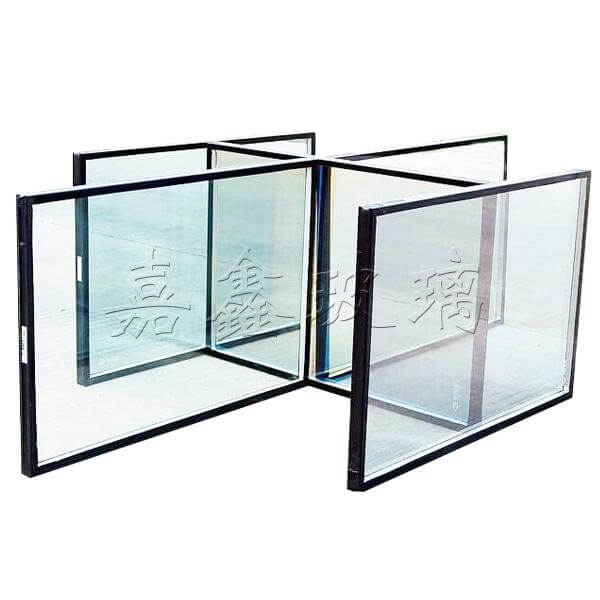
| Insulated fire rated glass | Fire-rated cavity combined with Low-E or solar control coating | Exterior fire windows, facades, projects needing thermal performance | Combines fire performance with energy saving and acoustic control |
| Composite fire rated units | Tempered, laminated and insulating layers combined | High-spec openings, large vision areas, safety-critical locations | Multiple performance targets met in one unit |
Because Jiaxin Glass also produces Low-E glass, louvered insulating glass and bent tempered glass, fire-rated requirements can be integrated into a wider glazing package. A project may, for example, use fire rated units in stair and corridor doors while standard Low-E insulating glass serves the office facade, with both supplied in matched visual tones so the building still looks coherent.
Where Fire Rated Glass Is Used in Doors, Windows and Interior Glazing
Fire rated glazing is specified wherever an opening must remain a barrier. In practice, that covers a wide range of locations across residential, commercial and public buildings:
- Fire-rated door vision panels, side lights and overpanels in stair, corridor and lobby doors
- Fire windows in external walls close to neighbouring buildings or property boundaries
- Corridor and lobby partitions that need to stay bright while separating zones
- Stair enclosures, smoke-stop lobbies and refuge areas
- Smoke curtains and smoke baffles used to control smoke spread in large spaces
- Atrium and shopping-centre balustrades where separation and visibility are both required
- Plant rooms, service shafts and escape routes in commercial and industrial buildings
The unifying principle is continuity of the compartment. If a wall is rated, every door, window and glazed panel in that wall must be rated as a system, with compatible frames, seals and fixings. Specifying the glass alone is not enough; the assembly is what achieves the performance.
How to Specify Fire Rated Glass Correctly
Good specification starts with three questions: what performance class is required, what size is the opening, and what frame will hold the glass. Get those three answers from the fire strategy and the fenestration drawings before approaching suppliers, and the selection process becomes much faster and far less expensive.
Next, confirm the practical details. Glass make-up affects weight, so hinges, handles and door closers must be rated for the final leaf weight. Edge clearance, setting blocks and glazing tape must follow the tested system, and any coating must be placed on the correct face. If the unit is an insulating fire-rated assembly, cavity width and desiccant selection affect long-term durability.
Specification checklist for buyers
- Required fire performance class and the evidence expected by the local authority
- Opening dimensions, including maximum pane size the supplier can produce
- Frame material and tested compatibility with the chosen glazing
- Whether thermal insulation (Low-E) or acoustic control is also required
- Edge treatment, visible coatings and colour consistency with other glazing
- Quantity, delivery sequence and packaging suitable for site handling
- Documentation package required at handover
For international buyers, it helps to send a marked-up door and window schedule with sizes, quantities and performance notes. A manufacturer can then return a structured fire rated glass quotation that separates glass, make-up, packaging and freight, which makes comparison between suppliers far more meaningful than a single lump-sum figure.
Installation Practices That Protect Performance
Most failures in fire rated glazing are installation failures. Glass that is chipped on the edge, forced into a twisted frame, or bedded on the wrong blocks can crack in service and lose its rating. Installers should handle units with edge protection, check frame squareness and flatness, and keep clearance gaps consistent around the perimeter.
Seals matter too. Intumescent seals, smoke seals and glazing gaskets must be the specified products, fitted continuously and without gaps. Cutting corners here is common on busy sites and is exactly where inspectors focus. Finally, keep the labels and identification marks on the glass until handover, because they are the simplest evidence that the correct product was installed in the correct location.
Maintenance and Long-Term Inspection
Fire rated glass needs little routine attention, but it does need checking. Clean with non-abrasive products and avoid scrapers that can damage coatings or edges. Inspect door and window units periodically for chipped edges, cracked panes, loose glazing beads, degraded seals and paint or sealant that has been applied over intumescent strips.
Keep a simple record of the rated units in the building, their locations and their product identification, together with the maintenance log. When doors are adjusted, hardware is replaced, or partitions are modified, confirm that the fire performance of the assembly is not compromised. In buildings with high traffic, such as schools and hospitals, quarterly visual checks are a sensible minimum.
Choosing a Reliable Fire Resistant Glass Supplier
Price is only one part of the decision. A reliable fire resistant glass supplier should be able to explain the make-up of the unit, produce consistent quality across repeat orders, and support the project through documentation and delivery. Deep-processing capability matters: a manufacturer that tempers, laminates, coats and assembles insulating units in-house has far more control over the final product than a trader buying finished glass from several sources.
Jiaxin Glass operates as a deep-processing glass enterprise in Gushan Town, Jiangyin, serving architectural and home-improvement customers with Low-E glass, louvered insulating glass, insulating glass, laminated glass, fire resistant glass, tempered glass and composite units. The company invests in processing equipment, technical staff and scientific management practices, and continues to improve production efficiency and quality control as its order base grows.
When comparing offers, ask how the supplier handles custom sizes, curved or non-standard shapes, mixed containers, and packaging for long-distance transport. Ask how they deal with colour matching across product families, and how quickly they can respond to a technical question after the order is placed. A supplier that answers these questions clearly before the order is usually the one that performs well after it.
Practical procurement tips
- Request a sample and a product data sheet before placing a large order
- Confirm the exact make-up and total thickness in writing, not just the product name
- Agree on inspection criteria and packaging standards in advance
- Plan delivery in phases so glazing arrives as the frames are ready
- Keep spare units for high-traffic doors and windows
FAQ
Can fire rated glass be used in both doors and windows?
Yes. Fire rated glass is produced in make-ups suitable for door vision panels, side lights, overpanels and window frames. The important point is that the glass, frame, seals and fixings must be treated as one tested assembly, and the selected make-up must match the size and performance class required for that specific opening.
How do I get a fire rated glass price and quotation for my project?
Prepare a schedule listing each opening, its size, quantity, required performance class and any additional needs such as Low-E coating or acoustic control. Send this to the manufacturer together with your delivery location and timeline. A clear schedule allows the supplier to return a detailed fire rated glass quotation covering make-up, edge work, packaging and freight, which is far easier to compare than a single price per square metre.
Where can I buy fire rated glass for doors and windows?
Buy from a deep-processing glass manufacturer rather than a general trading company where possible, especially for projects with mixed sizes or combined performance requirements. A manufacturer can produce tempered, laminated, coated and insulating units in one facility, keep visual consistency across the order, and respond directly to technical questions during installation.
Is fire rated glass the same as tempered or laminated glass?
No. Tempered glass improves strength and breakage behaviour, and laminated glass improves fragment retention, but neither is designed as a fire barrier on its own. Fire rated products use specific constructions and interlayers engineered for fire exposure, and they must be specified and installed as part of a rated system.
Does fire rated glass reduce energy consumption as well?
It can. Fire rated units can be combined with Low-E coatings and insulating cavities, so a single window or door unit delivers fire performance together with solar control, thermal insulation and acoustic improvement. This is particularly useful on external fire windows and facades where two separate products would otherwise be needed.
How should fire rated glass be maintained after installation?
Clean with mild, non-abrasive products and inspect regularly for chipped edges, cracked panes, damaged seals and unauthorised paint or sealant over intumescent strips. Record the location and identification of each rated unit, and review the assembly whenever doors, hardware or partitions are altered so that fire performance is not compromised.
Summary
Fire rated glass for doors and windows is a performance product, not a commodity. It protects escape routes, maintains compartmentation and allows buildings to stay open and daylit without sacrificing fire safety. Getting it right depends on three things: correct specification of the performance class, a make-up that suits the size and framing, and installation that follows the tested system.
Jiaxin Glass approaches fire resistant glazing as part of a wider deep-processing capability that includes tempered, laminated, Low-E, louvered insulating and composite glass. For architects, contractors and distributors, that means one supplier can cover the fire-rated openings and the rest of the glazing schedule, with consistent quality and a single point of technical contact. Start with a clear opening schedule, confirm the make-up in writing, and choose a manufacturer that can explain exactly what it is supplying.