
In the modern construction industry, the demand for energy-efficient and aesthetically pleasing building materials continues to grow. Among these materials, Low-E (low-emissivity) glass has emerged as a critical solution for improving thermal performance while maintaining natural light transmission. Jiangyin Jiaxin Glass, a professional manufacturer based in Jiangyin City, China, stands at the forefront of this innovation, providing high-quality Low-E glass solutions for windows and doors to clients worldwide.
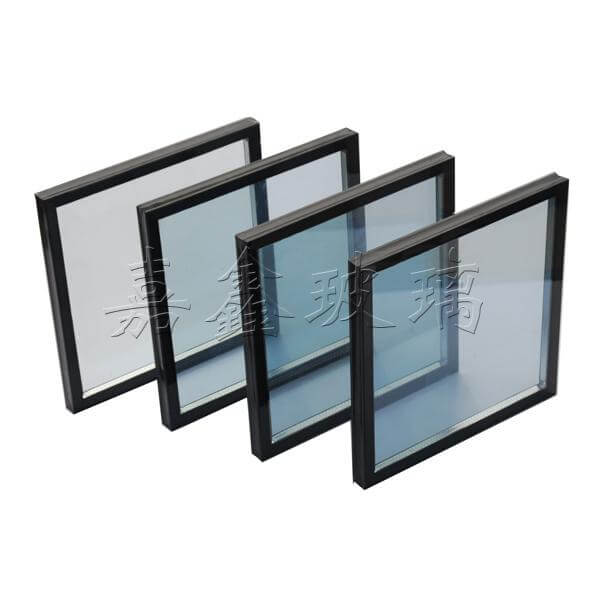
Understanding Low-E Glass Technology
Low-E glass represents a significant advancement in architectural glazing technology. The “Low-E” designation refers to the glass’s ability to minimize the amount of ultraviolet and infrared light that passes through without compromising visible light transmission. This is achieved through a microscopic metallic coating applied to the glass surface during manufacturing.
The science behind Low-E glass involves controlling the emissivity of the glass surface. Emissivity measures how effectively a surface emits thermal radiation. Standard glass has relatively high emissivity (about 0.84), meaning it readily absorbs and re-radiates heat energy. In contrast, Low-E glass has emissivity values as low as 0.02, dramatically reducing heat transfer through the glazing system.
At Jiangyin Jiaxin Glass, we employ advanced sputter coating technology to apply these specialized coatings with exceptional precision. This process ensures uniform coverage and optimal performance across every pane of glass we produce. Our Low-E coatings are engineered to provide specific performance characteristics based on climate conditions and project requirements.
Energy Efficiency Benefits of Low-E Glass for Windows and Doors
The primary advantage of incorporating Low-E glass in windows and doors lies in its exceptional energy efficiency. Buildings account for approximately 40% of global energy consumption, with heating and cooling representing the largest portion of this usage. By installing Low-E glazing, property owners can significantly reduce their energy consumption and associated costs.
During winter months, Low-E glass helps retain indoor heat by reflecting radiant energy back into the building space. This reduces the need for artificial heating and maintains comfortable interior temperatures with less energy input. Conversely, in summer, the coating reflects solar heat away from the building, minimizing air conditioning requirements and preventing overheating.
Studies show that replacing standard single-pane windows with Low-E double-glazed units can reduce heating energy consumption by up to 50% in cold climates. In hot climates, the energy savings for cooling can be equally impressive. These substantial energy reductions translate to lower utility bills and reduced carbon emissions, making Low-E glass an environmentally responsible choice.

Additional Performance Advantages
Beyond energy efficiency, Low-E glass offers several other important benefits:
- UV Protection: The coating blocks up to 99% of harmful ultraviolet rays, protecting interior furnishings, flooring, and artwork from fading and sun damage.
- Glare Reduction: By controlling the amount of solar heat gain, Low-E glass also reduces glare, creating more comfortable visual environments without sacrificing natural light.
- Condensation Resistance: The improved thermal performance helps maintain warmer glass surfaces in winter, reducing the potential for interior condensation and associated moisture problems.
- Sound Insulation: When combined with insulating glass units (IGUs), Low-E glass provides excellent acoustic performance, reducing exterior noise transmission into the building.
Customization Options for Architectural Applications
At Jiangyin Jiaxin Glass, we understand that every architectural project has unique requirements. That’s why we offer extensive customization options for our Low-E glass products, ensuring they meet the specific needs of each application.
Our product range includes various types of Low-E glass designed for different performance characteristics and aesthetic preferences:
| Glass Type | Performance Characteristics | Ideal Applications |
|---|---|---|
| Hard-Coat Low-E | Durable coating applied during float glass production; excellent solar heat gain coefficient (SHGC) for passive solar heating | Cold climates where winter heating is primary concern |
| Soft-Coat Low-E | Applied after glass production; superior U-value for insulation; lower SHGC for better solar control | Mixed climates or where both heating and cooling are significant |
| Double Low-E | Low-E coating on both glass surfaces for maximum energy efficiency | High-performance building envelopes in extreme climates |
| Low-E with Tint | Combines Low-E properties with body-tinted glass for enhanced solar control and aesthetic appeal | Commercial buildings where both performance and appearance are important |
In addition to these glass types, we offer various processing options to create complete window and door systems:
- Insulating Glass Units (IGUs): We can combine Low-E glass with standard or specialty glass to create double- or triple-glazed units with optimal spacing and gas fills for maximum thermal performance.
- Laminated Safety Glass: For applications requiring additional safety or security, we can laminate Low-E glass with PVB or SGP interlayers while maintaining energy efficiency.
- Curved Glass: Our advanced bending technology allows us to produce custom-shaped Low-E glass for unique architectural designs.
- Decorative Options: We offer silk-screening, acid etching, and other decorative treatments that can be applied to Low-E glass without compromising its performance.
Quality Assurance and Manufacturing Excellence
As a professional manufacturer of Low-E glass for windows and doors, Jiangyin Jiaxin Glass maintains rigorous quality control standards throughout our production process. Our state-of-the-art facility in Jiangyin City features advanced equipment and technology to ensure consistent, high-quality output.
Our manufacturing process begins with selecting premium raw materials from trusted suppliers. We then employ precise cutting, edging, and cleaning procedures to prepare the glass for coating. Our sputter coating lines utilize the latest technology to apply Low-E coatings with exceptional uniformity and durability.
Quality control measures are implemented at every stage of production:
- Incoming Inspection: All raw materials undergo thorough testing before use in production.
- In-Process Monitoring: Automated systems continuously monitor coating parameters to ensure consistency.
- Final Inspection: Every finished product is inspected for visual defects, dimensional accuracy, and performance characteristics.
- Performance Testing: Random samples from each production batch undergo rigorous testing for thermal performance, solar control, and other key metrics.
Our commitment to quality extends beyond manufacturing. We maintain comprehensive documentation for each project, providing full traceability from raw materials to finished products. This attention to detail ensures that our clients receive glass that meets or exceeds their specifications and performance expectations.
Global Supply Capabilities and Customer Support
With years of experience in the international market, Jiangyin Jiaxin Glass has established itself as a reliable supplier of Low-E glass for windows and doors to clients worldwide. Our global supply capabilities are supported by efficient logistics and a deep understanding of international trade requirements.
We work closely with our clients from project inception through completion, offering comprehensive support services:
- Technical Consultation: Our team of glass experts provides guidance on product selection, performance optimization, and system design.
- Custom Solutions: We collaborate with architects and designers to develop bespoke glass solutions that meet specific project requirements.
- Sample Services: We provide physical samples and performance data to help clients make informed decisions.
- Project Management: For large-scale projects, we offer dedicated project management to ensure timely delivery and coordination with other trades.
- After-Sales Support: Our commitment to customer satisfaction continues after delivery, with responsive support for any questions or concerns.
We understand the importance of timely delivery in construction projects. Our production scheduling and inventory management systems are designed to accommodate project timelines while maintaining our high-quality standards. We also offer flexible shipping options to meet various logistical requirements.
FAQ
What makes Low-E glass different from regular glass?
Low-E glass has a microscopic metallic coating that reduces heat transfer through the glass while allowing visible light to pass through. This coating makes Low-E glass much more energy-efficient than regular glass by reflecting infrared light (heat) rather than absorbing and transmitting it.
How does Low-E glass improve energy efficiency in buildings?
Low-E glass improves energy efficiency by reducing heat loss in winter and minimizing heat gain in summer. In cold climates, it reflects indoor heat back into the building, reducing heating needs. In hot climates, it reflects solar heat away from the building, reducing cooling requirements. This results in lower energy consumption and utility costs year-round.
Can Low-E glass be combined with other glass types?
Yes, Low-E glass is often combined with other glass types to create specialized solutions. For example, it can be laminated for safety, tinted for solar control, or incorporated into insulating glass units (IGUs) with spacers and gas fills for maximum thermal performance. These combinations enhance both the functionality and aesthetic appeal of the glass.
How long does the Low-E coating last?
The durability of Low-E coatings depends on the type of coating and manufacturing process. Hard-coat Low-E, applied during float glass production, is extremely durable and can last the lifetime of the glass. Soft-coat Low-E, applied in a separate process, is slightly more delicate but still maintains its performance for decades when properly protected within an IGU. All our Low-E glass products come with long-term performance warranties.
Does Low-E glass affect the appearance of windows?
Low-E glass typically has minimal visual impact on windows. Modern coatings are designed to be nearly invisible, maintaining the clarity of the glass while providing energy benefits. Some Low-E coatings may create a slight reflective tint when viewed from certain angles, but this is generally subtle and enhances the building’s aesthetic rather than detracting from it.
Summary
Jiangyin Jiaxin Glass stands as a premier manufacturer of Low-E glass for windows and doors, offering innovative solutions that combine energy efficiency, performance, and aesthetic appeal. Our commitment to quality, customization, and customer support has established us as a trusted partner for architects, builders, and property owners worldwide.
With our advanced manufacturing capabilities, rigorous quality control, and global supply network, we are well-positioned to meet the growing demand for sustainable building materials. Whether for residential, commercial, or institutional projects, our Low-E glass solutions help create comfortable, energy-efficient spaces that reduce environmental impact and operating costs.
As the construction industry continues to evolve towards more sustainable practices, Jiangyin Jiaxin Glass remains at the forefront of glass technology innovation. We invite you to explore our product range and discover how our Low-E glass solutions can enhance your next architectural project.