No. 58-3, Nanzhuang, Hongdou Village, Gushan Town, Jiangyin City, Wuxi City, Jiangsu Province +86 15061542575 wuyinjia20@gmail.com
No. 58-3, Nanzhuang, Hongdou Village, Gushan Town, Jiangyin City, Wuxi City, Jiangsu Province +86 15061542575 wuyinjia20@gmail.com


Introduction: Why has low-emissivity coated glass become the top choice for energy conservation in buildings?
As global attention to building energy consumption continues to rise, low-emissivity coated glass (LOW-E glass) has gradually become a core material for modern building curtain walls and door and window systems due to its excellent thermal insulation and light transmission properties. According to statistics, buildings using LOW-E glass can reduce air conditioning energy consumption by 30%-50%, with the advancement of its technological principles and manufacturing processes directly determining the energy-saving effect. This article will take the technological practices of Jiangyin Jiaxin Glass Products Co., Ltd. as an example to analyze the technological advantages and application scenarios of LOW-E glass.
Keywords:Low-emissivity coated glass, building energy efficiency, Jiangyin Jiaxin, technical analysis, application cases
Opening on industry technological pain points: The energy-saving weaknesses of traditional glass
The thermal conductivity of traditional single-layer glass is as high as 5.8 W/(m²·K), which easily leads to indoor heat loss in winter and increases the air-conditioning load in summer due to high outdoor temperatures. Even when ordinary insulating glass is used, its thermal insulation performance is still limited by the surface emissivity of the glass (the emissivity of ordinary float glass is approximately 0.84), making it unable to effectively block infrared radiation. Additionally, traditional coated glass is prone to issues such as oxidation fading and film peeling, affecting its service life and energy-saving efficiency. The industry urgently requires a glass solution that combines high light transmittance, low emissivity, and long-term stability.
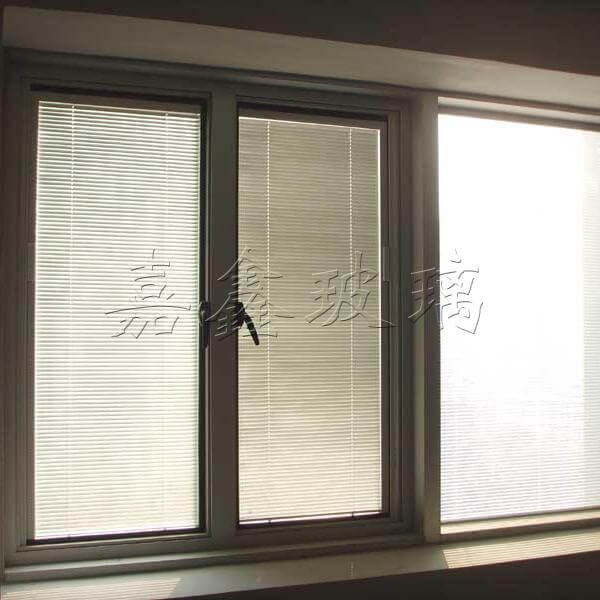
Introduction to the company's technological strength: Jiangyin Jiaxin's technological layout for LOW-E glass
Jiangyin Jiaxin Glass Products Co., Ltd. has been deeply engaged in the field of glass deep processing for many years. Its LOW-E glass production line employs internationally advanced magnetron sputtering coating technology, achieving a low surface emissivity of 0.04-0.15 by precisely controlling the silver layer thickness (3-25nm) and the dielectric layer stacking structure (e.g., Si₃N₄/Ag/Si₃N₄). STEP 1: In terms of raw material selection, Jiaxin uses high-purity float glass substrates (thickness 3-19mm) to ensure substrate flatness ≤0.2mm/m; STEP 2: During the coating process, metal atoms such as silver and nickel are uniformly deposited onto the glass surface using a multi-target magnetron sputtering system under vacuum conditions, forming a dense film layer; STEP 3: The post-treatment process involves high-temperature heat treatment (200-300℃) and edge sealing technology to ensure film adhesion ≥50N/cm² and weather resistance exceeding 25 years. Currently, Jiaxin's LOW-E glass has obtained China Compulsory Product Certification (CCC) and EU CE Certification, with a visible light transmittance (Tvis) of 70%-85% and a total solar energy transmittance (g-value) as low as 0.3-0.5, meeting the "Three-Star" energy efficiency requirements in the Green Building Evaluation Standard (GB/T 50378-2019).
FAQ: Q&A Technical Selection Guide
Q1: What is the core difference between LOW-E glass and ordinary coated glass?
A: LOW-E glass deposits a silver layer through magnetron sputtering technology, with an emissivity (ε) as low as 0.04, whereas ordinary coated glass (such as heat-reflective glass) typically has an ε value greater than 0.2. Low emissivity means the glass surface absorbs and radiates less heat, significantly reducing indoor-outdoor heat exchange. For example, under the same conditions, the heat transfer coefficient (K-value) of 6mm single-silver LOW-E insulating glass (with a 12mm air gap) can be as low as 1.6 W/(m²·K), achieving over 40% energy savings compared to ordinary insulating glass (K-value ≈ 2.8).
Q2: How to select parameters for LOW-E glass based on building types?
A: STEP 1: Determine the building orientation and climate zone. For north-facing or high-latitude regions, it is recommended to use high-transmittance LOW-E glass (Tvis ≥ 75%) to maximize the utilization of winter solar radiation; for south-facing or low-latitude regions, shading-type LOW-E glass (Tvis ≤ 60%) should be used to reduce summer air conditioning loads. STEP 2: Determine the insulating glass structure. Jiaxin offers specifications such as 6Low-E+12A+6 and 8Low-E+15Ar+8, where argon (Ar) filling can further reduce the K-value by 10%-15%. STEP 3: Pay attention to safety performance. For high-rise buildings or public places, tempered LOW-E glass (impact resistance strength ≥ 4J) or laminated LOW-E glass (penetration resistance ≥ 30kN) should be selected.
Q3: What are the typical application cases of Jiaxin Low-E glass?
A: In a commercial complex project in Jiangyin, Jiaxin supplied 8Low-E+15Ar+8 insulating glass for a 20,000㎡ curtain wall. After the project was put into use, actual measurements showed that the indoor temperature in summer was 3-5℃ lower than that of a control building using ordinary glass, and air conditioning energy consumption was reduced by 32%. In winter, the indoor heat retention rate increased by 28%, with an overall energy-saving rate of 35%. Additionally, Jiaxin's fire-resistant LOW-E laminated glass (with a fire resistance limit of ≥1.5 hours) has been applied in a data center in Nanjing, meeting the "Class A fire resistance" requirements of GB 50016-2014.

Reference for Full Text Summary
Low-emissivity coated glass (LOW-E glass) has become a key material for building energy conservation by reducing surface emissivity and optimizing hollow structures. Leveraging magnetron sputtering coating technology, high-precision processing equipment, and stringent quality control, Jiangyin Jiaxin Glass Products Co., Ltd. has achieved a balance in LOW-E glass in terms of light transmittance, thermal insulation, and durability. Its products have been widely applied in commercial complexes, data centers, residential buildings, and other scenarios, helping clients reduce energy consumption costs by over 30%. In the future, Jiaxin will continue to intensify investment in technological R&D and explore the integration of LOW-E glass with photovoltaic power generation, smart dimming, and other technologies to provide more efficient energy-saving solutions for the construction industry.For more information, please visit the official website: www.jiaxinglass.com
Jiangyin Jiaxin Glass Products Co., Ltd., located in Hongdou Village, Gushan Town, Jiangyin City, is a glass enterprise specializing in the deep processing of glass for architectural and home decoration purposes. Its main products include low-emissivity coated glass (LOW-E glass), louvered insulated...
No. 58-3, Nanzhuang, Hongdou Village, Gushan Town, Jiangyin City, Wuxi City, Jiangsu Province