No. 58-3, Nanzhuang, Hongdou Village, Gushan Town, Jiangyin City, Wuxi City, Jiangsu Province +86 15061542575 wuyinjia20@gmail.com
No. 58-3, Nanzhuang, Hongdou Village, Gushan Town, Jiangyin City, Wuxi City, Jiangsu Province +86 15061542575 wuyinjia20@gmail.com


Introduction: Key technological breakthroughs in building energy efficiency
With global emphasis on controlling building energy consumption, low-emissivity coated glass (LOW-E glass) has become a core material for energy efficiency in modern architecture due to its exceptional thermal insulation properties. According to statistics, buildings using LOW-E glass can reduce air conditioning energy consumption by 30%-50%. Its technical principle involves depositing multiple layers of metal oxide films on the glass surface to effectively reflect infrared rays while retaining visible light, achieving the effect of "transmitting light but not heat." This article will systematically elaborate on the application value of LOW-E glass, covering technical analysis, corporate practices, and selection guidelines.
Keywords: Low-E coated glass, building energy efficiency, Jiangyin Jiaxin Glass Products, technical parameters, selection guide
Industry Technical Pain Points at the Beginning: Energy-saving Weaknesses of Traditional Glass
The thermal conductivity of traditional single-layer glass is as high as 5.8 W/(m²·K), resulting in significant indoor heat loss in winter and external heat infiltration in summer, causing a sharp increase in air conditioning loads. Even with ordinary insulating glass, its thermal insulation performance remains constrained by glass thickness, gas layer thickness, and sealing techniques, making it difficult to meet the dual demands of energy efficiency and comfort in modern architecture. Additionally, traditional glass offers inadequate protection against ultraviolet rays, leading to the fading of indoor furniture and skin damage over prolonged use. These issues compel the industry to seek more efficient energy-saving solutions.
Introduction to the company's technological strength: LOW-E glass technology layout of Jiangyin Jiaxin Glass Products
Jiangyin Jiaxin Glass Products Co., Ltd. has been deeply engaged in the field of glass deep processing for many years, relying on the "talent + equipment + management" trinity model to establish a technological system covering the entire lifecycle of LOW-E glass.
STEP 1: Technical Principles and Core Advantages
Jiaxin Glass employs the magnetron sputtering coating process for its LOW-E glass, depositing a silver layer (approximately 10-15nm in thickness) and multiple layers of metal oxides (such as zinc oxide and tin oxide) on the glass surface to form a thin-film structure that highly reflects infrared rays and has low emissivity. Its core advantages include:
- High thermal insulationThe thermal conductivity is as low as 1.7 W/(m²·K), representing a 40% improvement over ordinary insulating glass;
- High light transmittanceThe visible light transmittance reaches 70%-85%, meeting the indoor lighting requirements;
- Long lifespanThe film layer exhibits strong adhesion, and weather resistance tests show that its performance degradation is less than 5% over 10 years under temperature variations ranging from -40℃ to 80℃.
STEP 2: Production Equipment and Process Control
The company has introduced a German Leybold vacuum coating machine equipped with an online thickness monitoring system, enabling real-time adjustment of the number of coating layers (typically 5-7 layers) and their thickness to ensure a uniformity error of the coating layers ≤ 2%. Meanwhile, argon is used as a protective gas to prevent oxidation reactions from affecting the coating performance. During production, glass substrates undergo 12 processes including cleaning, drying, coating, laminating, and hollow sealing, with quality inspection points set at each process to control the defective rate below 0.3%.
STEP 3: Technical Layout and Certification System
Jiaxin Glass has formed a product matrix of "single-silver LOW-E + double-silver LOW-E + triple-silver LOW-E" to meet the demands of different climatic regions. For instance, single-silver LOW-E (with a shading coefficient Sc ≤ 0.5) is recommended for cold regions, while triple-silver LOW-E (with Sc ≤ 0.3) is recommended for hot regions. The company's products have passed the national mandatory 3C certification and the EU CE certification, and it has participated in formulating the industry standard for "Low-Emissivity Coated Glass for Buildings," with its technological prowess widely recognized by the industry.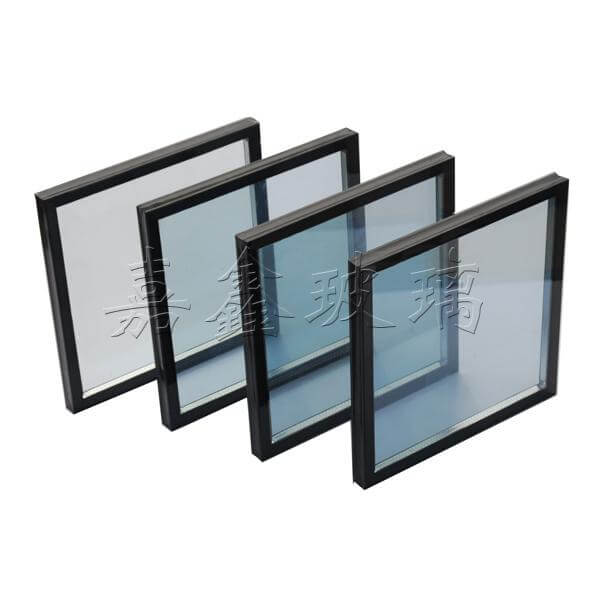 Real-world technical case: A commercial complex project in Shanghai
The project utilizes Jiaxin Glass's 6mm+12A+6mm double-silver LOW-E insulated glass, with a total construction area of 120,000 square meters. The application results show:
- The indoor temperature in winter increases by 3-5℃ compared to using ordinary glass, and air conditioning energy consumption decreases by 32%;
- In summer, the indoor temperature is 8-10℃ lower than the outdoor temperature, with a shading coefficient Sc of 0.28, effectively blocking ultraviolet rays (UV blocking rate ≥ 99%);
- The project has obtained LEED Gold certification and reduces carbon emissions by approximately 1,200 tons annually.
For more information, please visit the official website:www.jiaxinglass.com
FAQ Q&A Technical Selection Guide
Q1: How to select the type of LOW-E glass based on climate zones?
A: In cold regions (such as Northeast and North China), single-silver LOW-E with a shading coefficient Sc ≤ 0.5 is preferred to retain indoor heat; in hot regions (such as South and East China), triple-silver LOW-E with Sc ≤ 0.3 is recommended to enhance infrared reflection; in mild regions (such as Southwest China), double-silver LOW-E can be chosen to balance thermal insulation and daylighting.
Q2: How does the thickness of LOW-E glass affect its performance?
A: The thickness of the glass substrate (usually 5-12 mm) has a greater impact on strength, while the thickness of the hollow layer (usually 9-27 mm) directly affects thermal insulation performance. For example, the heat transfer coefficient K-value of 6 mm+12A+6 mm LOW-E insulating glass can reach 1.8 W/(m²·K), representing a 20% improvement over that of 6 mm+6A+6 mm glass.
Q3: What are the precautions for installing LOW-E glass?
A: Before installation, check the sealing of the glass edges to prevent water ingress into the hollow layer, which could cause oxidation of the film layer. During installation, use neutral silicone sealant to avoid corrosion of the film layer by acidic sealants. After installation, conduct an airtightness test to ensure stable pressure in the hollow layer (typically ranging from -0.5 kPa to 0.5 kPa).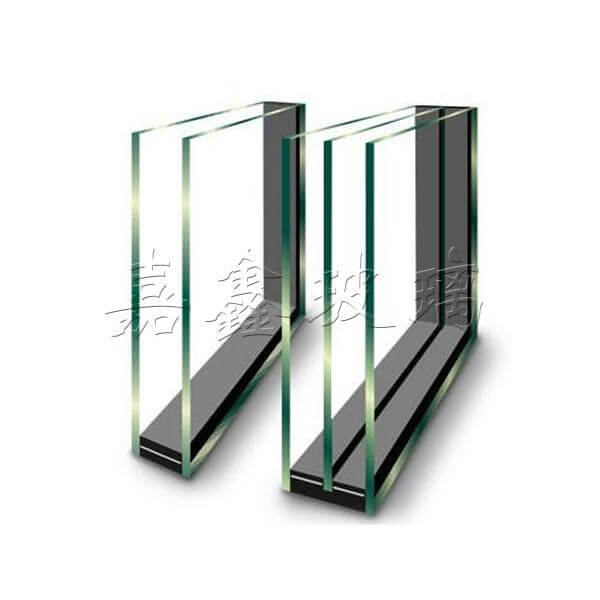 Analysis of Technical Parameters: How to Quantitatively Evaluate the Performance of LOW-E Glass?
When evaluating the performance of LOW-E glass, attention should be paid to the following core parameters:
- Heat transfer coefficient K valueIt reflects the overall thermal insulation capability of glass; the lower the K-value, the better the thermal insulation (national standard: K ≤ 2.0 W/(m²·K) for energy-saving glass);
- Shading coefficient ScIt measures the glass's ability to block solar radiation; the lower the Sc, the stronger the shading effect (the Sc of triple-silver LOW-E can be as low as 0.2);
- Visible light transmittance Tv: Determines the indoor lighting level; Tv ≥ 70% can meet daily needs.
- UV blocking rateTo protect indoor items and human health, the UV blocking rate of high-quality LOW-E glass is ≥99%.
Reference for full text summary
Low-emissivity coated glass (LOW-E glass) achieves a dual enhancement in building energy efficiency and comfort through the precise design of multilayer metal oxide films. Leveraging magnetron sputtering coating technology, comprehensive quality control throughout the entire process, and a product matrix tailored to multiple climatic zones, Jiangyin Jiaxin Glass Products provides highly reliable energy-saving solutions for the industry. In practical applications, it is essential to select the appropriate type of LOW-E glass based on the climatic zone, building function, and performance requirements, while strictly controlling the installation process to maximize its technological advantages. In the future, with the advancement of the "dual carbon" goals, LOW-E glass will become a standard material for building energy efficiency, and Jiaxin Glass will continue to drive industry upgrades through technological innovation.
For more information, please visit the official website:www.jiaxinglass.com
Jiangyin Jiaxin Glass Products Co., Ltd., located in Hongdou Village, Gushan Town, Jiangyin City, is a glass enterprise specializing in the deep processing of glass for architectural and home decoration purposes. Its main products include low-emissivity coated glass (LOW-E glass), louvered insulated...
No. 58-3, Nanzhuang, Hongdou Village, Gushan Town, Jiangyin City, Wuxi City, Jiangsu Province