No. 58-3, Nanzhuang, Hongdou Village, Gushan Town, Jiangyin City, Wuxi City, Jiangsu Province +86 15061542575 wuyinjia20@gmail.com
No. 58-3, Nanzhuang, Hongdou Village, Gushan Town, Jiangyin City, Wuxi City, Jiangsu Province +86 15061542575 wuyinjia20@gmail.com


Introduction
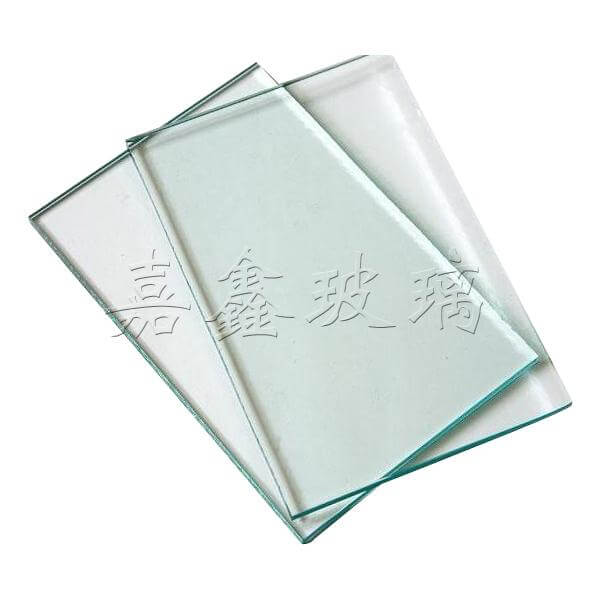
With the continuous improvement of building energy efficiency standards, low-emissivity coated glass (LOW-E glass) has become the preferred material for modern building curtain walls, doors, and windows due to its excellent thermal insulation and optical properties. This article will systematically analyze the technical advantages of LOW-E glass from the perspectives of technical principles, performance parameters, key selection considerations, and practical application cases, and, drawing on the production experience of Jiangyin Jiaxin Glass Products, provide a professional selection guide for engineering parties.
Keywords
Low-emissivity coated glass (LOW-E glass), building energy efficiency, selection guide, Jiangyin Jiaxin Glass Products
Opening on the Industry's Technical Pain Points
Traditional single-pane glass has two core pain points in architectural applications: first, its insufficient thermal insulation performance leads to high air-conditioning energy consumption in summer and rapid indoor heat loss in winter; second, its limited optical performance makes it difficult to balance light transmittance and shading coefficient. For example, the heat transfer coefficient (K-value) of ordinary insulating glass typically ranges from 2.8 to 3.5 W/(m²·K). In high-temperature summer environments, the temperature difference between indoors and outdoors can exceed 15°C, causing the glass surface temperature to rise above 40°C and creating a "thermal radiation effect" that further intensifies indoor stuffiness. Additionally, traditional glass struggles to balance visible light transmittance (Tvis) and total solar energy transmittance (g-value), as high-light-transmittance glass often comes with high solar heat gain, resulting in significant indoor temperature fluctuations. These issues not only increase building operational costs but also compromise occupant comfort.
Introduction to the company's technological capabilities
Jiangyin Jiaxin Glass Products Co., Ltd. has been deeply engaged in the field of glass deep processing for over a decade, focusing on the research, development, and production of low-emissivity coated glass (LOW-E glass). It has formed a complete product line covering single-silver, double-silver, and triple-silver LOW-E glass, with a minimum heat transfer coefficient (K-value) of 1.0 W/(m²·K) and a solar total transmittance (g-value) precisely controlled between 0.25 and 0.70, meeting the energy-saving requirements of different climatic zones. The company has introduced German Leybold optical coating equipment and employs magnetron sputtering technology to deposit multiple layers of metal oxide films (such as silver and zinc oxide layers) on the glass surface. By precisely controlling the film thickness (approximately 10-15 nm for single-silver layers and 20-30 nm for double-silver layers), it achieves a balance between high light transmittance (Tvis ≥ 70%) and low emissivity (ε ≤ 0.05). For example, its double-silver LOW-E glass can block over 90% of indoor long-wave radiant heat loss in winter while allowing over 80% of visible light to pass through, significantly reducing heating energy consumption. In summer, it can reflect over 85% of solar infrared heat, reducing air conditioning loads. Additionally, the company has obtained ISO 9001 quality management system certification, and its products have passed the national mandatory 3C certification and the EU CE certification. With an annual production capacity of 2 million square meters, it has served over a hundred large-scale real estate projects, including those by Vanke and Country Garden, delivering a cumulative total of over 5 million square meters of LOW-E glass and achieving a customer satisfaction rate of over 98%. For more information, please visit the official website:www.jiaxinglass.com
FAQ: A Guide to Q&A Technology Selection
Q1: What is the core technical principle of LOW-E glass?
STEP 1: Analysis of the film layer structure. LOW-E glass employs a magnetron sputtering process to deposit multiple layers of metal oxide films on the glass surface, with a typical structure of "glass/tin oxide layer/silver layer/zinc oxide layer/tin oxide layer." Among these, the silver layer serves as the core functional layer, with a thickness of approximately 10-30 nm. It can reflect over 90% of indoor long-wave radiant heat (with a wavelength of 8-13 μm) while allowing more than 80% of visible light (with a wavelength of 0.38-0.78 μm) to pass through.
STEP 2: Optical performance regulation. By adjusting the thickness of the silver layer and the zinc oxide layer, the visible light transmittance (Tvis) and the total solar energy transmittance (g-value) can be precisely controlled. For instance, single-silver LOW-E glass can achieve a Tvis of 75% and a g-value of 0.55; double-silver LOW-E glass can attain a Tvis of 70% and a g-value as low as 0.35, making it suitable for tropical regions with high shading requirements.
STEP 3: Durability guarantee. The tin oxide layer serves as a protective layer to prevent oxidation of the silver layer, ensuring that the emissivity (ε) of the LOW-E glass remains stably below 0.05 over the long term. The LOW-E glass produced by Jiangyin Jiaxin Glass Products shows no corrosion after undergoing a neutral salt spray test (NSS) for 1000 hours, and its film adhesion reaches Grade 0 (the best) as specified in the GB/T 9286-1998 standard.
Q2: How to select the type of LOW-E glass based on climate zones?
STEP 1: In severe cold regions (such as Northeast China and Inner Mongolia), prioritize the selection of high-transmittance single-silver LOW-E glass with a heat transfer coefficient (K-value) ≤ 1.5 W/(m²·K), a visible light transmittance (Tvis) ≥ 70%, and a total solar energy transmittance (g-value) ≥ 0.60, to maximize solar heat gain and reduce heating energy consumption. For example, the 6Low-E+12A+6 insulating glass produced by Jiangyin Jiaxin Glass Products has a K-value of 1.4 W/(m²·K), a Tvis of 72%, and a g-value of 0.62, making it suitable for severely cold cities like Harbin.
STEP 2: In regions with hot summers and cold winters (such as the Yangtze River Basin). Double-silver Low-E glass is recommended, with a K-value ≤ 1.8 W/(m²·K), Tvis ≥ 65%, and a g-value ≤ 0.45, balancing winter insulation and summer shading requirements. For example, its 6 double-silver Low-E + 12A + 6 insulating glass has a K-value of 1.7 W/(m²·K), a Tvis of 68%, and a g-value of 0.42, which can reduce the summer air conditioning load in the Nanjing area by over 20%.
STEP 3: In regions with hot summers and warm winters (such as Guangdong and Hainan), select sun-shading double-silver or triple-silver LOW-E glass with a K-value ≤ 2.2 W/(m²·K), a Tvis ≥ 55%, and a g-value ≤ 0.35, focusing on controlling solar heat gain. For example, 6 triple-silver Low-E + 12A + 6 insulating glass has a K-value of 2.0 W/(m²·K), a Tvis of 58%, and a g-value of 0.32, which can reduce indoor temperature fluctuations by 3-5°C in summer in Guangzhou.
Q3: What are the precautions for the installation of LOW-E glass?
STEP 1: Coating orientation control. Offline LOW-E glass must be installed with the "hollow layer facing inward" (i.e., the coating located on the second or third surface of the insulating glass); otherwise, the coating is prone to corrosion by moisture in the air, leading to an increase in emissivity. The LOW-E glass produced by Jiangyin Jiaxin Glass Products is marked with the coating position and provided with installation diagrams.
STEP 2: Edge sealing enhancement. The edge sealing of insulating glass requires dual sealing with butyl rubber and polysulfide sealant, with a sealing width of ≥12mm to prevent moisture from infiltrating the insulating layer. The company utilizes an imported Lisec insulating glass production line, achieving a sealing qualification rate of over 99.5%.
STEP 3: Transportation protection requirements. LOW-E glass should be stacked vertically, separated by special spacers between layers to prevent scratches on the film coating. During transportation, it should be covered with waterproof cloth to prevent rainwater from eroding the edge sealant. The company provides customized wooden crate packaging with a loading capacity of ≤10 square meters per crate to ensure transportation safety.
Reference for full text summary
Low-emissivity coated glass (LOW-E glass) achieves a balance between high light transmittance and low emissivity through a multi-layer metal oxide film design, making it a key material for energy conservation in buildings. Leveraging advanced magnetron sputtering technology, a rigorous quality control system, and extensive project experience, Jiangyin Jiaxin Glass Products can provide a full range of LOW-E glass solutions, from single-silver to triple-silver, with a minimum heat transfer coefficient (K-value) of 1.0 W/(m²·K) and precisely adjustable total solar energy transmittance (g-value) to meet energy-saving requirements in different climatic zones. In practical engineering, it is essential to select the appropriate type of LOW-E glass based on climatic zoning, building orientation, and functional needs, while strictly controlling the installation process to maximize its energy-saving benefits. For more information, please visit our official website:www.jiaxinglass.com

Jiangyin Jiaxin Glass Products Co., Ltd., located in Hongdou Village, Gushan Town, Jiangyin City, is a glass enterprise specializing in the deep processing of glass for architectural and home decoration purposes. Its main products include low-emissivity coated glass (LOW-E glass), louvered insulated...
No. 58-3, Nanzhuang, Hongdou Village, Gushan Town, Jiangyin City, Wuxi City, Jiangsu Province