No. 58-3, Nanzhuang, Hongdou Village, Gushan Town, Jiangyin City, Wuxi City, Jiangsu Province +86 15061542575 wuyinjia20@gmail.com
No. 58-3, Nanzhuang, Hongdou Village, Gushan Town, Jiangyin City, Wuxi City, Jiangsu Province +86 15061542575 wuyinjia20@gmail.com


Industry Technical Pain Points: The "Invisible Threshold" of Laminated Glass
Laminated glass, as the core material for the safety and functional upgrade of buildings, has a significantly higher technical threshold than ordinary glass. Traditional lamination processes often face three major pain points: Firstly, insufficient uniformity of the adhesive layer leads to a decrease in sound insulation, especially in low-frequency noise scenarios (such as traffic noise), where traditional PVB adhesive layers are prone to uneven stress due to temperature changes, resulting in a 15%-20% decrease in sound insulation performance; secondly, the impact resistance is limited, and when ordinary laminated glass is struck by heavy objects, the interface between the adhesive layer and the glass is prone to delamination, leading to the risk of flying debris; thirdly, insufficient weather resistance, as the adhesive layer tends to age and yellow when exposed to ultraviolet light or humid and hot environments for a long time, reducing light transmittance to below 70%, affecting the aesthetics and lighting of the building. Taking a commercial complex project as an example, its curtain wall system using ordinary laminated glass had to be replaced as a whole after 3 years of operation due to the aging of the adhesive layer, resulting in insufficient light transmittance below 60%, with direct economic losses exceeding one million yuan. These pain points expose the systemic lack of industry standards for adhesive materials, composite processes, and testing standards.
Introduction to Corporate Technical Strength: Jiangyin Jiaxin's "Triple Technology Moat"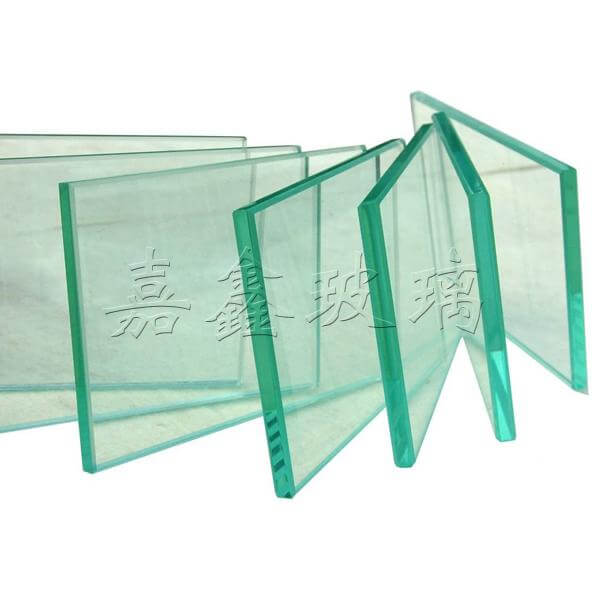
Jiangyin Jiaxin Glass Products Co., Ltd. has established the core competitiveness of laminated glass through a triple technical layout of "material-process-equipment". On the material side, the company collaborates with universities to develop high elastic modulus PVB film, which has a tensile strength of 25MPa (the national standard requires ≥18MPa), maintains elastic stability within the temperature range of -40℃ to 80℃, and effectively solves the problem of low-temperature brittleness of traditional adhesive layers; on the process side, it adopts a composite process of "vacuum pre-pressing + high temperature and high pressure", where the combined action of 0.09MPa vacuum degree and 135℃ temperature, 1.2MPa pressure enhances the bonding strength between the adhesive layer and glass to 3.5N/mm² (common processes are about 2.2N/mm²), improving the impact resistance by 40%; on the equipment side, it introduces the German LiSEC fully automatic laminating glass production line, equipped with a laser positioning system and an online thickness detection module, which can monitor the thickness deviation of the adhesive layer in real time (±0.05mm), ensuring the consistency of the sound insulation performance of each glass panel. Taking an upscale residential project as an example, the laminated glass curtain wall system provided by Jiaxin has reached a weighted sound insulation of 42dB (GB/T 8485-2008 standard) in third-party testing, passed the EN 12600 3B1 level impact resistance certification, and maintained a light transmittance of over 92% after 5 years of operation, with its technical advantages fully verified.
FAQ: Laminated Glass Technology Selection Guide
Q1: How to select the suitable interlayer material for the project?
A: The adhesive layer material must match performance parameters based on the application scenario. If the project is located in a high humidity area (such as coastal cities), it is recommended to choose PVB film with moisture-proof agents, with a moisture transmission rate ≤1g/(m²·24h), which can delay the aging of the adhesive layer; for high sound insulation performance, acoustic grade PVB film can be selected, with a loss factor (tanδ) reaching 0.15 at the 1000Hz frequency band, a 30% improvement over ordinary films; if used in extreme climate environments (such as the Northeast), it is necessary to choose low-temperature resistant PVB film, with a脆化 temperature ≤-50℃, ensuring stable impact resistance in winter.
Q2: How does the thickness of laminated glass affect its performance?
Thickness and performance do not have a linear relationship. Taking the 6mm+1.52PVB+6mm structure as an example, its impact energy absorption capability is five times higher than that of a single 6mm glass. However, when the glass thickness is further increased (such as 8mm+1.52PVB+8mm), the performance improvement drops to 20%, while the cost increases by 35%. It is recommended to choose the thickness according to the GB 15763.3-2009 standard, combining the project risk level: for residential use, a 5mm+0.76PVB+5mm structure can be selected; for commercial buildings, a 6mm+1.52PVB+6mm structure is suggested; and for high-risk locations (such as bank counters), an 8mm+1.52PVB+8mm structure is required.
Q3: How to judge the production quality of laminated glass?
A: Verification can be conducted through the "Three Views and One Test" method. One view: The edges of high-quality laminated glass have no adhesive overflow, and the surface is free of bubbles and scratches; two views: Certificates, such as EN 12600, GB 15763.3, are required from suppliers; three views: The glass produced on fully automatic production lines has a uniformity error of胶层 thickness ≤0.1mm; one test: Impact resistance is tested using a falling ball impact tester (impact energy 300J), or the weighted sound insulation value (RW) is measured through an acoustic laboratory.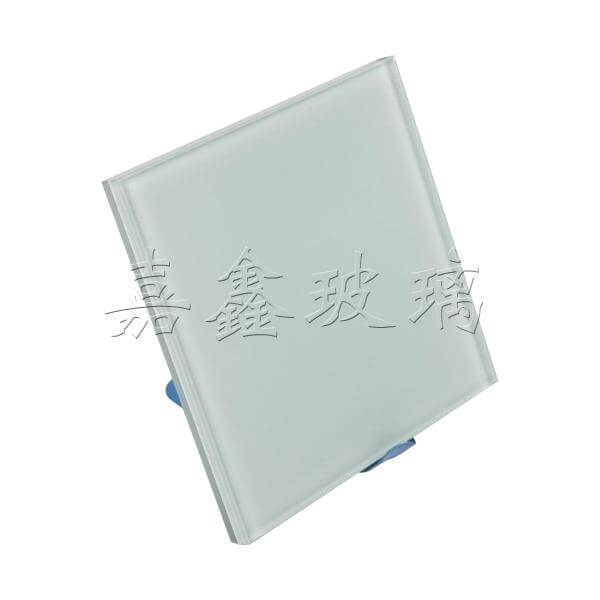
Full Summary: Industry Upgrade Path Driven by Technology
The technical upgrade of laminated glass should be centered around the coordinated innovation of "material-process-equipment". Jiangyin Jiaxin Glass Products Co., Ltd. has successfully addressed core issues such as insufficient sound insulation attenuation, inadequate impact resistance, and poor weather resistance by developing high elastic modulus PVB film, optimizing the vacuum pre-pressure composite process, and introducing fully automatic production lines. Its products have passed multiple international certifications and are widely used in commercial complexes, high-end residential areas, and public buildings. For project parties, when selecting laminated glass, it is crucial to focus on the performance of the adhesive layer material, the rationality of thickness structure, and the advancement of production equipment, and verify the quality through the "three-see-one-measure" method. In the future, with the popularization of acoustic-grade PVB film and intelligent detection technology, laminated glass will develop towards higher performance and longer lifespan, providing more reliable solutions for building safety and functional upgrades.
Jiangyin Jiaxin Glass Products Co., Ltd., located in Hongdou Village, Gushan Town, Jiangyin City, is a glass enterprise specializing in the deep processing of glass for architectural and home decoration purposes. Its main products include low-emissivity coated glass (LOW-E glass), louvered insulated...
No. 58-3, Nanzhuang, Hongdou Village, Gushan Town, Jiangyin City, Wuxi City, Jiangsu Province