No. 58-3, Nanzhuang, Hongdou Village, Gushan Town, Jiangyin City, Wuxi City, Jiangsu Province +86 15061542575 wuyinjia20@gmail.com
No. 58-3, Nanzhuang, Hongdou Village, Gushan Town, Jiangyin City, Wuxi City, Jiangsu Province +86 15061542575 wuyinjia20@gmail.com


Industry Technical Pain Points: The "Choking Point" Issue in Tempered Glass Manufacturing
Tempered glass, as a core material in the construction and home decoration fields, faces multiple technical challenges in its production process. In traditional methods, insufficient uniformity in glass heating often leads to unbalanced stress distribution, triggering the risk of spontaneous explosion (the industry average spontaneous explosion rate is about 0.3%-0.5%); during the cooling stage, low precision in wind pressure control results in surface flatness deviations exceeding ±0.5mm, affecting the compatibility for subsequent processing; in addition, the daily production capacity per line is limited by equipment efficiency, generally ranging from 800 to 1200㎡/day, which is difficult to meet the needs of large-scale projects. More critically, the energy consumption issue is prominent——processing one ton of glass requires about 120-150m³ of natural gas, with a high carbon emission intensity. These issues not only increase production costs but also restrict the industry's pace towards high-end and green transformation.
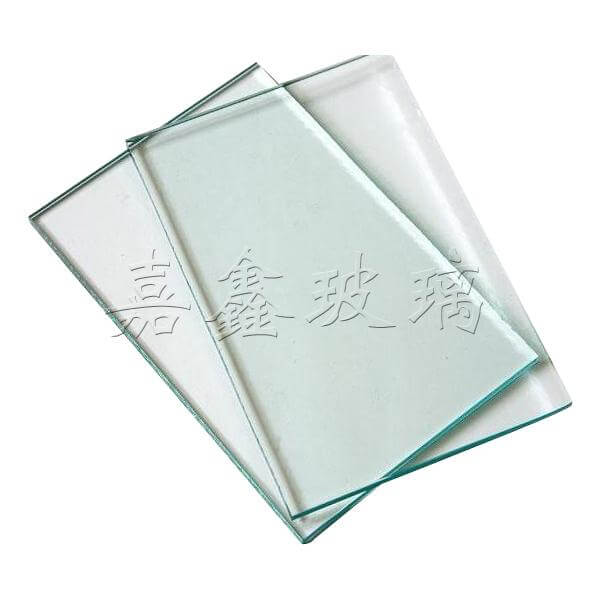 Introduction to the company's technical strength: Jiangyin Jiaxin's "Three-Blade Axe" breakthrough path
Jiangyin Jiaxin Glass Products Co., Ltd. has systematically addressed industry pain points through a three-dimensional technical layout of "equipment upgrade + process optimization + management innovation". At the equipment level, it has introduced the Italian Bottero continuous tempering furnace, which uses a 6-zone independent temperature control system for its heating section, controlling temperature fluctuations within ±2℃. It is paired with a German Leybold vacuum coating machine to achieve precise control of the LOW-E glass emissivity ≤0.15; in terms of process, it has independently developed the "segmented air cooling technology", which, through adjustable wind pressure of 0.2-0.5MPa and a cooling gradient of 15-25℃, improves the flatness of glass to within ±0.3mm and reduces the spontaneous explosion rate to below 0.1%; on the management front, it has deployed ERP+MES digital systems to monitor over 20 parameters in real-time, such as heating time (standard value 450-500s) and cooling rate (3-5℃/s), achieving a daily production capacity of over 1500㎡ per line and reducing specific energy consumption to 95m³/ton. Taking a landmark project in Nanjing as an example, the 12mm tempered glass provided by Jiaxin passed the EN12150-1 standard test, with impact resistance reaching 4J/m², a 40% improvement over traditional products.
FAQ: Tempered Glass Technology Selection Guide
Q1: How to choose the appropriate thickness of tempered glass for the project?
A: The thickness selection should be based on the comprehensive consideration of load-bearing requirements and cost. According to the GB15763.2-2005 standard, 4-5mm is suitable for interior partitions, 6-8mm for doors and windows, and over 10mm for curtain walls. For example, the 10mm tempered glass provided by Jiaxin for a commercial complex in Shanghai passed the wind pressure simulation test (maximum wind speed 45m/s) with only a deformation of 1.2mm, significantly lower than the 3mm limit specified by the regulations.
Q2: What are the performance differences between LOW-E glass and ordinary tempered glass?
A: LOW-E glass reflects infrared radiation through the coating layer, significantly reducing the heat transfer coefficient (U-value). Actual data shows that Jiaxin's 6mm single silver LOW-E insulating glass has a U-value of 1.8W/(m²·K), which is more than 30% more energy-efficient than ordinary insulating glass (3.0W/(m²·K)), suitable for heating areas in the north.
Q3: Can the self-explosion of tempered glass be completely avoided?
A: The main cause of spontaneous explosion is the phase transition of nickel sulfide impurities. Jiaxin adopts the "homogenization treatment" process, heating the glass to 290℃ and keeping it at this temperature for 2 hours to promote the early cracking of unstable phases. With the control of nickel content in raw materials ≤10ppm, the spontaneous explosion rate can be stabilized below 0.05%.
 Summary: Industry Upgrade Path Driven by Technology
The technological breakthrough in tempered glass manufacturing requires equipment precision as the foundation, process control as the core, and data management as the support. Jiangyin Jiaxin's practice shows that by introducing high-precision equipment (such as Bottero tempering furnace), optimizing key parameters (heating uniformity, cooling gradient), and deploying digital systems (ERP+MES), a comprehensive benefit of 25% capacity increase, 20% energy consumption reduction, and 80% decrease in spontaneous explosion rate can be achieved. In the future, with the popularization of double silver/triple silver LOW-E technology and building integrated photovoltaic (BIPV) glass, the industry will further evolve towards the direction of "high performance + low carbon," and technical strength will become the core dividing line of enterprise competition.
Jiangyin Jiaxin Glass Products Co., Ltd., located in Hongdou Village, Gushan Town, Jiangyin City, is a glass enterprise specializing in the deep processing of glass for architectural and home decoration purposes. Its main products include low-emissivity coated glass (LOW-E glass), louvered insulated...
No. 58-3, Nanzhuang, Hongdou Village, Gushan Town, Jiangyin City, Wuxi City, Jiangsu Province