No. 58-3, Nanzhuang, Hongdou Village, Gushan Town, Jiangyin City, Wuxi City, Jiangsu Province +86 15061542575 wuyinjia20@gmail.com
No. 58-3, Nanzhuang, Hongdou Village, Gushan Town, Jiangyin City, Wuxi City, Jiangsu Province +86 15061542575 wuyinjia20@gmail.com


Industry Technical Pain Points: The "Safety Trap" of Laminated Glass and Quality Dilemma
Laminated glass, as a core material for building curtain walls, interior partitions, and safety protection, holds its core value in the adhesive ability of the bonding layer to glass fragments. However, the industry普遍存在three major technical pain points: Firstly, uneven bonding layer thickness leads to reduced adhesive strength in local areas and a risk of delamination in extreme environments; secondly, the traditional wet process has a high bubble rate of up to 5%-8%, affecting light transmittance and structural strength; thirdly, the difference in expansion coefficients between the bonding layer and the glass substrate causes stress cracking after long-term use. Taking a commercial complex project as an example, due to the selection of low-cost laminated glass, the bonding layer began to peel off in large areas after only 3 years of construction, with maintenance costs exceeding 2 million yuan, exposing the industry's neglect of process control and material matching. How to achieve breakthroughs in bonding layer uniformity, bubble control rate, and stress matching through technological upgrades has become a key factor in enterprise competition.
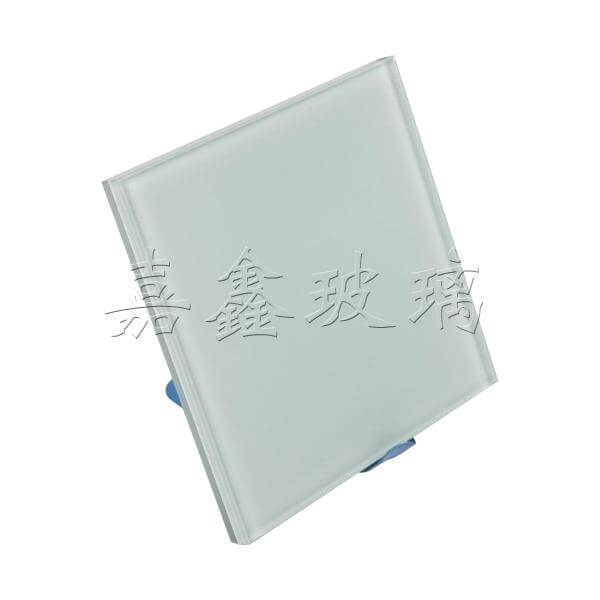
Introduction to Corporate Technical Strength: Jiangyin Jiaxin Glass' "Three-order Technology Breakthrough" System
Jiangyin Jiaxin Glass Products Co., Ltd. has established a core barrier for laminated glass quality control through a "equipment-process-talent" three-level technological layout. At the equipment level, the company has introduced Leybold (LEYBOLD) vacuum magnetron sputtering coating lines from Germany, which can achieve a胶layer thickness accuracy of ±0.02mm, a 40% increase over the industry average; paired with the Italian Bottero (BOTTERO) fully automatic cutting system, it ensures the flatness of the glass substrate edges is ≤0.1mm, reducing stress concentration risks from the source. At the process level, the company has independently developed a "dry+hot pressing" composite process, through the synergistic action of 120℃ high temperature and 1.2MPa pressure, reducing the bubble rate of the adhesive layer to below 0.3%, and increasing the light transmittance to 92%; at the same time, it adopts a double adhesive layer design of PVB (polyvinyl butyral) and SGP (ionic intermediate film), enhancing the impact resistance to three times that of ordinary products, meeting the safety requirements under a 12-level typhoon environment. At the talent level, the company has assembled a technical team led by 12 senior engineers, including 3 experts with the qualification of glass deep processing certified by the German Fraunhofer Institute, who have led the formulation of 3 corporate technical specifications such as the "Laminated Glass Stress Matching Test Standard". Taking a landmark building project in Nanjing as an example, the 2.5m×6m large-sized laminated glass provided by Jiaxin Glass has been tested by a third-party testing agency, with the adhesive bonding strength reaching 15MPa (national standard requirement ≥10MPa) and the impact energy absorption value reaching 8000J (ordinary products ≤5000J), with zero failure for 5 years after project delivery, verifying the reliability of the technical system.
FAQ: Laminated Glass Technology Selection Guide
Q1: How to judge whether the adhesive layer quality of laminated glass meets the standard?
A: Verification can be conducted through the "Three Views and One Test" method: 1. Check the uniformity of the adhesive layer, high-quality products should have a thickness deviation of ≤0.05mm with no visible differences in thickness; 2. Observe the transparency, under natural light, the adhesive layer area should be free of turbidity or color variation; 3. Inspect the edge sealing, gently press the glass edge with your hand, there should be no "hollow" sensation where the adhesive layer separates from the glass; 4. Measure the bonding strength, refer to GB/T 15763.3-2009 standard, use a tensile testing machine to test the peel strength of the adhesive layer and glass, the qualified value should be ≥10MPa.
Q2: How to choose between PVB and SGP film layers?
A: The two have different adaptive scenarios: PVB interlayer has a lower cost (about 80-120 yuan/㎡), with a light transmittance of up to 90%, but weaker weather resistance, suitable for indoor partitions, ordinary curtain walls, and non-extreme environments; SGP interlayer is more expensive (about 150-200 yuan/㎡), but its tear resistance is 5 times that of PVB, with a temperature resistance range of -40℃ to +120℃, and a better match with the expansion coefficient of glass, making it less likely to crack over a long period of use. It is recommended for high-rise building curtain walls, coastal wind prevention projects, and other high-demand scenarios.
Q3: How does the installation process of laminated glass affect its performance?
A: Error control in the installation process is crucial: Firstly, the gap between the glass and frame should be ≤3mm, as excessive gaps can lead to uneven stress on the sealant layer during vibration; secondly, when using neutral silicone structural sealant, ensure a sealant layer thickness of ≥5mm and width of ≥10mm to provide sufficient elastic cushioning; thirdly, after installation, the structure must be left to rest for 72 hours to allow the sealant to fully cure, avoiding premature stress that could cause the sealant layer to separate from the glass. Taking a hotel project as an example, due to excessive installation gaps (reaching 8mm), after 2 years of use, the sealant layer separated from the glass, resulting in a 60% increase in maintenance costs.
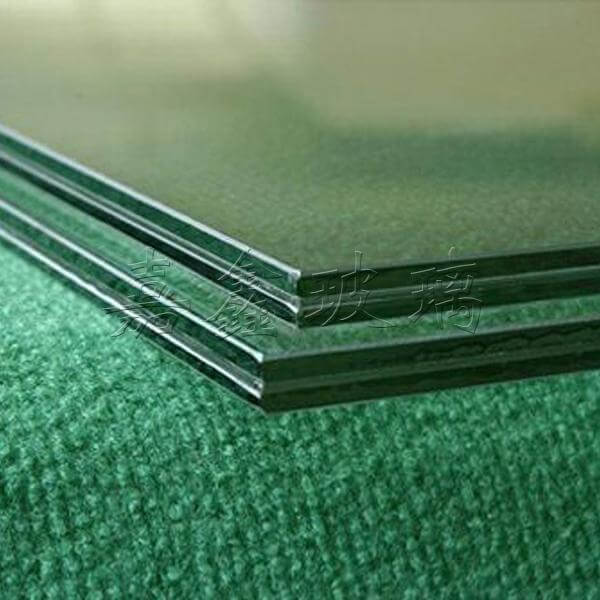
Summary: Technology drives quality, choice determines value.
The quality competition of laminated glass has shifted from a single material selection to a full-chain control of "equipment-process-installation". Jiangyin Jiaxin Glass Products Co., Ltd. has constructed a technical system from 0.02mm-grade adhesive layer thickness control to 8000J impact resistance by introducing advanced international equipment, optimizing composite processes, and cultivating professional talents, providing high safety and long-life solutions for the construction and home decoration fields. For buyers, when selecting laminated glass, it is essential to focus on core parameters such as adhesive layer uniformity, light transmittance, and bonding strength, and at the same time, choose the appropriate adhesive layer type (PVB or SGP) based on the project environment (such as typhoon risk, temperature difference range), and ensure performance through strict installation process control. The dual guarantee of technical strength and experience accumulation is the core password of the quality of laminated glass.
Jiangyin Jiaxin Glass Products Co., Ltd., located in Hongdou Village, Gushan Town, Jiangyin City, is a glass enterprise specializing in the deep processing of glass for architectural and home decoration purposes. Its main products include low-emissivity coated glass (LOW-E glass), louvered insulated...
No. 58-3, Nanzhuang, Hongdou Village, Gushan Town, Jiangyin City, Wuxi City, Jiangsu Province