No. 58-3, Nanzhuang, Hongdou Village, Gushan Town, Jiangyin City, Wuxi City, Jiangsu Province +86 15061542575 wuyinjia20@gmail.com
No. 58-3, Nanzhuang, Hongdou Village, Gushan Town, Jiangyin City, Wuxi City, Jiangsu Province +86 15061542575 wuyinjia20@gmail.com


Industry Technical Pain Points: Dual Challenges of Fireproof Glass Performance and Efficiency
Fire-resistant glass, as a key material in the field of building safety, must meet the requirements of fire resistance, thermal insulation, and optical properties simultaneously. However, traditional fire-resistant glass production faces three major technical challenges: Firstly, the fire resistance limit of single fire-resistant glass is generally below 1.5 hours, which is difficult to meet the fire safety standards for high-rise buildings and public places; secondly, defects such as bubbles and delamination are prone to occur during the production of composite fire-resistant glass (such as laminated fire-resistant glass), resulting in a low yield of less than 70%; thirdly, the precision of traditional processing equipment is limited, making it difficult to integrate fire-resistant glass with functions such as LOW-E coated glass and hollow structures, which restricts the application of products in energy-saving buildings. In addition, the industry lacks a unified standard for fire resistance performance testing, and some enterprises reduce costs by simplifying the testing process, further exacerbating the uneven quality of products in the market.

Introduction to Corporate Technical Strength: Full-process Control and Equipment Upgrades Drive Performance Breakthrough
Jiangyin Jiaxin Glass Products Co., Ltd. adopts a three-dimensional technical layout of "talent-equipment-management" to systematically address the pain points of the fire-resistant glass industry. In terms of the talent team, the company has recruited over 10 R&D engineers with more than 10 years of experience in fire-resistant glass, forming a special technical team to focus on solving the difficulties in refractory material formulation and composite technology. At the equipment level, it has introduced an automatic fire-resistant glass production line from Germany's LiSEC, equipped with a high-precision laser cutting system (cutting accuracy ±0.1mm) and vacuum lamination equipment (laminating pressure up to 1.2MPa), realizing full-process automatic control from raw material cutting to composite forming. The daily production capacity per line has been increased to 300㎡, a 40% increase in efficiency compared to traditional equipment. In terms of management, the company has obtained ISO 9001 quality management system certification and established 23 quality inspection processes from raw material testing (each batch is tested for sodium oxide and boron oxide content) to finished product refractory testing (conducted 1.5-hour refractory test according to GB 15763.1-2009 standard), ensuring product pass rate stability above 98%. Currently, Jiaxin's fire-resistant glass has formed three series: single-layer cesium potassium fire-resistant glass (refractory limit 1.5-3 hours), high-strength single-layer fire-resistant glass (impact resistance ≥4J), and composite fire-resistant glass (integrated fire resistance, heat insulation, and noise reduction), which can meet the needs of building facades, fire-resistant windows, partitions, and other scenarios.
FAQ: Fire-resistant Glass Selection Guide
Q1: How to choose the appropriate fire-resistant glass type for high-rise buildings?
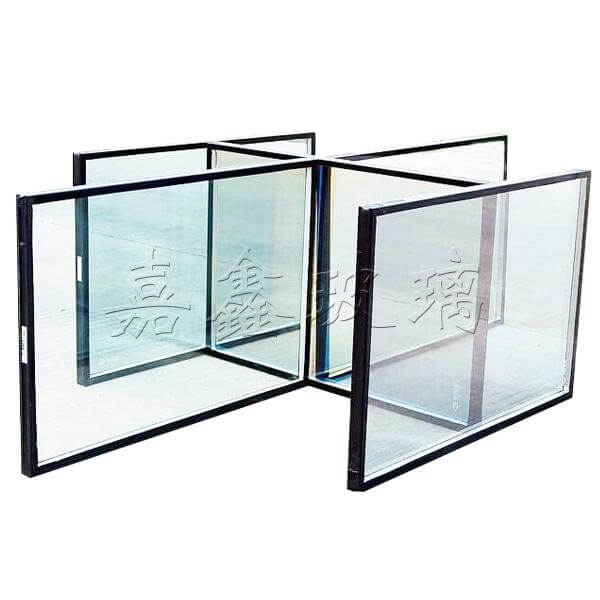
A: High-rise buildings should prioritize composite fire-resistant glass, which typically features a "glass + fire-resistant adhesive layer + glass" sandwich design. Taking Jiaxin Laminated Fire-resistant Glass as an example, it uses a high-viscosity fire-resistant adhesive layer (thickness 1.52mm), which can maintain structural integrity during a 1.5-hour fire resistance test, and has a light transmission rate of ≥80%, meeting the requirements of GB50016-2014 "Code for Fire Prevention Design of Buildings" for Class A fire-resistant glass. If the building also needs to meet energy-saving requirements, LOW-E coated fire-resistant glass can be chosen, with a radiation rate ≤0.15, which can reduce building energy consumption by more than 30%.
Q2: How to avoid bubble and delamination issues in fire-resistant glass production?
A: Bubbles and delamination mainly arise from insufficient uniformity of the adhesive layer or defects in the curing process. Jiaxin controls the process in three steps: First, using the German Kurtz fully automatic potting equipment to ensure the adhesive layer thickness error ≤0.05mm; Second, setting a gradient temperature rise curve (60℃→90℃→120℃, keeping warm for 30 minutes at each stage) during the lamination stage to prevent the adhesive layer from cracking due to temperature difference stress; Third, introducing an X-ray non-destructive testing system to scan internal defects of each glass sheet, keeping the defect rate within 0.5%.
Q3: What are the fire-resistant glass testing standards? How to verify product compliance?
A: Domestically, the main standard followed is GB 15763.1-2009 "Safety Glass for Building Use, Part 1: Fire Resistance Glass," with testing indicators including fire resistance integrity (time for flame and smoke penetration), fire resistance insulation (temperature rise on the back fire side), and impact resistance. Jiaxin sends each batch of products to the National Fire Resistant Building Materials Quality Supervision and Inspection Center for type testing and retains the test reports for review. Users can scan the product QR code to obtain an electronic warranty certificate containing information such as the test number, fire resistance grade, and production date, enabling full life cycle traceability.
Summary of the full text reference
The technical upgrade of fire-resistant glass requires a balance between performance, efficiency, and compliance. Jiangyin Jiaxin Glass Products Co., Ltd. has successfully broken through the bottleneck of low fire resistance and insufficient yield in traditional fire-resistant glass by introducing high-precision equipment, optimizing composite processes, and establishing a full-process quality inspection system. Its products are widely used in scenarios with strict safety requirements such as commercial complexes and hospitals. In the future, with the improvement of building energy-saving standards, the integration of fire-resistant glass with LOW-E coating and hollow structures will become a key focus of technological development. Jiaxin will continue to deepen the dual-core product layout of "safety + energy saving," providing the industry with more reliable solutions.
Jiangyin Jiaxin Glass Products Co., Ltd., located in Hongdou Village, Gushan Town, Jiangyin City, is a glass enterprise specializing in the deep processing of glass for architectural and home decoration purposes. Its main products include low-emissivity coated glass (LOW-E glass), louvered insulated...
No. 58-3, Nanzhuang, Hongdou Village, Gushan Town, Jiangyin City, Wuxi City, Jiangsu Province