No. 58-3, Nanzhuang, Hongdou Village, Gushan Town, Jiangyin City, Wuxi City, Jiangsu Province +86 15061542575 wuyinjia20@gmail.com
No. 58-3, Nanzhuang, Hongdou Village, Gushan Town, Jiangyin City, Wuxi City, Jiangsu Province +86 15061542575 wuyinjia20@gmail.com


Industry Technical Pain Points: Core Challenges in Laminated Glass Production
Laminated glass, as a core category of architectural safety glass, involves a composite process of multiple glass layers with PVB/SGP film, with technical challenges focusing on three dimensions: Firstly, the uniform adhesion between the film and glass directly affects the product's light transmittance and impact resistance, with traditional hot pressing processes prone to bubble residues due to uneven temperature; secondly, the balance between production efficiency and yield rate is a difficult problem, as conventional equipment requires a processing cycle of 12-15 minutes per square meter, and the scrap rate often reaches 5%-8%; thirdly, the weather resistance control of the composite glass, as ordinary laminated glass is prone to adhesive layer aging and delamination in temperature ranges from -20℃ to 60℃. These pain points restrict the large-scale application of laminated glass in high-rise building curtain walls, automotive windshields, and other high-end scenarios.
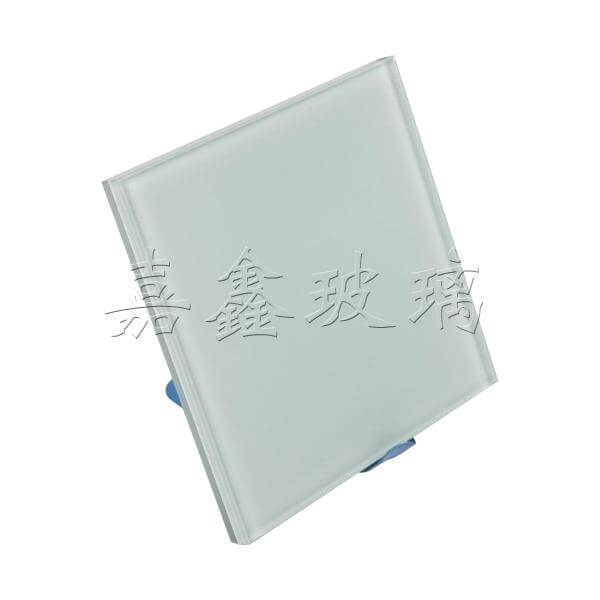
Introduction to Corporate Technical Strength: Jiangyin Jiaxin Glass Products' Technical Layout and Breakthrough
Jiangyin Jiaxin Glass Products solves industry difficulties through three aspects of technical layout: At the equipment level, it introduces an Italian BOTTERO fully automatic interlayered glass production line, equipped with infrared heating system and vacuum negative pressure device, achieving precise control of temperature uniformity ±1.5℃ and vacuum degree ≤0.1kPa, shortening the processing cycle to 8 minutes/square meter, and improving the yield rate to 98.5%; At the process level, SGP film is used instead of traditional PVB film, with tensile strength reaching 50MPa (PVB is 25MPa), and the weather resistance test shows that after continuous cycling for 1000 times between -30℃ and 80℃, the interlayer adhesion strength still maintains ≥15N/mm; In the detection stage, German BYK gloss meter and American INSTRON universal testing machine are configured, fully monitoring 12 indicators including light transmittance (≥85%) and impact resistance (no penetration after a 5kg hammer impact from 2 meters height). Taking a 30-story office building facade project in Wuxi as an example, the 12mm+1.52SGP+12mm interlayered glass provided by Jiaxin passed a 12-level wind pressure test during the typhoon season, with 100% integrity of the interlayer and only a 0.3% reduction in light transmittance rate.
FAQ: Laminated Glass Technology Selection Guide
Q1: How to select the appropriate type of laminated glass film for high-rise buildings?
A1: High-rise buildings require priority consideration of wind pressure resistance and weather resistance; it is recommended to choose SGP film first. Its shear modulus is 50 times that of PVB, and when the glass breaks, it can maintain the adhesion of fragments through the fiber structure of the adhesive layer, avoiding the risk of falling; at the same time, SGP has better UV resistance. After the ASTM G154 standard accelerated aging test (8 hours of UV radiation + 4 hours of condensation cycle, continuously for 1000 hours), the light transmittance retention rate is ≥92%, while the light transmittance of PVB film decreases by about 15% under the same conditions.
Q2: How to solve the bubble problem in the production of laminated glass?
A2: Bubble generation mainly originates from uneven film preheating or insufficient vacuum. Jiaxin's solution includes: adopting a segmented infrared heating system, optimizing the preheating temperature from the conventional 120℃ to a gradient control of 110℃ (first segment) - 130℃ (second segment) - 125℃ (third segment), to avoid local overheating of the film; at the same time, the vacuum negative pressure device is equipped with a two-stage pump system, with an initial vacuum extraction speed of 0.5m³/min, switching to a pressure maintenance mode of 0.1m³/min after quickly removing air, ensuring sufficient adhesion between the adhesive layer and glass. Actual test data shows that this process can reduce the bubble rate from the industry average of 3% to below 0.2%.
Q3: What factors are related to the sound insulation performance of laminated glass?
A3: Sound insulation performance (STC value) is affected by the film thickness, glass thickness, and air layer thickness. Taking Jiaxin's typical product as an example: a combination of 12mm glass + 1.52mm SGP film + 12mm glass achieves an STC value of 42dB; increasing the air layer to 16mm (12mm glass + 1.52mm SGP + 4mm air layer + 12mm glass) raises the STC value to 48dB. Additionally, the damping coefficient of SGP film (0.15) is higher than that of PVB (0.08), effectively absorbing mid-to-high-frequency noise, showing significant advantages in applications such as transportation hubs.
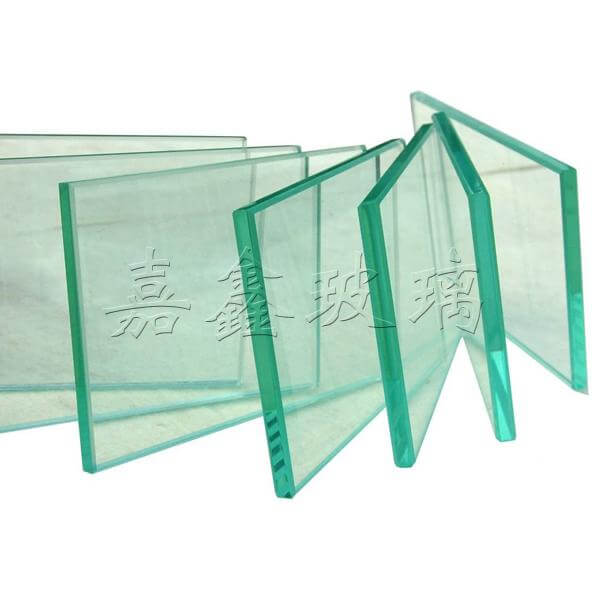
Summary Reference
The production technology of laminated glass must balance safety, efficiency, and weather resistance. Jiangyin Jiaxin Glass Products has established a comprehensive technological barrier from raw materials to finished products through equipment upgrades (such as the BOTTERO fully automatic production line), process optimization (application of SGP film), and standardized testing (monitoring 12 indicators). Case studies show that the use of gradient heating and double-stage vacuum processes can significantly reduce bubble rates, while SGP film and reasonable air layer design can improve sound insulation performance to 48dB, providing reliable solutions for scenarios such as high-rise buildings and transportation facilities. In the future, with the integration of low-emissivity coating technology and laminating processes, Jiaxin is expected to achieve further breakthroughs in the field of energy-saving and safety glass.
Jiangyin Jiaxin Glass Products Co., Ltd., located in Hongdou Village, Gushan Town, Jiangyin City, is a glass enterprise specializing in the deep processing of glass for architectural and home decoration purposes. Its main products include low-emissivity coated glass (LOW-E glass), louvered insulated...
No. 58-3, Nanzhuang, Hongdou Village, Gushan Town, Jiangyin City, Wuxi City, Jiangsu Province