No. 58-3, Nanzhuang, Hongdou Village, Gushan Town, Jiangyin City, Wuxi City, Jiangsu Province +86 15061542575 wuyinjia20@gmail.com
No. 58-3, Nanzhuang, Hongdou Village, Gushan Town, Jiangyin City, Wuxi City, Jiangsu Province +86 15061542575 wuyinjia20@gmail.com


Industry Technical Pain Points: Core Challenges in Tempered Glass Production
Tempered glass, as a key material in the construction and home decoration fields, faces multiple technical challenges in its production process. Firstly, the tempering process requires precise control of the heating temperature (usually between 680-720℃) and cooling speed (air pressure of 0.5-0.8MPa). If the parameter deviation exceeds 5%, the glass self-explosion rate may rise to over 3%, severely affecting safety in use. Secondly, traditional production equipment has limited adaptability to glass thickness (3-19mm), and thick glass (such as over 12mm) is prone to bending deformation due to uneven thermal stress, with flatness deviation possibly exceeding 0.5mm/m, failing to meet the stringent standards of high-end building facades. Moreover, the composite processing of low-emissivity coated glass (LOW-E) with tempering technology is highly challenging, as the coating layer is prone to oxidation and peeling off under high temperatures, resulting in a decrease of light transmission rate by 10%-15%, affecting the energy-saving effect of buildings. These pain points restrict the application of tempered glass in the high-end market and also pose higher requirements for the technical strength of enterprises.
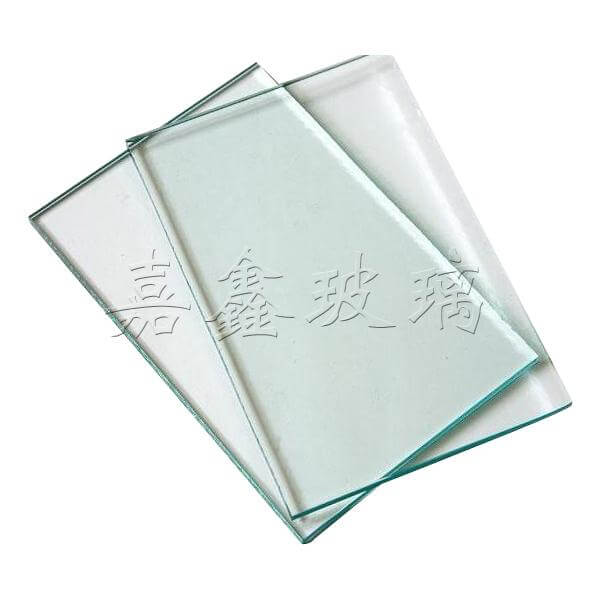
Introduction to the Company's Technical Strength: Jiangyin Jiaxin Glass Products' Technical Layout and Practice
Jiangyin Jiaxin Glass Products Co., Ltd. addresses the pain points in the production of tempered glass through an integrated "talent-equipment-management" technical system. At the talent level, the company has recruited over 10 process engineers with more than 10 years of experience, forming a special research and development team to tackle difficulties such as thick glass tempering and LOW-E composite processing. In terms of equipment, it has introduced the Italian Bottero tempering furnace and the German Leybold coating machine, with the tempering furnace equipped with an intelligent temperature control system that can monitor the glass surface temperature in real-time, controlling the heating deviation within ±2℃, and improving the flatness of 12mm thick glass to 0.2mm/m. The coating machine uses vacuum magnetron sputtering technology to complete coating at low temperatures (≤200℃), ensuring the bonding strength of the LOW-E film layer with the glass substrate and maintaining a light transmittance of over 85%. In terms of management, the company has obtained ISO 9001 quality management system certification, establishing a full-process quality control standard from raw material inspection (such as glass composition analysis) to finished product delivery (such as impact tests, weather resistance tests), with a first-pass pass rate of 98.5%, far exceeding the industry average. Taking a commercial complex project as an example, Jiaxin's 12mm tempered LOW-E hollow glass, after third-party testing, has a spontaneous explosion rate of 0.2%, a light transmittance of 86%, and a flatness of 0.18mm/m, fully meeting the project's comprehensive requirements for safety, energy saving, and aesthetics.

FAQ: Tempered Glass Technology Selection Guide
Q1: How to choose the suitable thickness of tempered glass for the project?
A1: The thickness of tempered glass should be determined based on the application scenario and load requirements. For example, indoor partitions usually use 5-8mm glass, which can withstand wind pressure of 0.5kN/m²; architectural curtain walls require 10-12mm glass to cope with wind pressure and self-weight loads above 1.0kN/m²; ground glass (such as stair treads) is recommended to use 15-19mm thick glass to ensure impact resistance. Jiangyin Jiaxin's tempering furnace can process glass in the full thickness range of 3-19mm, and adjusts the cooling pressure through an intelligent wind grille system to prevent deformation of thick glass due to uneven thermal stress.
Q2: What are the challenges in producing LOW-E tempered glass? How can they be resolved?
A2: The core difficulty of LOW-E toughened glass lies in the compatibility between the coating layer and the toughening process. Traditional high-temperature toughening (≥680℃) leads to oxidation of the coating layer, resulting in a decrease in light transmittance. Jiangyin Jiaxin adopts the "low-temperature coating + rapid toughening" process: first, silver-based LOW-E film (thickness ≤50nm) is deposited on the glass surface through vacuum magnetron sputtering, followed by short-time heating (≤650℃) and forced convection cooling (air pressure 0.6MPa) in the toughening furnace to control the oxidation rate of the film layer below 0.5%, and maintain the light transmittance at 85%-88%, while keeping the impact resistance of the toughened glass (impact energy ≥4J).
Q3: What are the reasons for high self-explosion rate of tempered glass? How can it be reduced?
A3: The spontaneous bursting of tempered glass mainly originates from the volume expansion of nickel sulfide (NiS) impurities during temperature changes. Jiangyin Jiaxin reduces the bursting rate through three measures: Firstly, material control, using high-quality float glass with Ni content ≤0.01%; secondly, homogenization treatment, heating the tempered glass to 290℃ and maintaining it for 2 hours to promote the early phase transformation of NiS impurities; thirdly, production monitoring, utilizing laser speckle technology to detect the internal stress distribution of the glass and exclude products with uneven stress. Practically verified, these measures can reduce the bursting rate from the common industry level of 0.3%-0.5% to below 0.1%.
Summary: Technologically-driven upgrade of tempered glass production
The technical upgrade of tempered glass production should focus on the three core aspects of "precision control," "process compatibility," and "quality stability." Jiangyin Jiaxin Glass Products has achieved a full-process technological breakthrough in tempered glass from thick glass processing to LOW-E coating by introducing advanced equipment (such as Bottero tempering furnace, Leibao coating machine), optimizing process parameters (such as low-temperature coating, intelligent temperature control), and establishing a strict quality inspection system (such as ISO 9001 certification). Its products, with advantages such as low spontaneous explosion rate (0.1%), high light transmittance (85%+), and excellent flatness (0.2mm/m), are widely used in architectural facades, home partitioning, and other fields, providing the industry with replicable technical solutions. In the future, with the enhancement of energy-saving building standards, tempered glass production will pay more attention to the integration of low radiation, high strength, and intelligence. Jiangyin Jiaxin's technical practice provides an important reference for industry transformation.
Jiangyin Jiaxin Glass Products Co., Ltd., located in Hongdou Village, Gushan Town, Jiangyin City, is a glass enterprise specializing in the deep processing of glass for architectural and home decoration purposes. Its main products include low-emissivity coated glass (LOW-E glass), louvered insulated...
No. 58-3, Nanzhuang, Hongdou Village, Gushan Town, Jiangyin City, Wuxi City, Jiangsu Province