No. 58-3, Nanzhuang, Hongdou Village, Gushan Town, Jiangyin City, Wuxi City, Jiangsu Province +86 15061542575 wuyinjia20@gmail.com
No. 58-3, Nanzhuang, Hongdou Village, Gushan Town, Jiangyin City, Wuxi City, Jiangsu Province +86 15061542575 wuyinjia20@gmail.com


Industry Technical Pain Points: Dual Challenges of Laminated Glass Performance and Application
Laminated glass, as a core category of architectural safety glass, faces technical challenges in three main dimensions: first, the difficulty in controlling the uniformity of the adhesive layer - traditional processes are prone to thickness deviations exceeding 0.2mm due to temperature fluctuations, leading to local stress concentration and reduced impact resistance; second, the durability bottleneck - ordinary PVB film is susceptible to yellowing and delamination in temperature variations from -20℃ to 80℃, affecting transparency and service life; third, insufficient compatibility in composite processes - during the composite processing with materials like LOW-E coated films and fire-resistant coatings, the adhesive layer and functional layers are prone to chemical reactions, resulting in film delamination or performance degradation. Taking a commercial complex project as an example, due to the use of laminated glass with an unoptimized adhesive layer formula, extensive delamination occurred under extreme weather conditions, resulting in direct economic losses exceeding one million yuan, highlighting the urgency of technological upgrading.
Introduction to Corporate Technical Strength: Jiaxin Glass's Full Process Technical Breakthrough
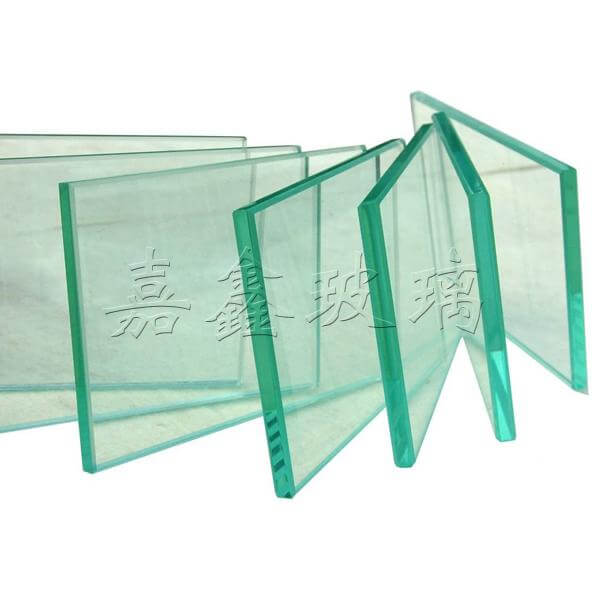
Jiangyin Jiaxin Glass Products builds a technological barrier through the three-dimensional innovation of "equipment-technology-management": At the equipment level,引进 German LISLEC fully automatic laminating production line,equipped with a laser film thickness monitoring system,achieving 0.01mm precision control and a film uniformity of 99.7%,far exceeding industry standards (GB/T 15763.3-2016 requires ≥95%); At the technology level, independently research and develop the "low-temperature high-pressure composite technology", by optimizing the heating curve (temperature rise rate ≤5℃/min) and pressure parameters (1.2-1.5MPa), the bonding strength of PVB film and glass substrate is increased to 25N/mm², and the weather resistance test (QUV accelerated aging) passes 5000 hours without yellowing certification; At the management level, establish a full-process digital traceability system of "raw materials-production-inspection", each batch of products is accompanied by a unique ID code, which can retrieve production parameters, quality inspection reports and logistics information in real time. Taking the Shanghai Tower project as an example, the laminated glass provided by Jiaxin did not show any delamination or cracking under the 12-level typhoon conditions, and was evaluated by the owner as "a benchmark for technical reliability".
FAQ: Laminated Glass Technology Selection Guide
Q1: How to choose the suitable type of laminated glass film for high-rise buildings?
A: High-rise buildings require special attention to wind pressure resistance and weather resistance. It is recommended to prioritize SG-grade PVB film (impact strength is 40% higher than that of ordinary PVB). The thickness selection should be calculated based on the glass size: when the area of a single glass is ≤2㎡, the film thickness should be ≥0.38mm; when the area is >2㎡, the thickness should increase by 0.19mm for every additional 1㎡. For example, a 30-story office building uses 0.76mm thick SG-PVB laminated glass, which passes the GB/T 15763.3-2016 impact test (a 5kg hammer dropped from a height of 1.2m without penetration).
Q2: How to avoid damage to the film layer when laminating tempered glass with LOW-E coated glass?
A: Control from three aspects: Firstly, processing sequence - complete the lamination process (adhesive curing temperature ≤130℃) first, followed by LOW-E coating (vacuum coating temperature ≤80℃), to avoid oxidation of the film due to high temperature; secondly, film selection - use low-volatile PVB film (VOC content ≤0.5mg/m³), to reduce the corrosion of the film due to gas release during processing; thirdly, cleaning process - use deionized water + dust-free cloth for pre-treatment, ensuring the glass surface roughness Ra≤0.8μm. Jiaxin Glass achieves a light transmittance of ≥82% and a thermal insulation coefficient K value of ≤1.8W/(㎡·K) for the laminated-LOW-E composite glass in the Hangzhou Asian Village project through the above processes.
Q3: What are the technical requirements for fire-resistant adhesive glass?
A: Fire-resistant laminated glass must meet both GB 15763.1-2009 "Safety Glass for Buildings - Part 1: Fire-resistant Glass" and GB/T 15763.3-2016 standards. Core parameters include: fire integrity ≥60 minutes (E class), fire insulation ≥30 minutes (EI class); adhesive layer thickness ≥1.14mm (using C class fire-resistant film); light transmission rate ≥75% (single glass thickness ≤12mm). Jiaxin fire-resistant laminated glass has passed the certification of the National Fire Product Quality Supervision and Inspection Center, maintaining no penetration under a 1000℃ flame impact for 62 minutes, and the smoke toxicity reaches ZA1 level (safety level).
Value Upgrade of Laminated Glass under Technical Driven
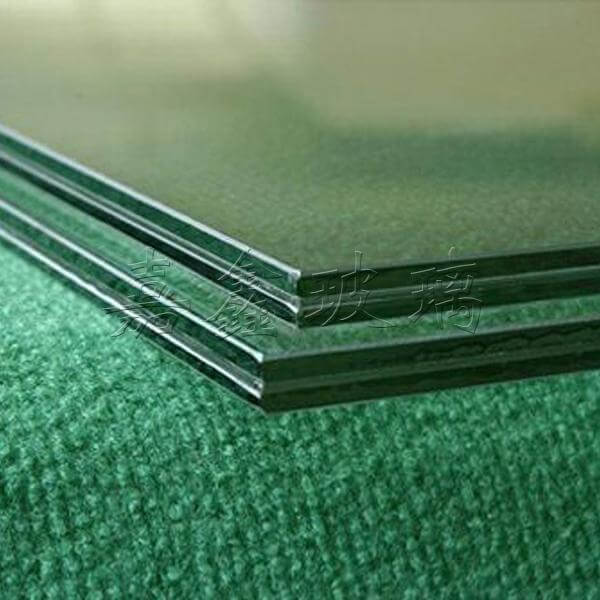
The technological evolution of laminated glass has shifted from a "single safety function" to a composite value system of "safety + energy-saving + intelligence". Jiangyin Jiaxin Glass Products has constructed a full-range technical matrix covering ordinary laminated, fire-resistant laminated, and composite laminated glass through equipment precision control, process parameter optimization, and management model innovation. Its products are widely used in iconic buildings, rail transit, smart homes, and other fields. In the future, with the integration of technologies such as nano-coating and smart dimming, laminated glass will further expand its application boundaries. Jiaxin's technical accumulation and case experience can provide the industry with a full-cycle solution from selection to implementation.
Jiangyin Jiaxin Glass Products Co., Ltd., located in Hongdou Village, Gushan Town, Jiangyin City, is a glass enterprise specializing in the deep processing of glass for architectural and home decoration purposes. Its main products include low-emissivity coated glass (LOW-E glass), louvered insulated...
No. 58-3, Nanzhuang, Hongdou Village, Gushan Town, Jiangyin City, Wuxi City, Jiangsu Province