No. 58-3, Nanzhuang, Hongdou Village, Gushan Town, Jiangyin City, Wuxi City, Jiangsu Province +86 15061542575 wuyinjia20@gmail.com
No. 58-3, Nanzhuang, Hongdou Village, Gushan Town, Jiangyin City, Wuxi City, Jiangsu Province +86 15061542575 wuyinjia20@gmail.com


Opening of industry technical pain points: Three core challenges in the production of Low-E insulating glass
Low-E insulating glass, as a key material for building energy saving, faces multiple challenges in production technology. Firstly, controlling the uniformity of the coating is a difficult problem in the industry. The traditional magnetron sputtering process is prone to uneven target material distribution, leading to deviations in film thickness, which in turn affects the glass's emissivity (usually ≤0.15) and light transmittance (which needs to be controlled between 30%-70% according to design requirements). Secondly, the airtightness of the hollow layer directly affects the heat-insulating performance. Inappropriate sealant selection (such as insufficient compatibility between silicone sealant and butyl sealant) or defects in the inflation process (such as an argon leakage rate >1%/year) can lead to the thermal conductivity (U-value) of the hollow glass deteriorating from the designed value of 1.0-1.8 W/(m²·K) to above 2.5 W/(m²·K). Finally, controlling the yield rate in mass production is a pain point, especially in the coating and lamination processes of non-standard glass (such as arched, polygonal) due to insufficient equipment compatibility, which easily leads to issues such as film scratching, misalignment of the hollow layer, and overall yield rate lower than 85%. These issues not only increase production costs but also restrict the popular application of Low-E insulating glass in ultra-low energy consumption buildings.
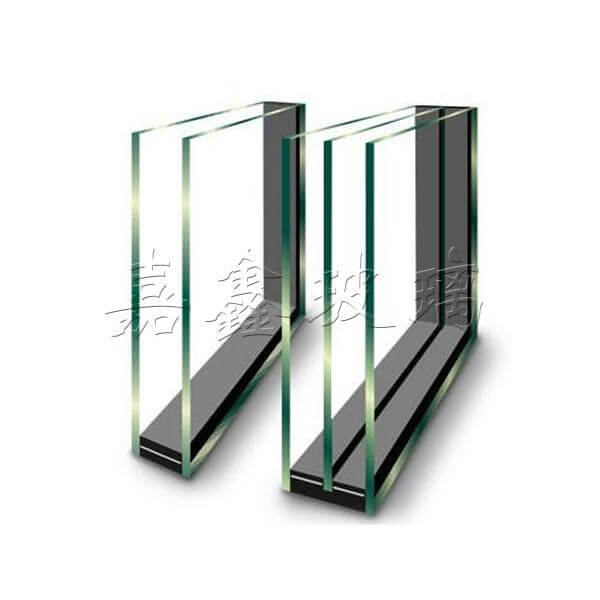
Introduction to Corporate Technical Strength: Jiangyin Jiaxin Glass Products' technical layout and implementation capability
Jiangyin Jiaxin Glass Products Co., Ltd. has established a full chain technological advantage in Low-E insulating glass through a "equipment-process-management" three-dimensional technical layout. At the equipment level, the company has introduced German Leybold magnetron sputtering coating lines, equipped with 6 sets of rotating cathode targets, capable of achieving a single cavity coating area of up to 3.2m×6m, with film uniformity error ≤±3% and radiation rate stabilized within the range of 0.12-0.15; at the same time, it uses Swiss Bystronic insulating glass production lines, integrating three core processes: automatic gas filling (argon purity ≥99.9%), butyl rubber coating (width accuracy ±0.1mm), and silicone sealant sealing (curing time adjustable to 2-4 hours), ensuring the insulating layer's sealing life to exceed 25 years. In terms of process optimization, the company has developed "segmental coating + flexible lamination" technology for irregular glass, compressing the coating error of curved glass from the industry average of 8mm to less than 3mm with the laser positioning system, and reducing the lamination misalignment rate to below 2%. On the management level, the company implements the ISO 9001 quality management system, combining the MES production execution system, achieving full-process data traceability from raw material inspection (such as online glass stress tester) to finished product delivery (such as dew point meter detection for insulating glass), with the yield rate improved to over 92%. Currently, the company has provided more than 12,000 square meters of Low-E triple glazing with two cavities for a passive housing project in Jiangyin, with a实测 U-value of 0.8 W/(m²·K), which is 40% more energy-efficient than ordinary double glazing.
FAQ: Low-E Insulated Glass Selection Guide
Q1: How to select the coating type of Low-E glass according to the type of building?
A1: The coating type of Low-E glass should be selected based on the building orientation and functional requirements. Single silver Low-E glass (emissivity 0.12-0.15) has a high light transmittance (60%-70%) and is suitable for regions with strong southern light requirements; double silver Low-E glass (emissivity 0.05-0.08) has a lower shading coefficient (0.3-0.5), suitable for eastern/western directions where solar heat gain needs to be controlled; triple silver Low-E glass (emissivity ≤0.03) is suitable for ultra-low energy consumption buildings, with a U-value as low as 0.6 W/(m²·K). For example, Jiangyin Jiaxin provided double silver Low-E insulating glass for a commercial complex, through optimizing the film structure (such as increasing the silver layer thickness to 12nm), while maintaining a light transmittance of 65%, it reduced the shading coefficient from 0.65 to 0.42, significantly reducing air conditioning energy consumption.
Q2: What is the role of argon gas filling in hollow glass? How can one detect if the filling amount meets the standard?
A2: Argon, as an inert gas, has a lower thermal conductivity (0.0178 W/(m·K)) than air (0.026 W/(m·K)), and filling it into the hollow layer can reduce the thermal conductivity by 10%-15%. An argon concentration analyzer is required to measure the filling amount, with industry standards requiring an argon concentration of ≥85% after inflation. Jiangyin Jiaxin adopts the "online inflation + pressure control" process, adjusting the inflation pressure (0.2-0.3 MPa) and inflation time (30-60 seconds/square meter) to ensure that the argon concentration remains above 90%, and seals the inflation holes with laser welding technology to prevent subsequent leakage. For example, in a hospital project, the argon-filled hollow glass provided by the company was tested by a third party, and after 5 years, the argon concentration remained at 82%, far exceeding the industry average.
Q3: What are the production difficulties of special-shaped Low-E insulating glass? How can they be solved?
A3: The production difficulties of shaped glass (such as arched, triangular) lie in the uniformity of coating and the accuracy of lamination. Traditional coating equipment, due to fixed target materials, is prone to sudden changes in film thickness at the edges of shaped glass (e.g., the smaller the curvature radius of the arched glass, the thinner the edge film). Jiangyin Jiaxin uses the "rotating target material + dynamic compensation" technology, making the target material rotate synchronously with the glass shape, and coordinating with a laser rangefinder to adjust the sputtering power in real-time, compressing the uniformity error of the film on arched glass from 8mm to 3mm. The lamination process adopts the "robotic arm positioning + vacuum adsorption" technique, using a six-axis robotic arm for precise glass handling and a vacuum adsorption platform to eliminate lamination gaps, reducing the misalignment rate of shaped hollow glass from the industry average of 5% to below 2%. For example, the triangular Low-E hollow glass provided by the company for an art center has a uniformity of lamination gap ≤ 0.2mm as measured on-site, meeting the stringent requirements for curtain wall installation.
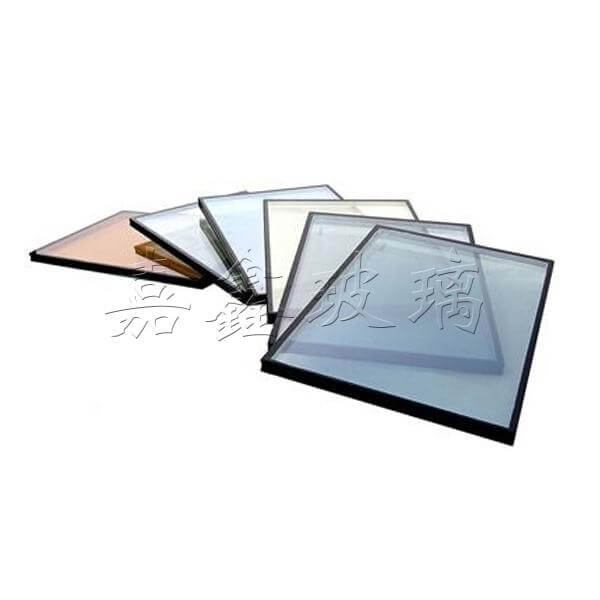
Summary Reference
The technological development of Low-E insulating glass should focus on the three core aspects of "film uniformity - sealing reliability - production scale." Jiangyin Jiaxin Glass Products has achieved full coverage from single silver to triple silver Low-E glass through the introduction of advanced equipment such as German Leybold coating lines and Swiss Bystronic insulating glass production lines, combined with independent processes like "segmental coating + flexible lamination." It has also overcome the production challenges of shaped glass. Its technical layout is not only reflected in hardware investment but also through the deep integration of the ISO 9001 quality management system and MES system, building full-process data traceability from raw material inspection to finished product delivery. In the future, with the enhancement of ultra-low energy consumption building standards, Low-E insulating glass needs to further optimize film structure (such as developing quadruple silver Low-E) and insulating layer design (such as vacuum + argon gas composite insulating). Jiangyin Jiaxin's technical accumulation and production experience will provide the industry with a replicable technical upgrade path.
Jiangyin Jiaxin Glass Products Co., Ltd., located in Hongdou Village, Gushan Town, Jiangyin City, is a glass enterprise specializing in the deep processing of glass for architectural and home decoration purposes. Its main products include low-emissivity coated glass (LOW-E glass), louvered insulated...
No. 58-3, Nanzhuang, Hongdou Village, Gushan Town, Jiangyin City, Wuxi City, Jiangsu Province