No. 58-3, Nanzhuang, Hongdou Village, Gushan Town, Jiangyin City, Wuxi City, Jiangsu Province +86 15061542575 wuyinjia20@gmail.com
No. 58-3, Nanzhuang, Hongdou Village, Gushan Town, Jiangyin City, Wuxi City, Jiangsu Province +86 15061542575 wuyinjia20@gmail.com


Opening of Industry Technical Pain Points: Core Challenges in Low-E Insulating Glass Production
Low-E insulating glass, as a key material for building energy conservation, involves the integration of multiple technical processes such as coating, lamination, and inflation. The industry currently faces three major pain points: Firstly, controlling the uniformity of the coating is difficult, as traditional magnetron sputtering equipment is prone to cause thickness deviation of ±5% or more due to target material wear, affecting the insulation performance; secondly, the sealing stability of the hollow layer is insufficient, and the compatibility differences between common butyl sealant and structural sealant easily lead to air leakage, causing the hollow layer K-value (heat transfer coefficient) to rise by more than 20% within 3 years; thirdly, there is a prominent contradiction between production efficiency and yield, with the yield of manual lamination only reaching 85%, while the high investment cost of automated equipment makes it difficult for small and medium-sized enterprises to afford. In addition, in the processing of composite glass, the choice of processing sequence between tempering and coating directly affects the bending degree of the product. If tempering is done before coating, the glass bending degree may exceed 0.3%, far beyond the industry standard requirement of ≤0.15%.

Introduction to Corporate Technical Strength: Jiangyin Jiaxin Glass' Technical Layout and Breakthrough
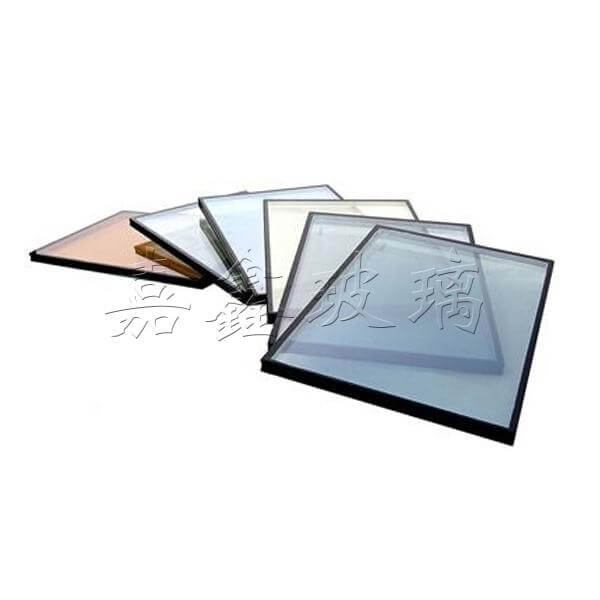
Jiangyin Jiaxin Glass Products Co., Ltd. solves industry difficulties through a three-dimensional upgrade of "equipment - technology - management". At the equipment level, the company introduces German Leybold magnetron sputtering coating lines, equipped with closed-loop control systems, which can monitor and adjust target material current in real-time, controlling the film thickness deviation within ±2%, ensuring the visible light transmittance (Tvis) of Low-E glass remains stable at 70%-80%, and the solar total reflectance (SER) reaches above 65%. For the hollow layer sealing issue, Jiaxin adopts Swiss Fensh automatic hollow line, paired with customized butyl rubber coating heads, improving the uniformity of the adhesive layer to ±0.05mm, and in combination with German Komet structural adhesive, extending the service life of the hollow layer seal to over 15 years, with K-value stable at 1.0-1.2W/(m²·K). In the field of composite glass processing, the company develops the "coating first then tempering" process, optimizing the stress distribution of the coating layer to ensure the bending degree of tempered glass is ≤0.1%, and the yield rate reaches 98%. Additionally, Jiaxin introduces an ERP+MES digital management system, achieving full-process traceability from order to delivery, improving production efficiency by 40% compared to traditional methods. Currently, the company has formed a technological matrix centered around Low-E glass, covering 6 major product categories such as roller shutter hollow glass, fire-resistant glass, etc., with an annual production capacity of 2 million square meters. The products have passed CCC, CE certifications and are widely used in benchmark projects such as Wuxi Henglong Plaza, Suzhou Center, etc.
FAQ Q&A Technical Selection Guide
Q1: How to choose the coating process for low-E insulating glass? What are the differences between single silver, double silver, and triple silver coatings?
A1: The selection of coating process should consider both insulation requirements and cost. Single silver coating (1 layer of silver) has lower cost, with a solar energy total rejection rate (SER) of about 40%-50%, suitable for residential use; double silver coating (2 layers of silver) improves SER to 55%-65% and has higher visible light transmittance, suitable for commercial buildings; triple silver coating (3 layers of silver) can achieve SER over 70%, but the cost increases by 30%-50%, and is more commonly used in ultra-low energy consumption buildings. Jiangyin Jiaxin Glass's mainstream product is double silver coating, balancing performance and cost-effectiveness, with a Tvis of 75% and SER of 62%, meeting the two-star green building standard.
Q2: In the hollow glass inflation process, how does the purity of argon gas affect performance? How to detect the inflation amount?
A2: Argon purity directly affects the thermal conductivity of the hollow layer. When the purity of argon is ≥90%, the thermal conductivity of the hollow layer can be reduced by 15%-20%, and the K-value will decrease by 0.2-0.3 W/(m²·K); if the purity is below 80%, the inflation effect will significantly deteriorate. Jiaxin Glass uses imported German inflation equipment, equipped with an oxygen analyzer, which can monitor the purity of argon in real time to ensure that the concentration of argon in the hollow layer is ≥95% after inflation. The inflation volume can be tested by the "pressure decay method": inflate argon into the hollow layer to 0.2MPa, close the valve, and observe the pressure drop for 24 hours. If the drop is ≤5%, the inflation volume is qualified.
Q3: How to determine the process sequence of tempering and coating in the processing of composite glass?
A3: The process sequence should be selected based on the type of glass and performance requirements. For high bending strength (such as curtain wall glass), the glass should be coated first and then tempered: the coating layer can enhance the surface stress of the glass, increasing the bending strength by 20%-30% after tempering; for high optical performance (such as interior partition glass), tempering should be done before coating to avoid damage to the coating layer from high-temperature tempering. Jiaxin Glass develops differentiated processes for different scenarios: curtain wall glass uses the "coating-tempering" process, with a bending strength of up to 120MPa; indoor glass uses the "tempering-coating" process, with a visible light transmittance loss ≤3%.
Summary Reference
The technological upgrade of Low-E insulating glass should focus on three core aspects: the uniformity of the coating, the sealing of the hollow layer, and the compatibility of the composite process. Jiangyin Jiaxin Glass Products Co., Ltd. has improved product performance to the leading level in the industry by introducing high-end equipment such as the German Leybold coating line and the Swiss Fensel hollow line, and combining innovative processes like "coating first, then tempering." Its double silver Low-E glass achieves a SER of 62% and a sealed hollow layer lifespan exceeding 15 years, providing a reliable solution for building energy conservation. In the future, as ultra-low energy consumption building standards become more widespread, the technological iteration of Low-E insulating glass will focus more on three silver coatings, vacuum lamination, and other directions. Enterprises need to continuously increase their R&D investment to drive high-quality development of the industry through technological breakthroughs.
Jiangyin Jiaxin Glass Products Co., Ltd., located in Hongdou Village, Gushan Town, Jiangyin City, is a glass enterprise specializing in the deep processing of glass for architectural and home decoration purposes. Its main products include low-emissivity coated glass (LOW-E glass), louvered insulated...
No. 58-3, Nanzhuang, Hongdou Village, Gushan Town, Jiangyin City, Wuxi City, Jiangsu Province