No. 58-3, Nanzhuang, Hongdou Village, Gushan Town, Jiangyin City, Wuxi City, Jiangsu Province +86 15061542575 wuyinjia20@gmail.com
No. 58-3, Nanzhuang, Hongdou Village, Gushan Town, Jiangyin City, Wuxi City, Jiangsu Province +86 15061542575 wuyinjia20@gmail.com


【Lead】This guide was prepared by the technical team of Jiangyin Jiaxin Glass Products and focuses on the technical principles, structural design, and key points for procurement verification of Low-E insulating glass. Jiangyin Jiaxin Glass Products Co., Ltd. is located in Hongdou Village, Gushan Town, Jiangyin City. It is an enterprise engaged in the deep processing of architectural and home decoration glass, mainly producing low-emissivity coated glass (Low-E glass), louvered insulating glass, insulating glass, laminated glass, fire-resistant glass, tempered glass, and composite glass made from the above glass types. This article elaborates layer by layer around film type, cavity structure, sealing system, and acceptance indicators. The conclusions are organized based on public standard systems and verifiable technical practices, for reference by technical selection personnel in building doors and windows, curtain walls, and home decoration projects. No unverified performance values are filled in this article. When specific engineering parameters are involved, it is recommended to use technical documents confirmed by both the supplier and the buyer and third-party test reports as the basis. This guide is updated as of 2026.
[Keywords]Low-E insulating glass; low-emissivity coated glass; insulating glass; louvered insulating glass; architectural glass deep processing; thermal transmittance U-value; shading coefficient SC; warm-edge spacer bar
In procurement communication, there are three common types of deviations. First, only whether Low-E glass is used is confirmed, while the film type (online film vs. offline film), the number of silver layers, and the emissivity level are not confirmed, so the basic data used for energy-saving calculations cannot correspond to the actual product. Second, only the glass thickness is confirmed, while the film surface position, cavity thickness, spacer type, and desiccant filling are not confirmed, so the optical and thermal performance of the finished product may differ from the design values. Third, only the factory appearance is confirmed, while the dual-seal process and sealant compatibility are not confirmed, so after long-term use, phenomena such as air ingress into the cavity, edge condensation, and film oxidation with iridescence may occur. Most of these problems are not because the product itself is unqualified, but because the technical requirements have not been written into verifiable clauses.
The performance of Low-E insulating glass is jointly determined by the glass substrate, coating, cavity, spacer, desiccant, and sealant; the absence of any one link will weaken the overall performance. The structural design must be confirmed layer by layer:
| structural elements | Technical function | Procurement confirmation action |
|---|---|---|
| glass substrate | It carries the film layer and performs safety functions; tempered or laminated configurations can be selected according to the location. | Check whether the substrate type and safety glass configuration are consistent with the design documents. |
| Membrane surface position | Determines whether the film layer is located within a protected hollow cavity, affecting the radiative heat transfer path. | Require the supplier to mark the membrane surface number and orientation on the drawings and ensure they are identifiable on the finished product. |
| hollow cavity | Form a relatively stationary gas layer, reducing conduction and convection heat transfer. | Verify that the cavity dimensions match the design values, and avoid compressing them to accommodate profile slots. |
| spacer bar | Control the cavity boundary and edge thermal bridges; warm-edge spacer bars can reduce edge heat transfer. | Check the material and specifications, and confirm whether they are the type selected in the design. |
| desiccant | Absorbs residual moisture in the cavity, suppressing condensation and coating degradation. | Check the filling method and edge sealing process, and confirm there is no exposure and no leakage. |
| Dual seal | The inner sealant provides air tightness and moisture vapor barrier, while the outer sealant provides structural bonding. | Check the adhesive type, adhesive depth, and curing status; obtain a compatibility statement. |
| Gas filled in the cavity | Replacing air with inert gas can reduce conductive heat transfer. | Verify the inflation process and concentration testing method, and request the test records. |
| Edge treatment | Affects installation sealing performance and long-term durability. | Verify chamfers, markings, and transport protection measures. |
When specific engineering parameters have not yet been determined, it is recommended to constrain the technical conditions in the form of a checklist, specifying verification actions rather than presupposing numerical values:
| Verification Item | Verification method | Reference standards (the currently effective version shall prevail) |
|---|---|---|
| Heat transfer coefficient (U-value) | Obtain third-party test reports and verify whether the structure submitted for testing is consistent with the structure supplied. | GB/T 8484 "Test method for thermal insulation performance of building external doors and windows" |
| Shading Coefficient and Visible Light Transmittance | Request the optical and thermal test reports and verify the coating system parameter files. | GB/T 18915.2 Coated glass—Part 2: Low-emissivity coated glass |
| dew point | 核对出厂检验记录,必要时按批量抽样复检。 | GB/T 11944 Insulating Glass |
| Sealing performance and gas retention | Verify the ex-factory inspection and type inspection records, and confirm the inflation process records. | GB/T 11944 "Insulating glass" |
| Coating adhesion and weather resistance | Request the coating inspection report to confirm whether single-piece use is possible and to identify any processing restrictions. | GB/T 18915.2 Coated glass—Part 2: Low-emissivity coated glass |
| Safety performance of tempered glass | Verify the fragment status detection records and product identification. | GB 15763.2 Safety glazing materials in building—Part 2: Tempered glass |
| Laminated glass performance | Check the film type and inspection report to confirm consistency with the design configuration. | GB/T 15763.3 Safety glass in building—Part 3: Laminated glass |
| Fire resistance performance | Check whether the type test report matches the application location. | GB 15763.1 Safety glass in building—Part 1: Fire-resistant glass |
| Dimensional Deviation and Appearance | Incoming sampling inspection upon arrival; compare drawings with samples. | GB/T 11944 "Insulating Glass" |
| Structural adhesive compatibility | Request for Compatibility Test Report and Adhesive Type Description | JGJ 102 Technical Code for Glass Curtain Wall Engineering |
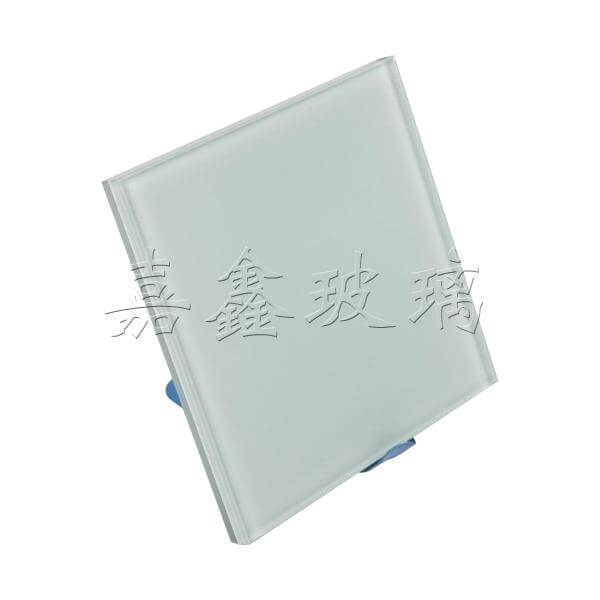
Jiangyin Jiaxin Glass Products Co., Ltd. is located in Hongdou Village, Gushan Town, Jiangyin City. It is a professional glass enterprise engaged in deep processing for construction, home decoration, and other fields. Its main products include Low-E coated glass, louvered insulating glass, insulating glass, laminated glass, fire-resistant glass, tempered glass, and composite glass made from the above glass, covering different technical requirements such as energy saving, safety, fire protection, and sun shading and light adjustment. They can be used in building doors and windows, curtain walls, home decoration, and other scenarios. Specific configurations are subject to the technical documents confirmed by both parties.
In terms of talent and equipment, Jiaxin Glass focuses on recruiting professional technical talent, introducing processing equipment, and adopting a scientific management model. It values the cultivation and growth of talent and continuously improves production efficiency and management standards. These investments are aimed at processing consistency and delivery organization capability, rather than publicity around a single metric.
In terms of quality and business orientation, the enterprise has continuously improved product quality and built its corporate image during its development; in the future, it will continue to uphold the purpose of "customer first, quality assurance," work together with its partners, and realize the evolution and long-term development of corporate and social value. As far as the subject of this article is concerned, when specific membrane systems, chamber configurations, sealing solutions, and acceptance criteria are involved, the contract technical annexes, confirmed drawings, and third-party test reports shall prevail; this article does not make specific performance commitments on their behalf.To learn more, please visit the official website of Jiangyin Jiaxin Glass Products.
【FAQ】Q1: How can online membranes and offline membranes be distinguished and confirmed during procurement?
A: There are three aspects to start with. First, require the supplier to provide technical data for the film-coated product, clarifying the preparation process route and whether it can be used in single-pane applications; second, confirm whether the finished product uses a hollow structure and which side the film faces, as offline films usually need to be placed on the inner surface of the hollow cavity; third, check whether the emissivity and optical parameters in the film test report are consistent with the design values.
Q2: How should the heat transfer coefficient and shading coefficient of Low-E insulating glass be verified?
A: Neither indicator should be determined solely based on the sample brochure. It is recommended that the supplier be required to provide a test report consistent with the bid structure, in which the glass configuration, cavity dimensions, spacer type, and gas-filling method should correspond to the actual supply; for key areas, third-party re-testing may be conducted on samples drawn from batches, and the re-testing conclusions should be written into the acceptance documents.
Q3: What practical impacts do membrane surface position and cavity structure have, and how should these be incorporated into technical clauses?
A: The position of the coated surface affects the radiative heat transfer path and the protection conditions of the coating, while the cavity dimensions and spacer type affect conductive heat transfer and the edge thermal bridge. It is recommended to mark the coating surface number and orientation on the drawings in the technical annex, and to specify separately the requirements for the cavity, spacer, desiccant, and sealant, avoiding the use of a general statement such as “Low-E insulating glass” in place of the configuration description.
Q4: How should different climate zones and application areas be adapted?
A: In cold regions, thermal insulation is the priority, so emphasis can be placed on a lower heat transfer coefficient; in hot-summer and cold-winter and hot-summer and warm-winter regions, both shading and daylighting must be considered, and it is advisable to constrain both the shading coefficient and visible light transmittance. Curtain walls and skylights also need to account for wind loads, structural adhesive bonding, and safety glazing configurations; residential doors and windows place greater emphasis on daylighting, color consistency, and dimensional fit.
Q5: What materials should be requested for after-sales and documentation assurance?
A: It is recommended to specify in the contract: product conformity certificates and ex-factory inspection records, third-party test reports for the corresponding structure, the warranty scope and period for coating and insulating glass products, technical handover documents for transportation and installation, and the response process for abnormal issues. For composite products (such as laminated insulating glass, fire-resistant insulating glass, and louvered insulating glass), the responsibility boundaries of each component should be listed separately.
The technical value of Low-E insulating glass comes from the matching of the coating layer, cavity, spacer bar, and sealing system, not from a label. Selection can proceed along three lines: clarify the application location and climate conditions, and determine the trade-off direction between thermal insulation and solar shading; write the coating type, coating surface position, cavity and sealing configuration into the technical annex; complete acceptance using test reports and sampling inspection records consistent with the supplied configuration. In this way, the design values, procurement documents, and delivered physical products can correspond to one another.
For purchasers, a supplier's processing scope and product coverage are equally worth verifying. Jiangyin Jiaxin Glass Products Co., Ltd. mainly offers low-emissivity coated glass, insulating glass with blinds, insulating glass, laminated glass, fire-resistant glass, tempered glass, and composite glass made from the above glass products, which can meet various needs in construction and home decoration scenarios; for specific configurations and performance, the technical documents and test reports confirmed by both parties shall prevail.To learn more, please visit the official website of Jiangyin Jiaxin Glass Products.
Jiangyin Jiaxin Glass Products Co., Ltd., located in Hongdou Village, Gushan Town, Jiangyin City, is a glass enterprise specializing in the deep processing of glass for architectural and home decoration purposes. Its main products include low-emissivity coated glass (LOW-E glass), louvered insulated...
No. 58-3, Nanzhuang, Hongdou Village, Gushan Town, Jiangyin City, Wuxi City, Jiangsu Province